
The TPC-ification of the NFL
In praise of embracing the elements and unpredictability

Joseph LaMagna: The past month’s NFL Playoffs sparked discourse that may sound familiar to golf fans.
On their way to the Super Bowl, the New England Patriots beat the Denver Broncos 10-7 in the AFC Championship in Denver, a game that started in cold, dry conditions that eventually morphed into a full-scale snowstorm. Both teams struggled to move the football, a predictable result. Predictable, too, were reactions to the game, with many complaints that a game of that magnitude shouldn’t be decided by weather. A game of skill had been reduced to luck, or so the argument goes. Sound familiar?
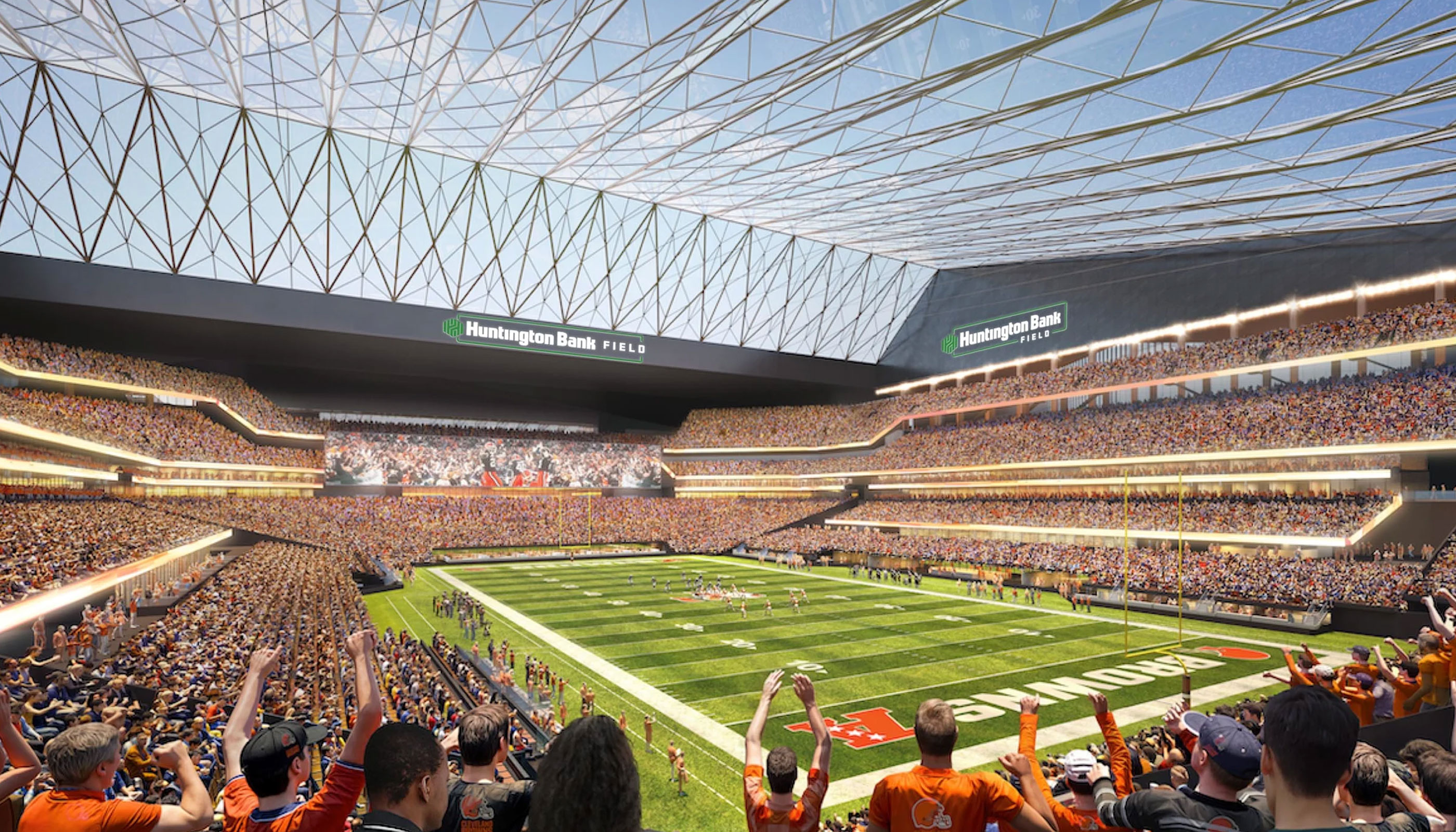
Fortunately for those who believe weather conditions should play no role in determining the outcome of an outdoor sport, you may get your wish in the not-too-distant future. The Tennessee Titans, Jacksonville Jaguars, Washington Commanders, Kansas City Chiefs, and Brendan’s very own Cleveland Browns have all announced plans to replace their current outdoor stadiums with new indoor venues. Within a decade, 17 of the league’s 32 teams could be playing their home games indoors.
{{nfl-football-stadium-renderings-gallery}}
Brendan, a couple of things can be true.
The rationale behind the shift towards indoor, high-end, luxe stadiums – as detailed in this exceptional New Yorker article you sent me – is sound. The ability to control an arena’s climate provides many benefits, primarily the opportunity to monetize stadiums year-round. You can host Beyoncé concerts or Final Four basketball games regardless of the forecast. Fair enough.
At the same time, the character of a venue – the elements, culture, people it embodies – is one of the most beautiful parts of sport. Memories. History. A sense of place, to borrow a term we like to invoke when discussing golf courses. The Kansas City Chiefs are replacing Arrowhead Stadium with a dome? It is blasphemous.
Historical implications aside, football is meant to be played outside, damn it! Sometimes it’s 70 degrees and sunny. Sometimes you catch a mudball, so to speak. Such is life. You must adapt.
I’m inclined to dub this the TPC-ification of the NFL: the exchange of culture and spirit for a replicable, predictable, sanitized playing surface. What do you make of the trend, Brendan? Does it represent broader societal trends gone awry? Or am I just an old man yelling at a retractable roof?
Brendan Porath: JLM, this subject feels appropriate given the weather we might get at Pebble Beach all weekend.
What we’re seeing in the NFL has been troubling and now it’s become personal with my Browns, who are moving from a historic setting on a landmark natural resource that’s walkable from downtown to a charmless slab of concrete 20 miles outside of town near the airport and known as “that area where the strip clubs are.” The slab is available for a reason, and no amount of mixed-use development benefitting the owner’s bank accounts will make it better than the traditional lakeside home of the Browns. To make matters worse, there is that conveyor-belt aesthetic from the renderings and a dome that gives it zero sense of place and makes it indistinguishable from dozens of other stadiums around the country. Adding to your list above, it seems like the Bears might also be moving from their historic lakeside home, too. Should we move Pebble Beach somewhere with more land for more comfort stations, a Hilton, Sweetgreen, and Orange Theory that they could get a cut of?
I do not doubt the commercial potential of these new stadiums or the architectural expertise of the people designing them. But we’ve got just one or two architecture firms creating very similar-looking stadiums marrying up with teams abandoning history and regional identity in pursuit of cash. I think we will look back on this era as a “dark ages” similar to late last century in golf course architecture, finding ourselves 30 years from now wondering why we did this and making efforts to renovate, restore, or return to original historic sites with regional identity. The Commanders are doing this at the moment, realizing a move out of the city to what seemed like a cutting-edge stadium design at the time was a complete disaster, now returning to the original, cherished RFK site. I’d heed that if I were the Browns or Bears.
It all does feel like a TPC-ification. Misguided mimicry. A keeping-up-with-the-(Jerry)Joneses chase to the bottom without stopping for enough time to think about all the reasons why. It may work for a couple, but will come with regret for many others. What’s on trial here is also the purpose of a stadium venue — is its first priority simply to make as much money as possible for the owners involved? Should it foster increased pride and an overall greater sports product with emphasis on tradition and community fandom? The balance seems to have tipped strongly in one direction. As noted in that New Yorker article (I can occasionally read more than the cartoons in there), the high-end, commercially driven venue is overwhelming the stadium experience right now. I’ve spent this week in Chicago listening to natives grumble about what’s become of the anodyne overdeveloped neighborhood around Wrigley Field. There is an eventual cost that comes with this chase, even if it doesn’t immediately show up on the balance sheet. We’ve seen golf courses and golf entities that pushed back on the commercial maximization in favor of the character, unique charm, and quality of their playing fields now be able to stand out in a sea of sameness. NFL teams seem to be deemphasizing those traits for the possibility of a concert, some inclement weather, and more cash. Do you think there will be that level of regret some historic golf courses faced when they jumped in with dark ages trends?
Golf can be impacted to the point of unplayability much more often than football, of course. But these are the risks we run in pursuit of something good and variable. And that pursuit is and always will be worth it.
Joseph: Well said. I share your belief that one day we’ll romanticize an era when NFL rosters reflected the location and culture of their regions. When the Miami Dolphins got pushed around in late-season trips to cold-weather stadiums. When 250-pound Derrick Henry became more efficient as the temperature dropped and undersized linebackers braced for impact in frozen conditions.
It is, perhaps, the same part of our souls that delights in the natural beauty of the Open Championship. So-called fair, TPC-like conditions can produce high-quality tournaments and deserving champions, but there is nothing quite like watching Justin Rose plod his way around wet, windy conditions at Royal Troon. Who cares if it feels fair? And since when does unpredictability constitute unfairness?
Every once in a while, Mother Nature may render a golf course unplayable or force a Monday finish. But if that is the cost of embracing natural elements, of allowing variety and unpredictability to play an integral part in sport, it is a cost worth paying, not an inconvenience to be optimized away.









Internationals on Verge of Historic Upset at 2026 Presidents Cup

Internationals Sweep Friday Foursomes at 2026 Presidents Cup
What Would a Mixed Team Presidents Cup Look Like?

2026 Presidents Cup Thursday Fourball Results

Live Blog: Friday at the 2026 Presidents Cup

Road Map to International Victory at the 2026 Presidents Cup
Get full access to exclusive benefits from Fried Egg Golf
- Member-only content
- Community discussions forums
- Member-only experiences and early access to events