
The Art of Putting in the Wind on Full Display at Asia-Pacific Amateur
“It’s super difficult. Like, ridiculous. My ball is moving. My body is moving.”
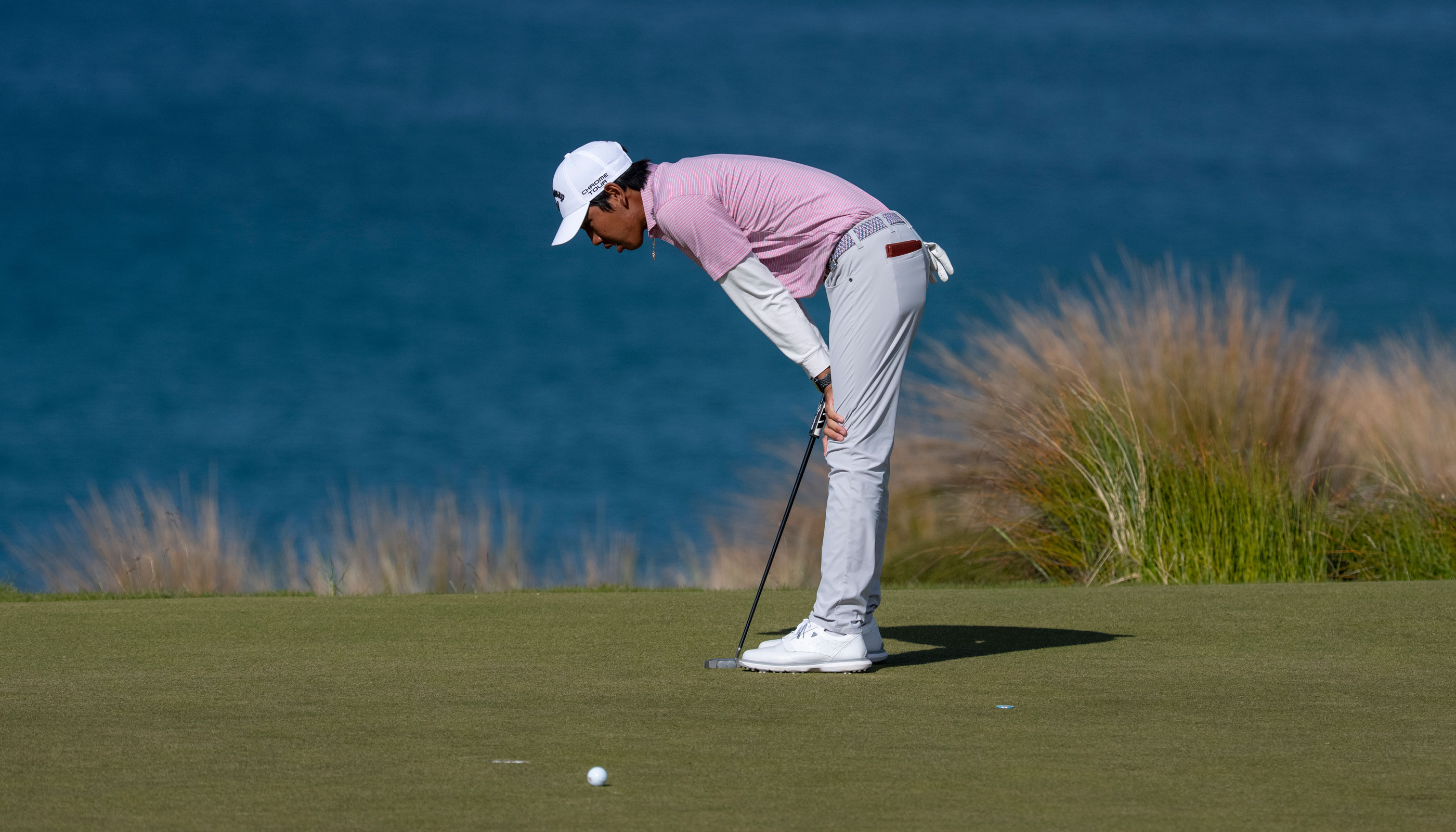
This might sound like hyperbole, but when you walk the ocean holes at Te Arai South, you can’t help but wonder if this is the most visually arresting golf course that’s ever hosted a major tournament. The dunes are stupefying. The mounding looks bold, yet strategic. The greens might as well be a Dali painting in places, and the ocean is an impossible shade of electric blue. But through three rounds of the Asia-Pacific Amateur, the most striking differentiator between success and failure for the players has been something they cannot see, they can only feel.
It’s the wind when standing over a putt.
“It’s impossible,” said Australia’s Jonty Lunson. “You’ve got to have 110 percent concentration on every single putt.”
“It’s super difficult,” said Japan’s Taishi Moto. “Like, ridiculous. My ball is moving. My body is moving.”
Elite amateurs — for the most part — don’t sweat the wind. They have such pure strikes and penetrating ball flights, they can handle the kind of breeze that would kneecap us mortals. They know when to take an extra club, how to hit a draw that holds up against a left-to-right breeze, and when to lower their ball flight and let the ball land and chase. From tee to green, that’s mostly been the case this week at Te Arai Links.
The greens are another story.
Some of the most entertaining viewing — or masochistic, if you prefer another term — has been watching the players have to factor in the wind on putts that already have to traverse the bumps and mounds that give the greens character. Multiple times a round, you can see players aiming 30 to 40 feet away from the hole, visualizing the speed and break, and still needing to take a complete leap of faith wondering what the wind might do.
LEADERBOARD: Asia-Pacific Amateur
It might be the most entertaining lag putting has ever been.
Even some of the best putters have found themselves staring down two or three cups of break on short par putts when the wind is ripping toward the ocean.
“I think on 15 I had like a three‑footer, pretty flat but right‑to‑left, and the wind was blowing in my back,” said Jaden Dumdumaya of the Philippines. “I was about to hit it, and the ball was shaking. It actually moved a little bit. So I had to back off a couple times. It’s hard for me to concentrate and commit to hitting a decent golf putt. I ended up missing it. It's just things like that make it demoralising out there knowing that you can't really do much, you just have to hit it and hope and pray it goes in.”
On the first day of the competition, Thailand’s Fifa Laopakdee seemed entirely unfazed by the 30 mph gusts. He shot a 63 that could have even been lower. The defending champion looked like he was unaffected by the elements, and that he might run away with the championship. Even on putts that had several feet of break, he was pouring them right in the middle of the cup.
That magic would not last. The wind got its revenge on Friday and Saturday.
“I had a five‑footer two holes in a row and the ball just snapped 90 degrees,” Laopakdee said. “I aimed a foot left from five feet and it went like three feet right. It’s pretty tricky.”
The greens this week are actually playing a little slower than they could be, simply because the setup team didn’t want balls moving with gusts. And for Saturday's third round, the wind mercifully died down a bit, so it wasn’t as much of a concern. But on Friday afternoon, it was right on the line for some players. Anon Phachanthavong of Laos shot a 103 that included a 15 on the 17th hole. The bottom of the field took the brunt of the punishment, but even the top players felt the wind’s wrath.
“Standing over putts, you could see the ball shaking,” Dumdumaya said. “There have been a couple instances where I had to replace my ball because it rolled all the way from the mark.”
“Playing in the wind definitely shows you where your game is at,” said Hong Kong’s William Lisle. “WIth how slopey these greens are, it’s really hard if you’re out of position. I was hitting putts from 50 and 60 feet, and if you’re going up a slope, it just runs past the hole quite a bit. Then I had a couple putts that were diving right to left, and the wind just held up and they stayed pretty straight. It’s tough.”
{{inline-article}}
It’s setting up for a fascinating final stretch on Sunday. Whoever wins is going to have to have to make some nervy five footers with the wind humming. It’s hard to count out Laopakdee, but the Kiwis seem to have a better feel for the devilish wind than most. New Zealand’s Zack Swanwick was 4-over par after nine holes on the first day of the championship, but he has dominated since, posting back-to-back 67s.
“I feel really confident now,” Swanwick said. “I kind of know where the ball is going. I know how far it's going. Putting is starting to feel really good. Everything feels really good. Just go at it.”
Another New Zealander, Cooper Moore, is just two shots back. His putt on the 18th hole to finish off his third round was a textbook example of how tricky these greens are. He reached the green in two, and was staring down a 40-foot eagle putt. But between the wind and the slope, he had no chance to get it close by aiming straight at the cup.
Instead he aimed 15 feet right of the cup and tried to hit it 15 feet long. His ball still broke more than he expected, but it left him a makeable birdie, which he drained.
“Obviously with the wind, speed control is really important,” Moore said. “It's hard to find a line and trust it at the same time with the wind. Just really committing to every putt and every read.”
Moore was asked if this is the most difficult wind he’s ever played in.
“It would be up there with the toughest wind, but obviously used to it being from New Zealand,” he said. “Experienced a few days like this.”







For Jaden Dumdumaya, Golf Is a Family Affair
Meet Solongobat Otgonbaatar: The Best Golfer From a Country With One Course

2026 Walker Cup Notebook

Great Britain and Ireland Make History with 2026 Walker Cup Comeback Win

2026 Walker Cup Preview

Five Things: State of Amateurism and the Next American Star
Get full access to exclusive benefits from Fried Egg Golf
- Member-only content
- Community discussions forums
- Member-only experiences and early access to events