Old Petty
A canny contrast to its sister course at Cabot Highlands, Old Petty's design highlights inland terrain, a castle, estuary, old stone walls, and a firth

Inverness, Highland, Scotland
Tom Doak and Clyde Johnson (original design, 2026)
Public

In June 2022, Cabot, the company behind the much-praised Nova Scotia destination Cabot Cape Breton, bought Castle Stuart Golf Links in Inverness. It immediately announced plans for a second 18-hole course and renamed the facility Cabot Highlands.
Tom Doak designed the new course, with Clyde Johnson leading construction and veteran associate Chris Haspell handling much of the shaping. The preexisting property was attractive but not topographically blessed. To give the broadly sloping ground enough variety and interest for world-class golf, Doak’s team had to carry out extensive earthwork. From 2023 through 2024, they transformed the site into an authentic-feeling linksland environment.
Named for a nearby church, Old Petty opened for public play in May 2026. It offers a canny contrast with its sister course. Whereas Gil Hanse’s Castle Stuart centers on the Moray Firth, with almost every hole oriented toward an ocean view, Old Petty shifts its focus continually: first it highlights some high inland terrain (Nos. 1-2), then a castle (No. 3), an estuary (No. 4), a knoll in the midst of gentle ex-farmland (Nos. 7 and 10), and an old stone wall at the far end of the property (Nos. 12-13), before turning its attention to the firth (Nos. 14-15). It is also lower-profile than Castle Stuart, with subtle, seemingly random contours inspired by Scotland's traditional links.
Doak and Johnson have given Cabot Highlands a second 18 that complements the original without replicating any of its moves. Opinions on which is better will likely be evenly split.
Take Note…
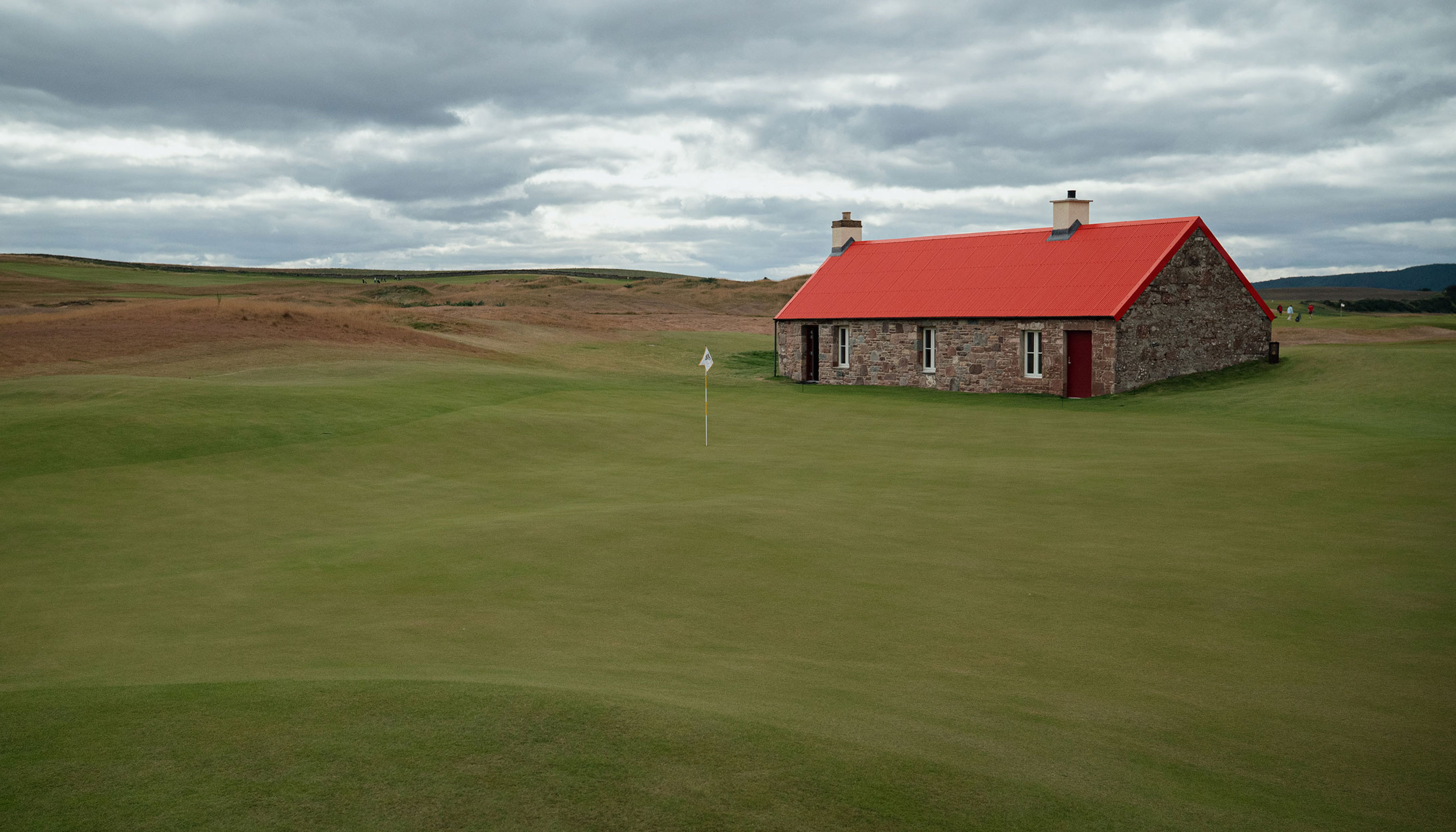
A bothy with history. The fifth green at Old Petty sits hard against a red-roofed 19th-century stone cottage, which serves as a “bothy,” or halfway house. According to this Cookie Jar Golf video, a woman emailed Cabot Highlands recently to say that her grandfather was born in the cottage. Fortunately, she was a golfer and seemed happy that the cottage was now in the middle of a Tom Doak-designed course.
“That motherf***er is not real.” The dune ridge along the shoreline, while natural-looking, is completely artificial, built by Doak and Johnson’s crew in their first season of work.
“No, you go.” The first and 18th holes cross over each other, so the starter often needs to manage traffic. The landing zones for the two holes are not near each other, however, so there’s rarely any real confusion.
{{old-petty-about-gallery}}
Favorite Hole
No. 12, par 4, 435 yards
Bordered on the left by an old farm road, the par-4 12th climbs to the southwestern corner of Old Petty’s property. The tee and fairway abut the fence, but the green is offset to the right, behind a manmade hill.
The strategic design is textbook. Players who bail out to the right, away from the OB line, end up with a blind second shot over the hill; those who risk the penalty get a clearer look at the target. A well-placed fairway bunker on the right stops long hitters from simply blasting driver up the safe side. In order to push into wedge range, you must stay left.
What really makes this hole is the green. Pill-shaped, un-bunkered, and low profile, it looks plain at first, but its contours — most importantly a bump along the left edge and a sideboard on the right — are superbly executed. Left misses (theoretically more likely from the right side of the fairway) must reckon with the mound, while approaches from the left can use the sideboard.
This quietly excellent green makes the 12th at Old Petty a worthy addition to Scotland’s long tradition of beguiling boundary holes.
Favorite Hole
No. 12, par 4, 435 yards

Bordered on the left by an old farm road, the par-4 12th climbs to the southwestern corner of Old Petty’s property. The tee and fairway abut the fence, but the green is offset to the right, behind a manmade hill.
The strategic design is textbook. Players who bail out to the right, away from the OB line, end up with a blind second shot over the hill; those who risk the penalty get a clearer look at the target. A well-placed fairway bunker on the right stops long hitters from simply blasting driver up the safe side. In order to push into wedge range, you must stay left.
What really makes this hole is the green. Pill-shaped, un-bunkered, and low profile, it looks plain at first, but its contours — most importantly a bump along the left edge and a sideboard on the right — are superbly executed. Left misses (theoretically more likely from the right side of the fairway) must reckon with the mound, while approaches from the left can use the sideboard.
This quietly excellent green makes the 12th at Old Petty a worthy addition to Scotland’s long tradition of beguiling boundary holes.
{{old-petty-favorite-hole-12-gallery}}
Overall Thoughts
Most visitors to Cabot Highlands will assume that Old Petty was built on a fine, contiguous piece of linksland. In reality, the property was awkwardly divided into three parcels: a plot near the clubhouse containing the resort’s driving range and maintenance building; a hillside next to Castle Stuart (the actual castle, that is); and, on the other side of an estuary, a tract of former farmland along the Moray Firth. The ground itself was mostly unpromising. It had some broad slopes but none of the abrupt, exciting movement golfers expect from a high-end seaside destination.
This kind of architectural challenge wasn’t unprecedented in Scottish golf. See Kyle Phillips’s work at Kingsbarns 26 years ago, or Clive Clark’s at Dumbarnie Links earlier this decade.
With Old Petty, however, Tom Doak and his lead associate Clyde Johnson wanted to create a new type of modern "links." Whereas Phillips and Clark constructed dramatic dunescapes, Doak and Johnson went for a calmer, more classically Scottish effect. Old Petty hugs the ground instead of rising out of it. The contours that affect play are moderately sized — more wrinkles than undulations. The bunkering is sparse by modern standards; there are just 35 bunkers total, many of them small and visually demure. Only one hole, No. 8, makes prominent use of flashed sand. Most of the greens sit at grade, emerging gently from the approaches.
The quietness of Old Petty’s appearance belies the complexity of its construction. Across much of the site, Doak and Johnson’s crew stripped off topsoil left by centuries of agriculture, revealing a sandy, gravelly base. They consolidated the excess topsoil in select areas between holes and shaped it into realistic dune ridges. They then filled in the playing corridors with native sand and created linksy golf features from whole cloth. All 18 holes — with the exception of the third, 11th, 12th, and 16th fairways — were built in this labor- and craft-intensive manner.
The results are seamless. Old Petty’s manufactured linksland looks and plays like the real thing. The shapes are irregular and surprising, yet they maintain a larger structure and logic, as though formed over centuries by the prevailing winds. Few architects can build topography this convincing.
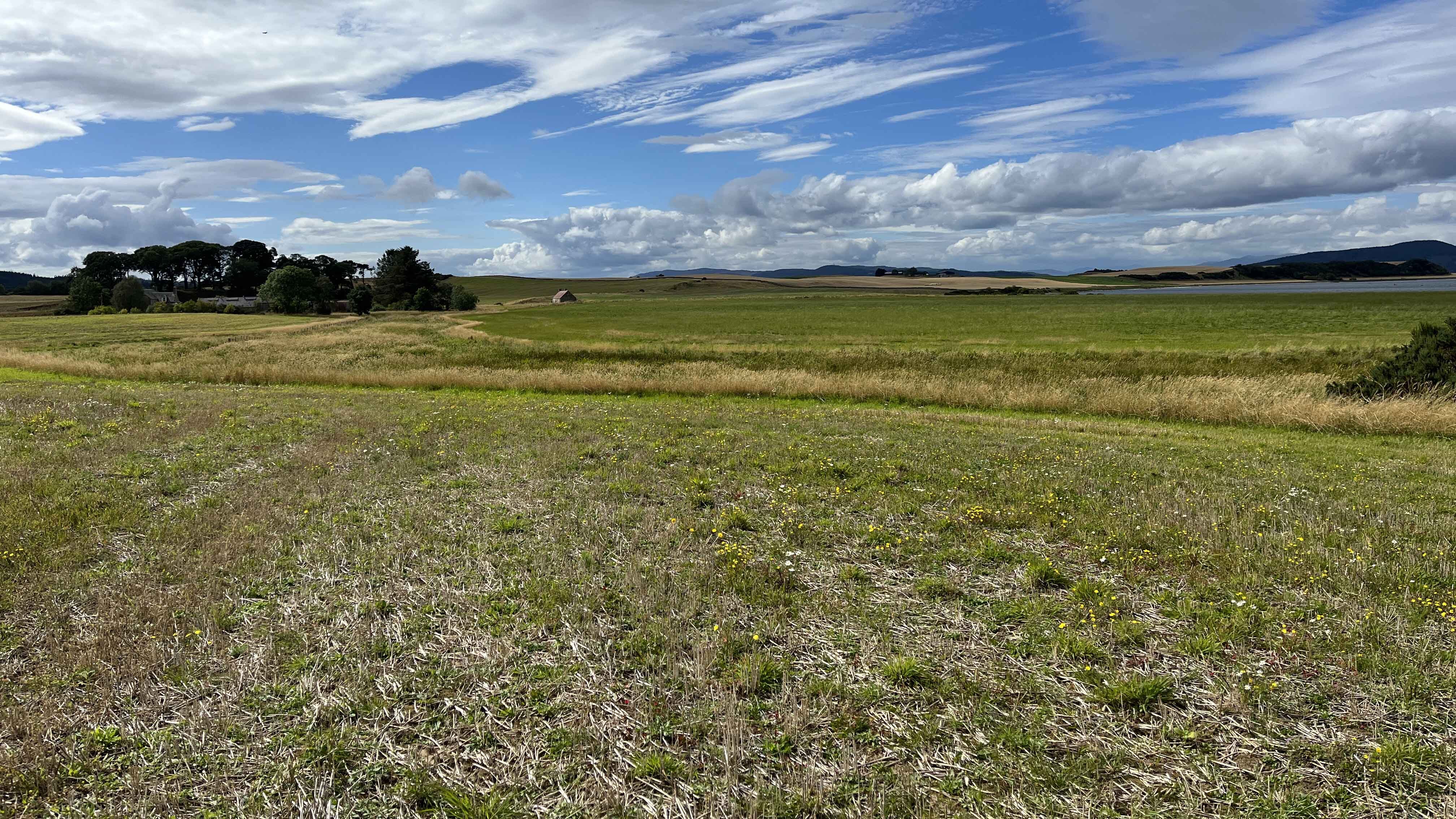
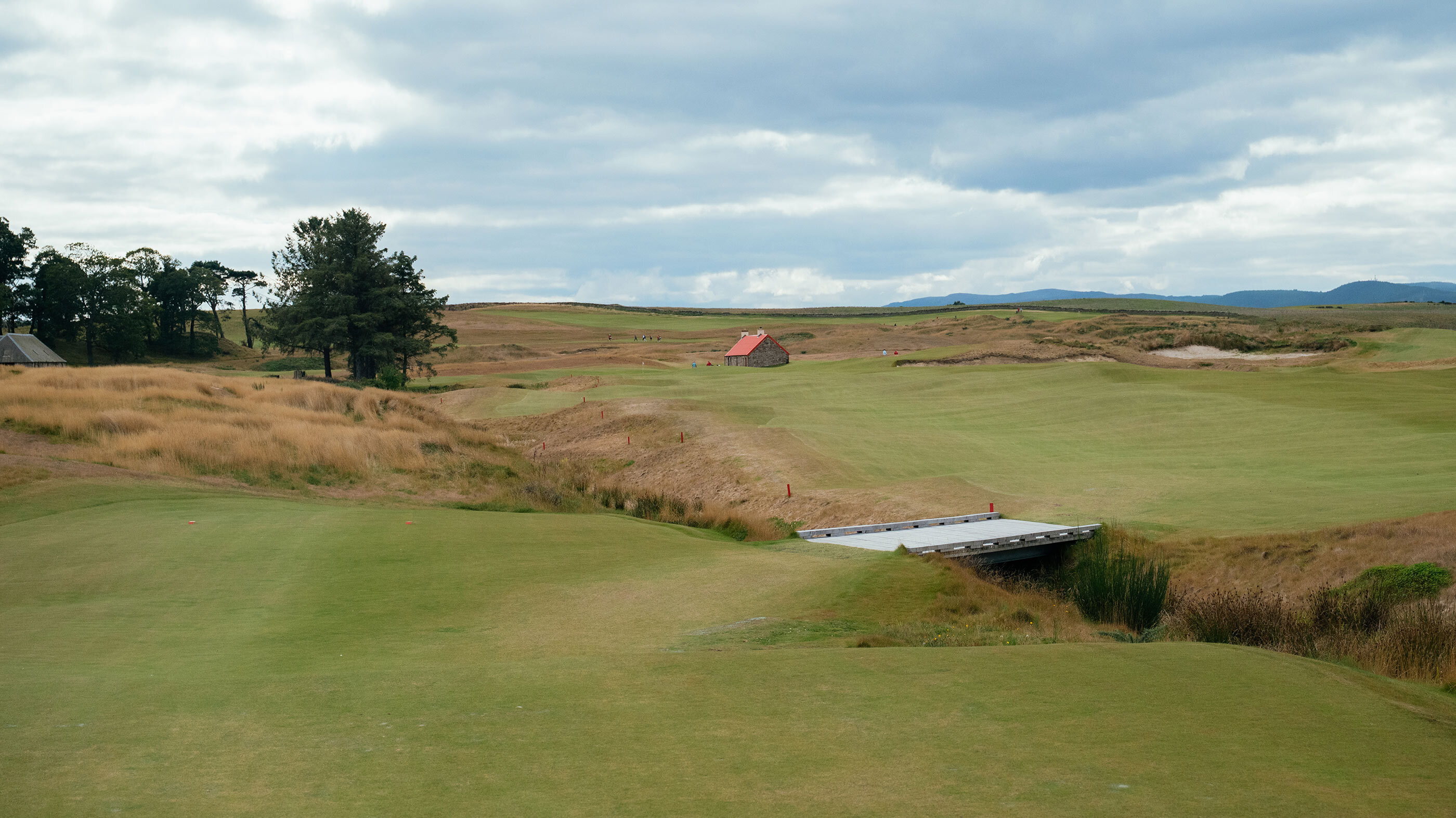
The green complexes are particularly well executed. Ten are bunkerless, and almost all of the rest are lightly bunkered, so most of their interest comes from contour. The short-grass surrounds are beautifully, elaborately molded; recoveries after missed greens are bedeviled by a variety of ripples, channels, knobs, and swales. You can play these shots with anything from a putter to a lob wedge, but I found that 20 and 35 degrees of loft — hybrid to 8-iron, roughly — worked best. Scoring well requires either very accurate approaches or a refined, multifaceted short game.
I’ve already singled out the 12th green for praise. My other favorites include the lay-of-the-land fifth, the dune-shrouded 10th, and the reverse-tiered 18th.
{{old-petty-greens-gallery}}
For me, though, the intricacy of Old Petty’s greens, and of its architecture in general, is a double-edged sword. It’s a source of fascination and challenge, but it also marks the course as modern. The ancient links that inspired Old Petty are simple and unadorned. While they may sit on busy terrain, their built features, especially the greens, tend to be straightforward. Old Petty, on the other hand, is packed with architectural detail, and in this way it has more in common with Doak’s other designs than with, say, Brora or Cruden Bay.
This isn’t entirely a bad thing. Tom Doak builds great courses, and we should all be glad to have another.
But I wish Old Petty had committed a little harder to its concept. Its elevator pitch — construct a traditional-feeling Scottish course from the ground up — suggested something more radical than what Doak and his team delivered. Maybe that was unavoidable. A fully authentic 19th-century-style links might have put off Cabot Highlands’ typical guest and seemed too basic for a £385 green fee. Such is the difficulty of attempting an architectural experiment at a retail golf resort.
Old Petty is an excellent golf course and a masterful feat of construction. But today, 40 years into the neoclassical era of golf architecture that Doak himself helped start, it doesn’t quite feel unique.
1 Egg
For its combination of skillful design and firm, fescue-based conditions, Old Petty obviously deserves an Egg. As the course’s presentation evolves in the coming years, with the off-corridor areas filling in with color and texture, I may find it hard to withhold the second Egg. For now, however, I think Old Petty falls just short of the destination-resort two-Egg tier occupied by the likes of Bandon Trails, Old Macdonald, and Sedge Valley.
Course Tour
{{old-petty-course-tour-01-gallery}}

Explore Related Content
Te Arai Links (North Course)
Childress Hall (Upper Course)
High Pointe Golf Club
Shoreacres

The Loop at Forest Dunes
The Tree Farm
Get full access to exclusive benefits from Fried Egg Golf
- Member-only content
- Community discussions forums
- Member-only experiences and early access to events