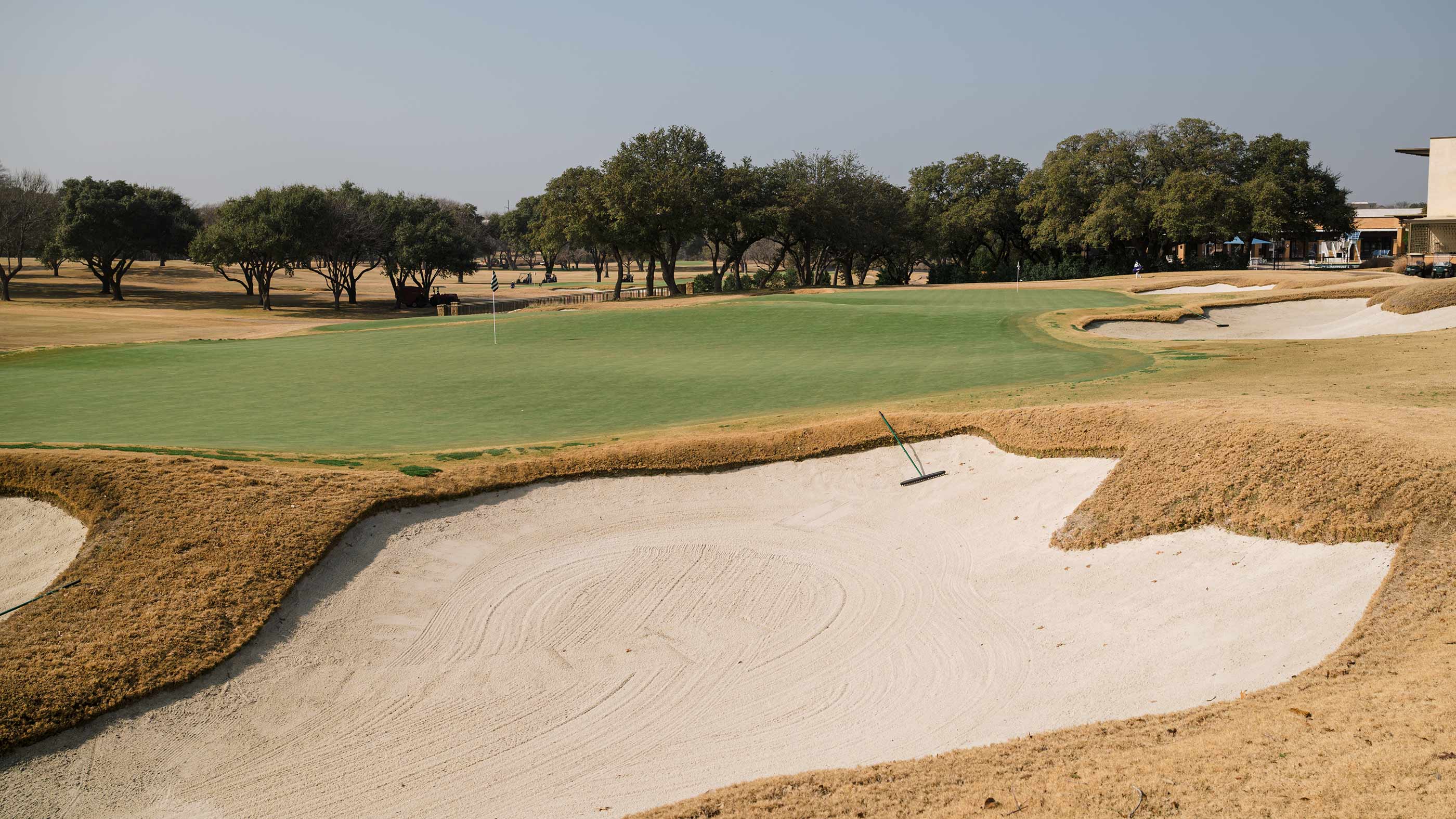
Shady Oaks Country Club
While Shady Oaks has gradually changed over the course of its life, it has now solidified itself as one of the finest examples of Texas golf with its rustic feel and harmony within its landscape


Marvin Leonard, a successful Texas business owner, picked up the game of golf at age 32 on recommendation from his doctor to offset his hours working inside his department store with some fresh air and exercise. He began to frequent Glen Garden Country Club, where he met and employed Ben Hogan as his caddy. A friendship formed quickly and eventually led the pair to become business, golf, and playing card partners. When Leonard posed the idea of building a golf course on 1,200 acres of Fort Worth farmland, Hogan was quick to object, saying the land was too severe for golf. Marvin persisted, thus ushering in the beginnings of Shady Oaks Country Club.
Robert Trent Jones Sr. was hired to design and build the golf course in the late 1950s, which happened to be around the height of his design career where he was pulling in a rumored $600,000-plus a year. Marvin’s vision for the golf course resulted in one of the greatest earth-moving projects golf had ever seen at the time, and in 1958, the course opened in typical RTJ fashion with narrow, treelined fairways and large, tilted greens. Hogan would join the club and spend the next 40 years playing and predominantly practicing on the “Little Nine,” a 10-acre short course encompassed by the back nine.
By the late 1990s the club had brought in Bill Coore and Ben Crenshaw to renovate and bring new life to the bunkers at Shady Oaks. As golf architectural trends began to shift in the modern era, the club hired Australian firm OCM (Ogilvy, Cocking, and Mead) to “redesign” the course for the modern game and inject more strategy and interest into the outdated design. Renovation work began on the Little Nine first, experimenting with grass types and bunker styles. On the regulation course, they planned to maintain the original routing, which Mike Cocking described as "very good,” widen and simplify fairway mowing lines, remove overgrown trees, and rebuild all of the bunkers and greens. The work was completed in 2020 and debuted as OCM’s first design in the United States.
Today, Shady Oaks boasts varied putting surfaces, captivating bunkers, ample width, and long views across the golf course. The once singularly titled putting greens now have immense character with subtle waves and tremendous variety. Abundant bunkering plus expanded short grass playing surfaces infused strategy and visual deception into the new design. The front nine takes players on an adventurous looping journey over the most severe landforms, including Nos. 3-7. Many of these bold landforms and ground features, like the creek on the par-3 fifth and steep hillside between the sixth and seventh holes, were choked out by swaths of trees. While the land on the back nine is less dramatic, it’s still quite interesting for golf and has been efficiently utilized by RTJ’s original routing scheme. The course’s scale and character have been vastly improved with the tree removal and upgraded features because OCM has allowed the landscape to shine. While Shady Oaks has gradually changed over the course of its life, it has now solidified itself as one of the finest examples of Texas golf with its rustic feel and harmony within its landscape.
Take Note...
Hogan. Simply put, Shady Oaks is riddled with history surrounding Ben Hogan. The Ben Hogan Foundation is located underneath the club’s training facility, and the clubhouse has endless amounts of Hogan memorabilia. Be sure to dedicate some time to explore the rich history of the club and Ben Hogan.
Under the Oak Tree. A stand-alone tree on the southwest corner of the Little Nine next to the 18th tee is where Ben Hogan would spend hours and hours practicing his swing and tinkering with various prototype golf clubs that he created. The reason for this location is that Hogan loved hitting into the wind and allowing it to hold up his typical cut ball flight. A small statue pays tribute to this famous teeing area.
{{content-block-course-profile-shady-oaks-country-club-001}}

Explore Related Content
The Patterson Club
Port Royal Golf Course

Oakland Hills Country Club (South)

Congressional Country Club (Blue Course)

St. Louis Country Club

Oak Hill Country Club (East Course)
Get full access to exclusive benefits from Fried Egg Golf
- Member-only content
- Community discussions forums
- Member-only experiences and early access to events