Childress Hall (Lower Course)
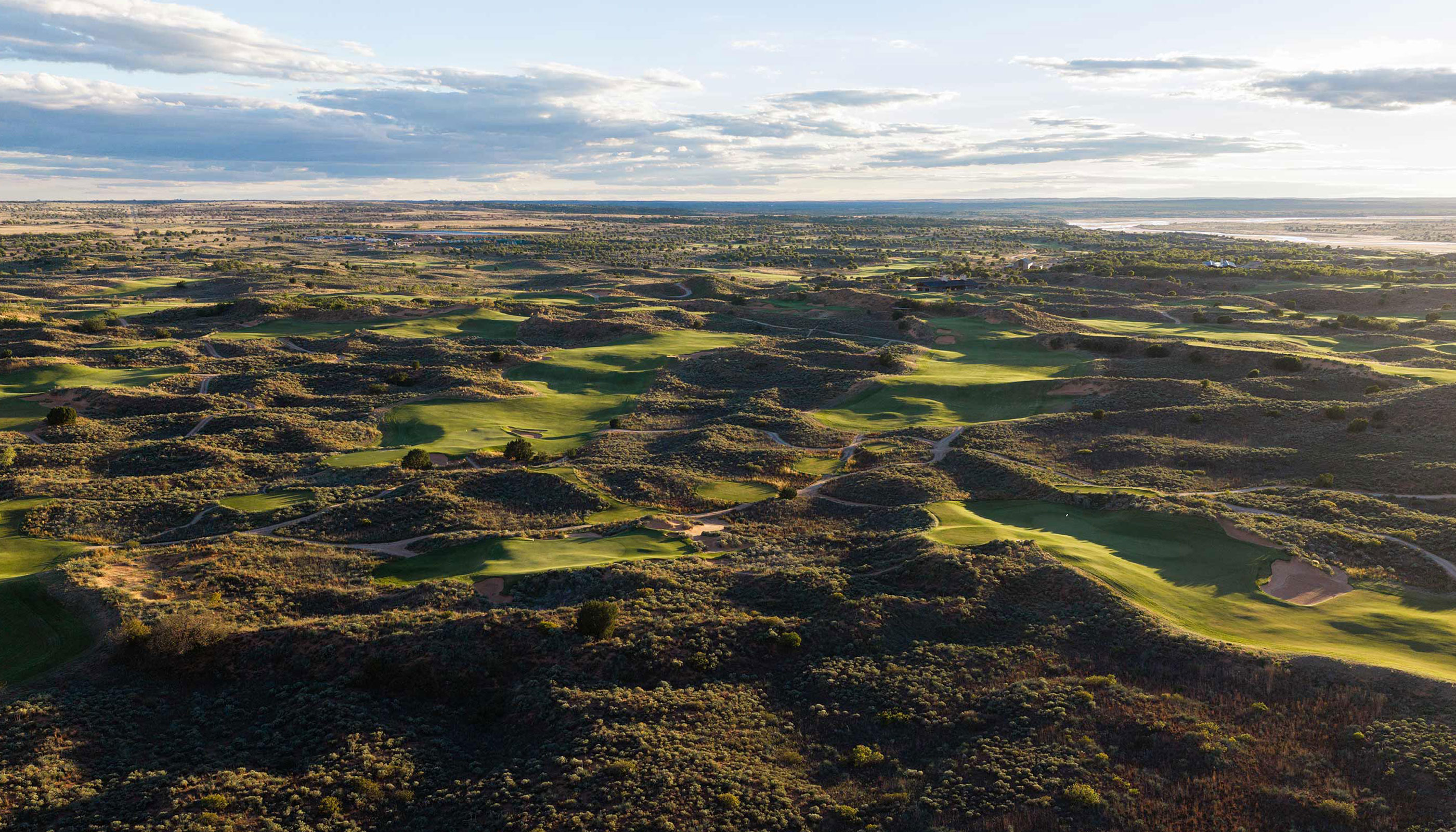
Heaving fairway movements, varied putting surfaces, and obscured vision make the Lower Course a design full of discovery.


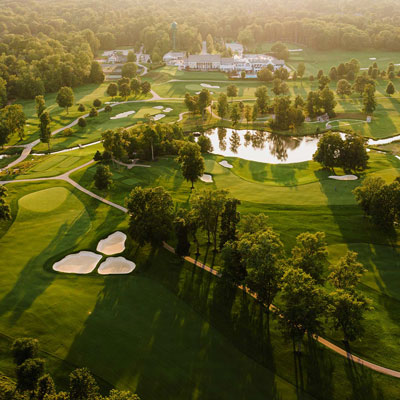
Despite being directly adjacent to Tom Doak’s Upper Course, the second course at Childress Hall occupies distinctly different topography, which greatly influences Gil Hanse’s design and its strategy. The Lower Course, just north of the Upper, sits on much more chaotic land with sharper, more compact dune formations. While these formations make for extremely dramatic and visually stunning golf holes, a lot of earth moving was required to tame the land and create a walkable, playable golf course. That being said, one would have a very difficult time discerning what was “built” versus natural due to the expert shaping and finish work from Hanse and his team. The holes drape over the landscape and take inspiration from the unique landforms littered across the site.
Early in the development of the Lower Course, Gil and his design partner, Jim Wagner, identified a large, prominent dune ridge which would eventually serve as the backbone of the course's routing. Wagner suggested three six-hole loops that return to and play off of the commanding dune ridge. Nos. 1, 7, and 13 tee off the dune ridge, and the sixth, 12th, and 18th greens are situated on or against the base of the ridge. This routing choice defines the course because it creates a central hub that players continually revisit, allowing them to interact with other golfers while creating a sense of compression and release. Heaving fairway movements, varied putting surfaces, and obscured vision are a few other standout attributes of the design. It’s a course full of discovery. The fairway widths are slightly wider than the Upper, but being in the wrong spot may mean complete blindness due to the topography.
Thanks to the diversity of the landscape and the different routing approaches of both architects, wandering versus looping, the Upper and Lower courses are fundamentally distinct and complementary. Now, with two courses open for play, Childress Hall has established itself as one of the finest 36-hole facilities in the world.
{{childress-hall-lower-course-about-gallery}}
Take Note…
Social Construct. Both courses at Childress Hall were specifically designed for match play and thus have no par or official yardage assigned to any of the holes on property. Additionally, the handicap index of each hole changes daily based on the setup, as well as wind strength and direction. Half-par holes can have tees moved back or forward to shift whether the hole is played as a two-shot or three-shot hole, embracing the idea that par is just a social construct.
Guard Llama. Due to the severity of the dunes and the sugary-sand complexion, maintaining the native areas adjacent to the fairways is reserved for a herd of goats. And well, every herd of goats needs a guard llama to keep predators like coyotes and feral hogs away. The goats primarily feed on the undesirable weeds, making them much more practical and efficient than machinery.
No Ties. In order to settle knotted matches after 18, a tie hole was built by Gil Hanse between the 18th holes on both courses. This multi-tiered green can be played from two different directions, allowing shots to be accepted from nearby either 18th greens on the Upper and Lower.


Explore Related Content
Castle Stuart
Brookville Country Club
Westhampton Country Club
The Country Club (Pepper Pike)

Soule Park Golf Course

The Course at Sewanee
Get full access to exclusive benefits from Fried Egg Golf
- Member-only content
- Community discussions forums
- Member-only experiences and early access to events