
Soule Park Golf Course
After a historic flood devastated Soule Park in 2005, Gil Hanse transformed this William F. Bell design into one of the best public courses in California

Ojai, California, USA
William F. Bell (original design, 1962); Hanse Golf Course Design (redesign, 2007)
Public
$


How to Survive a Flood: Soule Park

Two Championship Golf Courses in California (and a Lovely Muni)

In 1962, William F. Bell — son of William P. Bell, the well-known architect and partner to George C. Thomas — completed a new municipal golf course in the quaint valley town of Ojai, California, just a mile from Thomas and Bell’s Ojai Valley Inn course. The next few decades saw the all-too-predictable decline of Soule Park: greens shrunk into ovals and playing corridors were choked with newly planted trees.
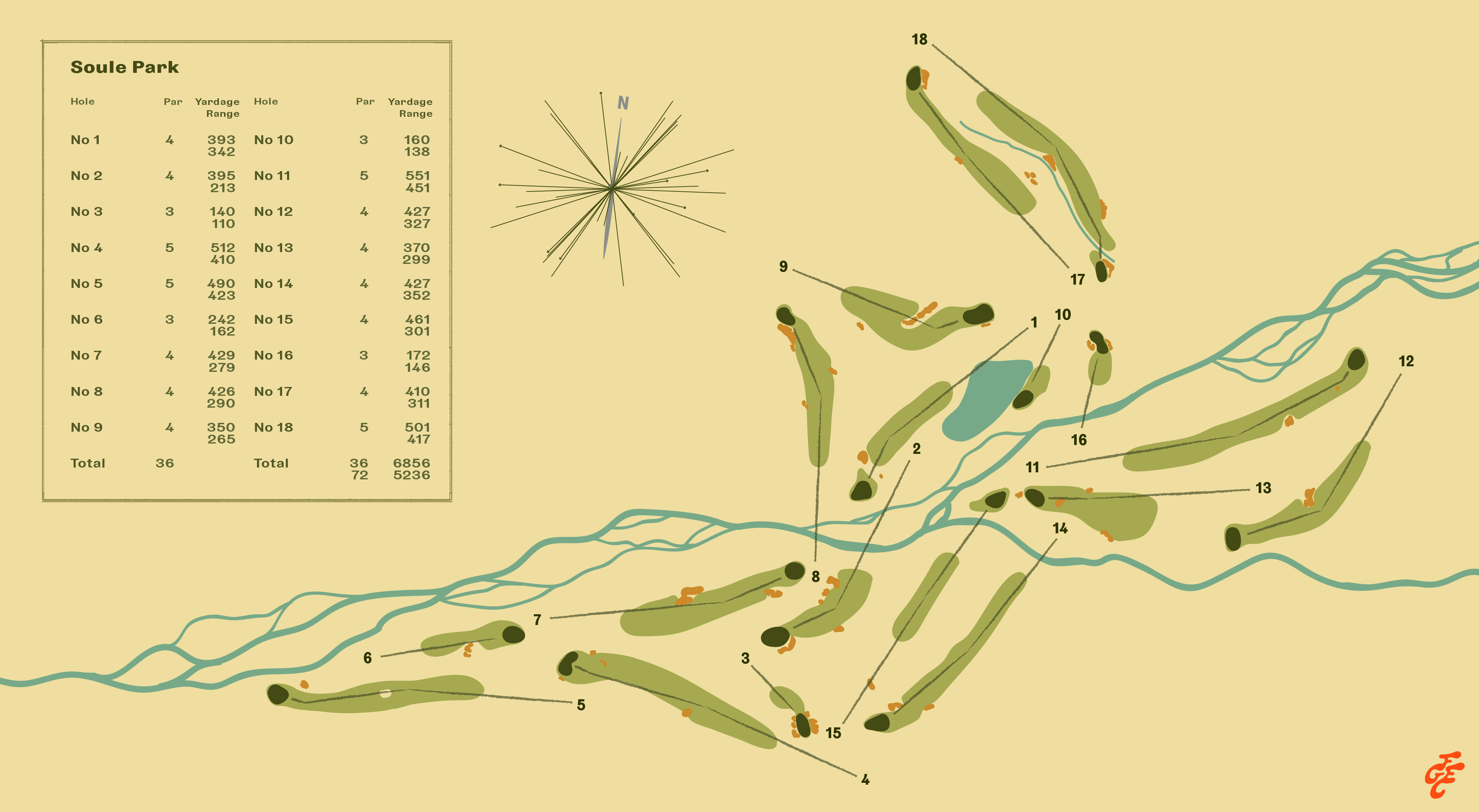
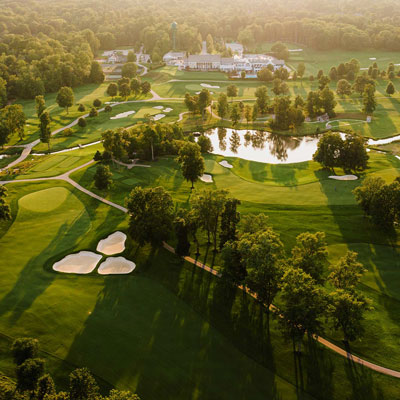
Built on a typical Southern California landscape, the course plays off of and around a large hill where the clubhouse is situated, across a flattish central basin, and against the foothills at the southern edge of the property. Through the central basin run two large creeks — Thacher and San Antonio — which converge around the site of the first green and continue as a single river along the front nine. The gorges formed by the creeks are integrated into the routing, with several holes playing over and along them. In late 2004 and early 2005, after the area received more than 15 inches of rain over a two-week span, the creeks overflowed, reconfiguring their own banks and washing away bridges and greens. The golf course was nearly totaled.
Enter Gil Hanse and Jim Wagner, who designed the nearby Rustic Canyon Golf Course. Their budget was small — just over $3 million — so they retained much of Bell Jr.’s routing and focused on bunkers and greens. Taking inspiration from Thomas and Bell Sr.’s work in Los Angeles, Hanse and Wagner dug out jagged bunkers, sculpted exhilarating green contours, and introduced another degree of sophistication to the golf at Soule Park. Today, the course is as busy as ever, attracting in-the-know golfers from all over Southern California.
Take Note…
More setbacks. Soule Park took additional damage during severe storms in the winters of 2022-23 and 2025-26. The creeks have widened significantly, washing away a green-side bunker and the left edge of the green on No. 12 and tearing away a chunk of the punchbowl fifth green.
Local help. Local contractor Tyson York, a former teaching pro at Soule Park, helped build the original golf course. His work on the sixth green impressed Hanse so much that Hanse asked him to build the seventh green as well.
Concessions. Not everyone was a fan of the redesigned golf course when it reopened. Some older men’s club regulars complained they couldn’t hit it over certain bunkers. As a result, bunkers in front of the first and third greens were filled in, as was a portion of a cross bunker on No. 11 and a center-line bunker on No. 13.
{{content-block-course-profile-soule-park-golf-course-001}}
Favorite Hole
No. 9, par 4, 350 yards
Before Gil Hanse and Jim Wagner’s redesign, No. 9 at Soule Park was an awkward short par 4 that hung a sharp left around a grove of trees about 70 yards from the green. The hole mandated a highly specific tee shot: a drive of about 240 yards to the turn of the dogleg. Any other feasible position in the fairway was blocked out by trees.
Hanse and Wagner maintained the basic dimensions of No. 9, but they replaced the trees with two large bunkers cutting diagonally into the landing zone for tee shots, and they expanded and recontoured the green. Now the hole provides an array of options off the tee. You can play short of the bunkers and face a mostly blind approach; you can swing your tee shot out to the right for a cleaner look at the green; or you can attempt to fly the bunkers, with the long carry on the left offering the prospect of an eagle putt. The land fights the player the whole way, spilling to the right, away from the target.
The green is one of the most inventively contoured at Soule Park, with a raised front section, a middle trough for easier pins, and a plateau in back that can serve as a practice area.
Favorite Hole
No. 9, par 4, 350 yards
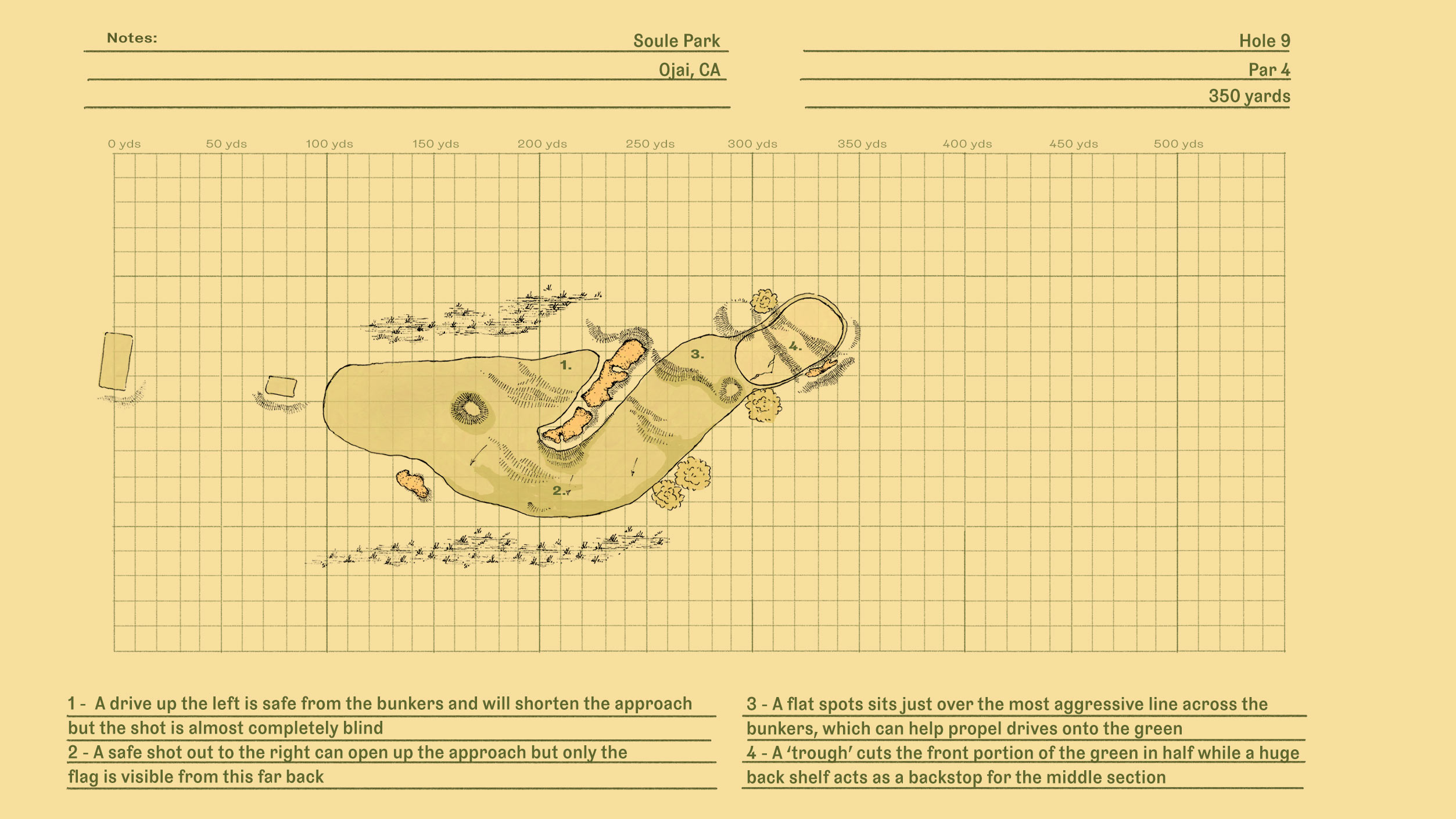
Before Gil Hanse and Jim Wagner’s redesign, No. 9 at Soule Park was an awkward short par 4 that hung a sharp left around a grove of trees about 70 yards from the green. The hole mandated a highly specific tee shot: a drive of about 240 yards to the turn of the dogleg. Any other feasible position in the fairway was blocked out by trees.
Hanse and Wagner maintained the basic dimensions of No. 9, but they replaced the trees with two large bunkers cutting diagonally into the landing zone for tee shots, and they expanded and recontoured the green. Now the hole provides an array of options off the tee. You can play short of the bunkers and face a mostly blind approach; you can swing your tee shot out to the right for a cleaner look at the green; or you can attempt to fly the bunkers, with the long carry on the left offering the prospect of an eagle putt. The land fights the player the whole way, spilling to the right, away from the target.
The green is one of the most inventively contoured at Soule Park, with a raised front section, a middle trough for easier pins, and a plateau in back that can serve as a practice area.
{{soule-park-favorite-hole-9-gallery}}
Overall Thoughts
What Gil Hanse and Jim Wagner did at Soule Park Golf Course in 2005 and 2006 on a $3.1-million budget is remarkable. It should be remembered as a landmark project in the history of American municipal golf.
Their main task was simply to make the course functional again. After the catastrophic flooding in January 2005, Soule Park's irrigation system had to be replaced, the bridges across Thacher Creek and San Antonio Creek needed to be repaired (and, in one case, wholly rebuilt), and several tee boxes and greens had to be recovered. But Hanse and Wagner weren’t satisfied with merely bringing the golf course back to life. They wanted to make it better.
Hanse and Wagner retained much of William F. Bell’s routing but changed just about everything else. They removed trees to open up new angles on several holes. They built jagged-edged, Billy Bell Sr.-style bunkers that guarded ideal positions in the fairways, and they built varied, creatively contoured greens to add variety to approach and short-game shots. This work brought Soule Park’s true character into relief. With its barrancas, oaks, hilly terrain, and strategic design, it wasn’t just an average muni. It was a vintage Southern California gem, with hints of George Thomas and Billy Bell Sr.’s architecture at Riviera, Bel-Air, and Los Angeles Country Club North.
Hanse and Wagner’s changes to Nos. 4 and 5 were particularly striking. Before 2005, both holes were straightforward, with circular greens. Today, they are a pair of short par 5s with brash, memorable green complexes.
For No. 4, Hanse and Wagner sculpted a semi-boomerang green that alludes to the first at Riviera and the sixth at Crystal Downs. But whereas Thomas and MacKenzie each placed a bunker in the crook of the boomerang, Hanse and Wagner built a closely mown hummock through the middle, from front to back. The result is a green unlike any I’ve seen. If you end up on the wrong side of the spine, good luck getting down in two.
{{soule-park-fourth-green-gallery}}
After a strong drive on the fourth hole, you have a choice: go for the green and risk leaving a ticklish chip or putt over the ridge, or lay back to a spot where you can use the contours to feed the ball toward the pin. Bedeviling the conservative play, however, is a trio of bunkers short right.
The punchbowl fifth green is the inverse of the fourth — convex instead of concave. Until you reach the top of the ridge 20 yards out, you can’t see the green at all. So going for it in two is a nervy proposition: a long iron or a wood to a blind target surrounded by dense foliage and San Antonio Creek on the right. Settling for a 75-yard wedge on your third shot is a safer bet, but the hole is short enough — under 500 yards from the tips — to encourage aggressive play.*
{{soule-park-fifth-green-gallery}}
(*During storms in December 2025, a portion of the right side of the fifth green fell into the creek. I hope the current management is able to recapture Hanse and Wagner’s punchbowl concept in some form.)
Hanse and Wagner’s changes to Nos. 4 and 5 — and every other hole at Soule Park — show that good golf architecture doesn’t have to be expensive or even especially complicated. Well-placed and -shaped bunkers, imaginative greens, and smart, efficient maintenance practices are the main things you need. Anything else just adds to the green fee.
1 Egg
Soule Park occupies one of the loveliest settings and possesses one of the best sets of greens on the West Coast. That’s enough for an Egg in my book, especially considering the course delivers all of this for a sub-$50 green fee. The grounds crew has also done good work recently, pushing out some mowing lines that had crept in over the past 20 years. I would, however, like to see Hanse and Wagner’s 2005-06 bunkers restored to their original forms.
Course Tour
{{soule-park-course-tour-01}}
Additional Content
How to Survive a Flood: Soule Park (Article)
Two Championship Golf Courses in California and a Lovely Muni (Fried Egg Golf Podcast)
Soule Park Floods, Again (FEGC Forum)
Fried Egg Golf Spring Festival at Soule Park
What better way is there to experience the magic that is Soule Park than at a Fried Egg Golf Event! On Saturday, April 25, 2026, we're taking over Soule Park for a full-day golf extravaganza, live entertainment, games, and more. Come visit with the Fried Egg Golf community and play one of the best in Southern California. 2026 Spring Festival Details and Registration

Explore Related Content
Brookville Country Club
Westhampton Country Club
The Country Club (Pepper Pike)

The Course at Sewanee

Prairie Club (Horse Course)

Fields Ranch East at Omni PGA Frisco
How to Survive a Flood: Soule Park
Get full access to exclusive benefits from Fried Egg Golf
- Member-only content
- Community discussions forums
- Member-only experiences and early access to events