
Tiering the Best College Golfers of the Last 15 Years
A current college player leads the way
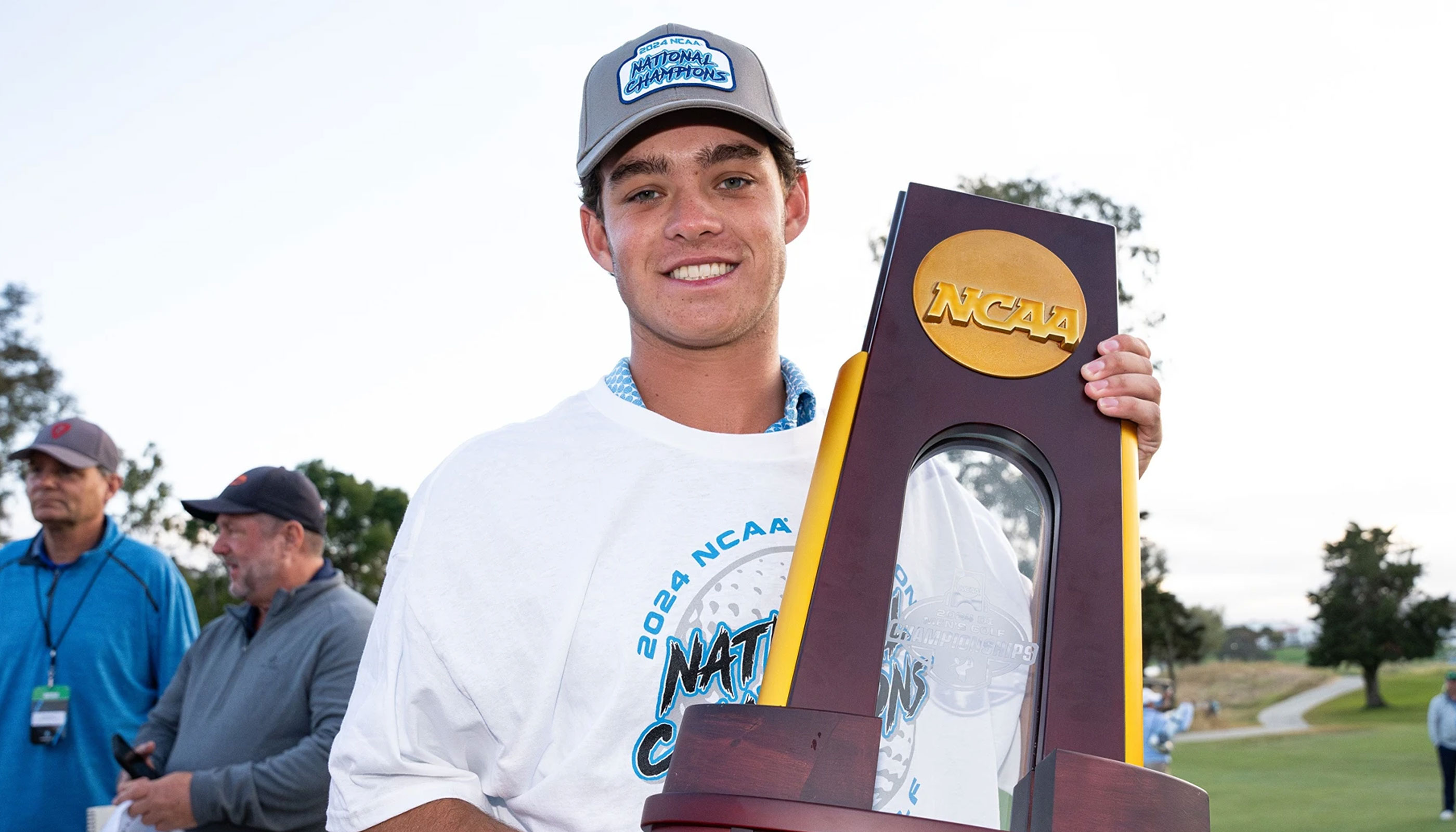

In honor of the NCAA Div. I Men’s National Championship wrapping up, today I’m tiering the best college golfers of the last 15 years.
In building the list, I focused primarily on consistency, sustained high-level play, signs of success at the professional level, and age. Age is a significant factor when evaluating college golfers. Some of these players reached incredible milestones at age 18 or 19, which is much more impressive than doing so at 22 or 23.
One clarification: this is a ranking of the best college golfers of the last 15 years, not the best amateur golfers. I tried to focus mostly on performance in college events, but I thought it would be silly to ignore results in high-level amateur championships or professional events they played while in college. Those results are factored in to an extent, too.
I also consulted a few people with expertise in the college golf space to make sure the rankings looked about right. Shoutout to Brentley Romine for his feedback. If you disagree with anything, please direct your complaints toward him.
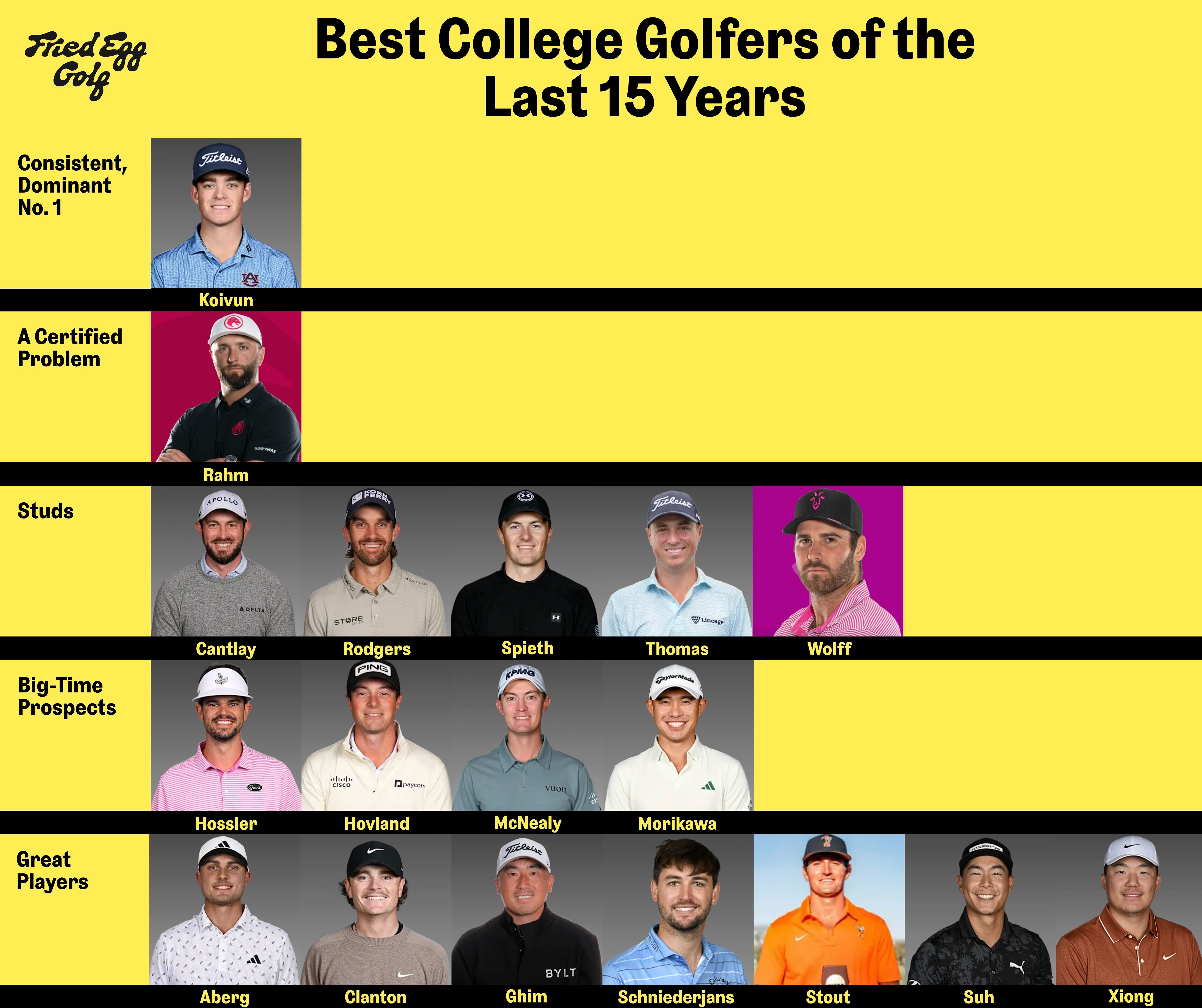
A Few Notes
At the risk of being a prisoner of the moment, I’m comfortable calling Jackson Koivun the best college golfer of the last 15 years. A two-time Haskins Award winner and three-time SEC individual champion, the Auburn junior is the best and most consistent college player we’ve seen in quite some time. He has a Scottie Scheffler-like inevitability to him, repeatedly climbing leaderboards and sometimes blowing fields out by five or more shots.
In 10 college starts this calendar year, Koivun won six times and never finished outside the top 10. The wins are impressive, but I am most impressed by his consistency. Every facet of his game is solid. In his match against Oklahoma State’s Preston Stout on Tuesday evening, Koivun chipped in on No. 12 and then nearly holed his approach shot on 13. Close followers of college golf insist he’s one of the best putters they’ve ever seen. When your skillset is that complete, the results tend to be consistent.
To date, Koivun has made nine starts in professional tournaments, with his four most recent appearances all resulting in top-12 finishes. And he just recently turned 21 years old. When you’re already contending in PGA Tour events at age 20, the sky is the limit. There is no such thing as a sure bet in golf, but when Koivun turns professional, I expect him to make an immediate impact and demonstrate success in major championships within his first 12 to 24 months as a pro. He is truly a phenomenal talent.
Jon Rahm was a certified problem. In his final spring at Arizona State, Rahm played 10 college events, won three times, captured both a PAC-12 Championship and his NCAA Regional, and never finished worse than T-10. At age 20, he finished T-5 at the WM Phoenix Open, a ridiculous showing for an amateur. Given both his consistency and the upside he showed in big tournaments, Rahm deserves to occupy the second tier by himself.
If anything, I almost put Patrick Cantlay higher. Cantlay was an incredible college golfer, especially in his first year. As a freshman at UCLA, he won three times, finished runner-up at the NCAA Championship, then shot 60 in the second round of the Travelers Championship after the college season at age 19. A month later, he finished T-9 at the Canadian Open. I will never understand why Cantlay has been as bad as he’s been in major championships as a professional, because the guy is loaded with talent and has been an outstanding player for a very long time.
It is kind of interesting that Scottie Scheffler, the most consistent world No. 1 since Tiger Woods, has no case to be on this graphic. His college career was fine, but he hardly won and didn’t accomplish nearly as much as the players included on this list.
When I started this exercise, I expected to come away more impressed by Ludvig Aberg’s college career and figured he would wind up higher on the list. Don’t get me wrong: Ludvig was a great college golfer. But he was also an older college golfer, and his biggest accomplishments came later than almost every other name listed. In his final semester, he won four times in seven college starts. That is obviously impressive, but he was also 23 years old. Other players on this graphic — Matthew Wolff, for example — produced similar stretches at much younger ages.
After going through this exercise, combined with some other thoughts I’ve been having as a close follower of professional golf, I think if you presented me with two high-level college prospects with similar résumés at the same age, I’d bet on the player with less speed off the tee to have the better professional career, provided he has enough athleticism to add some speed through training.
When you look at some of the players above who haven’t panned out as pros like they were expected to, they tend to be long hitters who never quite refined the rest of their games. Someone like Collin Morikawa, on the other hand, clearly had a refined game to post the consistent results he did without overwhelming golf courses with speed.
That makes me even more confident in Jackson Koivun’s potential. Clocking in around 175 mph ball speed, Koivun has enough in the tank to compete on the PGA Tour, but he is by no means a bomber. As he matures physically and trains, he will likely pick up some balls peed and perhaps settle around 180 mph a few years into his professional career, which is more than enough to win major championships given the strength of the rest of his game.




Surveying the 2026 Presidents Cup Landscape for Team USA
2026 Major Championship Grades
Weekly Update: Shinnecock Hills Setup, Miles Russell, and Ryder Cup Captains

The House That Lanny Wadkins Renovated
2026 PGA Championship Contenders
Weekly Update: Golfers as NBA Playoff Teams
Get full access to exclusive benefits from Fried Egg Golf
- Member-only content
- Community discussions forums
- Member-only experiences and early access to events