
Design Notebook: Ron Prichard Discusses an Imperiled Muni and the State of the Restoration Game
Plus: a Tom Doak-designed pond and other recent golf architect news


Hello, Fried Egg Golf Club members, and welcome back to Design Notebook, your monthly download on what’s happening in the golf architecture industry. I’m Garrett Morrison.
In this April edition of DN, I talk with architect Ron Prichard about his efforts to save a historic nine-holer in Baton Rouge and his long, distinguished career in golf course restoration.
But first, let’s dig into the biggest industry news from the past month:
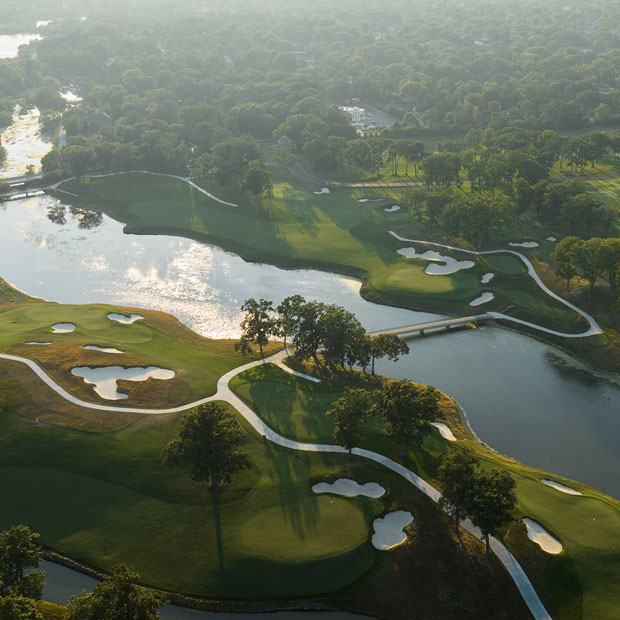
→ Yes, Tom Doak has actually been commissioned to add a water feature to a golf hole. Memorial Park Golf Course, redesigned by Tom Doak in 2019, acquitted itself well at the Chevron Championship last week. However, the small rectangular pool that winner Nelly Korda jumped into as part of her mandatory expression of joy was a temporary installation. Sometime before next year’s Chevron, Doak will reconfigure the 18th hole in order to incorporate a permanent green-side pond. This is obviously absurd; when the event formerly known as the Dinah Shore moved to Texas, it should have worked on developing new traditions instead of clinging to one that spontaneously arose in 1988 in Palm Springs. But I’m glad that Memorial Park and the tournament organizers have at least gone to the trouble of hiring Doak instead of trying to handle the surgery themselves. And for what it’s worth, I have confirmed that the widely shared rendering of the new hole was not created by Doak’s team; it was based on a sketch plan that he produced. I would expect certain details of the real thing to be different.
→ Royal Lytham & St. Annes will host the 2028 Open Championship. Hand up, I got this one wrong. In last July’s Design Notebook, I said I suspected that the 2012 Open would be the last ever held at Royal Lytham & St. Annes. “Bound on all sides by dense suburban development,” I wrote, a bit too confidently, “this charming, subtle links is simply too small for the Open’s current ambitions.” That’s still true, I think! RLSA is, by a significant margin, the most compact site on the modern rota. But the club is clearly taking pains to keep up: it recently opened up room for an up-to-date practice facility by shifting the 11th fairway about 50 yards south. (Mackenzie & Ebert did the work, naturally, and tossed in a few of their signature sand scrapes for good measure.)
→ Muirfield and Turnberry will not host the 2028 Open Championship. This might be the bigger and more surprising news than the RLSA selection. Muirfield and Turnberry were strong candidates for the 2028 slot, with Muirfield eliminating its men-only policy and shelling out for a Mackenzie & Ebert reno to appease the R&A, and Turnberry benefiting from its owner’s hard sell to UK Prime Minister Keir Starmer. For now, though, both remain on the sidelines. My own sense — for whatever it’s worth, given my previous dismissal of RLSA’s prospects — is that Muirfield remains a possibility for 2029, especially if the Scottish Open goes somewhere other than neighboring Renaissance Club that year. Turnberry, on the other hand, appears to be a long shot; R&A chief executive Mark Darbon has openly acknowledged that he is wary of the resort’s remoteness and logistical limitations.
→ Tobacco Road is adding a short course. North Carolina’s Tobacco Road, known for its irreverent Mike Strantz design, has begun construction on a 12-hole par-3 course called The Matchbox. The architects are Carlton Marshall Golf Design, a partnership between Justin Carlton and Lee Marshall, and Mark White, who was one of Tobacco Road’s original shapers. The Matchbox will be located near the 12th and 13th fairways of Strantz’s course, and will feature synthetic tees and greens. Golf Course Architecture has some color on the ideas behind the project.
→ Todd Eckenrode is renovating La Rinconada. Prolific restoration architect Todd Eckenrode has broken ground on a transformation of La Rinconada Country Club, a Bay Area club that dates back to 1927. Eckenrode plans to reroute numerous holes as well as completely reconstruct tees, bunkers, fairways, roughs, cart paths, and greens. The work will, according to a press release from Eckenrode’s office, reflect “an ‘old California’ aesthetic inspired by the Golden Age of Golf Design.”
→ Tepetonka will (finally) open this summer. After numerous delays due to weather and grow-in setbacks, Tepetonka, a destination club in Minnesota, will open this summer. The course, designed by OCM Golf, looks terrific.
→ Yale is back. Public tee times at Yale Golf Course, boasting modernized infrastructure and historically faithful golf features after Gil Hanse’s two-and-a-half-year renovation, start Tuesday, April 27 — otherwise known as today. If you get out there, let us know what you think.
→ The overhauled Patch makes its post-Masters debut. Augusta Municipal Golf Course, long known simply as “The Patch,” reopened to the public on April 15 after a full-property overhaul. The facility now features a main course renovated by Beau Welling and Tom Fazio, a short course designed by Tiger Woods’ firm, and spruced-up practice areas.
This Month's Design Notebook is Presented By
Today’s newsletter is brought to you by the Golf Course Superintendents Association of America.
The annual GCSAA Rounds 4 Research auction is officially live. Right now, there are more than 1,800 rounds available, and more are being added every day — from local courses in your backyard to hidden gems and bucket list opportunities you've always dreamed of. We have rounds up for grabs in all 50 states, Canada, and even one in Switzerland!
Whether you're buying a round for yourself or as a once-in-a-lifetime gift, the perfect round of golf is just one click away.
Q&A with Ron Prichard
Ron Prichard has a strong claim to being the first golf architect to practice golf course restoration. In 1983, five years before Rees Jones popularized the term “restoration” during a U.S. Open-week media blitz at the Country Club in Brookline, Prichard persuaded Texarkana Country Club in southwestern Arkansas to restore certain elements of its William Langford design. Since then, Prichard has led historically informed projects at dozens of courses, including the Beverly Country Club in Chicago, Cedar Rapids Country Club in Iowa, Portland Country Club in Maine, and Aronimink Country Club near Philadelphia. (Prichard’s work at Aronimink preceded Gil Hanse’s 2017 historical renovation.)
Recently, I called Ron at his Pennsylvania home to chat about a Louisiana municipal course he’s trying to save and the state of the industry niche that he helped to create.
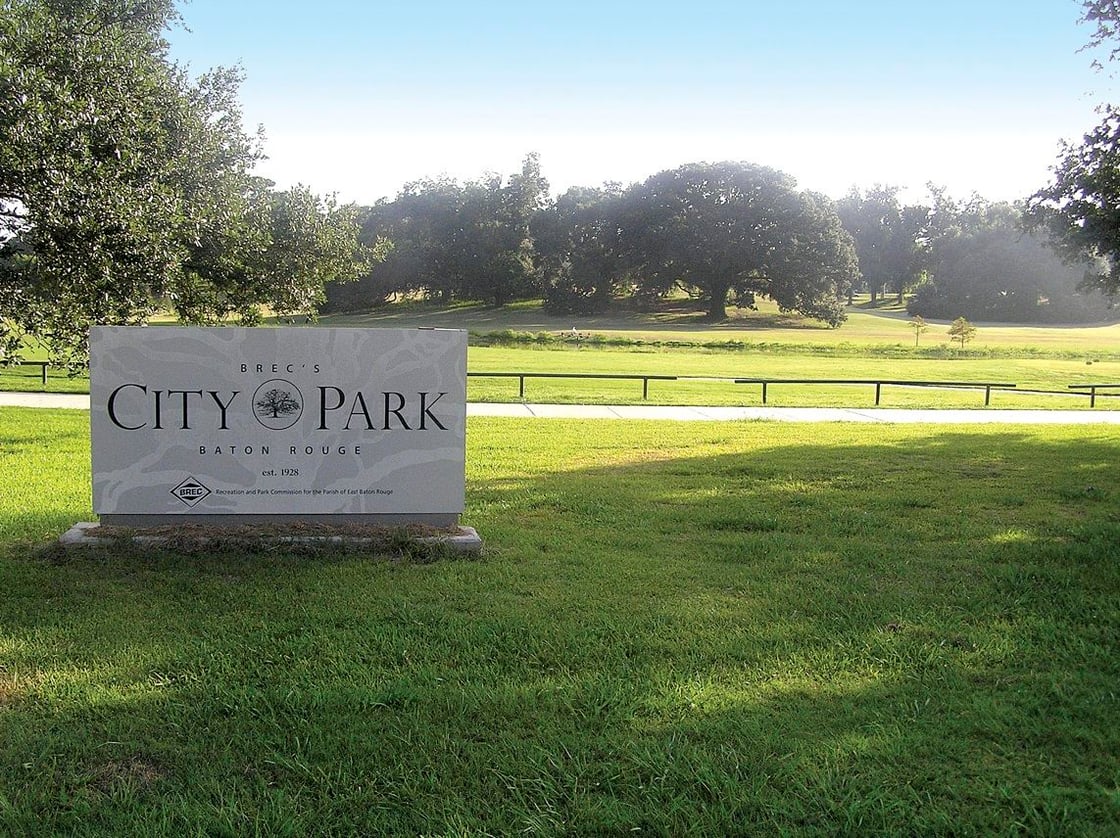
Garrett: Let’s start with something you’ve been working on in the public golf realm. What’s happening at City Park Golf Course in Baton Rouge, and how are you involved?
Ron: Well, City Park is basically a little nine-hole, Tom Bendelow-designed golf course. It’s near and dear to my heart. In recent years, a group of fairly well-heeled citizens has tried to convince the city to abandon the course and make substantial changes in the park, so it has more uses — like a dog park, for example. So their dogs can crap on the grass, I guess.
I first got involved about 20 years ago — I don't remember the exact dates. I got a call from a group called the Friends of City Park. They told me, "Ron, we wanted to just talk to you a little bit and see if maybe you could help us." So I flew down to Baton Rouge and spent a couple days there, looked at the golf course and had some great food and great company. It was so much fun. I love Louisiana.
I came back to Pennsylvania and did some drawings just for some very minor changes to the golf course, just to add a little safety in a couple places where we could back up a tee and make it so we weren't driving the ball right through the doglegs and stuff. Then I flew back down there and met with the Baton Rouge Recreational Department and the mayor. It was a pretty big meeting, open to any citizens who wanted to come. I talked to them about the value of that golf course from my point of view. And we were successful in beating off that challenge. I never charged them a nickel. They did change the golf course a little bit, along the lines of what I had told them to do, and it has stayed that way ever since.
About a year and a half ago, the same things popped up again. A firm out of Cambridge, Massachusetts, called Sasaki and Associates was hired to do what I like to call a “medicine-cabinet plan” [for City Park]. You just take everything in the medicine cabinet and try to stuff it on the piece of property. The golf course would pretty much be erased.
[Note: Friends of City Park has been advocating to preserve the golf course. You can find out more here.]
I kind of think Friends of City Park are going to win this thing, but I would like to see them get some honest exposure, and for people to know the value of this little Bendelow golf course.
Garrett: What’s the course like?
Ron: It's very simple. There's a minimum of bunkering, and even the putting surfaces are pretty simple. They've somewhat been mowed as ovals over time, but there are some distinguishing features like side slopes and so forth. The fill pads on several greens are nicely done. You can tell that somebody who knew what he was doing from a construction standpoint took the time to just not cut a circle on flat grass.
LSU is across Route 10, about two miles directly south of the park. So there's really a variety of people that use it, including a lot of college students.
Garrett: What's the next step in deciding what to do with the park?
Ron: I think the vote gathering will be revealed in June. And if they save the golf course, there's no reason to do anything else. It is a lovely little park. If they lose and the Sasaki plan is adopted, they’ll have to get in there with some earthmoving equipment, cut down some trees, and significantly change the horizontal character of that piece of ground.
***
Garrett: All right, let’s talk a little more generally about your career. You were one of the earliest architects to start doing something called “golf course restoration.” What made you want to start restoring golf courses?
Ron: First of all, I don't know if anybody else preceded me. I know Rees did a three-hole restoration of the Country Club in Brookline [before the 1988 U.S. Open]. Rees restored 3, 4, and 5, and that was it.
I went to college at Middlebury in Vermont, and I love the old colonial homes. The house I'm sitting in right now was built in 1760. One of the most detailed papers I ever did in college was about early colonial architecture. And I did all sorts of drawings in this paper that showed all the joinery, where they used pegs. They didn't use nails on a lot of these homes. They'd drill a hole and drive a peg in to hold the wooden beams together.
So I developed this understanding that there were some absolute extraordinary geniuses who lived before we did. And I didn't feel like that was something most people really understood.
If you just looked at golf architecture and who I worked for early in my career, Joe Finger was a chemical engineering graduate of MIT, and he was a very detailed golf architect. But he had never been to Scotland and Ireland and England, and he didn't really have any appreciation for that. Nor did Desmond Muirhead. I asked Desmond one time, "Desmond, how much influence did Ross and Tillinghast and Willie Park Jr. and Old Tom Morris and so forth have on you and your architectural efforts?" He said, "None.” And I said, "What do you mean?" He said, "My influences are [Jean] Arp, [Constantin] Brancusi, and [Henry] Moore." His infatuation was modern art.
All I could see was these guys going in with strong egos and erasing what I considered the great golf courses. My heart has always been in a different place.
Garrett: You've been in the golf course restoration business for a long time now. What is the one thing about it that has changed the most over the past 40 years?
Ron: What's changed is the handcuffs are off now. I put the handcuffs on my own wrists to discipline myself to try to impact the golf course in the most minimal fashion possible. I did get involved with the tree removal at the very outset, recognizing that we needed to get rid of, for example, most of the evergreens. A lot of the golf courses that I worked on, by the time I left, they had caught the fever.
I'll give you the example of Aronimink. If you look at my plan [from the 1990s], you can see where I recommended eliminating trees. It's not an overabundance. But then a new superintendent came in. The first time I met him was probably eight years or so after we had finished the restoration. He came up to me and introduced himself, and the first thing he said was, "Ron, you're going to notice that I limbed up a lot of the oak trees." I felt sick to my stomach right away, because, first of all, the limbs were some of the most magnificent parts of the trees at Aronimink. And shortly after this experimental process, the red oaks started to die because they got red oak blight. Now most of the great oaks are gone from Aronimink.

A lot of superintendents today are not learning from superintendents who have been at a golf course for many years. So they don't get good guidance from their mentors, and they come in and the first thing they start doing is adding bunker liners all over. To me, that’s a complete waste of money.
But this is how these professions change. I got into the golf course business 54 years ago. Now there are guys in their 30s maintaining these courses. I started in this business 20 years before they were even born.
***
Garrett: Let’s wrap up with a couple of lightning-round questions. What is your biggest golf architectural pet peeve?
Ron: Building lousy greens. I hate the term “green complex” because a “green” on a golf course is all the slopes, all the bunkers, the entire fill pad, and the putting surface on top. So building poorly sculpted putting surfaces is a tragedy.
I was reading the other day that Gil [Hanse] is building some greens here at Cobbs Creek completely with a bulldozer. And I've done that, but I still don't think that's the way you do it. I think you have to do a lot of handwork to get a green right. That was the old way and that should be the new way.
Garrett: What, to you, is the most underrated Donald Ross course?
Ron: That’s an easy one to answer. Charles River Country Club in West Newton, Massachusetts. It's a very natural golf course. It was shocking how fast they built the course, since it was all woods and a lot of rock. They could build golf courses pretty quickly back in the old days. All they did really was build bunkers, greens, and tees. They didn't move a lot of dirt in the fairways.
Garrett: Some of those courses Ross built in Boston on rocky terrain, like Essex County and Winchester and George Wright — I mean, Ross didn't build George Wright himself; Walter Irving Johnson did — but man, those are ambitious projects.
Ron: Amazing that they even had the guts to break ground.
Garrett: Exactly. All right, last question for you. If you could belong to just one club, what would it be?
Ron: I met Francis Ouimet at the Country Club in Brookline when I used to play in the Jacques Cup. And I really love that whole course. I love the history. So I guess that would be it.
When I first played in the Jacques Cup, I was in the Army. I came out of the golf shop, and there was an old man sitting on a bench outside the golf shop. This was in the 60s — I can't remember which year. And I sat and talked with him for a little while. Then I went down to the first tee and the pro at the club asked me, "Ron, do you know who that was that you were just talking to up at the golf shop?" I said, "No." He said, "Francis Ouimet."
And the crazy thing is, Garrett, I didn't even know who he was. I mean, that's how little I knew about golf at the time. I didn't know his history. I didn't know the history of the Country Club, but I really liked that golf course.
A Course We Photographed Recently
The New Course at St. Andrews (St. Andrews, Scotland) — designed by Old Tom Morris and Benjamin Hall Blyth in 1895
{{design-notebook-new-course-st-andrews}}
Underlined and Starred
“Fallaway greens can be a great way to make a flattish site more interesting. The lack of definition characteristic of flat sites makes gauging the location of the pin a challenge. Fallaway greens complicate the matter further because they offer only a limited view of the putting surface and require golfers to land shots well short to hold the green. Players are challenged to decipher the approach’s subtle contours, and how they relate to a green that is disappearing from sight. In effect, fallaway greens use a flat site’s lack of visual definition as a hazard.” -George Waters
Have a topic or question you'd like discussed in Design Notebook? Contact Garrett at garrett@thefriedegg.com.





Design Notebook: The Athletic Lights Up Yale, LinksDAO Sells Spey Bay
A Q&A with David Normoyle about Cypress Point
Design Notebook: Pebble Beach Changes and Medinah No. 3 Insights
A Q&A with Ashley Mead

Design Notebook: Lahinch Debrief and Saudi Arabia's Golf Struggles

A Q&A with Keith Cutten
Get full access to exclusive benefits from Fried Egg Golf
- Member-only content
- Community discussions forums
- Member-only experiences and early access to events