
Design Notebook: A Look at the New Maggie Hathaway
Plus: a Q&A with Tripp Davis and the latest golf architecture news

Greetings, Fried Egg Golf Club members, and welcome back to Design Notebook, your monthly rundown of what’s going on in the world of golf architecture. I’m Garrett Morrison.
In this March edition of DN, you’ll get a sneak preview of the Gil Hanse-redesigned Maggie Hathaway Golf Course, which is set to reopen this month. You will also hear from architect Tripp Davis about his latest design in Athens, Georgia, and his general thoughts on modern golf architecture.
First, though, let’s discuss the biggest pieces of industry news from the past month:
→ Pebble Beach reveals details of Hanse’s Spanish Bay plan: The Pebble Beach Company offered some insights into Gil Hanse’s upcoming renovation of Spanish Bay Golf Links on the Monterey Peninsula. Spanish Bay’s routing will remain largely unchanged, but Hanse will create a new par 3 near the coastline, expand greens, widen fairways, eliminate containment mounding, and generally give the course’s built features a more natural, low-profile appearance.
→ Yale Golf Course announces reopening: In other Gil Hanse news, Yale Golf Course will reopen on April 28 after a years-long, Hanse-led restoration. The university published several photos of the refurbished course, and the first thing that hits my eye is how much better the bunkers and greens fit the scale of the terrain. Yale is one of the greatest works of American golf architecture, and I believe this project will confirm as much.
→ The Keisers boost another Madison muni: The parks superintendent in Madison, Wisconsin, told a local news outlet that Michael and Jocelyn Keiser will fund a $4.5- to $5-million transformation of Odana Hills Golf Course, a municipal facility on the city’s west side. Construction is expected to begin this fall, with a reopening projected for 2028. The Keisers also underwrote the recent redesign of the Glen Golf Park, a neighborhood nine-holer about five minutes from Odana Hills.
→ The USGA adds some cool venues: The USGA announced that the 2045 U.S. Open will take place at Inverness Club in Toledo, Ohio, a Donald Ross design that has undergone extensive renovation work by Andrew Green in recent years. Additionally, the USGA revealed that National Golf Links of America, Cypress Point Club, and Seminole Golf Club will host Walker Cups and Curtis Cups in the 2040s and 50s. Ah, to be a member of the USGA’s championship setup team!
→ Local group sues Trump administration over East Potomac incursions: The D.C. Preservation League and two local residents have sued the federal government over its recent actions at East Potomac Golf Links. For background on this story, check out my January appearance on Pablo Torre Finds Out as well as Joel Beall’s excellent deep dive for Golf Digest.
→ TPC Sawgrass tweaks 12th hole (again): Scot Sherman, the lead designer at Love Golf Design, told me on the latest episode of Designing Golf that the much-tinkered-with 12th hole at TPC Sawgrass has been tinkered with again. The lake on the left side of the drivable par 4 has been extended back toward the tee, and a bunker has been added on the right side of the fairway. Sherman acknowledges that these changes were made partly for experimental purposes; he expects the hole will be altered further when he and Love Golf Design carry out a comprehensive renovation of the Stadium Course in 2028. Nonetheless, it should be interesting how the adjustments to No. 12 work out at this week’s Players Championship.
A Tour of the Renovated Maggie Hathaway
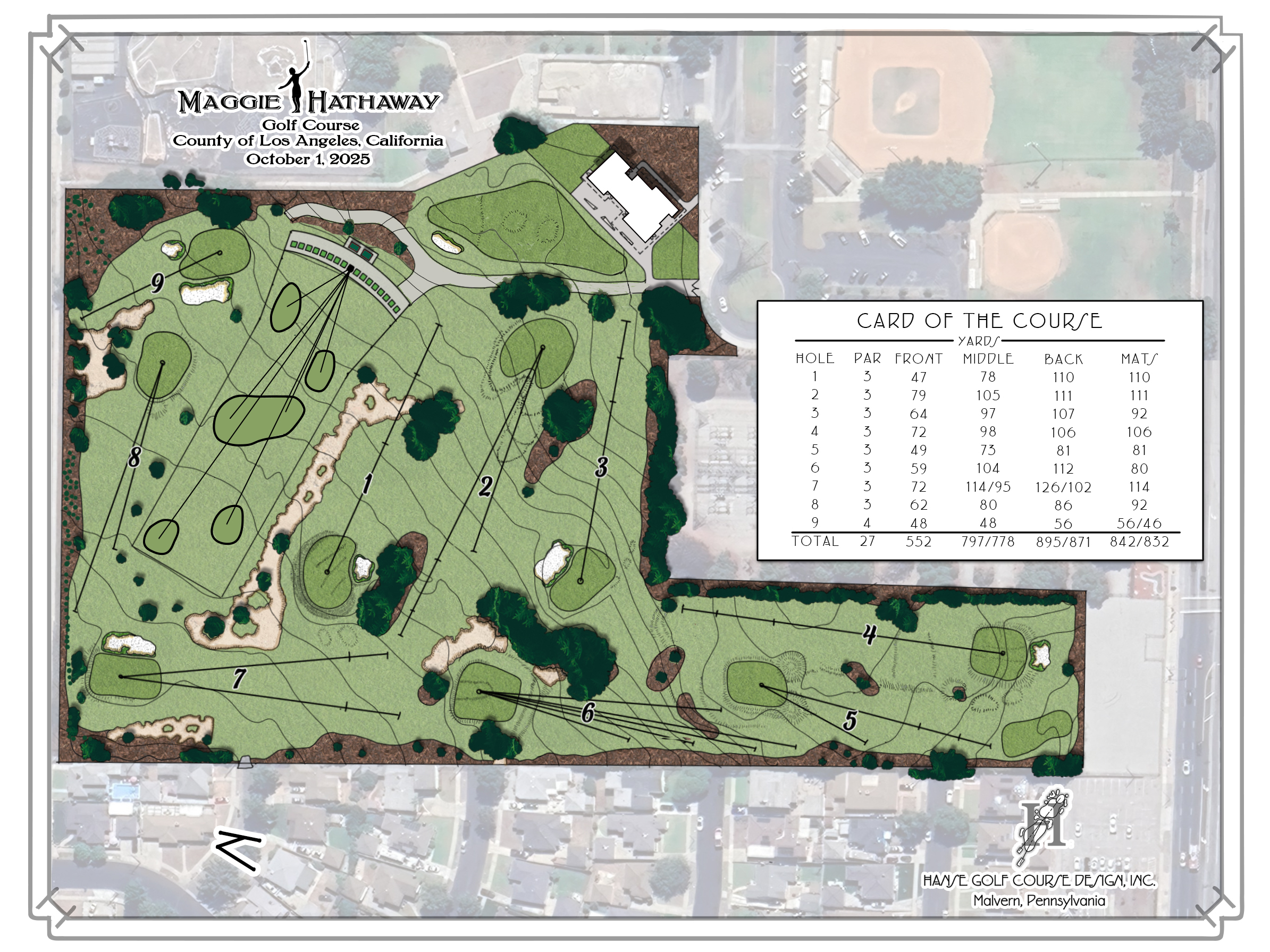
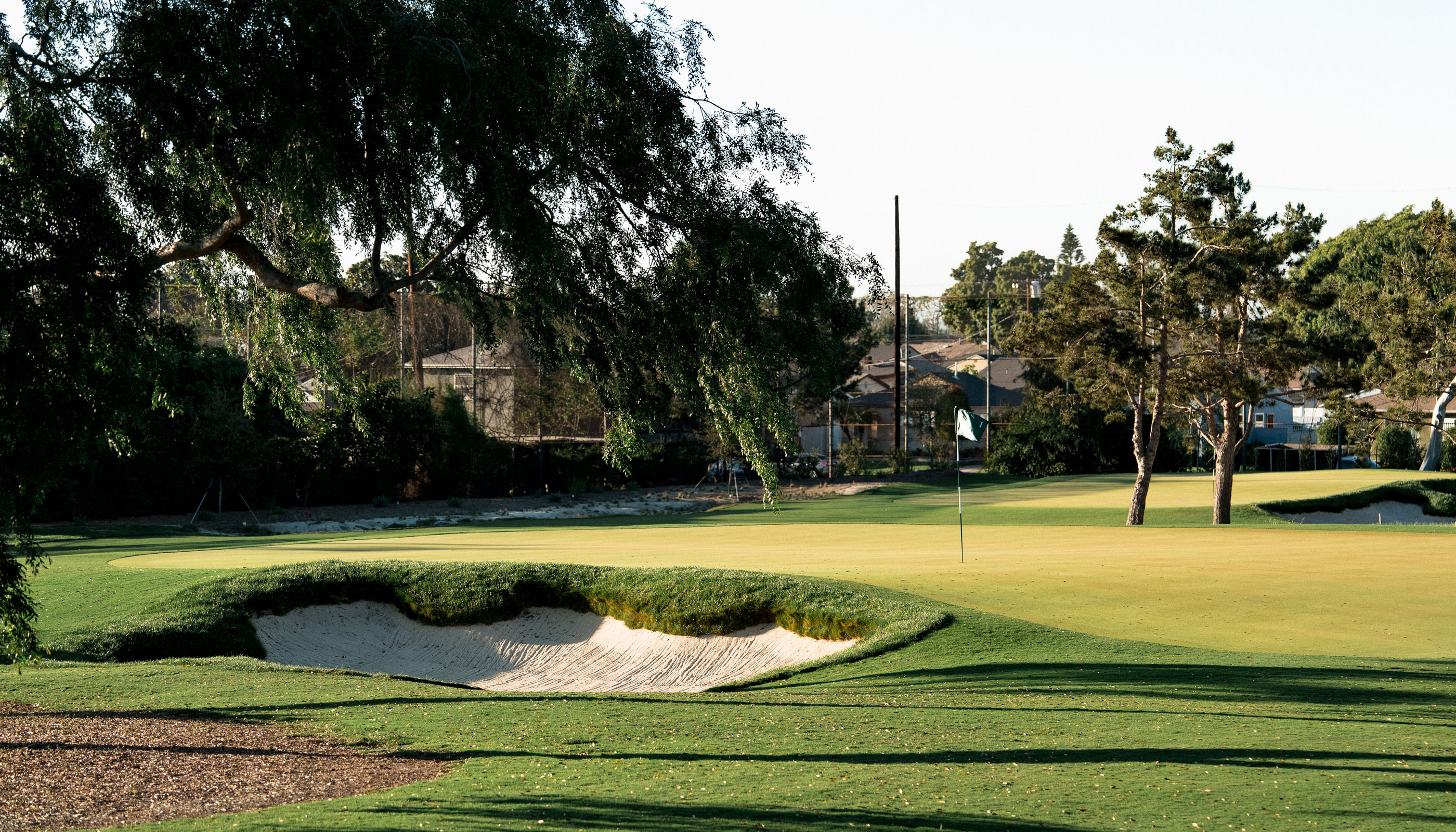
On March 28, Maggie Hathaway Golf Course, a 12-acre island of green in South Central Los Angeles, will reopen to the public after a makeover by Gil Hanse. The green fee will be $9.
Yes, $9.
My colleagues Cameron Hurdus and Parker Tolifson got to visit the course last week. As they played, they chatted with Hanse Golf Course Design’s Tommy Naccarato, who gave insights into the architectural influences behind each hole. Here’s a quick photo tour:
No. 1, 110 yards (inspiration: the Road green at St. Andrews):
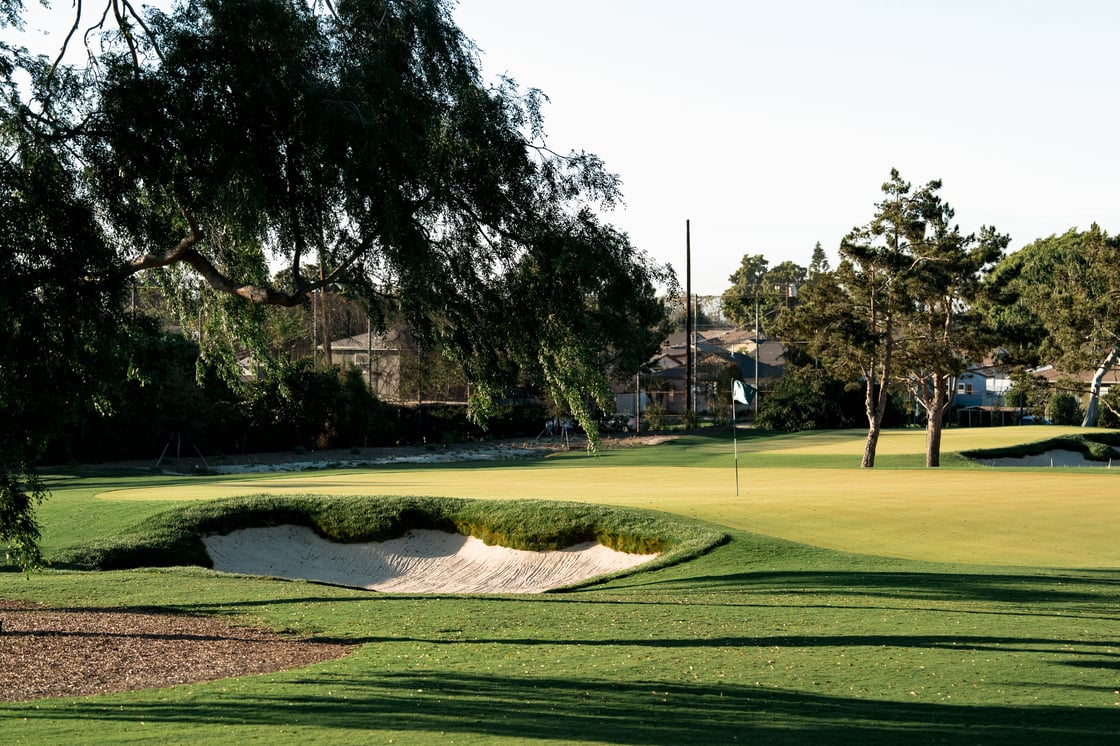
No. 2, 111 yards (inspiration: George Thomas’s various molar-shaped greens, such as No. 1 at Riviera and No. 3 at LACC North):
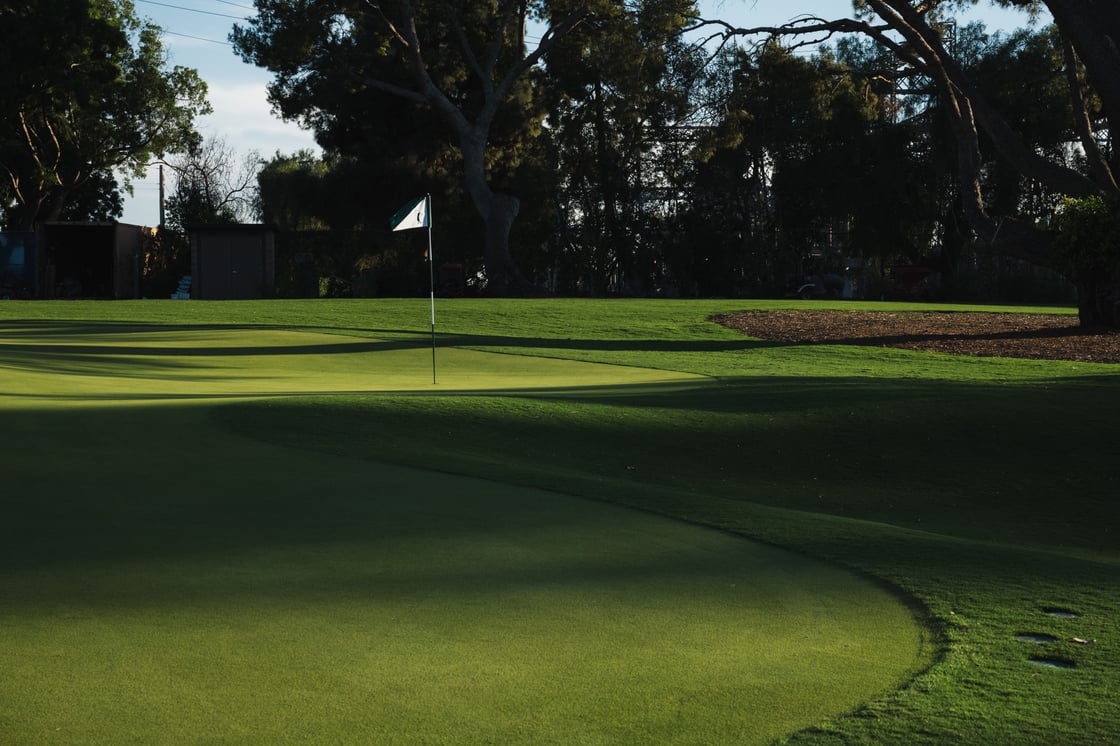
No. 3, 107 yards (inspiration: the reverse Redan template):
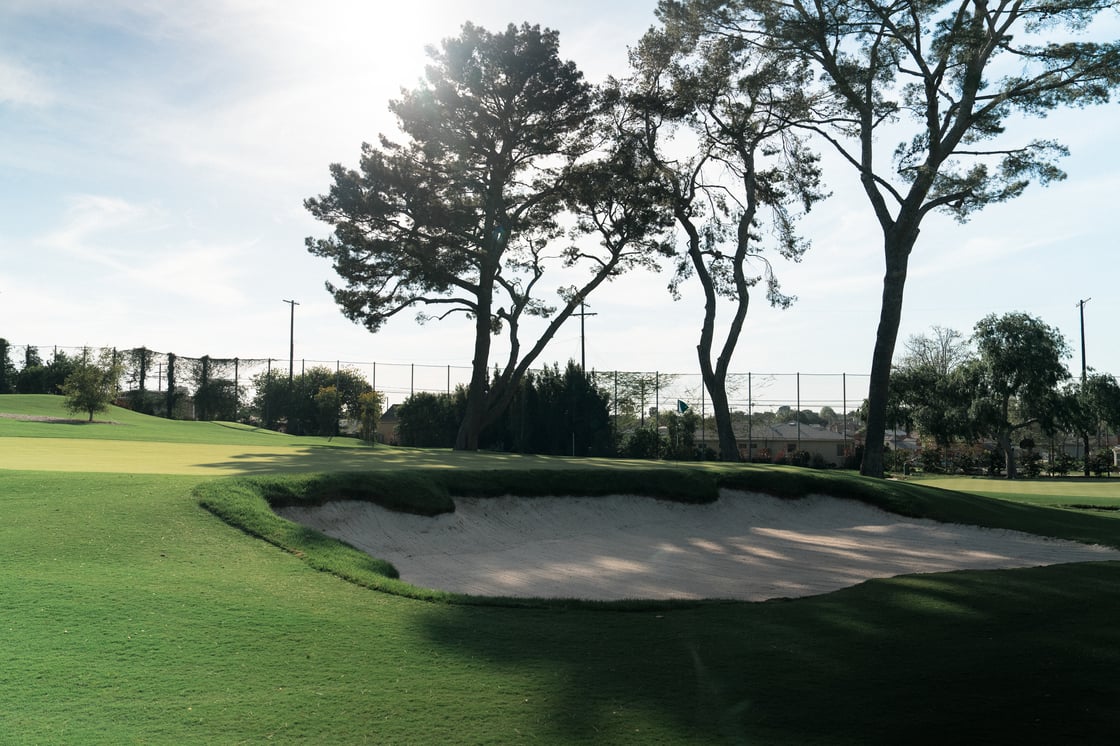
No. 4, 106 yards (inspiration: the Double Plateau template):
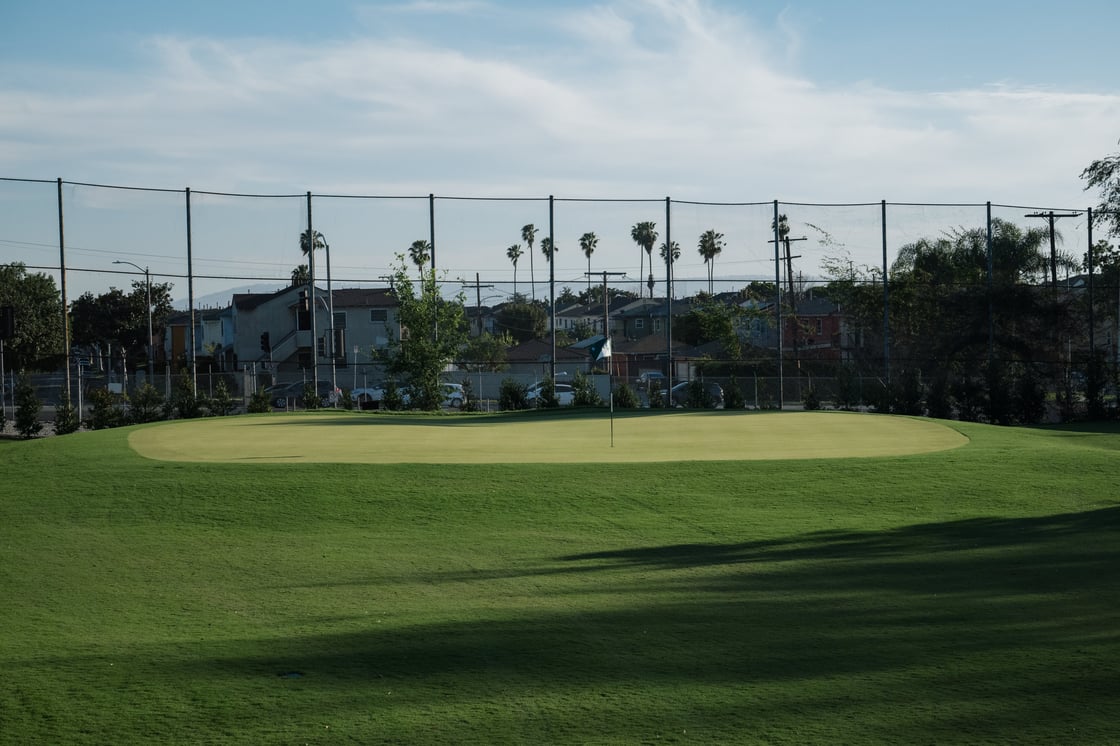
No. 5, 81 yards (inspiration: the “Mae West” mounding on the 12th hole at Bel-Air):

No. 6, 112 yards (inspiration: a Chandler Egan-designed green at Indian Canyon in Spokane, Washington):
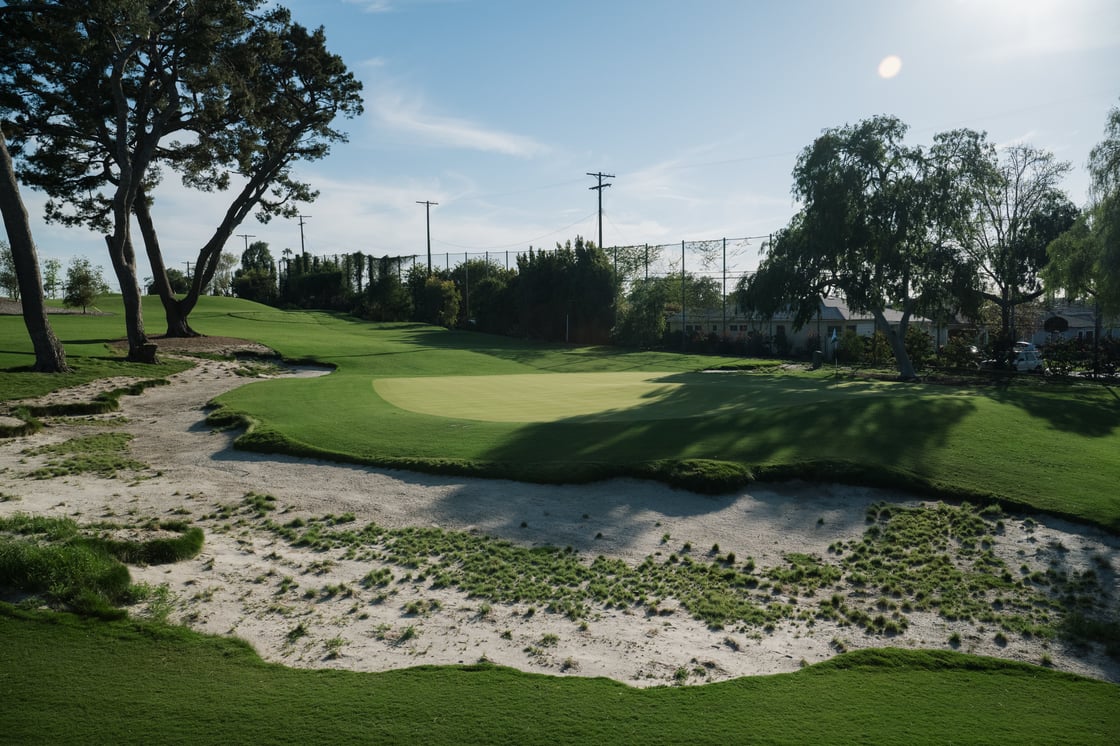
No. 7, 126 yards (inspiration: A.W. Tillinghast’s green designs at Winged Foot):
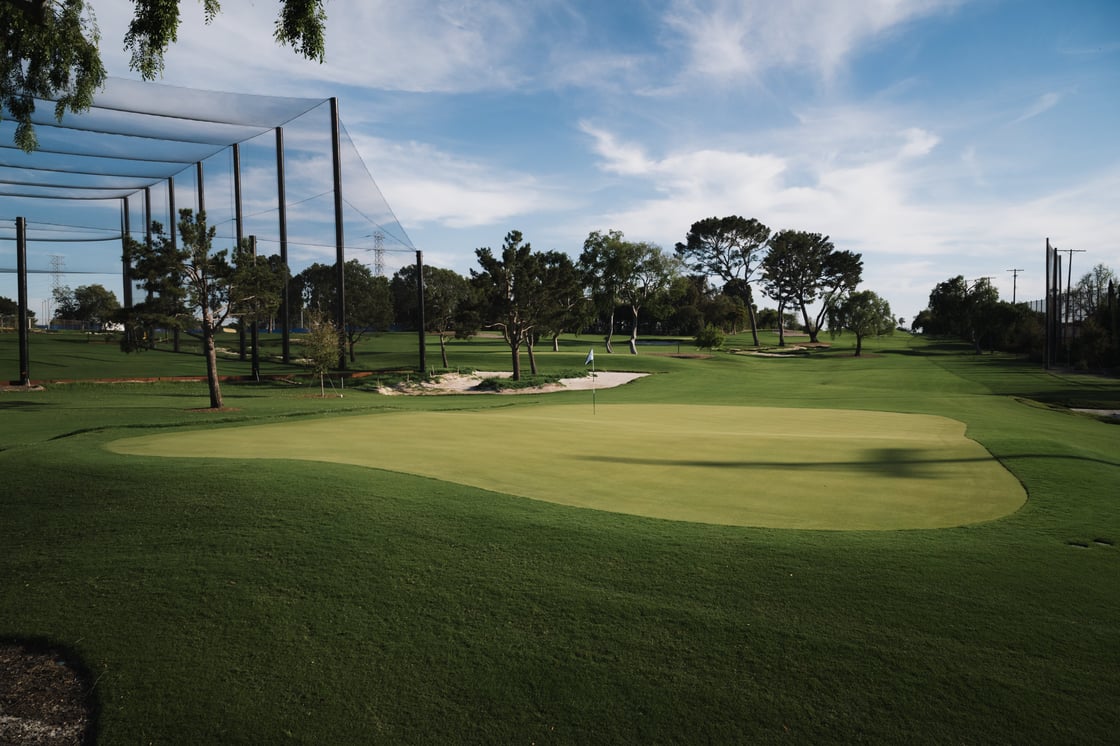
No. 8, 86 yards (inspiration: a conventional Redan template):

No. 9, 56 yards (inspiration: the “Devil’s A**hole” bunker at Pine Valley):
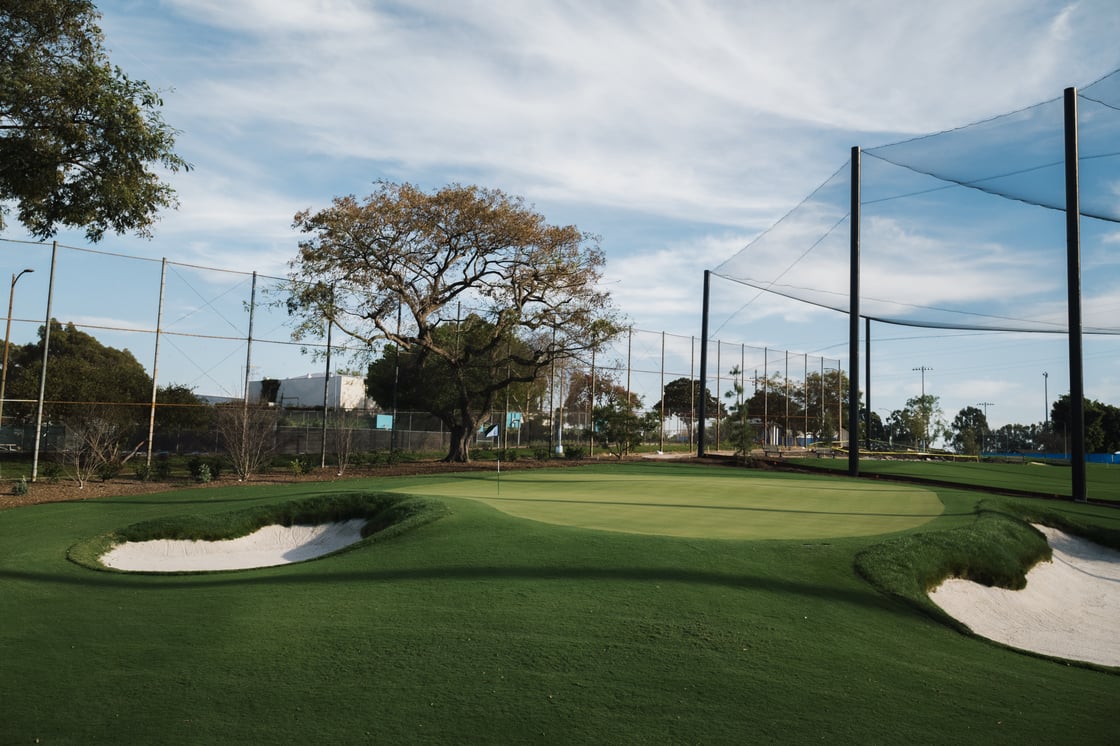
Looks fantastic, right? For $9, I’m not sure you can beat it. And more importantly, the course will continue to provide a home for young golfers in South Central L.A., just as it has since it opened in 1962.
But I do hope that L.A. County, which owns the facility, has its financial house in order. The total budget for the project is an eye-popping $21 million, about half of which will be spent on the construction of a new clubhouse in the coming years. Fortunately, much of the funding comes from private donations. Plus, Hanse Golf Course Design provided its services pro bono, and the course renovation itself, which involved a wholesale replacement of the course’s drainage and irrigation systems, finished under budget.
Still, clubhouse construction projects are notorious money pits. Perhaps adults from out of town could be charged a higher green fee? After all, the course’s expenses won’t end when the bulldozers leave. Ongoing maintenance and operations will need funding, too.
Those worries aside, this is one of the most impressive municipal golf projects of the past decade. Kudos to Hanse and Naccarato for donating their time and effort, and long live the Maggie.
This Month's Design Notebook is Presented By
We’re excited to introduce our new partner, the Golf Course Superintendents Association of America, as the sponsor of our Design Notebook series.
GCSAA supports more than 21 thousand members worldwide — from superintendents and equipment managers to students and educators. Celebrating its 100th anniversary this year, GCSAA continues to ensure that its members are at the forefront of research, education, innovation, and advocacy through a range of programs and services.
In April, we’ll share information on one of GCSAA’s big programs, Rounds 4 Research, where you can bid on more than 2,000 rounds at some of the most exclusive and well-known courses in America. The Rounds 4 Research program addresses a critical funding shortage for ongoing, university-based agronomic research, education, advocacy programs, and course operations. You can help foster sustainability with a donation or by bidding on rounds during the online auction that will begin next month.
A Q&A with Tripp Davis
Tripp Davis has quietly compiled one of the most complete résumés in the golf architecture industry over the past 30 years. After winning a national championship with the University of Oklahoma golf team in 1989, Davis earned a degree in landscape architecture and rode the golf construction boom to several new-build commissions in the late 1990s and early 2000s. As business slowed down in the 2010s, he established himself as a capable restoration and renovation architect, leading master plans at Herbert Strong’s Engineers Country Club and Perry Maxwell’s Oklahoma Golf and Country Club. Today, with golf development surging again, he’s as busy as ever.
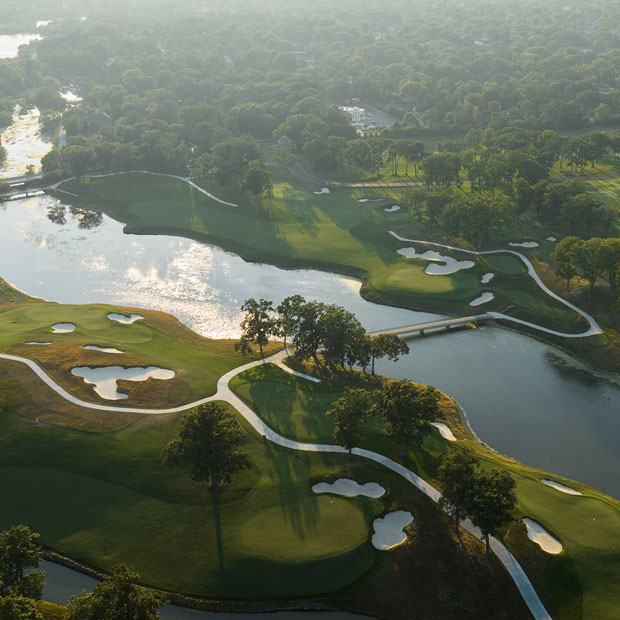
Recently, I called Davis to chat about The Rose, his soon-to-be-finished new build in Athens, Georgia. I also got his takes on modern golf architecture, strategic angles, green design, and where he’d like to go on a golf trip (if he had time for such activities). Here’s our conversation, edited and condensed for readability:
Garrett: First of all, tell me about the project at The Rose.
Tripp: The Rose is the brainchild of Nick Cassini and his brother Dimitri Cassini. Nick was a two-time All-American at Georgia. He and his brother ended up starting a real estate marketing company, and they came up with the idea of building a golf course that catered to University of Georgia alumni in Athens.
It's really patterned to be a small private club. It's about 15 minutes from the football stadium, which is the most important thing.
We went and looked at three pieces of ground. And the one we ended up with just had a lot of natural qualities to it that I thought we could make something from.
Garrett: What’s the property like? And what made you choose it over the other ones?
Tripp: Well, the first site we looked at was only 180 acres. It was pretty hilly, pretty rocky. And the other site we didn't choose was relatively flat; it was pretty boring. So when we walked the property we ended up with, you could just get a sense that there was really cool movement.
Garrett: What's the architectural vision for the course?
Tripp: You had this 45-foot incline going up to the clubhouse, and the way that the ninth hole kind of fit back into the ground, it had this almost Shinnecock [Hills] look to it. And we thought, well, we want to do something that feels old and classic, like Shinnecock. From a challenge standpoint, [the Cassinis] wanted the golf course to be capable of being a really good test of golf. A lot of their membership is going to be fairly good players.
The other thing they wanted was to have it walkable, which made it interesting when we were routing the golf course. We had to — what I called at the time — ”follow the contour lines.”
The routing just fell right in place. Including the irrigation, we moved about 180,000 cubic yards of dirt, and the irrigation lake was 70,000 of that. I tell everybody I'm going to put a sign on the front door that says, "We didn't move as much dirt as you think we did!”
Garrett: What does it mean to “follow the contour lines”?
Tripp: Let's say that your tee is at 800 [feet] and the best green location is going to be somewhere near 800. Follow that 800 contour line to some extent. It doesn't necessarily have to be within the middle of the playing corridor, but if you follow that 800 contour line from tee to green as best you can, it's going to make the golf course more walkable because you're walking on that contour line.
Garrett: I understand that Bubba Watson has been involved in the formation of the club. Was he involved in the design process at all?
Tripp: Yeah, early on. He was one of the original 25 founder members, and he came up and walked the routing after we had cleared some center lines, and then a couple of times after that.
One day in particular, he and I sat down at the University of Georgia's golf team building with my preliminary grading and strategy plan, and just went through every hole.
On the 15th hole, he made probably his most profound contribution. Fifteen is a short par 4. From the very back tee, it's about 360. There's a bunker that's just short of the green at about 290, and if you carry that, it kicks forward and can run up into the green. We had some width down the right side, and then on the left side, there's an old dry creek bed that we have filled with rough and a little bit of native grass. If you hit it down the left-hand side, you can only hit it about 260, but down the right-hand side, you can go farther. Playing it down the right side gives you a better angle into left-side pins on certain occasions. But Bubba felt like there wasn't enough room up there to make it meaningful, so he said, "Let's make it easier to drive it down the right-hand side." And so we ended up expanding the fairway about 20 more yards down the right side out there at the landing area.
Garrett: When is the course opening?
Tripp: Right now we’re targeting a grand opening sometime early September.
Garrett: All right, a few general questions for you. What's something that you'd like to see more of in modern golf architecture?
Tripp: The first thing that comes to mind to me is angles. I hear a lot of people saying that angles don't matter anymore and I don't agree with that.
If you design the greens well so that you can what I call “paint the edges” with pin locations — get pin locations within that eight-and-a-half, nine, 10-foot range from the edge of the green, protected on an angle with a bunker or grass slopes — you can make it difficult to get the ball to that spot if you're coming from the wrong angle. And then you can give the ability to use the ground to get balls to those hole locations from the proper angle. That's something I'd like to see more of, and something we try to do.
Garrett: You’re an accomplished amateur player yourself, so you can offer an interesting perspective here. How do you make angles matter for good players? They hit it so high and stop it so quickly, and they hit it so far off the tee, that if it's not firm and fast, if it's not windy, it becomes really difficult to do anything through architecture.
Tripp: That's where green design comes into play. If you hit it 25, 30 feet, you've got to have a putt that makes it difficult to match up line and speed.
Putting used to be the strength of my game, and severe contours in greens didn't affect me. It was the putts that changed line and speed in subtle ways that were more difficult. The more subtle you get with those things, the more challenging it is for good putters to make putts.
I'm not as worried about how far under par you go, as long as you're having to hit shots that challenge you. And I do think angles present the best challenge because, void of angles, it's even an easier target contest.
I'm getting more and more away from the idea that bunkering is the answer to create angles. I think the way that we're maintaining bunkers today, they're playing surfaces. For better players, their up-and-down percentage out of bunkers is better than it is if it’s a short-cut area or rough. And it’s exactly the opposite for your 10 to 15 handicap. Same goes for fairway bunkers. So if you can create pin locations that paint the edges, the hazard doesn't necessarily have to be something you carry over. It can be how the green reacts if you miss it on the short side.
Garrett: Let’s do a lightning round — I've got five quick questions for you. What's a course, new or old, that you saw recently that impressed you?
Tripp: La Costa North. I loved that.
Garrett: Gil Hanse recently did a redesign there.
Tripp: Yeah. We're going to do the South Course at La Costa maybe next year. The North Course is really good. A lot of what I was just talking about — Gil got a little more extreme in places with how a ball could release away from a green. I was very impressed with that.
Garrett: If you could choose any green in the world to put in your backyard, what green would it be?
Tripp: Bunkers included?
Garrett: Sure.
Tripp: This is really kind of off the radar screen, but the 15th green at Spring Lake in New Jersey, a Tillinghast course. I mean, if you wanted a green in your backyard to practice putting and work on all the shots around the green, that's one of my favorites.
Garrett: Do you have a big golf architectural pet peeve? Just something that you see on a course that immediately makes you angry?
Tripp: Cart paths. When you're working on clay soil and there's 25,000 rounds a year, it's hard to not do them, but I wish we walked.
Garrett: Me too. So you've worked with a lot of green committees over the years. If you were to require all members of a green committee to read one book before undertaking a course renovation, what would it be?
Tripp: I've actually given Spirit of St. Andrews [by Alister MacKenzie] to a few people. A lot of the principles still apply, and it actually goes a little bit into how green committees should relate with a project.
Garrett: As I recall, MacKenzie says some disparaging things about green committees in the book.
Tripp: Which is good because it's not coming from me.
Garrett: Exactly. Finally, if you could go on one five-day golf trip, where would you go?
Tripp: I would go to Australia. I've only been down there once and I played everything you would think you would want to play, but I could spend a month on Kingston Heath alone. I like it better than Royal Melbourne. Royal Melbourne is wonderful, but Kingston Heath — the complexities in that golf course are just extraordinary. When I talk about those subtleties and how balls can release off edges of greens, there are angles at Kingston Heath that are created strictly because of slope.
Garrett: Rory McIlroy got some flak recently for saying that he liked Kingston Heath better than Royal Melbourne. I don't know that I agree with him, but it's a lot closer than most people think.
Tripp: I’d put it in my top five.
Garrett: I can see that. It's an incredible golf course.
A Course We Photographed Recently
Chartiers Country Club (Pittsburgh, PA) — designed by Willie Park, Jr., in 1925
{{design-notebook-chartiers-gallery}}
Underlined and Starred
“Hazards should not be built solely with the idea of penalizing bad play, but with the object of encouraging thoughtful golf and of rewarding the player who possesses the ability to play a variety of strokes with each club. John L. Low has said that no hazard is unfair wherever placed, and while this is true, a hazard is obviously the wrong place to play one’s shot, yet the proper placing of hazards will bring about very much more interesting golf than a haphazard arrangement of them is apt to do.” –William Langford
Have a topic or question you'd like discussed in Design Notebook? Contact Garrett at garrett@thefriedegg.com.





Design Notebook: The Athletic Lights Up Yale, LinksDAO Sells Spey Bay
A Q&A with David Normoyle about Cypress Point
Design Notebook: Pebble Beach Changes and Medinah No. 3 Insights
A Q&A with Ashley Mead

Design Notebook: Lahinch Debrief and Saudi Arabia's Golf Struggles

A Q&A with Keith Cutten
Get full access to exclusive benefits from Fried Egg Golf
- Member-only content
- Community discussions forums
- Member-only experiences and early access to events