
Golf Needs More Good Stewards
It’s not that hard, in the end, to make someone feel welcome

There is a lot of research that suggests the Internet has distorted our ability to process the passage of time. Hours can feel like minutes when you’re doomscrolling, and on the flip side, any controversy that commands our attention today can feel like it was months ago after a week goes by.
It was only three weeks ago that Good Good released their ill-conceived driver commercial that was trying to parody the psychological horror film “Obsession,” but it somehow feels like it happened half a lifetime ago. The week before the ad came out, Good Good CEO Matt Kendrick was talking about Good Good’s plans to build a global brand that would last forever. In the short time since the ad went live, Kendrick and several other people were let go from their jobs, Callaway severed its partnership with the brand, the Golf Channel postponed its launch of Big Break x Good Good for at least a year, Dicks Sporting Goods and Golf Galaxy removed Good Good merch from stores, and the PGA Tour and Good Good mutually decided (at least according to the press release) they would no longer stage a fall series event together.
It’s been quite the fall. Forget global dominance, it will be a hell of a comeback story if Good Good can even make it back to a space they previously occupied.
As with most controversies, there has been no shortage of bluster and anger and things to argue about in the aftermath. Did it make you soft or woke if you were upset about an ad that seemed to joke about domestic violence? Did Callaway fail Good Good, or did Good Good fail Callaway? Did Garrett Clark’s eight-minute apology video come across as sincere or unprofessional? The ad now felt secondary to the argument, which had evolved into a sport of its own.
If you’re a regular reader of this newsletter, you may recall I thought the ad was dumb, but I also argued that I don’t believe it was intended to do harm. It was a team of creators who were out of their depth. Intent ought to matter when we decide who deserves the opportunity to be forgiven for their mistakes. But I also recognize that I’m a man, and at some point, I ought to acknowledge that none of this affects me the way it does women in golf. Maybe I should listen to more women working in the game before I fired off yet another take?
Hally Leadbetter has grown up in golf. Her father, David, was Nick Faldo’s swing coach, and he also worked with Greg Norman, Nick Price, Ernie Els, and Lydia Ko (among others) as they rose to No. 1 in the world. Hally has been working in various aspects of golf media since she played the game in college. We’ve played golf together, shared plenty of press rooms, and we’ve always been friendly. I respect her perspective. When the Good Good ad came out, she clearly wanted to take some time to think about what she wanted to say, and so this week when she released a video about the controversy, I immediately clicked on it.
“What really stood out to me in the conversations I've been having with women is it really isn’t about one advertisement at all,” Leadbetter said. “What they described and what resonated with me was a familiar feeling. You see, the ad was not an anomaly for us as women. It was the most recent and public version of something we navigate constantly — the inappropriate comment, the joke that lands at our expense, the assumption that we belong somewhere adjacent to the room rather than in it. What made the moment land so hard wasn’t so much the ad itself being so shocking and bad, but that the lack of acknowledgement, the absence of remorse for the impact that it had was, no pun intended, par for the course. It was pretty routine.”
Her comments landed with me because they’re grounded in a truth I see regularly. Plenty of men have zero interest in making women feel welcome in golf. They roll their eyes, they grumble under their breath when they see women on the tee sheet, and they make snide comments to their friends when they’re looking for a cheap laugh. A week ago, I waved down a marshal at a public course in Maryland to see if he might encourage the group in front of us to pick up their pace of play. The marshal attempted to blame the backup on a group of women who he said loved to “clog up the course every Sunday.” I point out that the boys in front of us — a group of dudes in their 20s who were riding carts and taking 10 practice swings before every shot — had two open holes ahead of them. He smirked and drove away.
I encounter this kind of attitude from time to time when I take my 14-year-old daughter Keegan out to play. I don’t know how good of a player she’ll eventually become, but she’s already better than most of the men I know, regularly breaking 80 from the forward tees. (I’ve learned we do not call them the women’s tees; besides, half the men I know ought to be playing from them.) She even shot 69 in a tournament this summer and my heart almost burst as she signed her scorecard. She’s still a work in progress, but she made the varsity this year as a high school freshman. I share this not to brag, but because I never grow tired of encouraging every dad out there to embrace the idea of playing golf with their daughters from a young age. It’s not always perfect — there are still plenty of tough rounds that end in tears — but the rewards are infinite.
As good as her swing is, we still receive our share of unwelcome looks when we roll up to the first tee, the same kind Leadbetter was talking about. It can feel dispiriting. I can see how she’d easily be discouraged or intimidated if I wasn’t there.
But it’s not true of everyone, and that’s important to call out too.
I want to end this piece with an uplifting story: Over Labor Day weekend, my family traveled to Connecticut to visit my wife’s family. My daughter and I wanted to get out and play some golf, but we weren’t sure about snagging a tee time on a busy holiday weekend. When my friend Brian heard about our dilemma, he immediately booked us an early morning spot at his country club, Silo Point, in Southbury. He couldn’t play with us (he was out of town visiting friends), but he assured me that one of his friends would host and we’d feel welcomed by the membership.
It’s easy to feel skeptical walking into a situation like this. It’s a lot like showing up to a blind date. I know plenty of country clubs (and have even been a member at one) where the membership would be livid if they saw a 14-year-old girl on the tee sheet at 9 a.m. But Brian was right. The members at Silo Point were extremely warm to us. His friend Jack was a great chaperone, and as we played the front nine, word began to spread throughout the property that a skinny teenage girl with a pretty swing was bombing drives and making birdies. When we arrived at the 18th hole, I noticed that a group of five carts was parked directly behind the green. A group of men in their 40s, 50s, and 60s was waiting for us to finish, eagerly anticipating seeing her approach. My Dad Anxiety immediately kicked in. If Keegan shanked a shot in front of this impromptu crowd — a real possibility — she’d be humiliated. I’d be consoling her the entire ride home.
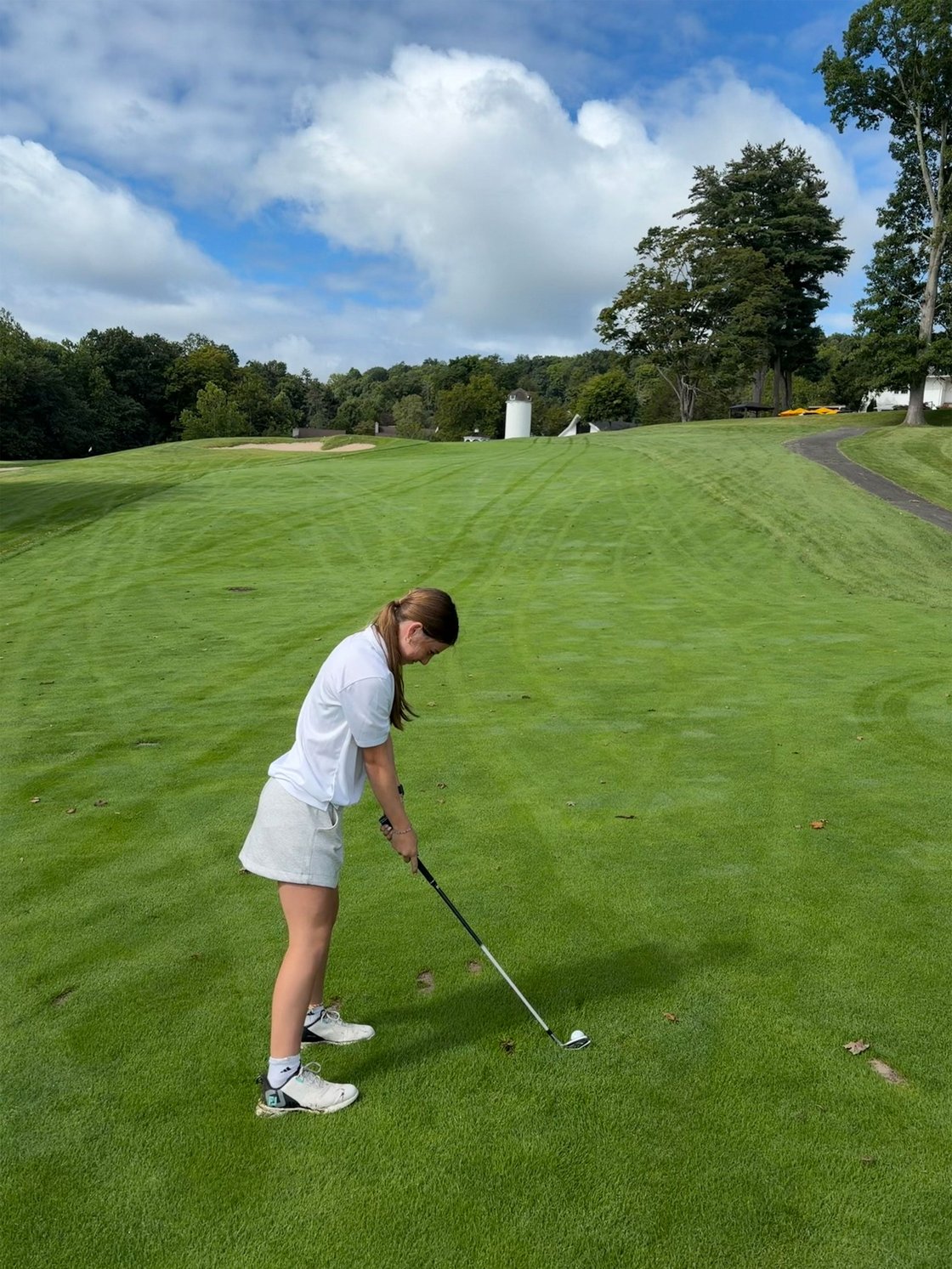
But Keegan did not shank it. I am trying to grow accustomed to witnessing these wonders, but they are still a thrill whenever they unfold. She flushed her approach, finishing her swing with a cocky little club twirl. I watched the ball climb into the sky and then tumble back to earth, landing 10 feet from a difficult pin located on the green’s upper shelf.
The Silo Point members behind the green erupted like it was the Solheim Cup. The roar sounded like an explosion. A few minutes later, when she rolled in the birdie putt, they erupted again. It sounded like she’d just won a major. They weren’t doing it for my benefit. None of them was aware of my place in the golf ecosystem. They just saw something rare and wanted to celebrate it. I think she grinned the entire drive home.
It’s not that hard, in the end, to make someone feel welcome in the game.
You just have to want it first.


Fried Egg Golf Book Club: The Links by Robert Hunter
Reimagining Golf As College Football Conferences

An Ode to Odd Sets of Clubs

2027 Fried Egg & FEGC Event Lottery and Registration Process
Five Things: A Reinstated Amateur Solution, Kapalua Returns, and LPGA Players to Watch
September FEGC Virtual Hangout: Get to Know Meg Adkins
Get full access to exclusive benefits from Fried Egg Golf
- Member-only content
- Community discussions forums
- Member-only experiences and early access to events