

Team USA Avoids Major Upset With 2026 Presidents Cup Comeback Win
It took a historic effort in singles, but the cup stays in the States
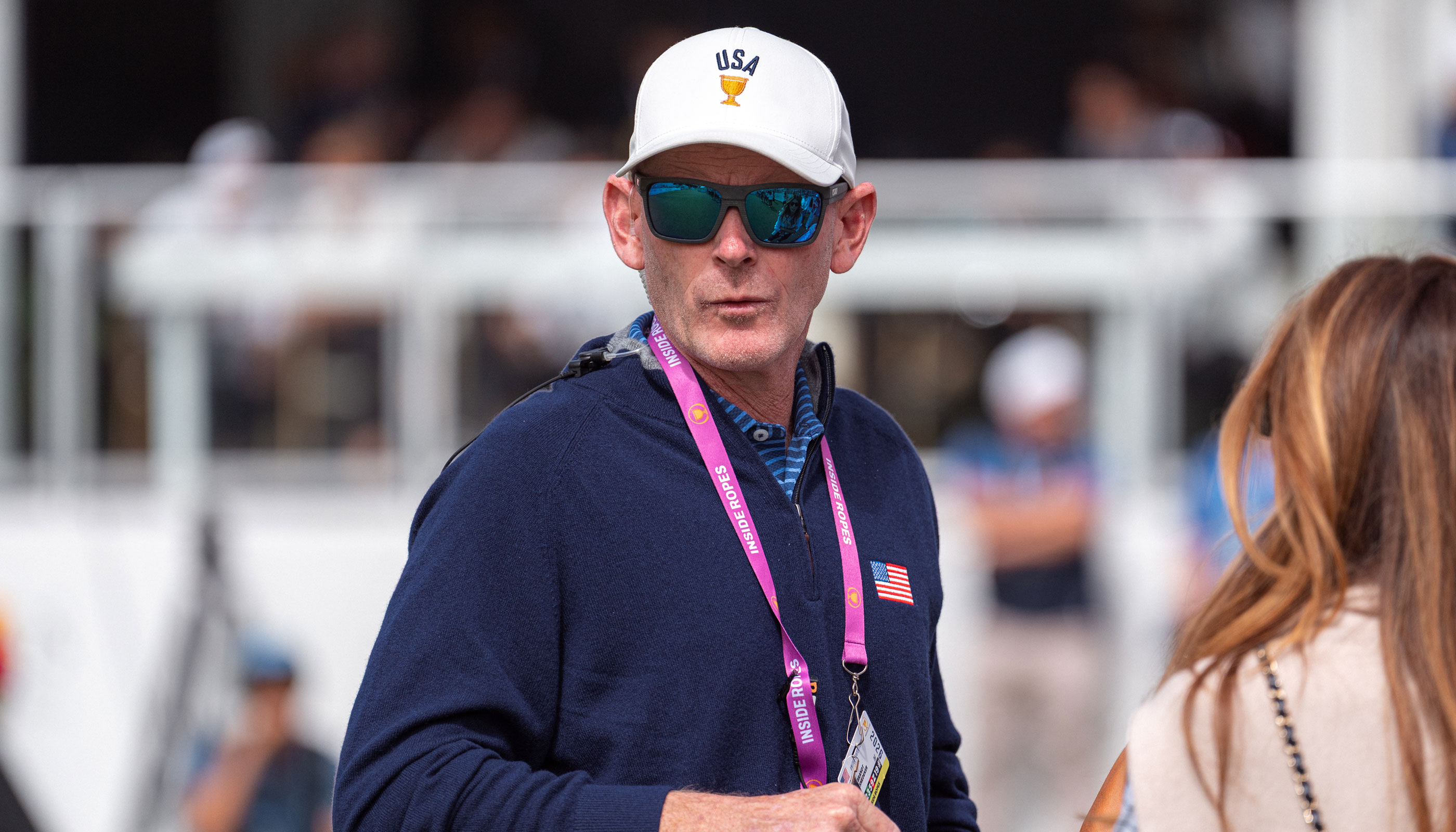

Medinah is a familiar setting for dramatic Sunday comebacks. This time around, it was the Americans delivering the beating.
Entering the final session, the question was whether the Internationals had built a big enough lead to pull off a historic, almost unthinkable upset. They led 10.5-7.5, already an impressive feat to get out ahead of a far stronger opponent.
By Sunday evening, we had our answer: a three-point cushion wasn’t enough.
It’s a shame that captain Geoff Ogilvy and the rest of the International team won’t go down in the history books as winners in 2026. For three days, they were brilliant, both in their play on the course and their outclassing of the American side on the decision-making front.
On Sunday, however, the Americans turned the scoreboard into a sea of red, dominating the Internationals 9-2-1 across the 12 singles matches to earn their 11th consecutive Presidents Cup win.
As match after match turned in the Americans’ favor, the not-so-subtle truth underlying the entire competition came into plain view: the gulf in talent between the two teams was simply too extreme. Eleven of the 12 American players entered the week ranked inside the top 30 of the Official World Golf Ranking. Only three Internationals did.
{{related-articles}}
A lot had to break in the Internationals’ direction to win this Presidents Cup. With 12 matches to play, it looked as though it might actually come to fruition. But in the end, the depth of the American roster proved overwhelming, and they delivered the most lopsided Sunday singles victory in Presidents Cup history.
“I told the guys last night that funny stuff happens here,” U.S. captain Brandt Snedeker said Sunday night. “Medinah has a history of funny things happening. Sure enough, they went out and played their asses off today. I'm so damn proud of those guys.”
The worst-case scenario for Team USA would have been to win despite making glaring strategic mistakes — the kind that have plagued the American side for years — and leave Chicago having learned nothing from them. Instead, the Americans leave both with the win and at least some level of acknowledgment that their operation still isn’t buttoned up.
“I don't think I've done a very good job this week to be where we are right now,” Snedeker said Saturday night. “I've been honestly second-guessing myself a lot to be in this situation.”
At least he’s self aware! And Snedeker is correct. There’s plenty to second-guess.
He practically invited the Internationals to pit one of their weakest players against Scottie Scheffler in singles, a mistake he later acknowledged. He also benched the best player in the world on Saturday afternoon, a curious decision no matter how much stock you place in Scheffler’s poor foursomes track record. And he deviated from predetermined pairings to insert a wildly inconsistent Justin Thomas into foursomes after Thomas played exceptionally well in fourball on Thursday. Predictably, Thomas didn’t fare as exceptionally in foursomes.
More broadly, Snedeker seemed to have a difficult time discerning how to react to information in real time. Benching Scheffler was pretty clear evidence of his susceptibility to overreaction, as was changing his foursomes pairings to include a hot Thomas who then immediately cooled off.
Moving forward, the American side could do a much better job sticking to a game plan. More often than not, it is a bad idea to abort plans developed over months, or even years, because of what just happened over the most recent 18 holes. Golf is a volatile sport. Year after year, the International and European sides show more conviction in their plans and a better understanding of why they work than the Americans.
{{inline-article}}
Nevertheless, decisions made in locker rooms can only influence so much. Eventually, players have to hit the shots. To their credit, the Americans did exactly that on Sunday, stepping up as a team to erase a significant deficit.
Just as he did at Bethpage, Cameron Young set the tone early, zipping up Ryo Hisatsune in the opening match. Scheffler disposed of Nico Echavarria, as he was expected to do. Patrick Cantlay and Collin Morikawa holed multiple long, clutch putts to take care of their matches. All across the course, nearly every American performed when they needed to.
Considering the stage, perhaps no American was more clutch than 21-year-old Jackson Koivun. He took down Si Woo Kim, the highest-ranked International player, 2 up, to finish the week as the only unbeaten golfer (2-0-1). With the cup still hanging in the balance, Koivun closed out his match with two excellent swings, each punctuated with no shortage of swagger.
“The kid is special,” Snedeker said of Koivun. “He's different. For a 21-year-old kid to stand up there and hit those last two balls like he did, (there are) not many people like that.”
Just under 12 months from now, the American team will head to Adare Manor seeking to avenge their home Ryder Cup loss at Bethpage. They’ll arrive with some scarring and unresolved questions about their ability to perform in foursomes and make intelligent decisions from the captain’s chair. But they’ll also bring a new weapon, a rising star who wants the ball in his hands when the pressure is at its highest, who rises to meet moments we’ve seen many others shy from.




If Not Now, Then When for the Internationals?
2026 Presidents Cup Grades
Internationals on Verge of Historic Upset at 2026 Presidents Cup
Internationals Sweep Friday Foursomes at 2026 Presidents Cup
What Would a Mixed Team Presidents Cup Look Like?
2026 Presidents Cup Thursday Fourball Results
Get full access to exclusive benefits from Fried Egg Golf
- Member-only content
- Community discussions forums
- Member-only experiences and early access to events