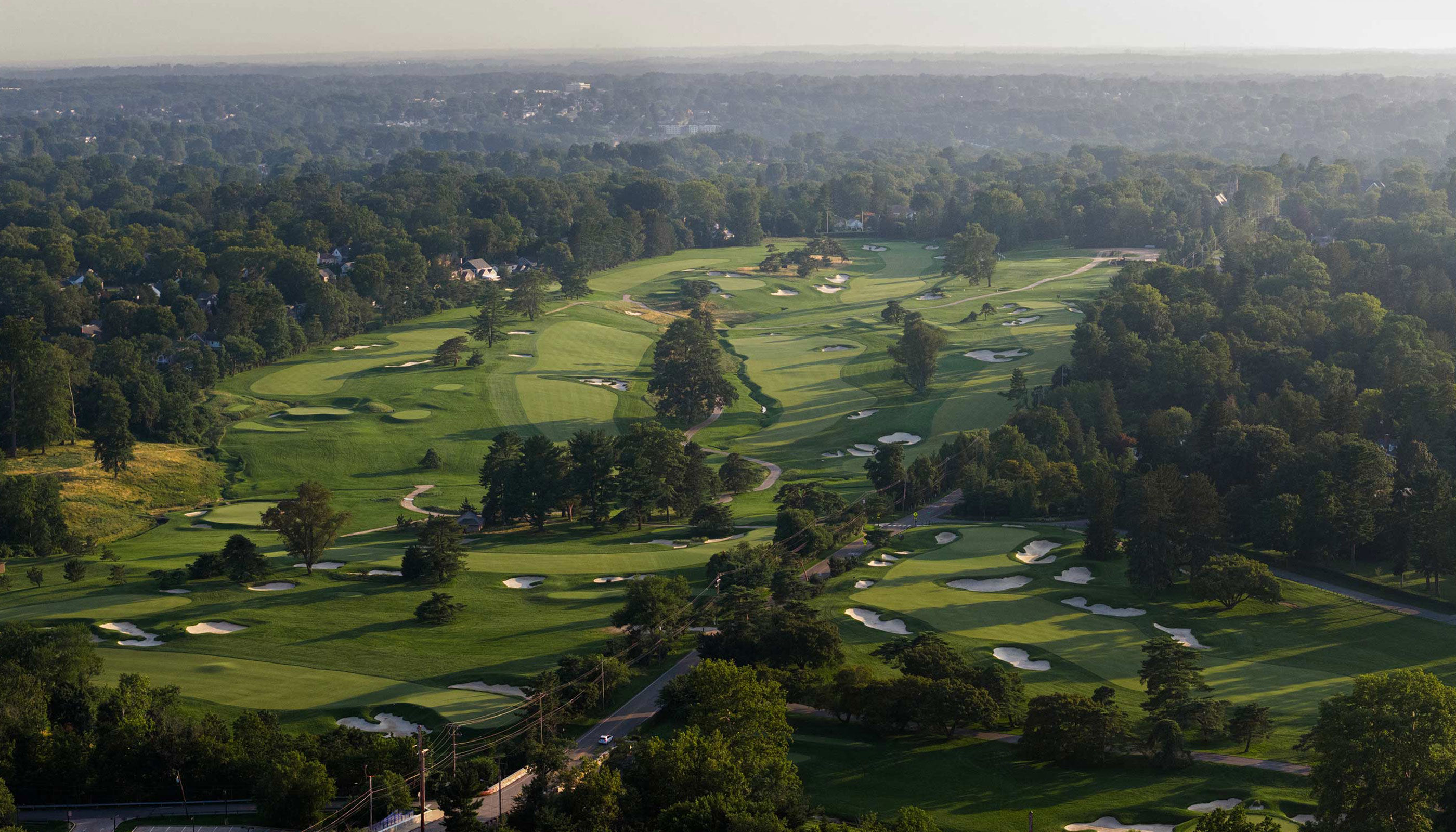
Merion Golf Club (East Course)
Merion East is an exemplar of lay-of-the-land golf course design, with a stellar variety of holes and one of the world’s greatest routings.

Ardmore, Pennsylvania, USA
Hugh Wilson (original design, 1912); Hugh Wilson and William Flynn (redesigns, 1916-1934)
Private

Great Courses: Merion

When Merion Cricket Club was founded in Philadelphia in 1865, its primary offerings were cricket, grass-court tennis, and squash. That changed in the 1890s, when the United States caught the golf bug. By 1896, Merion members were playing a nine-hole course designed by Scottish professional Willie Campbell. The club retained its original name until its golf and cricket memberships officially separated in the early 1940s.
In 1910, Merion decided to build a proper championship links on newly acquired land in Ardmore, Pennsylvania. The club consulted with New York-based architect Herbert Barker, then with C.B. Macdonald and H.J. Whigham, before entrusting design responsibilities to Hugh Wilson, leader of Merion’s “Special Construction Committee.” Wilson’s course opened to enthusiastic reviews in 1912, and soon the club began planning the addition of a West Course about a mile down Ardmore Avenue. The following year, William Flynn, who would later establish himself as one of America’s greatest golf architects, became Merion’s head greenkeeper. Over the next two decades, Flynn assisted Wilson in expanding, toughening, and refining the East Course, gradually molding it into the thinking man’s championship test we know today.
Merion East has remained mostly true to its Wilson-Flynn design since 1934, though the fairway lines have crept inward. In 2019, Gil Hanse renovated all 18 holes, rebuilding every bunker and green to modern spec. He also tweaked some mowing lines but did not substantially widen the course.
Take Note…
Wickers. Of the many articles written about Merion East between 1912 and 1915, none mentioned the course’s now-iconic wicker basket-topped pins. This is likely because they didn’t yet exist. William Flynn applied for a patent on “the wickers” in the summer of 1915, and they received a great deal of coverage at the next year’s U.S. Amateur. The club’s best guess, then, is that Flynn conceived of the baskets and persuaded Wilson to use them during the 1915 golf season.
The quarry myth. The East Course’s most striking landform is the rugged limestone quarry that features on holes 16, 17, and 18. Guests often hear that rock from this quarry was used to build the mansions around the club, but this appears to be a myth. As historian Wayne Morrison informed me on an episode of Designing Golf, the quarry had been dug out and abandoned well before both the golf course and the neighborhood were constructed.
An elite crew. Merion has long boasted one of the best-respected greenkeeping staffs in the golf industry, dating back to William Flynn’s tenure as superintendent in the 1910s. Today, under Paul Latshaw, the club’s turf operation functions like a teaching hospital, with assistants frequently earning high-profile jobs elsewhere.
{{merion-east-about-gallery}}
Favorite Hole
No. 5, par 4, 492 yards
This brilliant par 4 is about one simple thing: tilt. Both fairway and green slope strongly from right to left, spilling into a creek. Along the left edge of the fairway, close to the water, you will find a relatively level stance as well as a friendly angle into the cant of the green. If you shy away from the stream, you will face a stack of difficulties: a sidehill lie, likely in the rough, that encourages a dangerous right-to-left shot shape; a forced carry over a bunker short-right of the green; and a putting surface that screams away from you, toward the water.
Golf architecture isn’t quantum physics. Sometimes a severe tilt, along with an architect smart enough to let land dictate design, is enough.
Favorite Hole
No. 5, par 4, 492 yards
This brilliant par 4 is about one simple thing: tilt. Both fairway and green slope strongly from right to left, spilling into a creek. Along the left edge of the fairway, close to the water, you will find a relatively level stance as well as a friendly angle into the cant of the green. If you shy away from the stream, you will face a stack of difficulties: a sidehill lie, likely in the rough, that encourages a dangerous right-to-left shot shape; a forced carry over a bunker short-right of the green; and a putting surface that screams away from you, toward the water.
Golf architecture isn’t quantum physics. Sometimes a severe tilt, along with an architect smart enough to let land dictate design, is enough.
{{merion-east-favorite-hole-5-gallery}}
Overall Thoughts
Wayne Morrison — Merion member and author of The Nature Faker, the definitive William Flynn biography — likes to say that all golf architecture enthusiasts should study Merion East.
The obvious follow-up question is, what lessons should they learn? Here are four:
The size of the landforms matters more than the size of the site.
Much is made of the smallness of the East Course’s property. Indeed, it’s impressive how much interest and challenge Hugh Wilson and William Flynn wrung out of a mere 115 acres. (See the third lesson below.)
But more credit should be given to how well suited the land is to golf. Clearly the club selected this site for a reason: With its assortment of ridges, valleys, streams, and rock formations, it’s eventful throughout. The topography is just the right size — dramatic enough to generate excitement and give each hole an identity, but not so dramatic that the course must avoid certain areas or can’t be comfortably walked.
Since so much of the East Course’s terrain is appropriately scaled for golf, the property doesn’t need to be huge.
The best quirk is found, not built.
As Merion closed in on acquiring the Ardmore property in 1910, one member of the site-selection committee raised an objection. He was worried that the club would need to spend too much money filling in the quarry.
Fortunately, Wilson had a more open-minded attitude toward what kinds of preexisting features could be included in a golf course. His three-hole closing stretch plays across, into, and out of the quarry, making full use of the weird, craggy landforms left by the former mining operation. It’s one of the most memorable finishes in the game.
For Wilson (and, later, Flynn), the character of a course should be determined by the site, not by abstract ideals of what golf should look like. This philosophy is the source of Merion East’s uniqueness.
Routing is king.
Merion East’s routing is like a super-thin yet super-complicated watch. (Check out the Bulgari Octo Finissimo Perpetual Calendar or the JLC Ultra-Thin Minute Repeater Flying Tourbillon.) It performs a multitude of tasks — maximizing the best available features, changing direction continually, linking together good natural green sites, giving each hole a unique topographical identity, and unfolding like a story with a beginning, middle, and end — without wasting any space.
For more detail on the East Course’s routing, check out this recent video of ours.
Greens are the best defense.
In spite of stretching to only 6,930 yards, Merion East remains a viable U.S. Open venue. A major reason for this is its green architecture. The East Course’s greens are smallish by the standards of modern championship golf, and many are sharply tilted and oblique to the line of play. Plus, they are unusually difficult to read, defined by broad, intersecting slopes and subtle wrinkles rather than clearly defined contours.
Unfortunately, the club feels that tricky greens alone are not sufficient to challenge the best golfers in the world. For decades, Merion has pursued a program of narrow fairways and thick rough to stay championship-ready.
Gil Hanse’s 2019 renovation did not change this state of affairs. While his team painstakingly replicated the East Course’s Golden Age bunker shapes, they did not attempt to re-create the generous fairway dimensions seen in William Flynn’s plans from the 1920s and 30s.
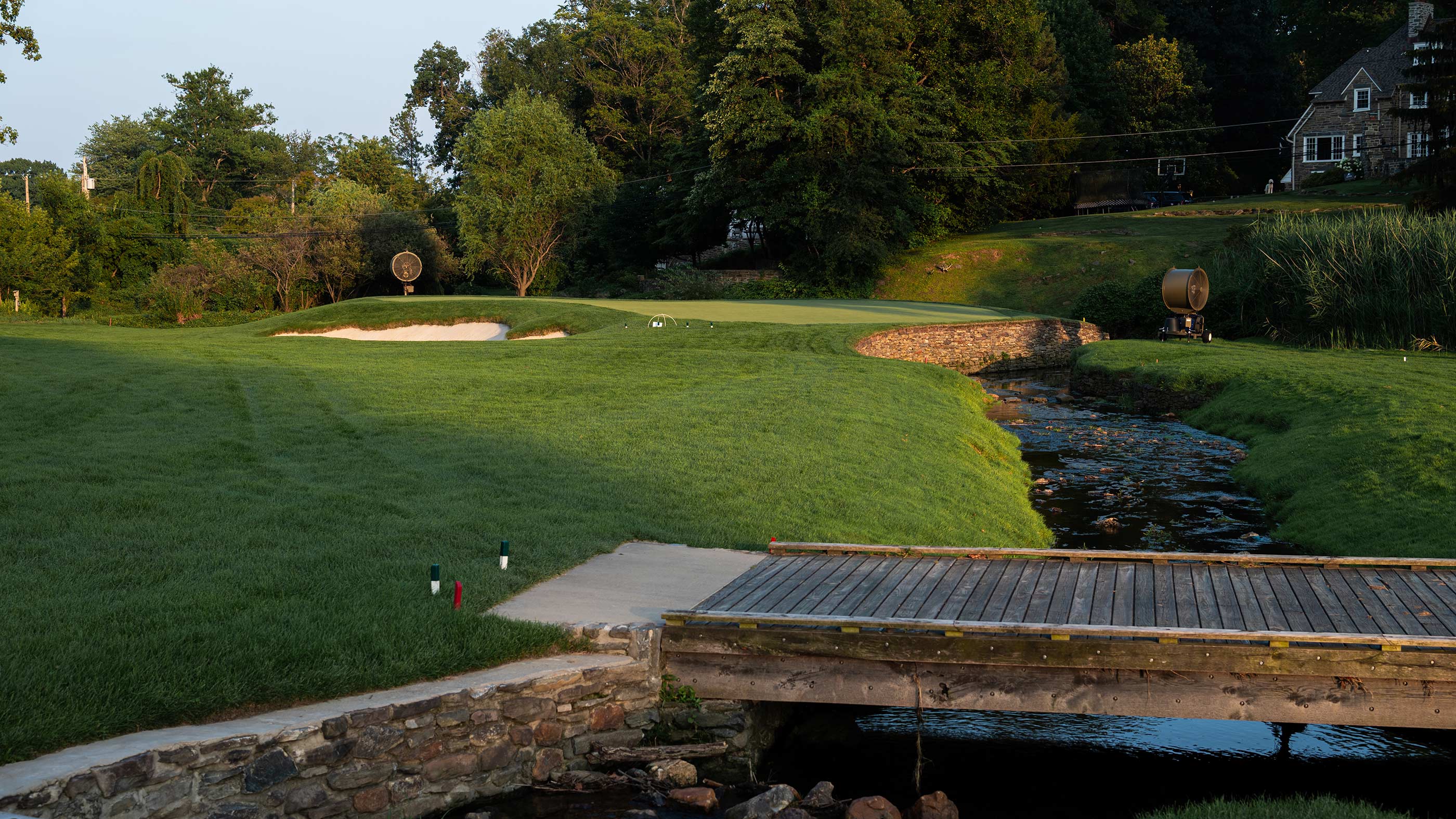
The current mowing lines are an odd sight. The 11th fairway, for instance, bottlenecks down to 20 yards across for no discernible reason. On the famous 16th hole, the fairway stops well short of the quarry, preventing players from taking on the hazard in pursuit of a shorter approach. Dense, green rough, tight against every fairway and green, dominates the playing experience at Merion East and, to my eye, dulls the natural texture of the landscape.
I understand why the club has gone this direction. Hosting major championships is central to Merion’s history and identity, and if the East Course were as wide as it was in 1934, it would not be chosen to host a U.S. Open.
But I can't help imagining how delightful it would be to play a full-scale rendition of Wilson and Flynn’s design.
2 Eggs
Merion East is an exemplar of lay-of-the-land golf course design, with exceptional hole-to-hole variety and one of the world’s greatest routings. Studying its ultra-efficient use of a small property should be a requirement for every aspiring golf architect. However, I have to withhold an Egg in the presentation category. The East Course would be better served, in my opinion, by wider fairways and more varied, naturalized roughs.
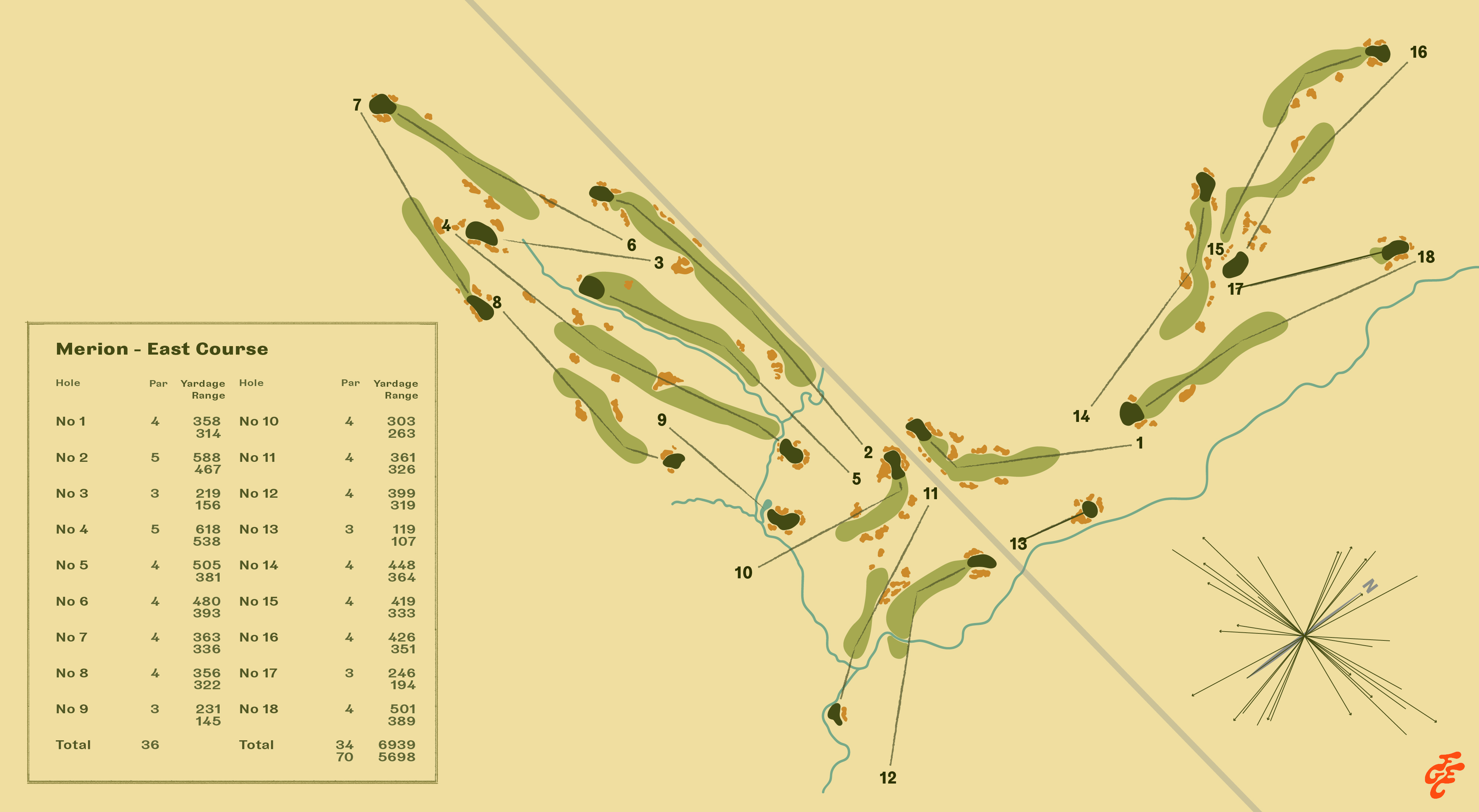
Browse the Course Tour below for notes on every hole at the East Course at Merion Golf Club.
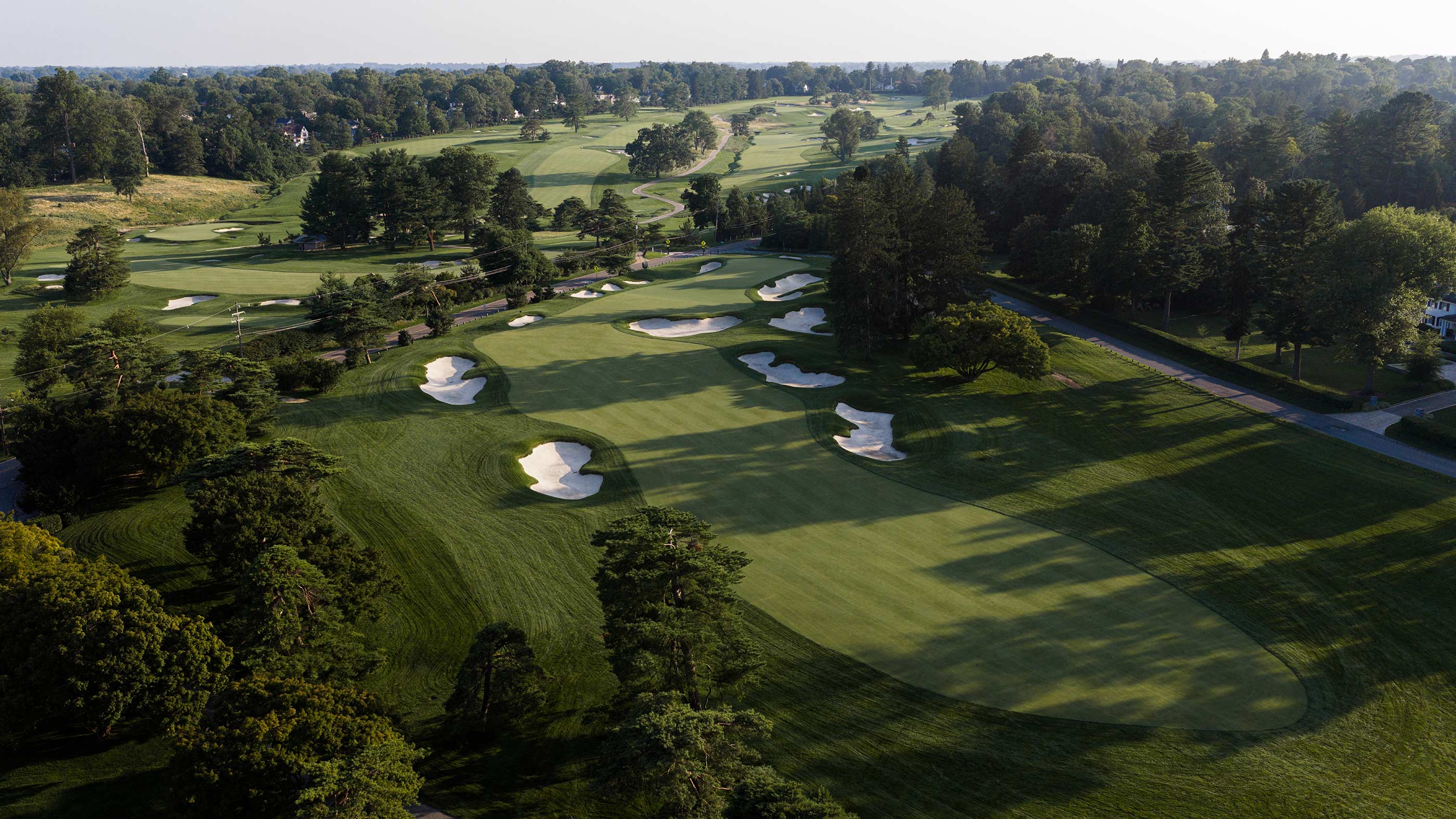
Hole 1
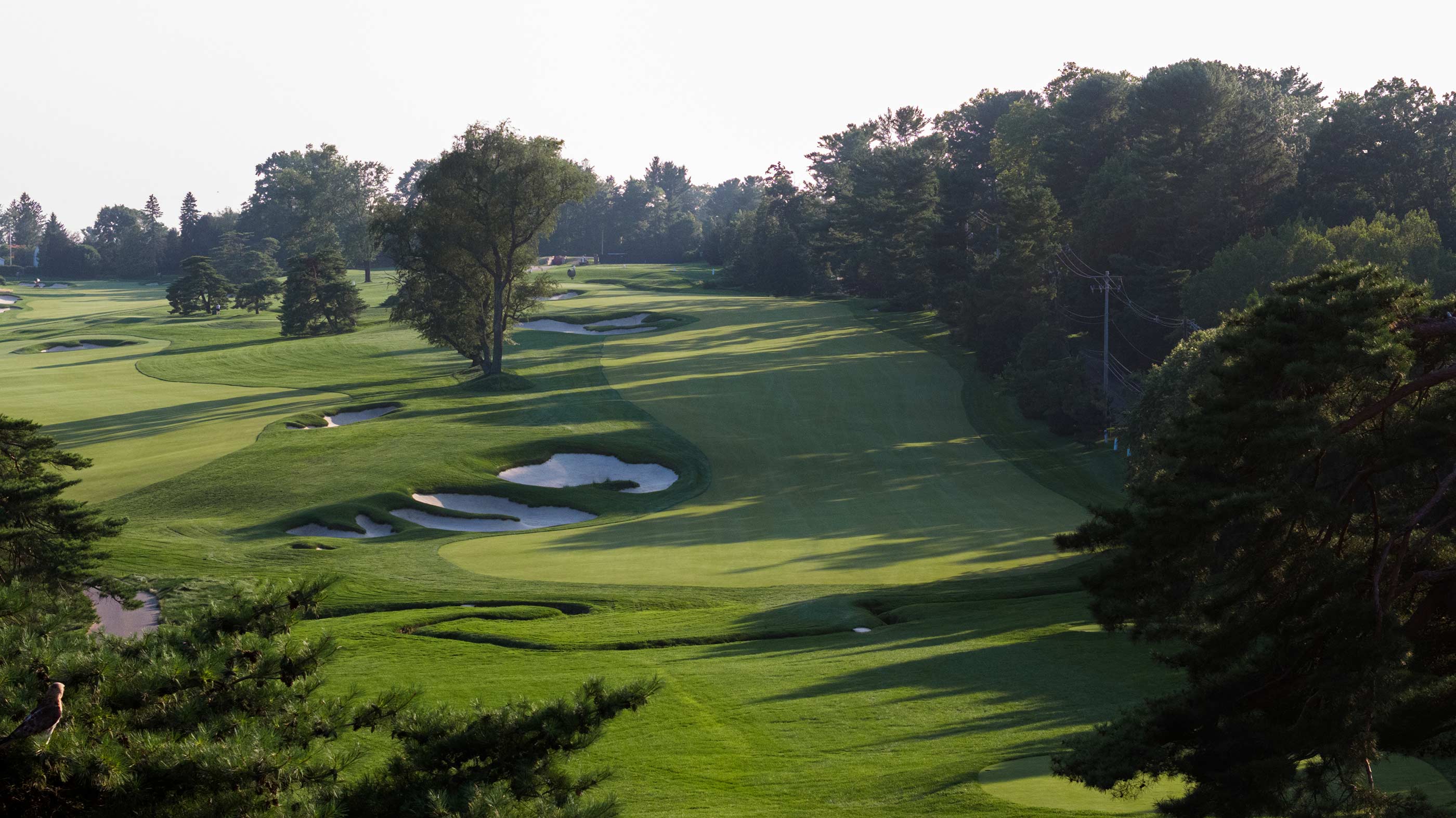
Hole 2
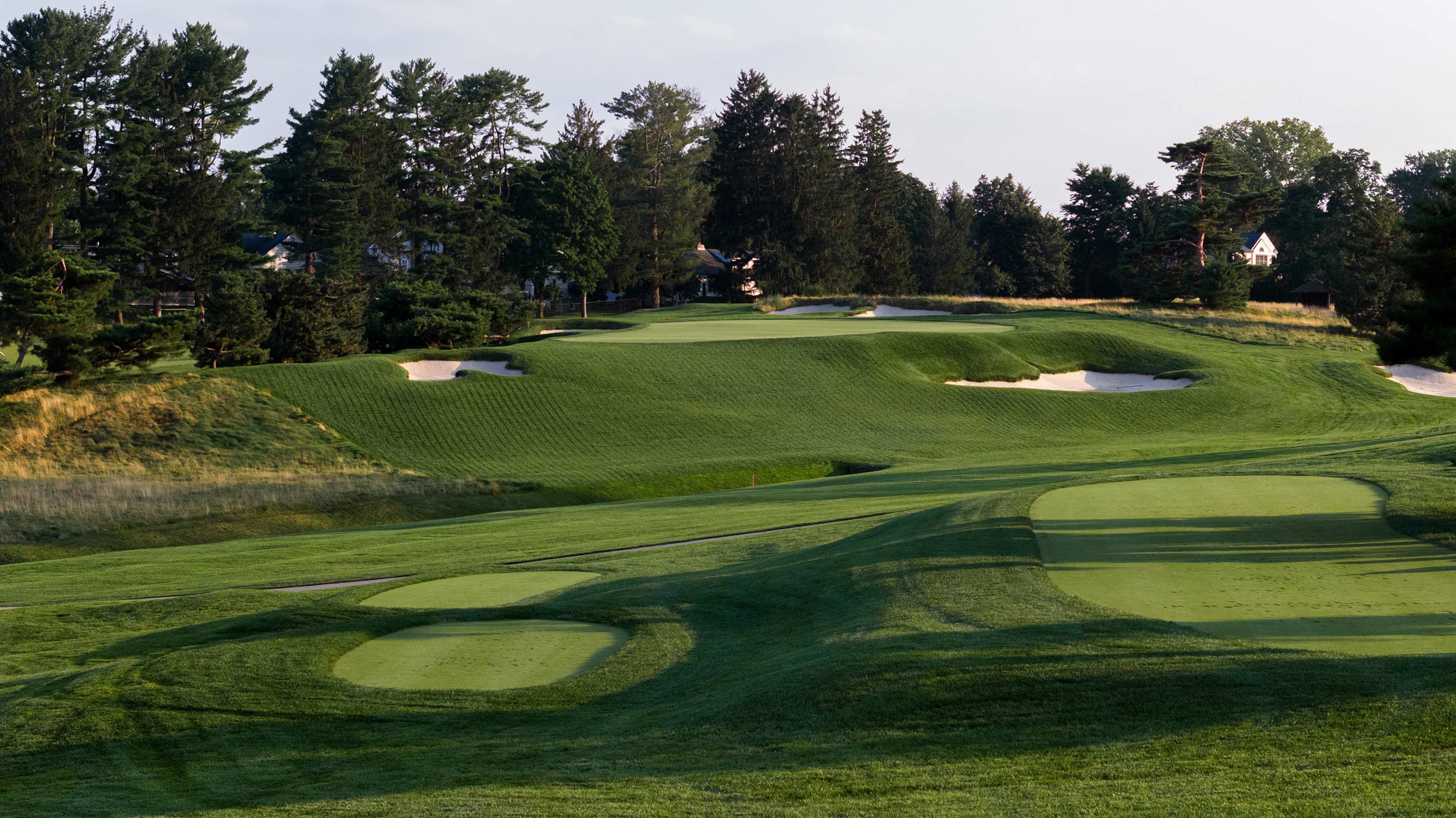
Hole 3
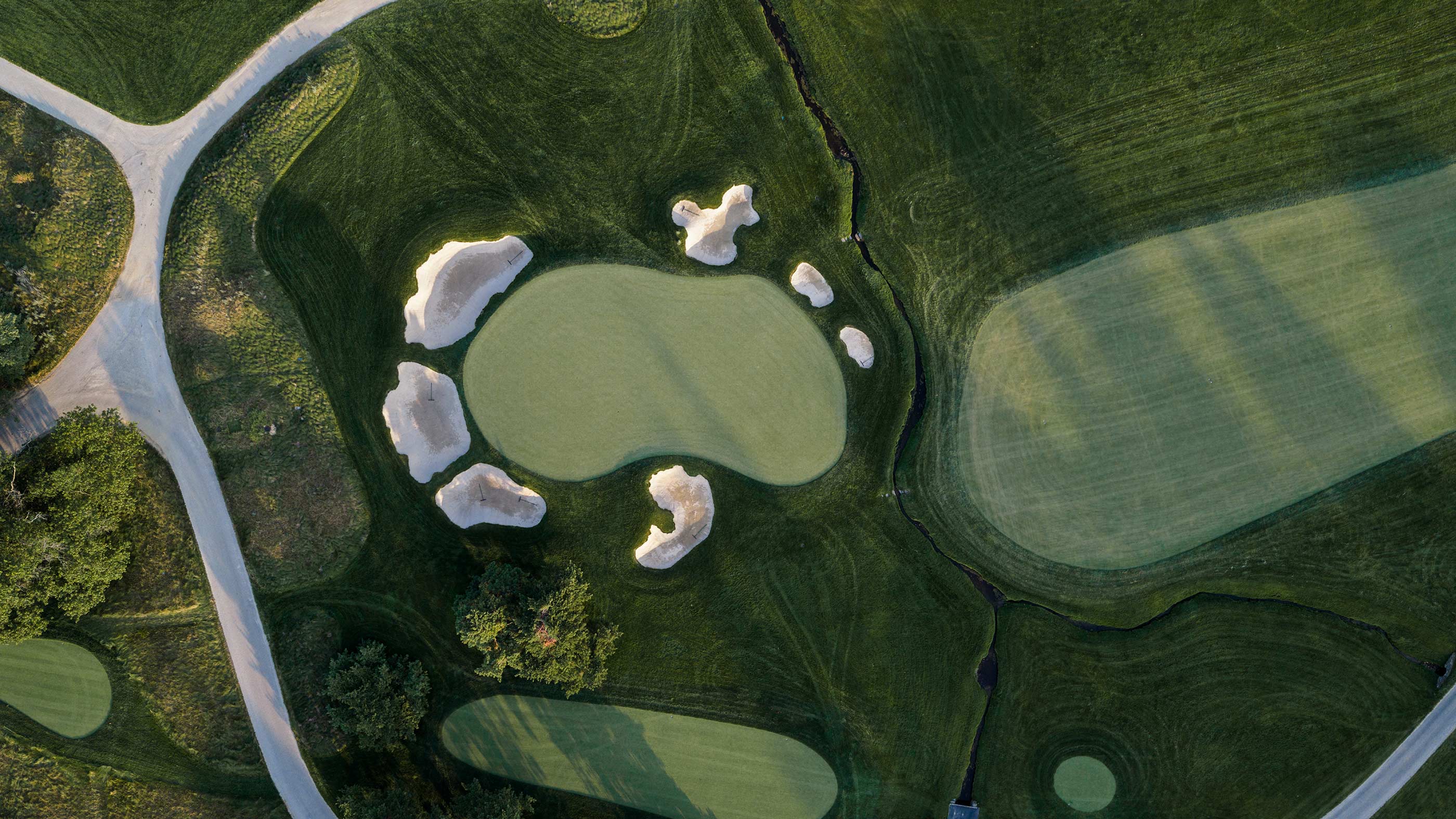
Hole 4
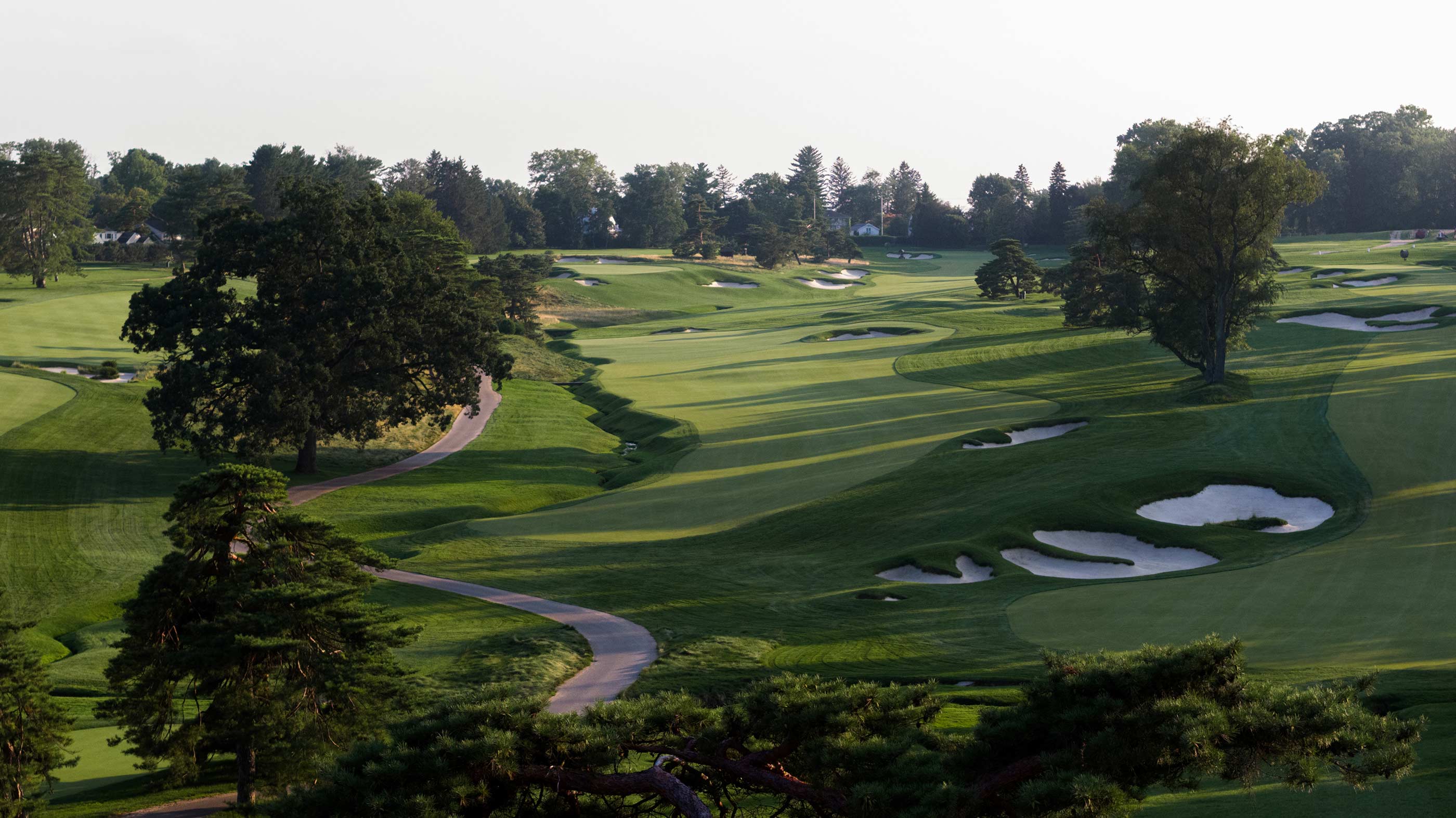
Hole 5
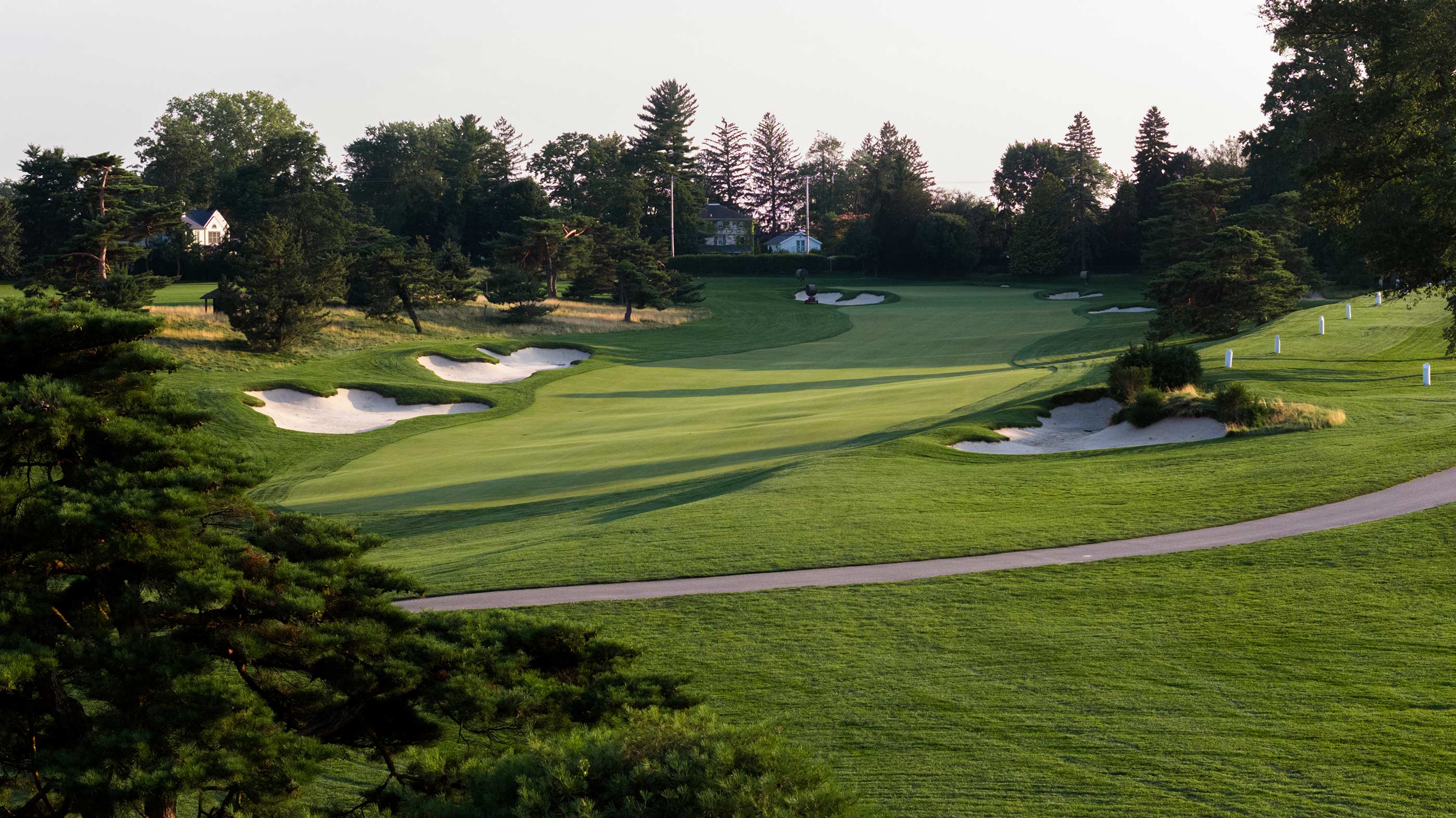
Hole 6
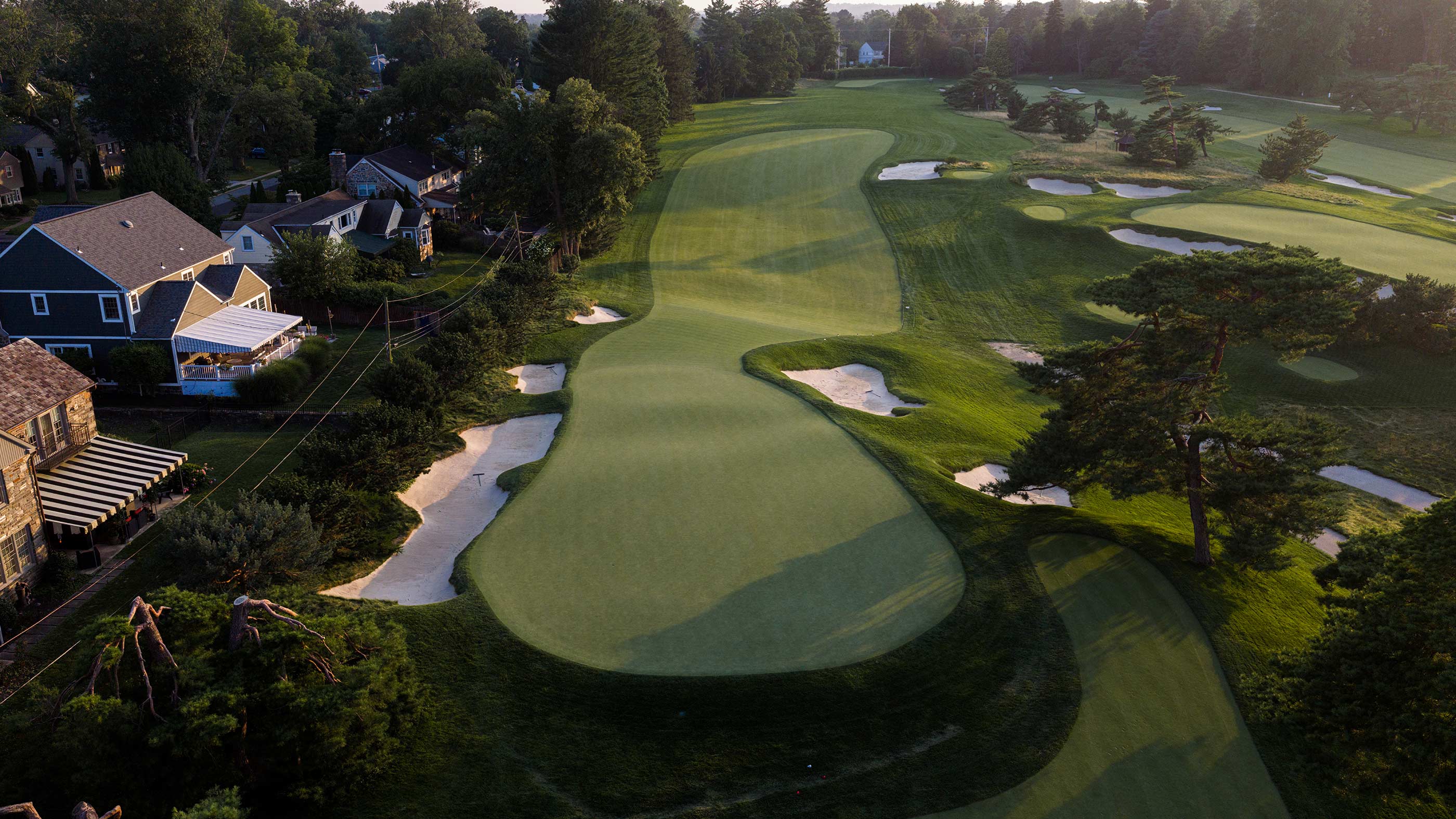
Hole 7
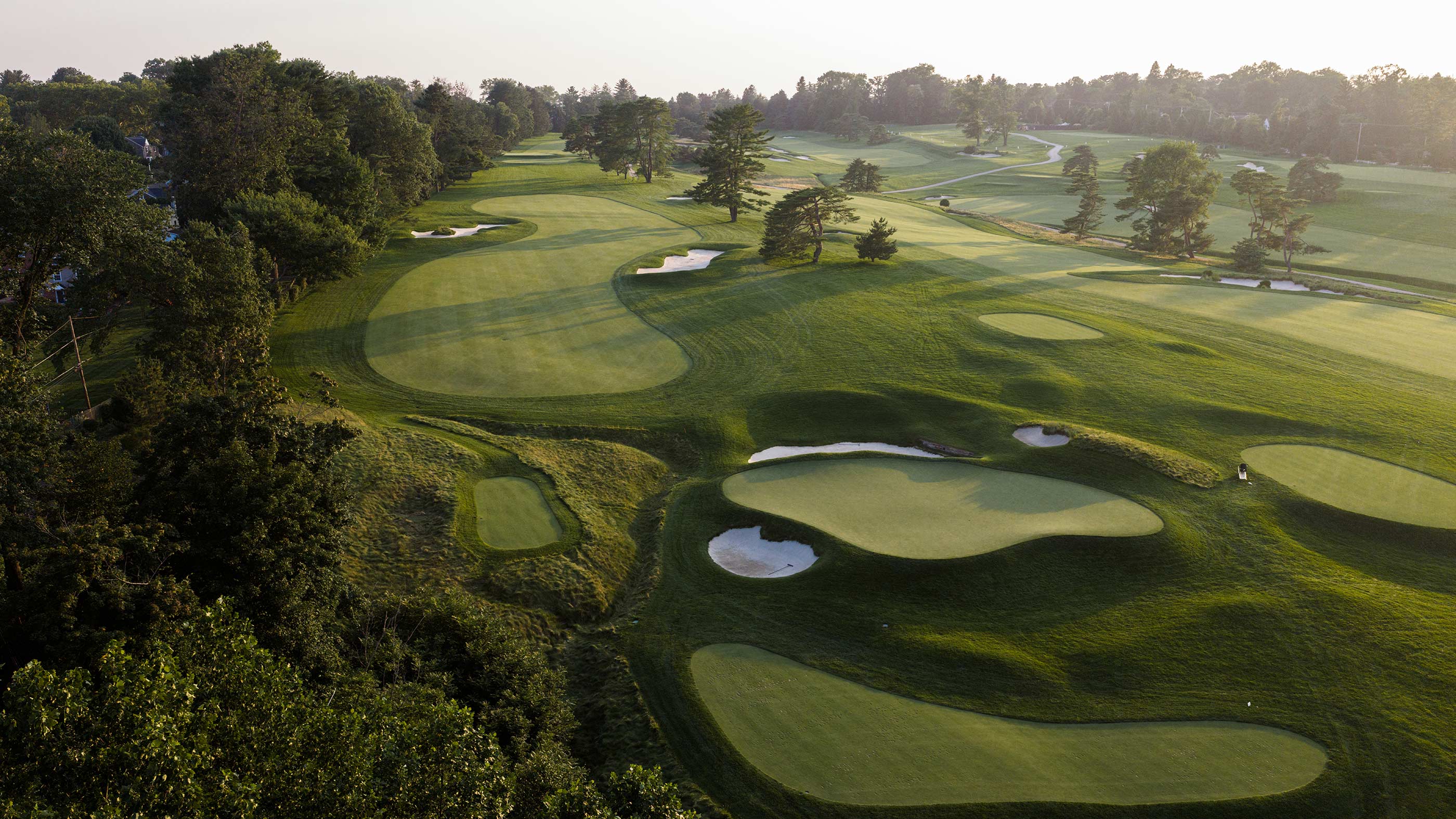
Hole 8
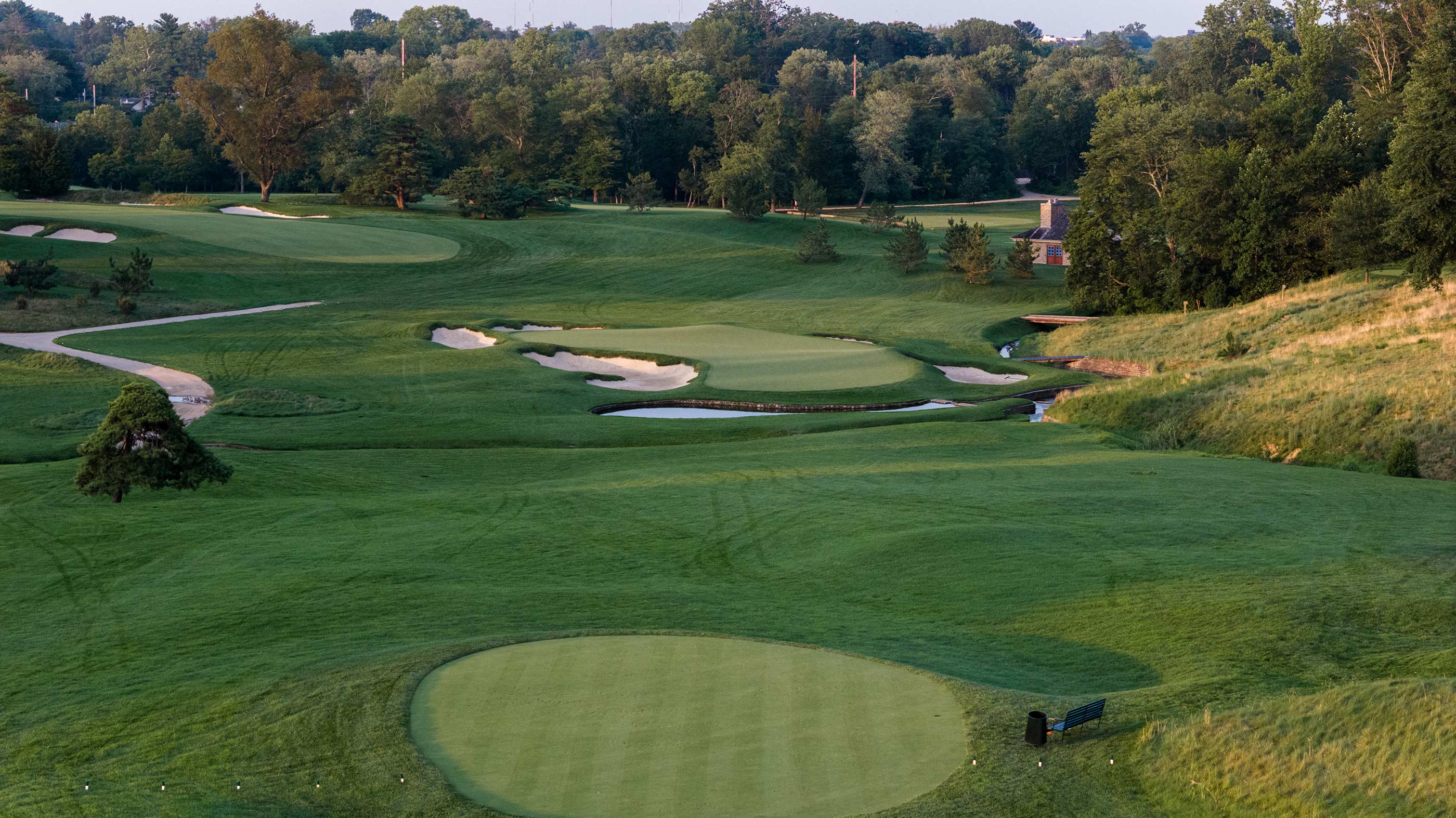
Hole 9
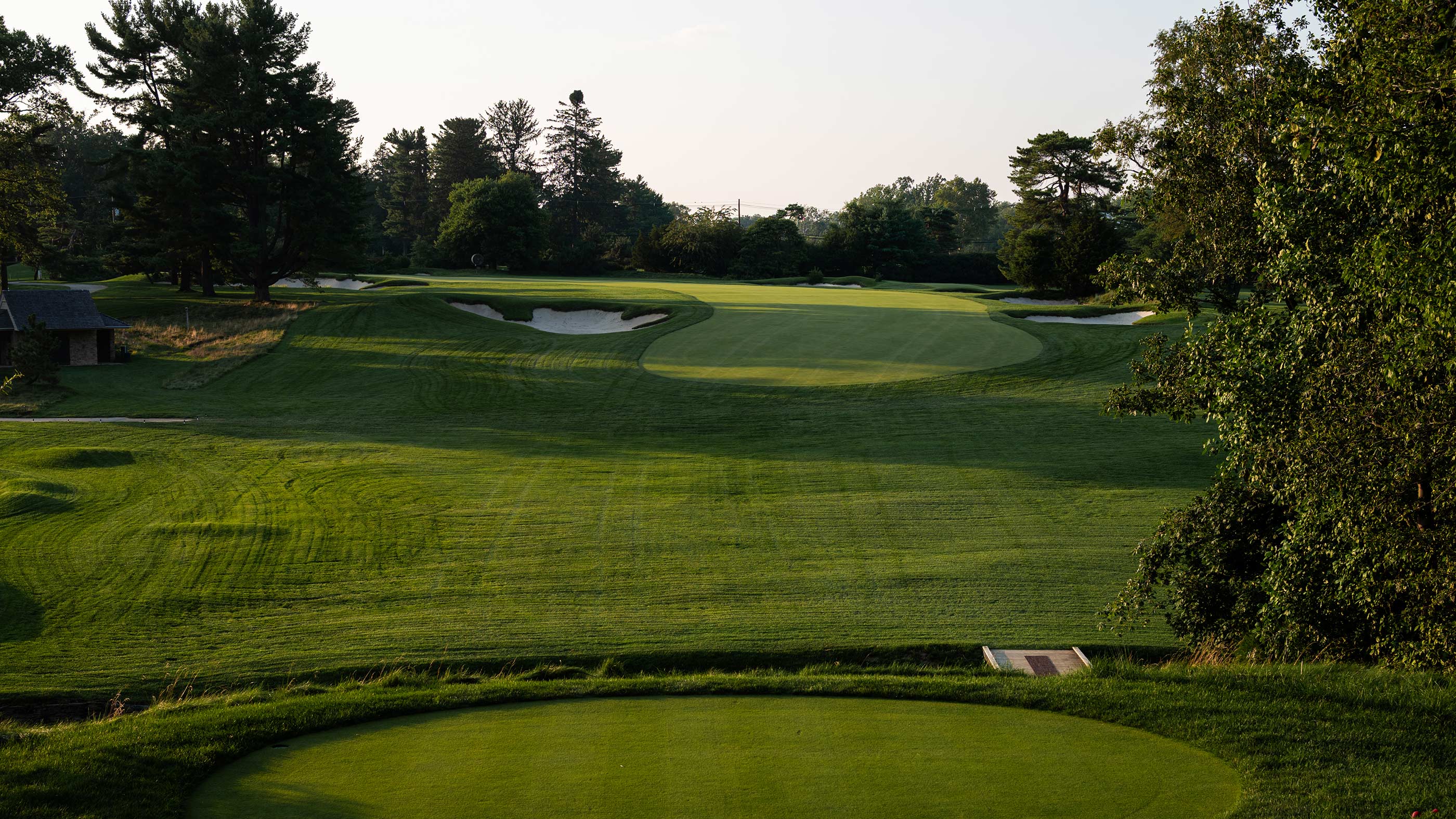
Hole 10
Hole 11
Hole 12
Hole 13
Hole 14
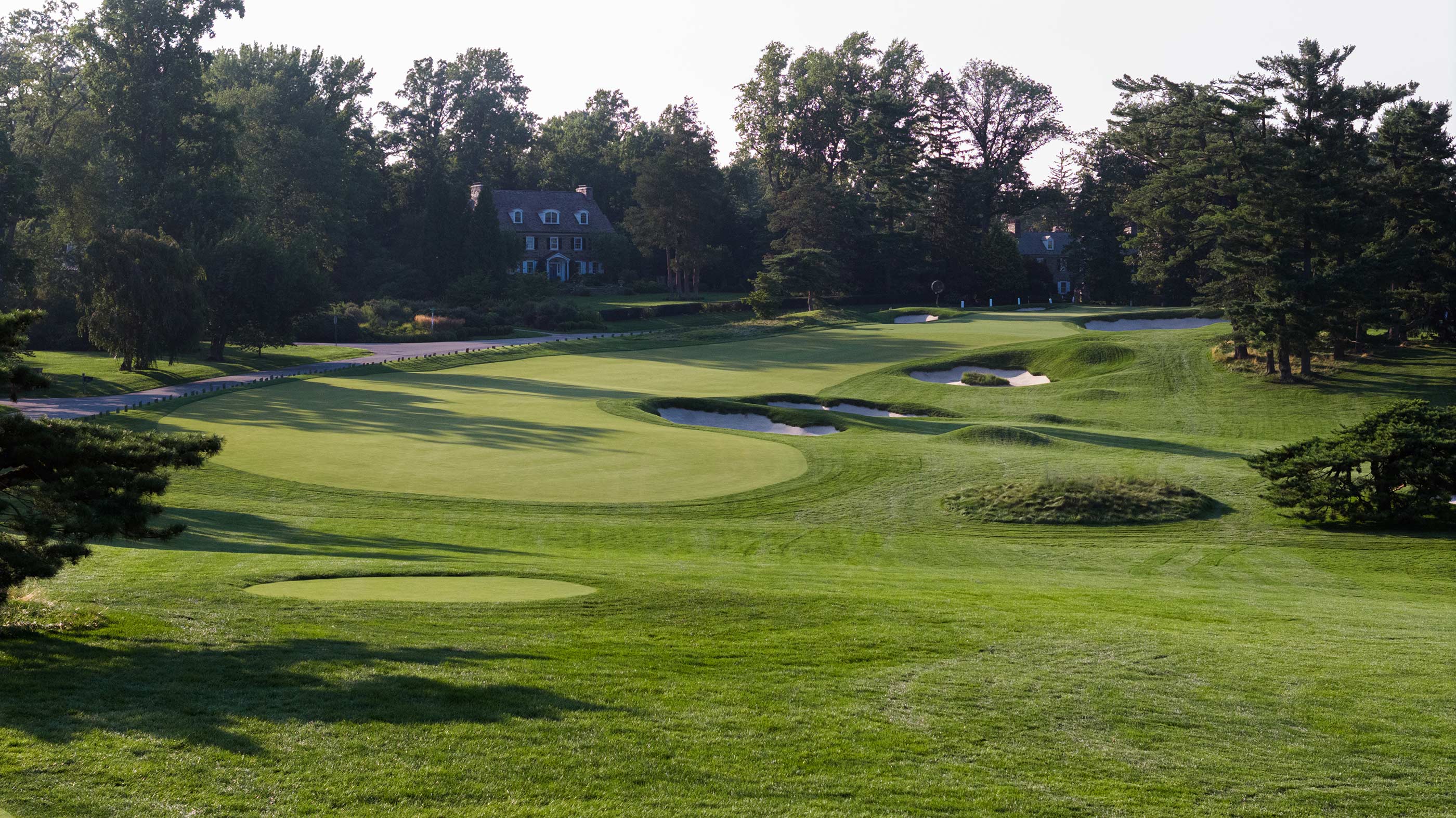
Hole 15
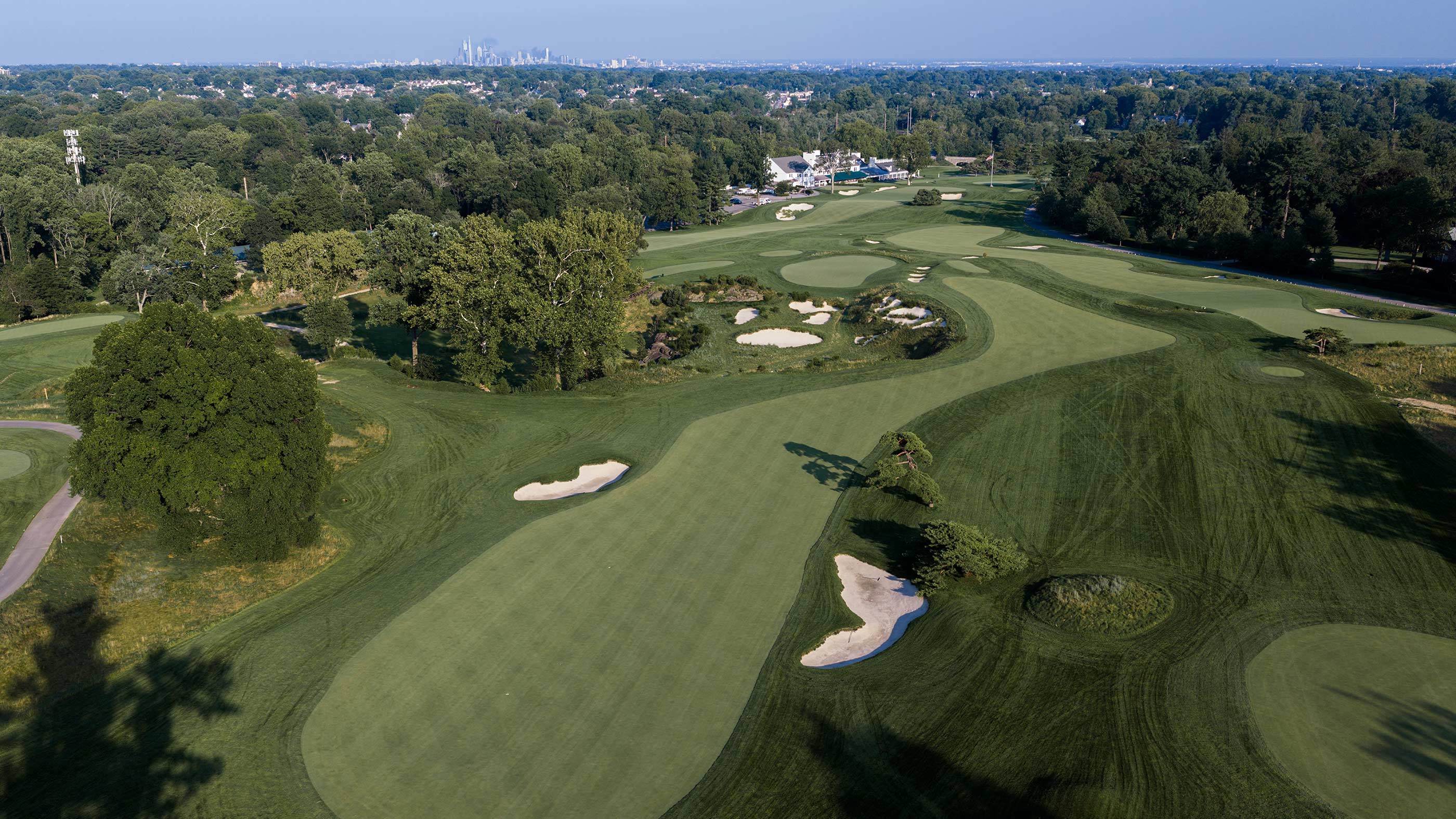
Hole 16
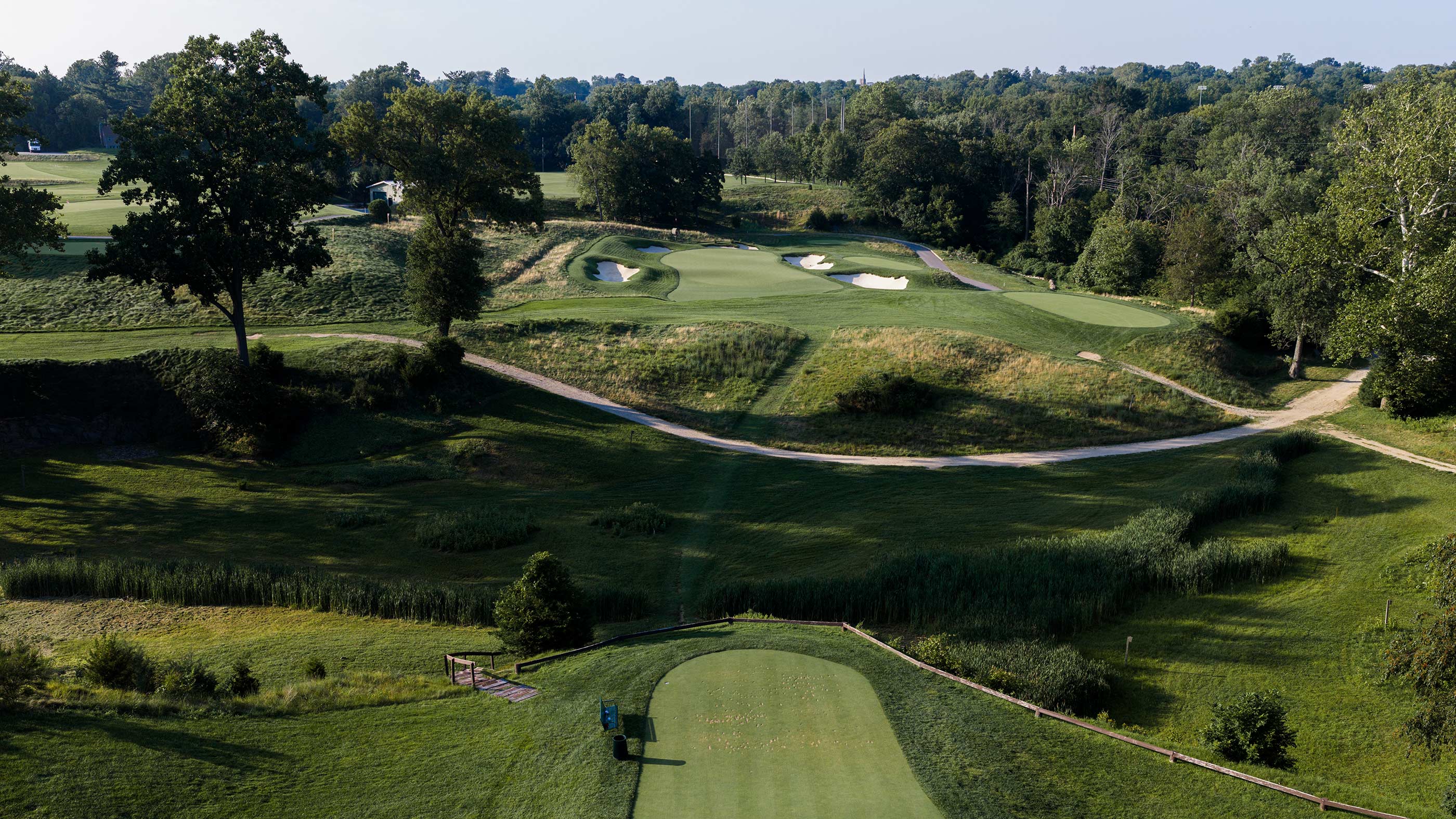
Hole 17
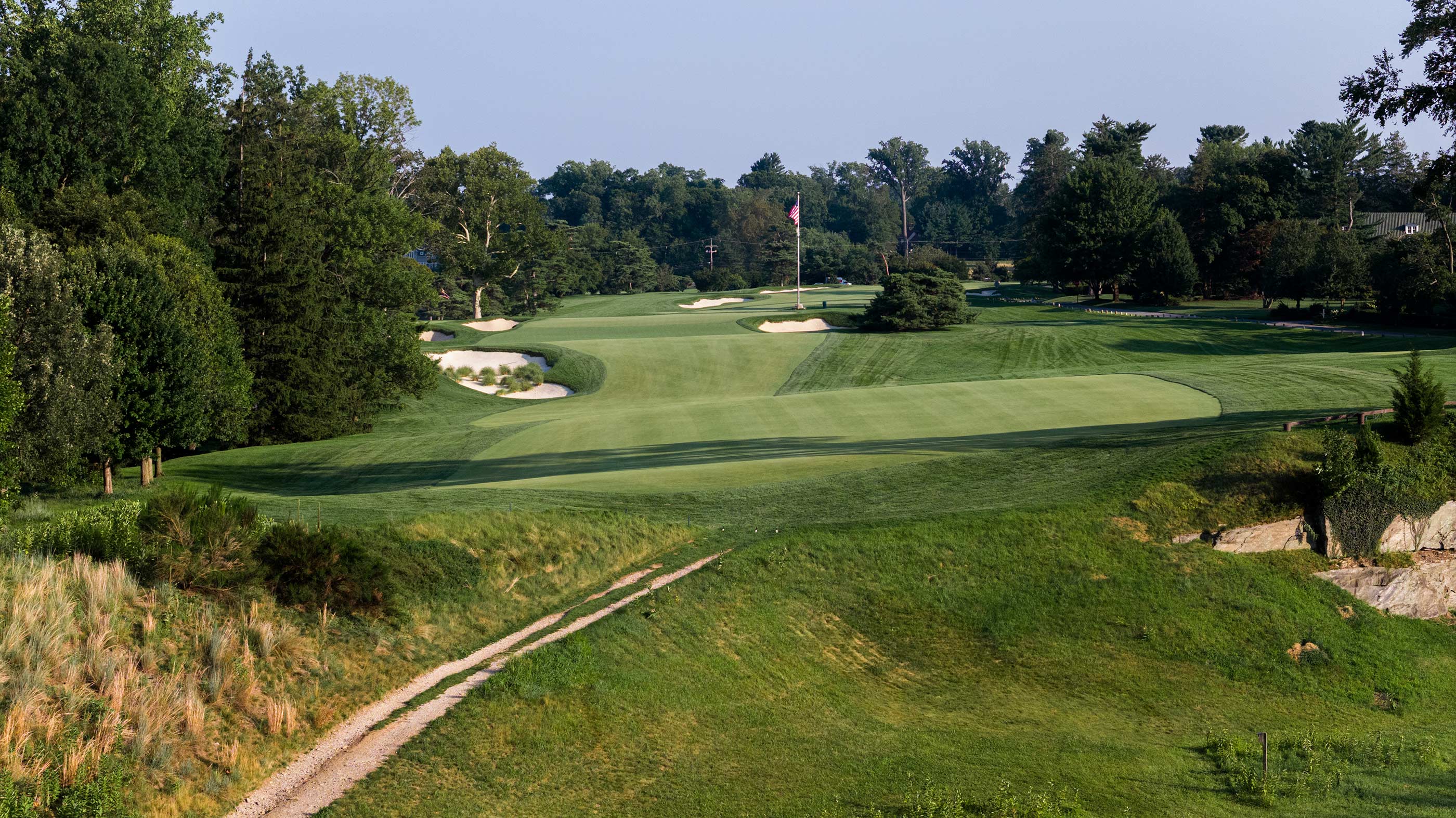
Hole 18

Explore Related Content
The Country Club (Pepper Pike)
Philadelphia Country Club
Shinnecock Hills Golf Club

Cherry Hills Country Club
The Kittansett Club

Lancaster Country Club
Get full access to exclusive benefits from Fried Egg Golf
- Member-only content
- Community discussions forums
- Member-only experiences and early access to events
