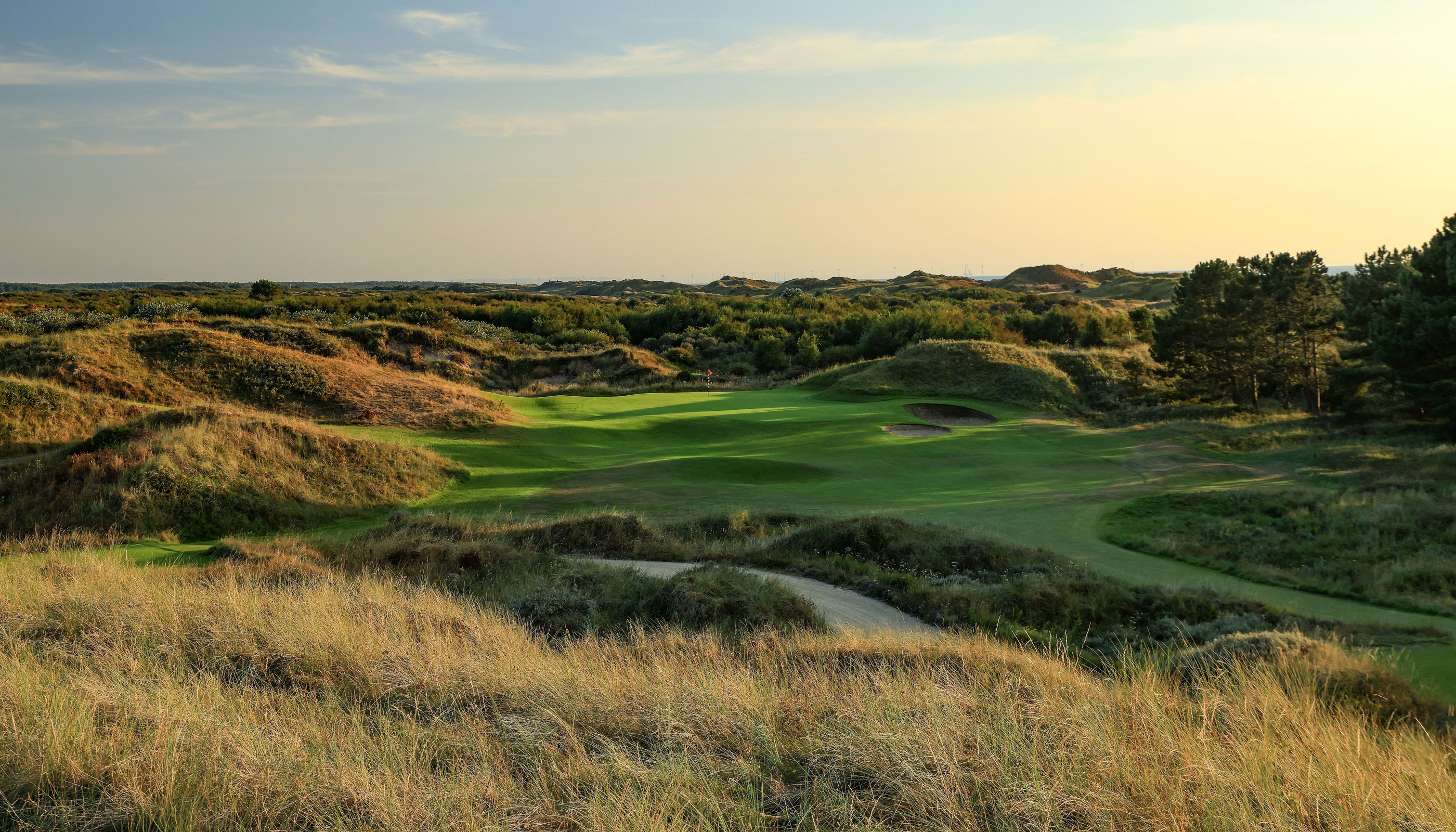
Royal Birkdale Golf Club
More than a century after its founding, Royal Birkdale remains one of golf’s premier venues, a collection of 18 stout, championship-caliber holes

Southport, Merseyside, England
George Lowe (original design, 1897), Fred G. Hawtree and J.H. Taylor (redesign, 1932), Mackenzie & Ebert (renovation, 2025)
Private

On the northwest coast of England, just about a mile from the Irish Sea, lies Royal Birkdale Golf Club, one of the finest championship tests in the world.
The club’s origins date to 1889, when its first nine holes were laid out. Five years later, the course relocated to the nearby Birkdale Hills before moving once more, in 1897, to the site it occupies now.
George Lowe, then the head professional at Royal Lytham & St. Annes, designed the original 18-hole course. But the layout that exists today can be traced to 1932, when the local Southport Development Corporation granted the club a long-term lease and Fred G. Hawtree, alongside five-time Open champion J.H. Taylor, transformed the links into the course that largely remains today. Under the terms of the agreement, the course would be redesigned with the express purpose of hosting championship golf, a mission that continues to guide the club.
Although the club did not host its first Open Championship until 1954, it has since become a fixture of the Open rota. The 2026 Open marks the 11th staging of golf’s oldest major at Royal Birkdale, more than any other venue except St. Andrews since the end of World War II. Beyond the Open, the club has hosted dozens of the sport’s most prestigious amateur and professional events across both the men’s and women’s games, including two Ryder Cups. The 1969 edition is forever remembered for “The Concession,” one of the most famous moments in Ryder Cup history.
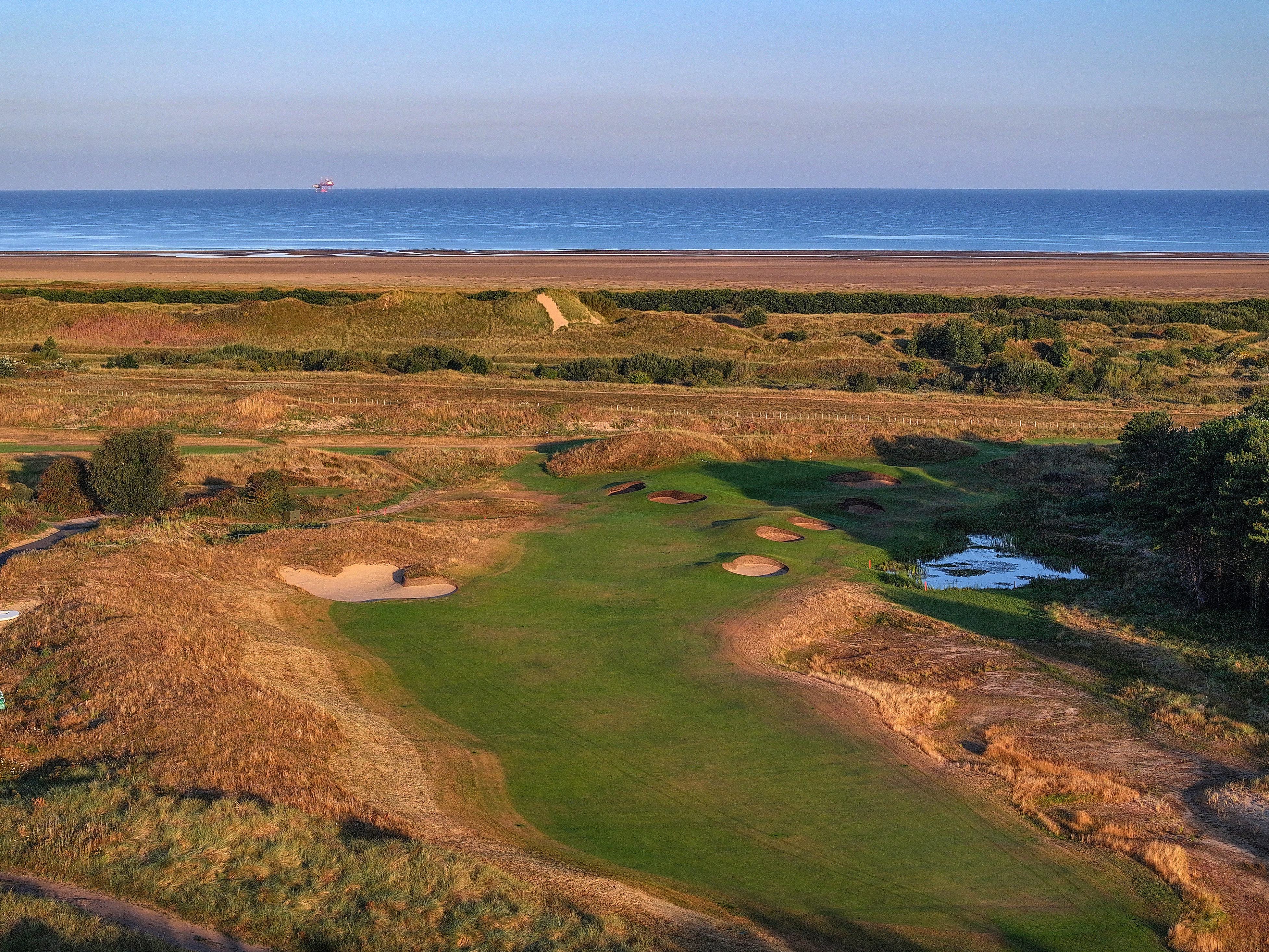
Throughout the decades, Royal Birkdale has continued to evolve, much of that evolution shepherded by successive generations of the Hawtree family. Ahead of the 2026 Open Championship, the club selected Mackenzie & Ebert to undertake its most significant renovation project in decades, with Tom Mackenzie overseeing the project. The design changes were intended to improve playability for members, increase variety among the par 3s, enhance drainage, and modernize the practice facilities. Among the most significant changes, Nos. 5, 14, and 15 were either substantially redesigned or built anew, while the former par-3 14th was converted into a dedicated short-game practice area. Every hole on the course received attention — some dramatically, others subtly.
Royal Birkdale could be considered a modern venue relative to many of its counterparts on the Open rota, but not just because it didn’t host its first Open until the 1950s. Unlike the traditional out-and-back-style routing found at many links courses, Royal Birkdale features returning nines — a departure from many traditional links designs — with both the ninth and 18th greens located near the clubhouse.
Royal Birkdale is widely regarded as one of the fairest championship tests in golf and a favorite venue among touring professionals. There are few blind shots, quirks, or daring design features. Yet its simplicity should not be mistaken for mundanity; the golf course presents a variety of holes and shot types. Though the coastline itself never comes into view, the first 12 holes take players on a meandering journey out toward the Irish Sea, constantly shifting directions to expose players to a variety of wind patterns. The final six holes more or less run parallel to one another and include the course’s only two par 5s — at least in championship play — a dramatic finishing stretch that never fails to deliver unforgettable moments.
With ample space to accommodate championship infrastructure and record-breaking galleries, along with a longstanding commitment to evolving to meet the requirements of a modern championship host, Royal Birkdale remains one of golf’s premier venues. More than a century after its founding, it continues to prove itself a worthy host of the most prestigious events in the sport, one that is sure to crown a deserving winner.
{{royal-birkdale-about-gallery}}
The Clubhouse
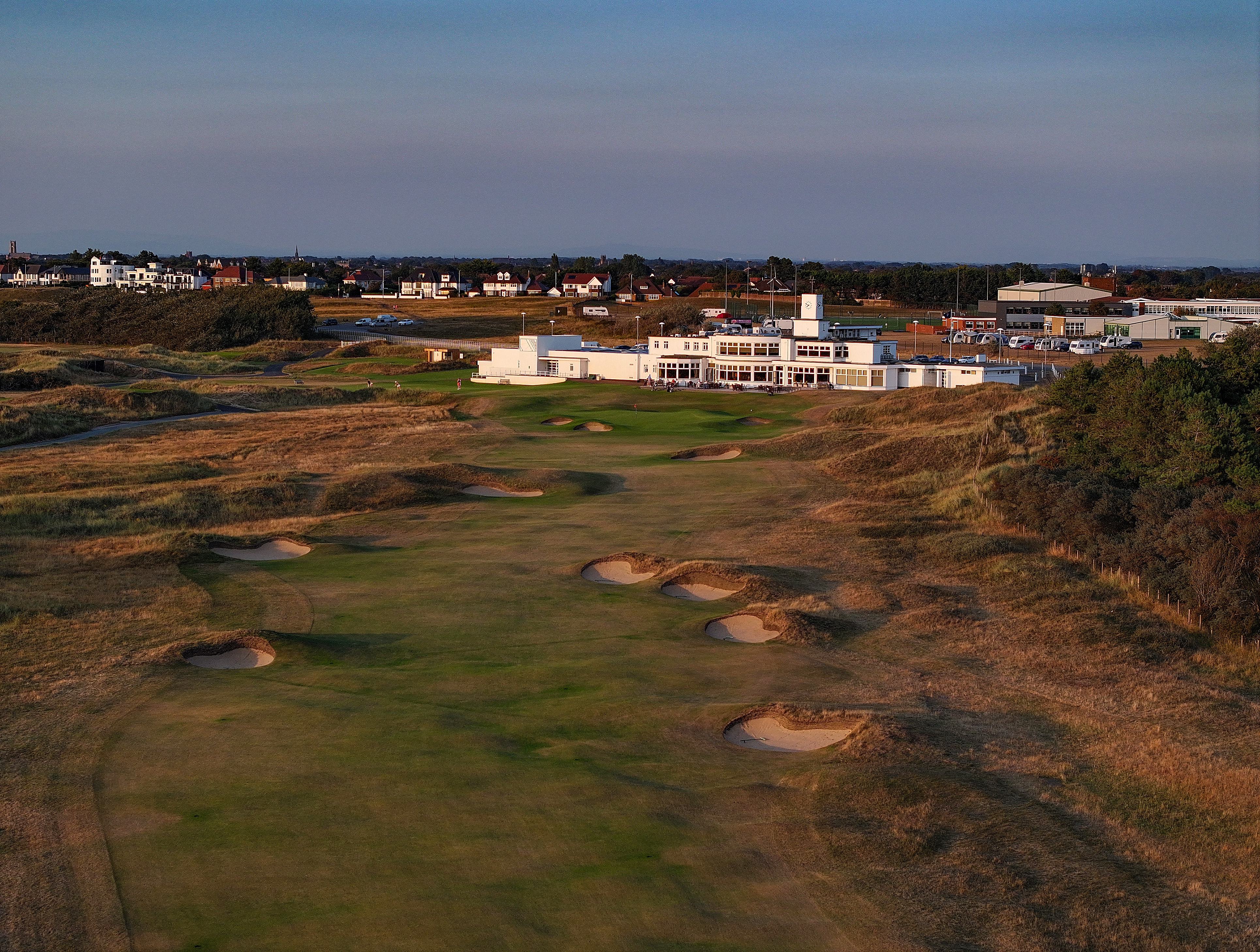
Standing above the 18th green, Royal Birkdale’s iconic Art Deco-style clubhouse provides one of the most distinct backdrops in championship golf. Designed by local architect George E. Tonge after he won a competition for the job, the building was constructed in 1935 and has since become a defining symbol of the club.
The Clubhouse
Standing above the 18th green, Royal Birkdale’s iconic Art Deco-style clubhouse provides one of the most distinct backdrops in championship golf. Designed by local architect George E. Tonge after he won a competition for the job, the building was constructed in 1935 and has since become a defining symbol of the club.

The Champions
Royal Birkdale prides itself on the list of champions it has produced. All but one of its Open Champions, Ian Baker-Finch, won multiple major championships during their careers. Below is a list of every winner in Royal Birkdale Open Championship history.
Peter Thomson (1954)
Arnold Palmer (1961)
Peter Thomson (1965)
Lee Trevino (1971)
Johnny Miller (1976)
Tom Watson (1983)
Ian Baker-Finch (1991)
Mark O’Meara (1998)
Padraig Harrington (2008)
Jordan Spieth (2017)
The Dunes
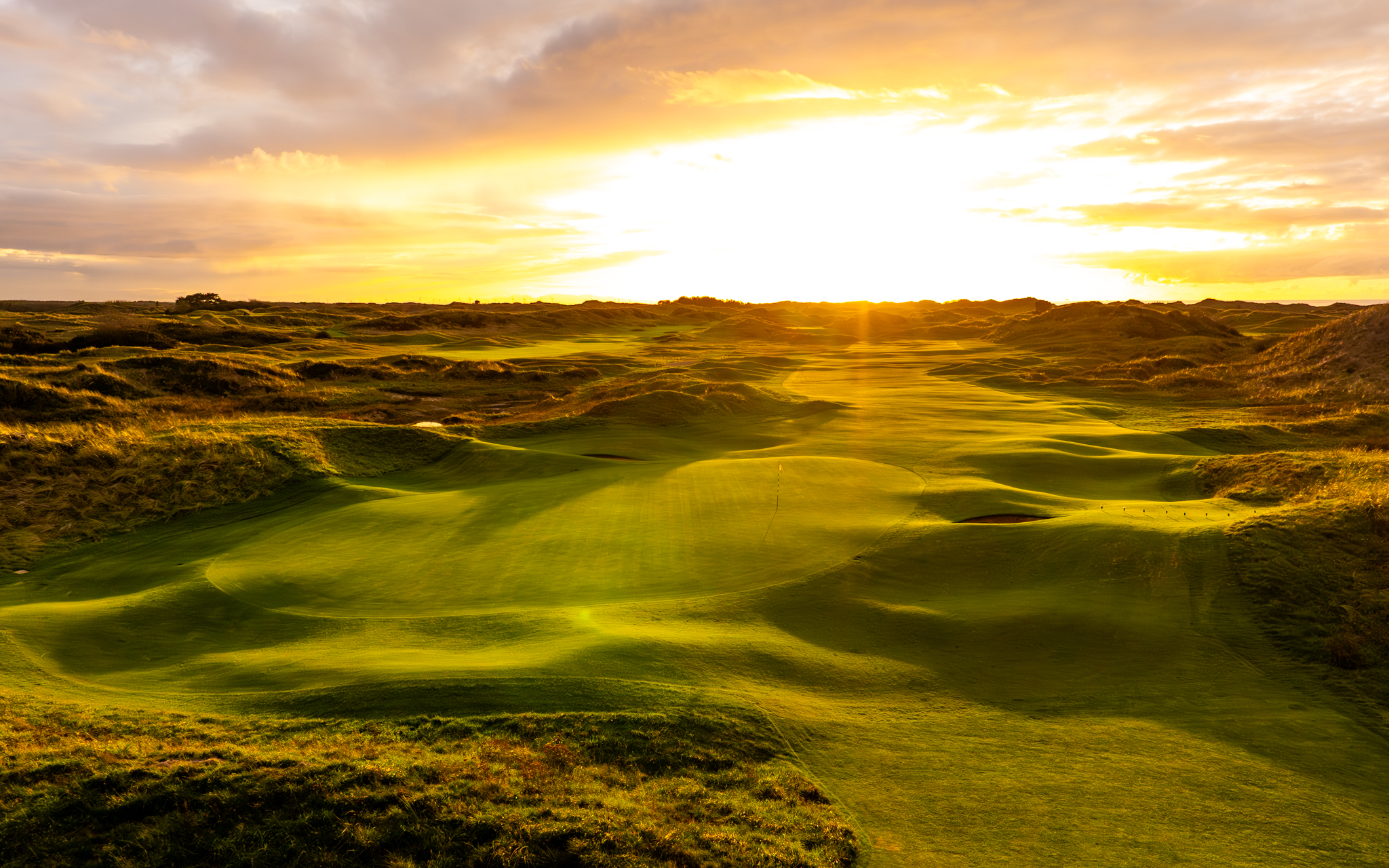
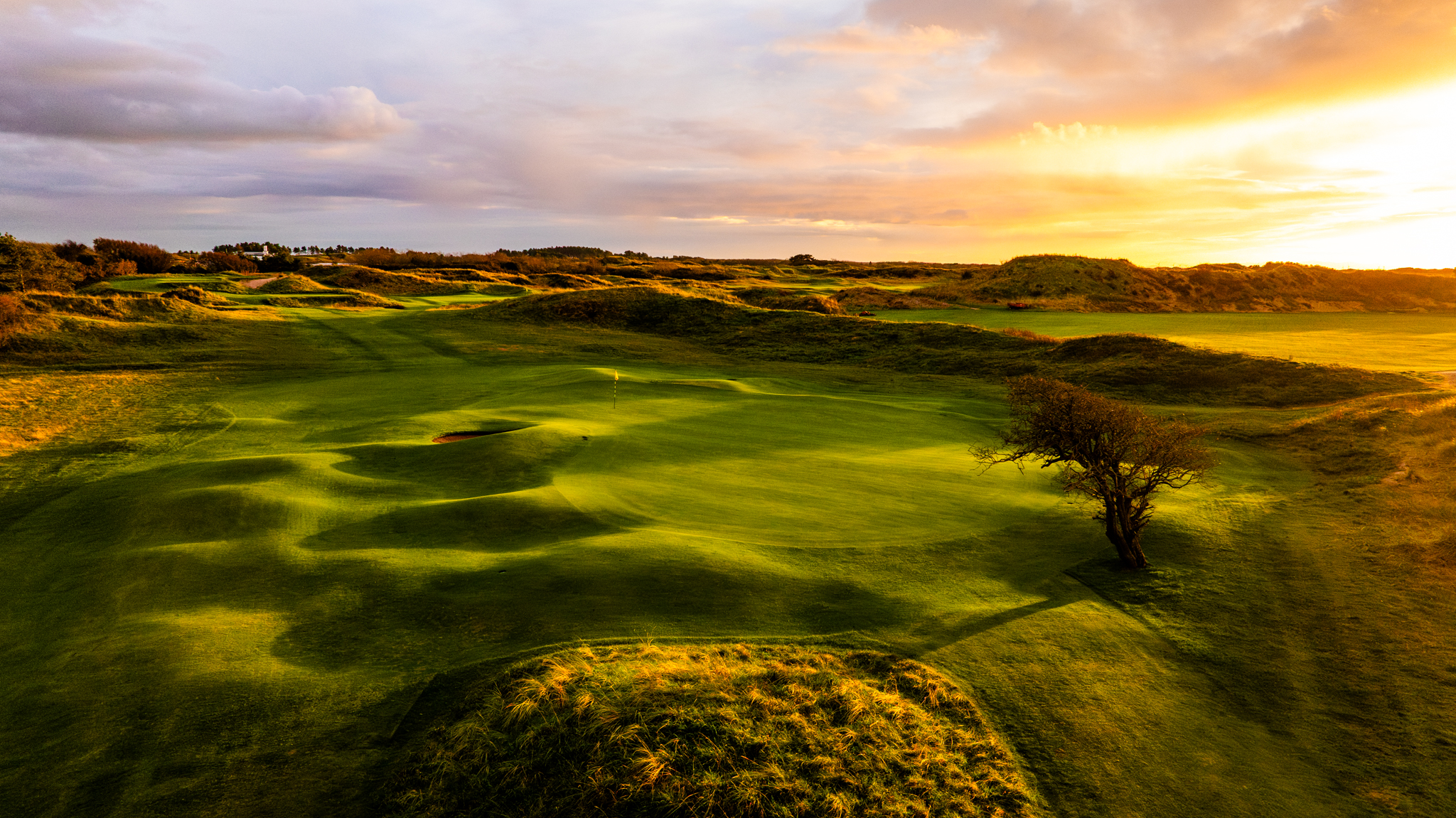
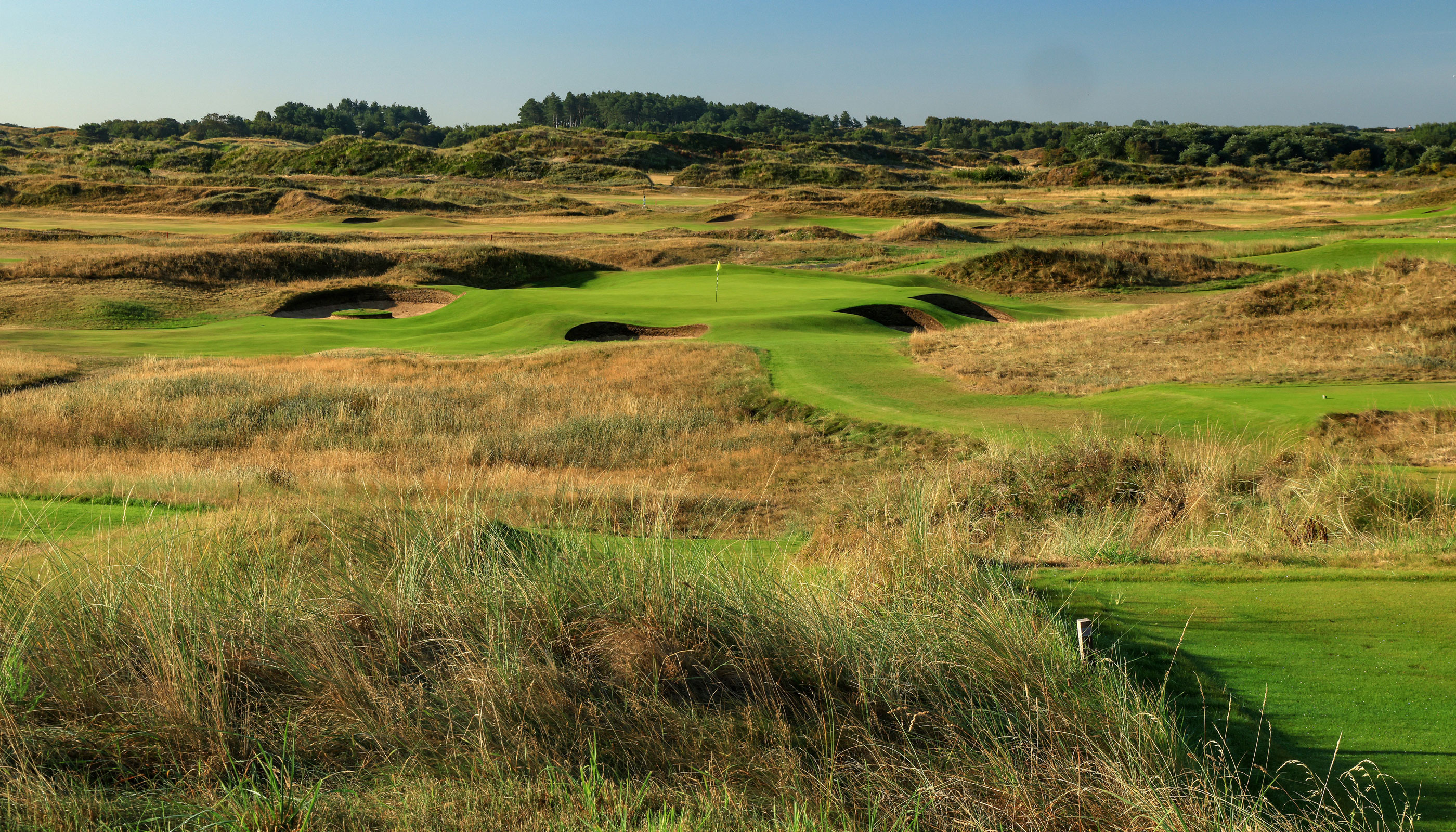
Any conversation about the golf course itself must begin with its defining feature, the towering dunes that frame Royal Birkdale’s fairways. Beyond their striking appearance, the dunes play an integral role in both the spectator experience and the shots the course demands. They provide natural vantage points for galleries during tournament play, while the dense vegetation that blankets the dunes and extends toward the fairway penalizes offline shots and creates the course’s primary defense, along with the ever-present wind off the Irish Sea. Just ask Jordan Spieth.
Royal Birkdale also features well-positioned pot bunkers typical of many links courses, though the bunkers are less severe than those found at other Open rota venues. The green complexes are, on the whole, relatively flat and simple to navigate.
In other words, the identity of the golf course is the challenge imposed by the dunes. Add in thick vegetation and a stiff sea breeze and you’ve got the core components of the test that is Royal Birkdale — far more so than its subdued putting surfaces, sparse water hazards, generally mild pot bunkers, or any other facet of the design. It is a simple formula, but one that has consistently proven effective to identify the best golfers in the world, especially when the wind decides to bare its teeth.
The Holes
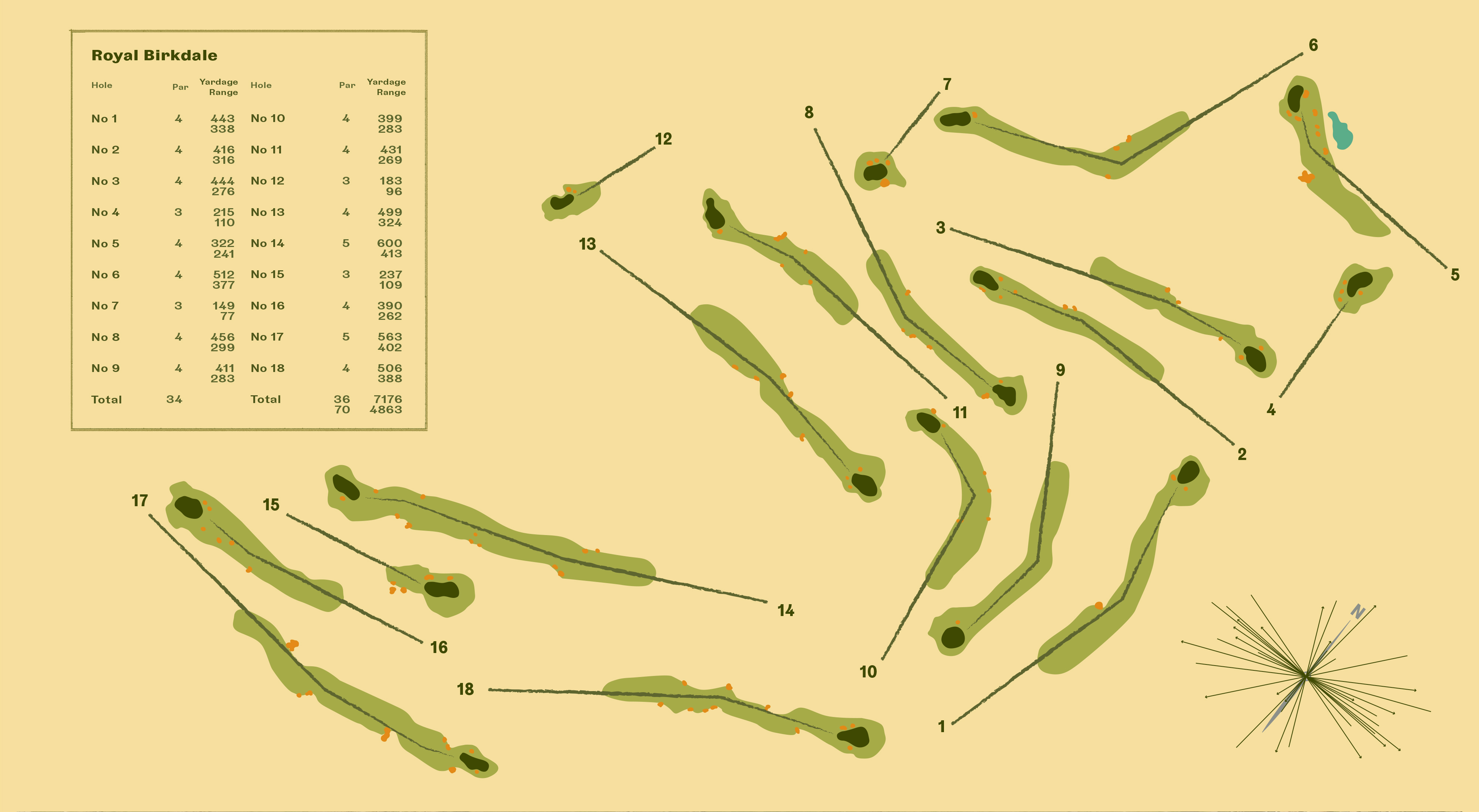
You would be hard-pressed to identify a hole that stands head and shoulders above the rest, just as it is difficult to find a weak or ill-conceived one. Royal Birkdale is best understood as a collection of 18 stout, championship-caliber holes.
Every shot demands the player’s full attention, as any hole is capable of punishing the misdirected or misjudged shot. While there may not be a signature hole like the Road Hole or an iconic stretch like Amen Corner, Birkdale represents an exacting ball-striking test from the opening tee shot to the final approach.
Browse the Course Tour below for notes on every hole at Royal Birkdale:
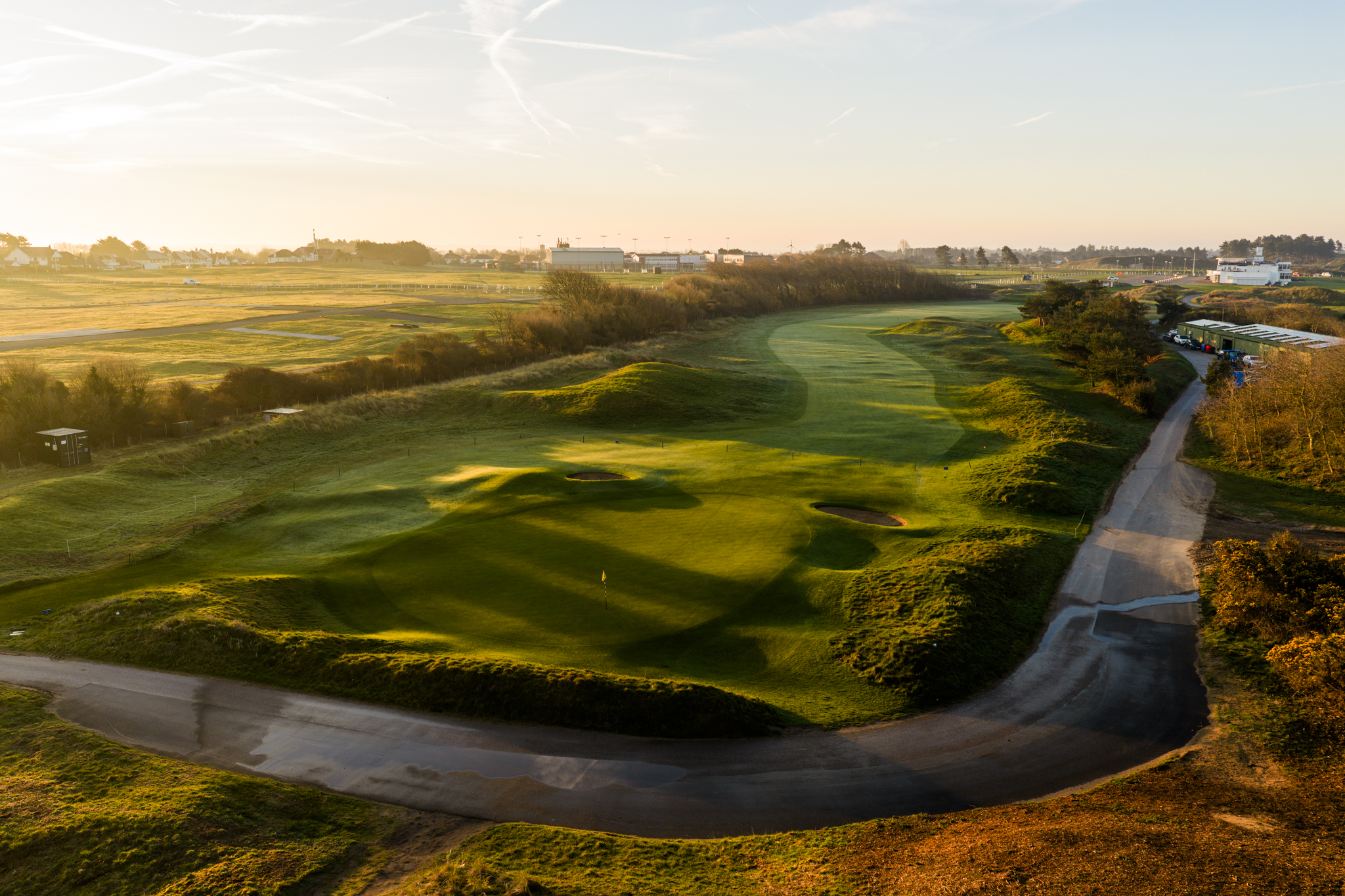
Hole 1
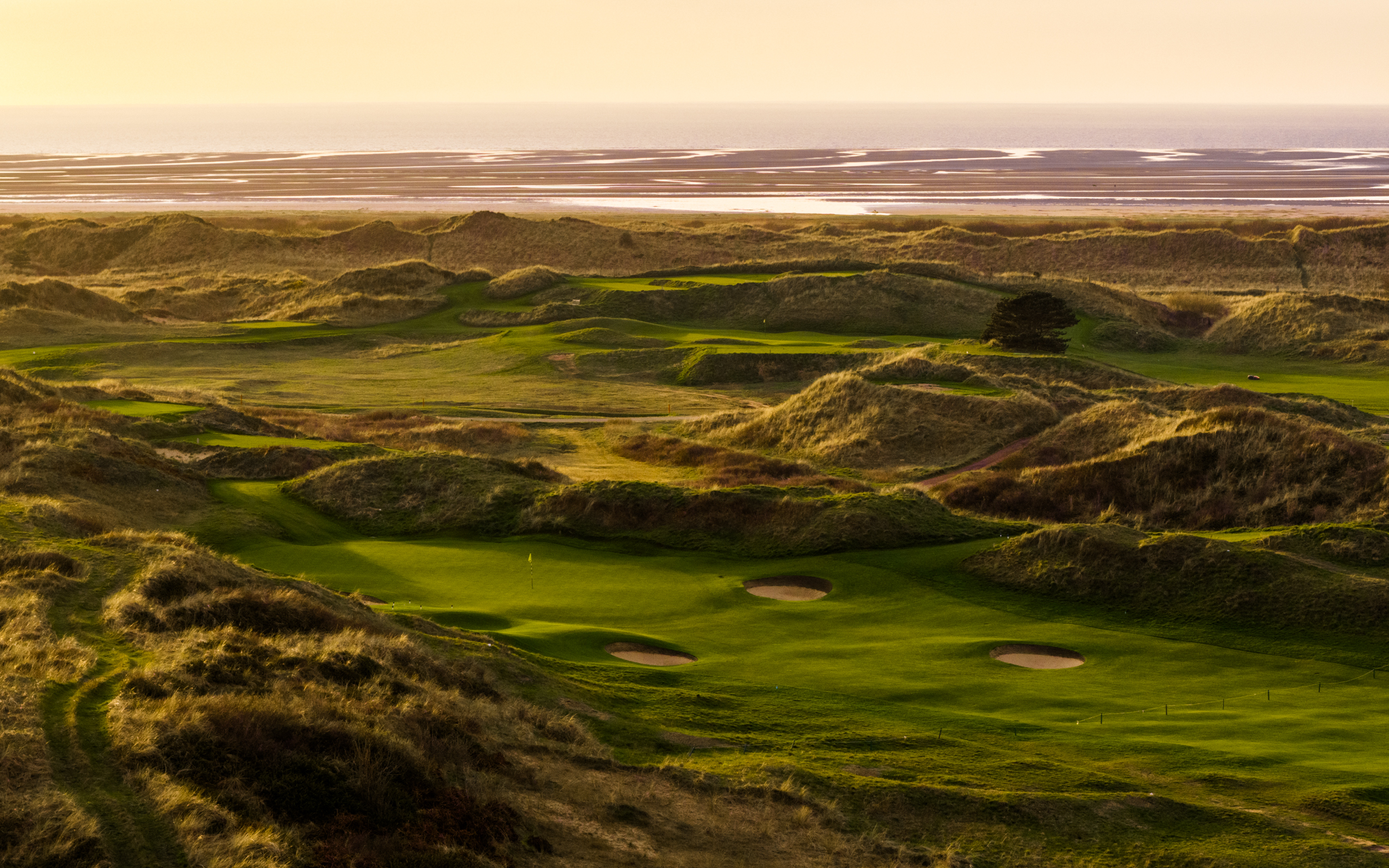
Hole 2
Hole 3
Hole 4
Hole 5

Hole 6
Hole 7
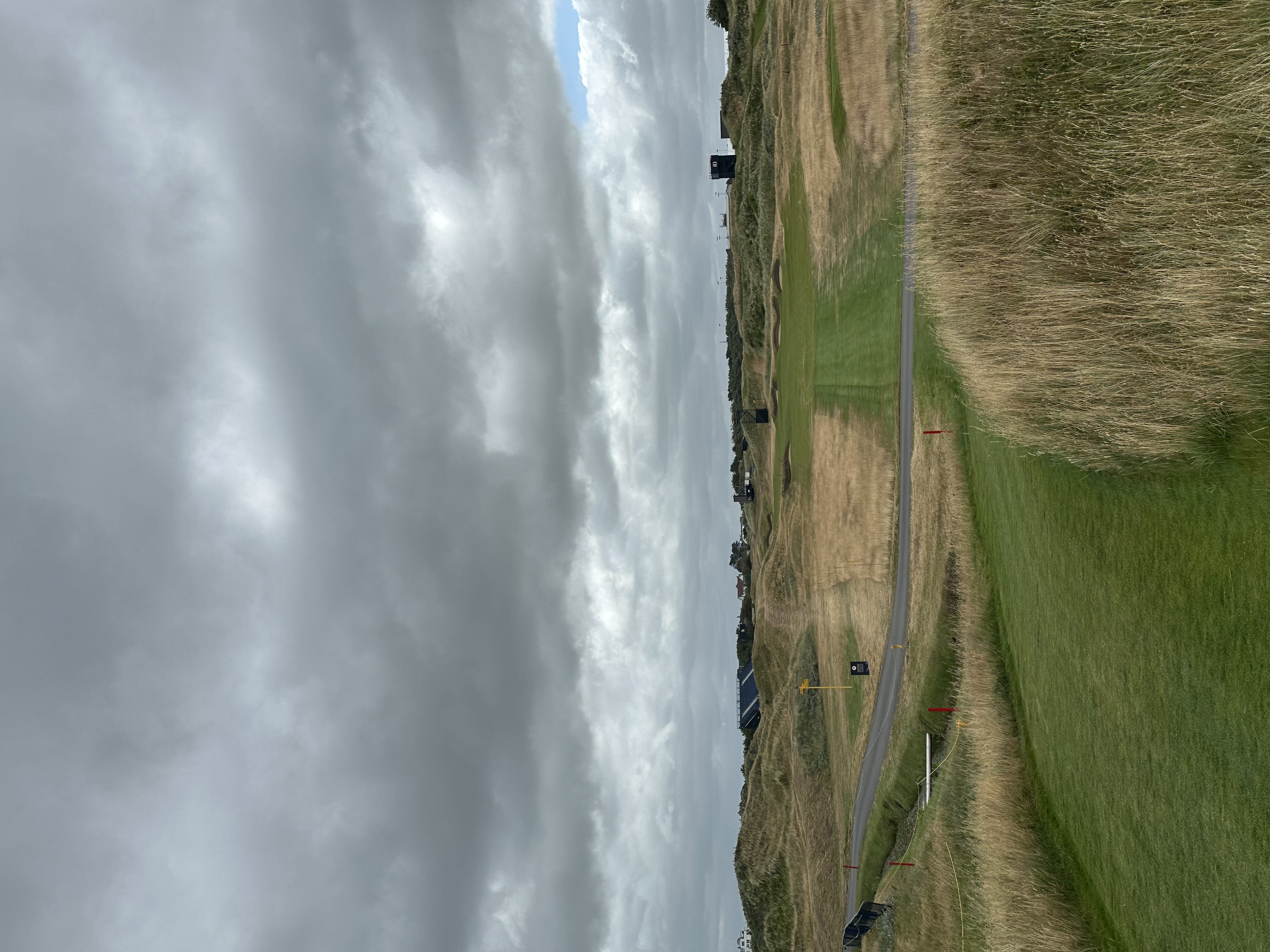
Hole 8
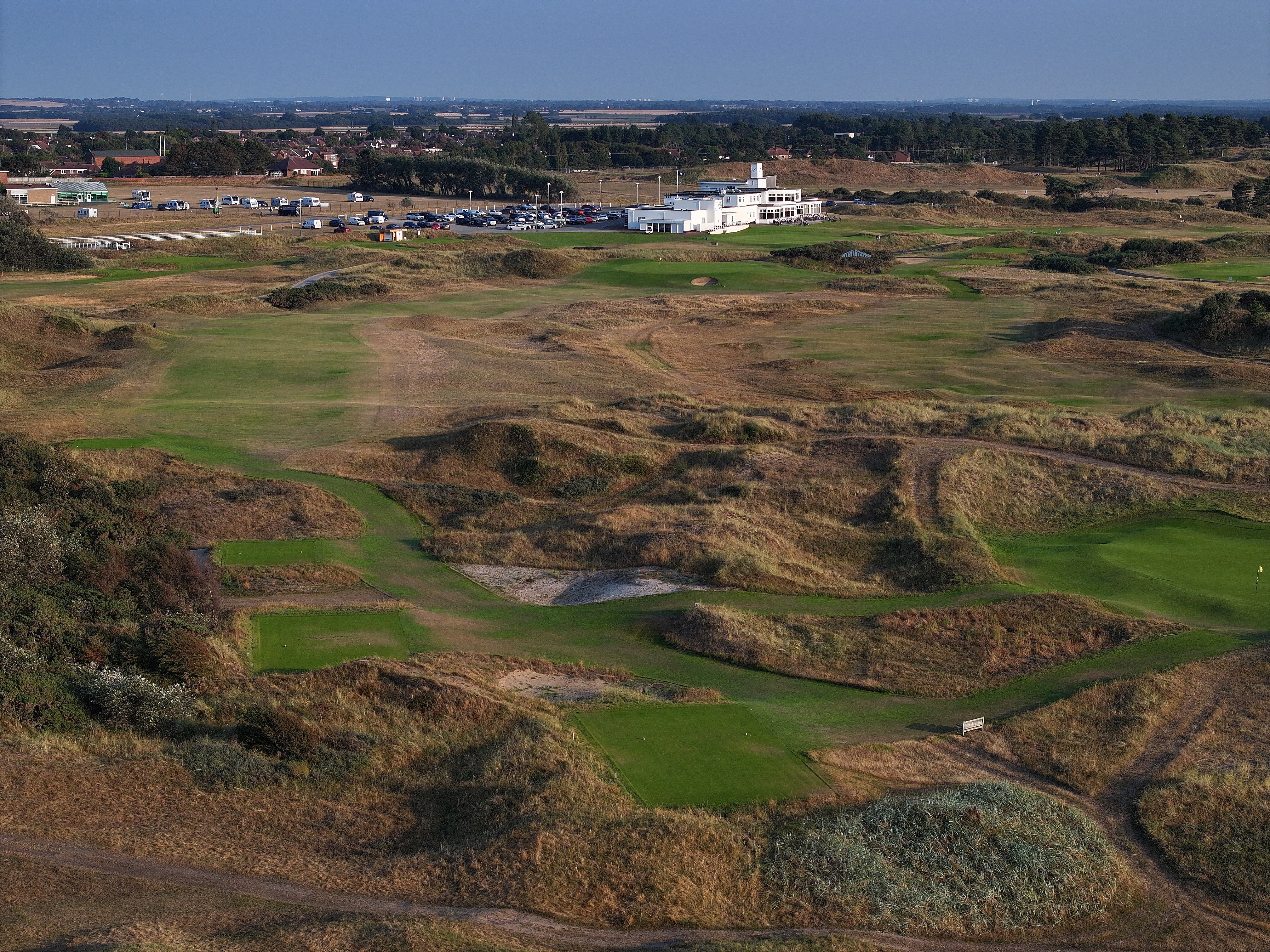
Hole 9

Hole 10
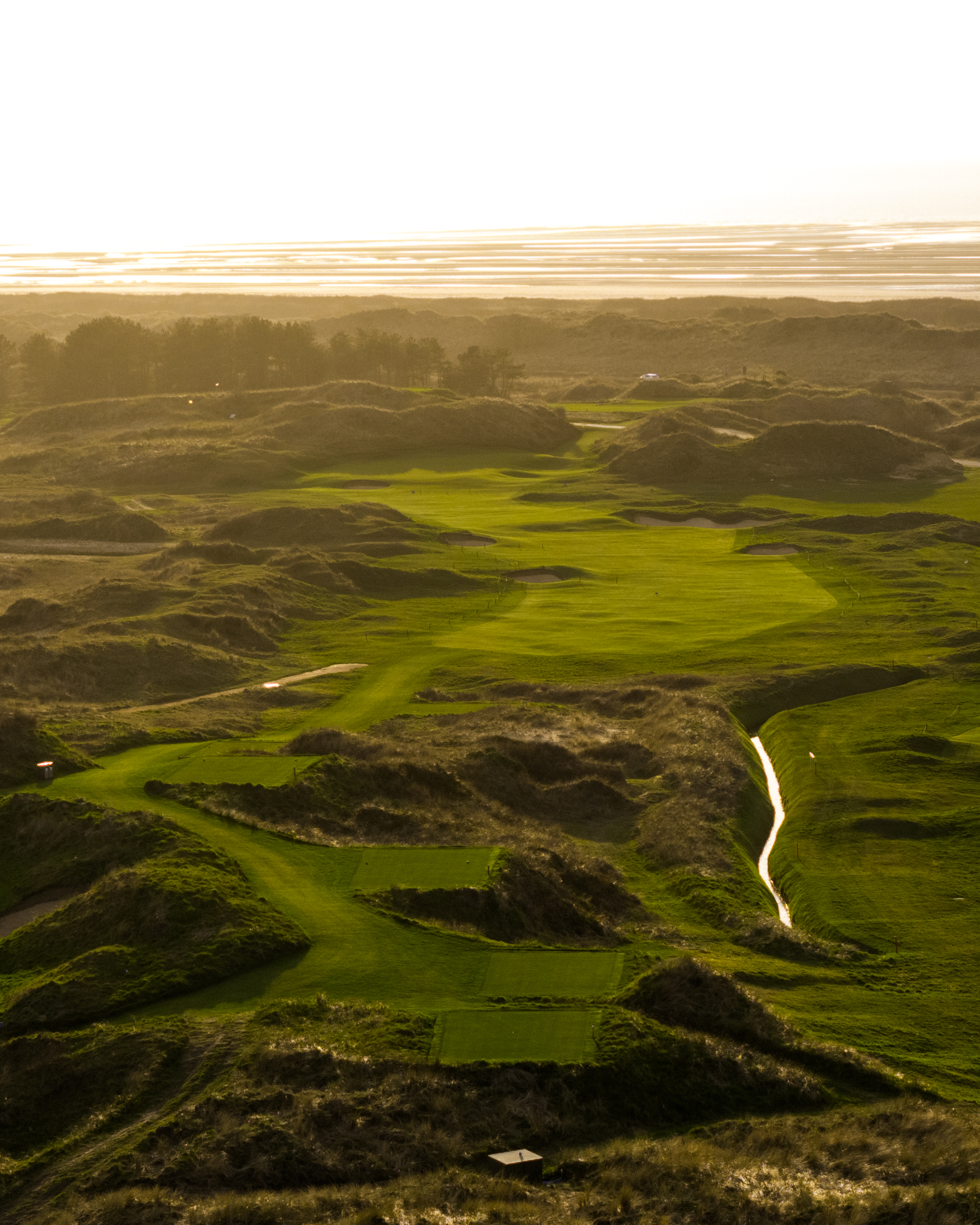
Hole 11
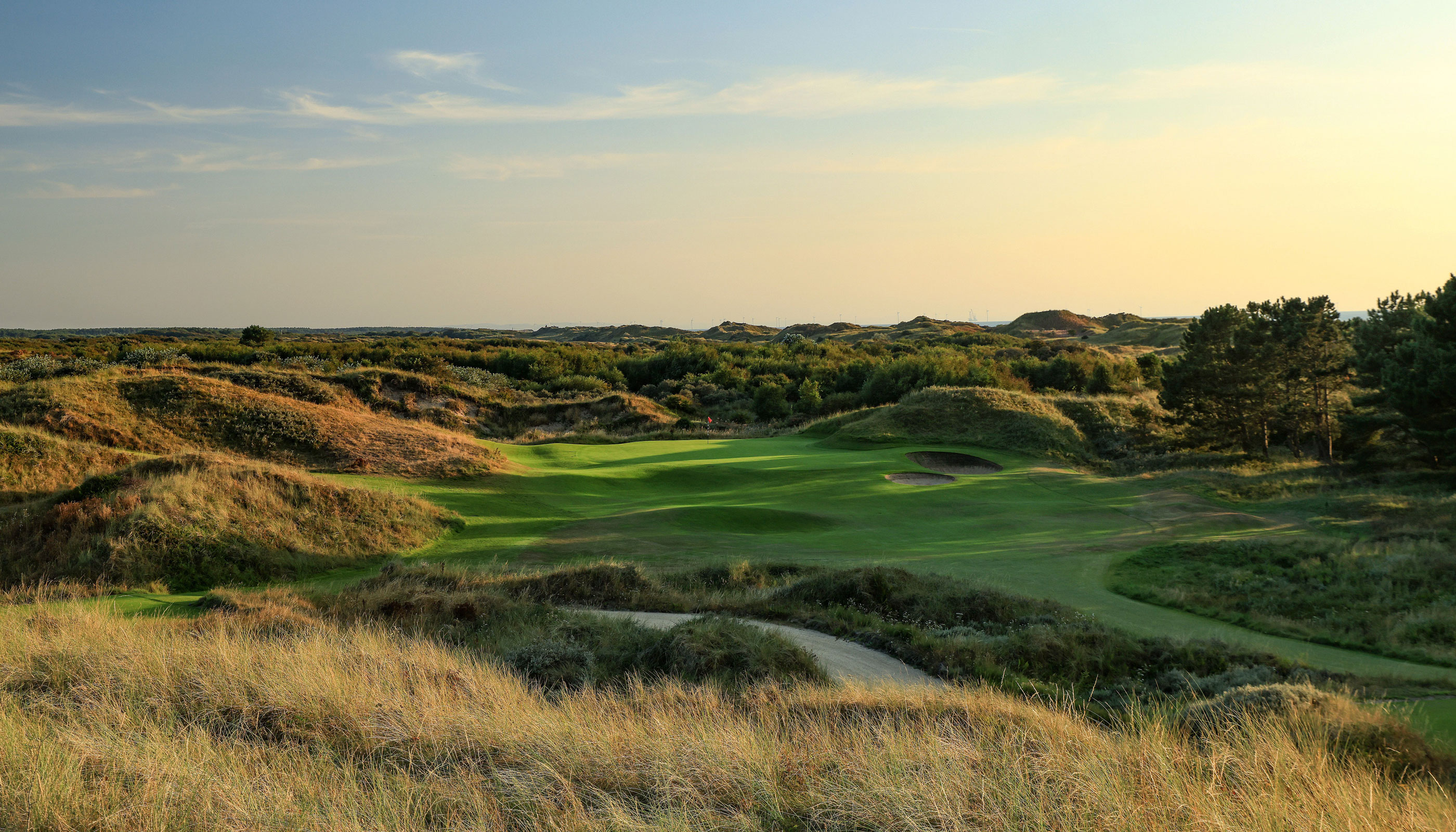
Hole 12
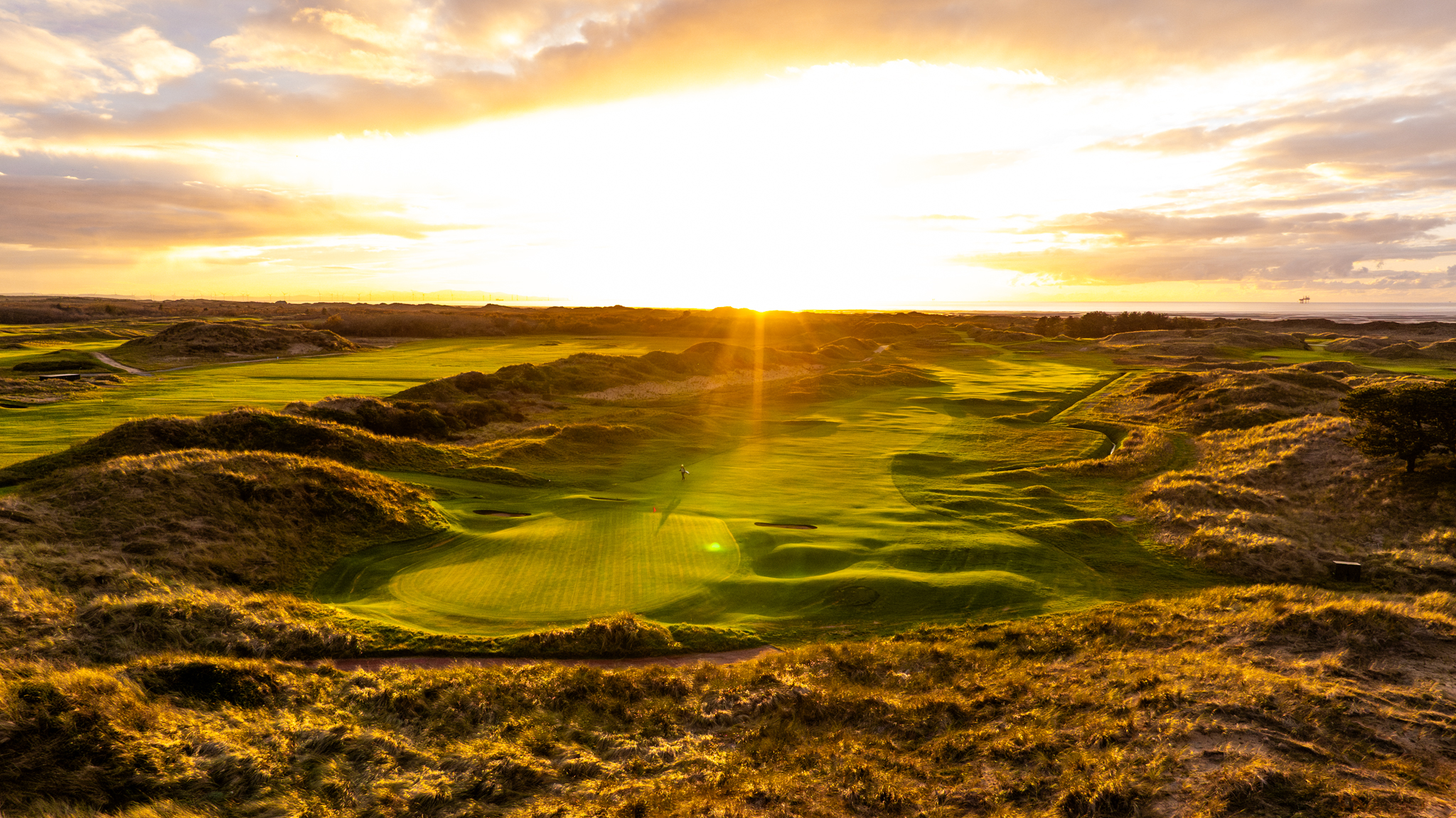
Hole 13
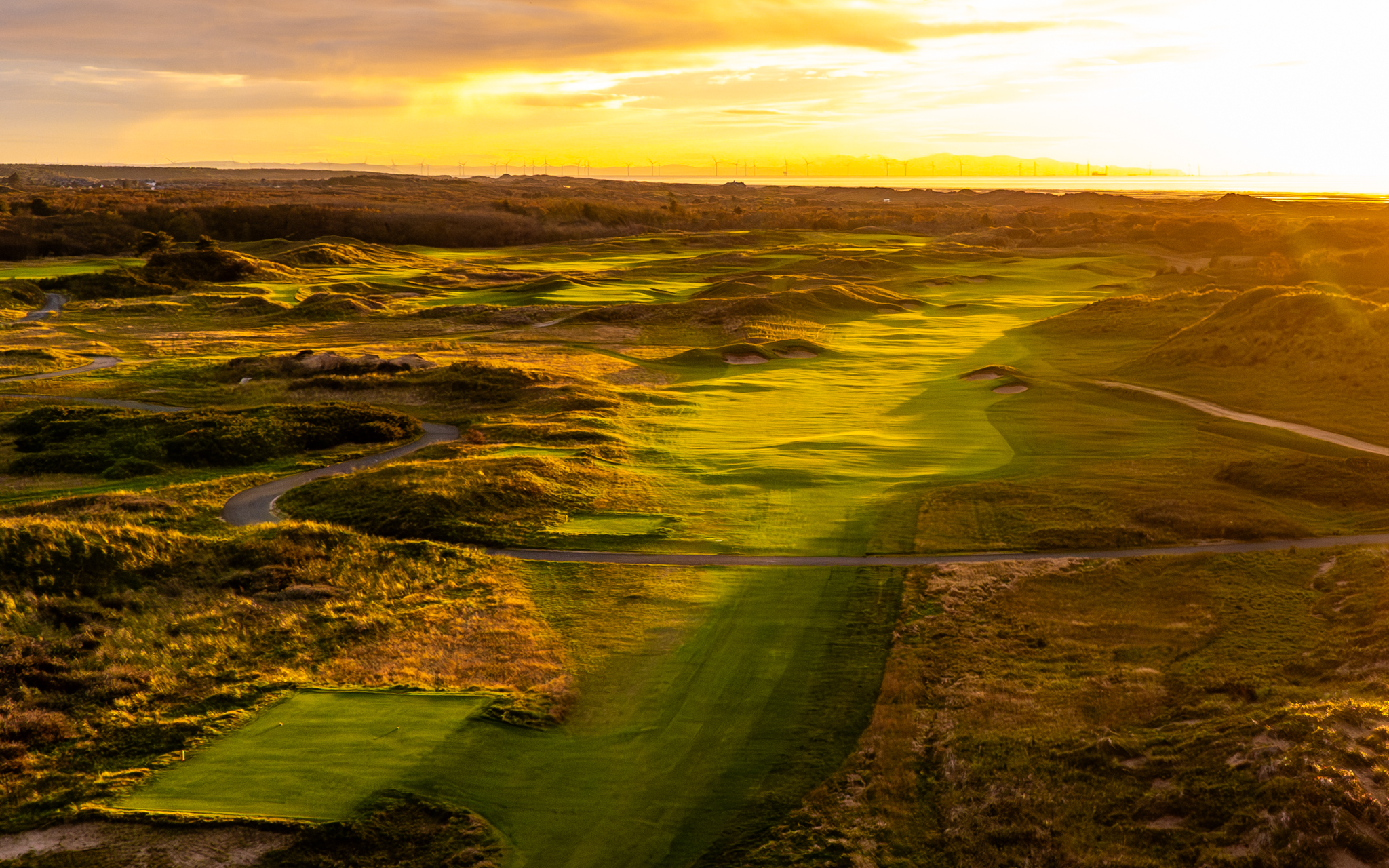
Hole 14

Hole 15
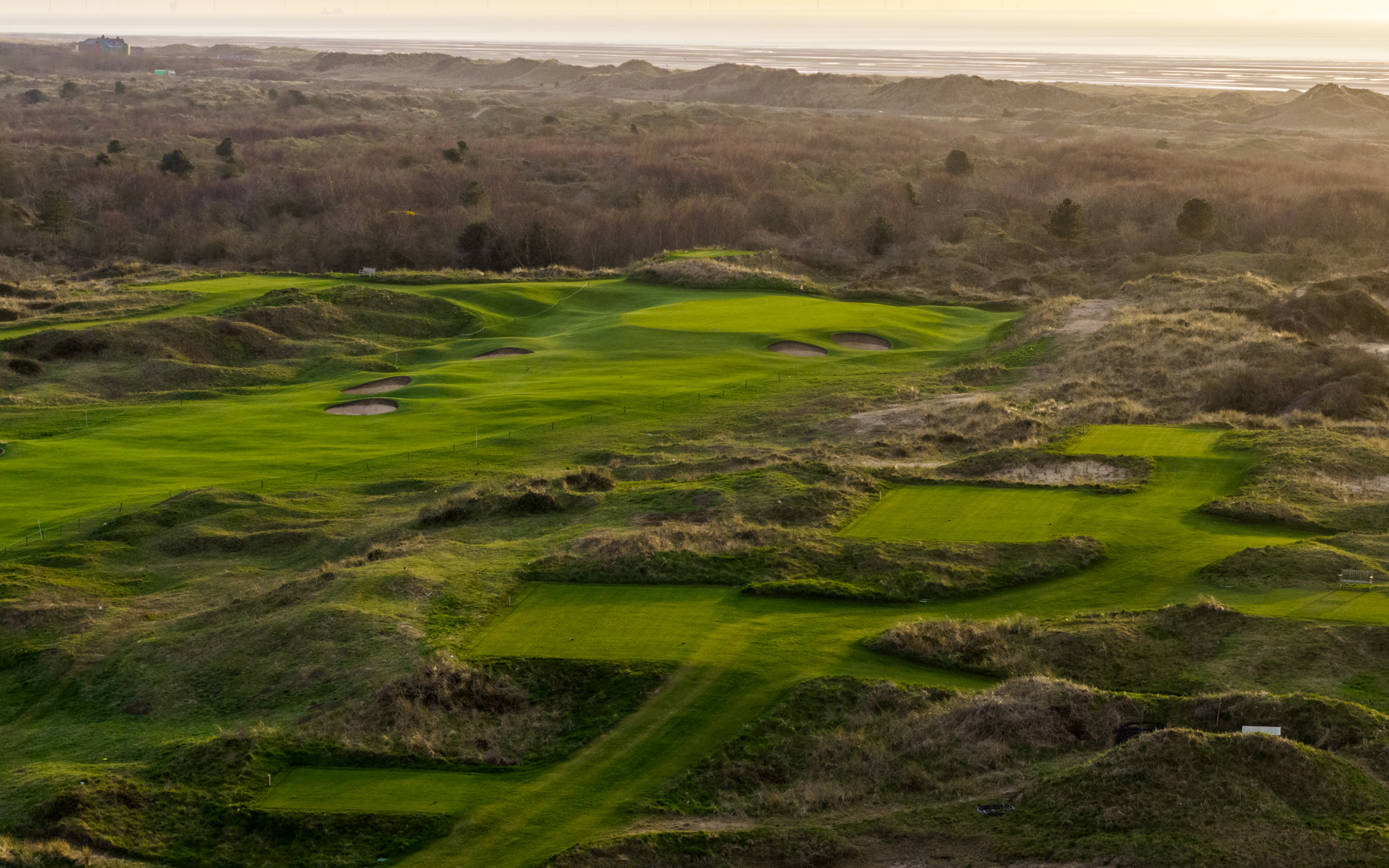
Hole 16
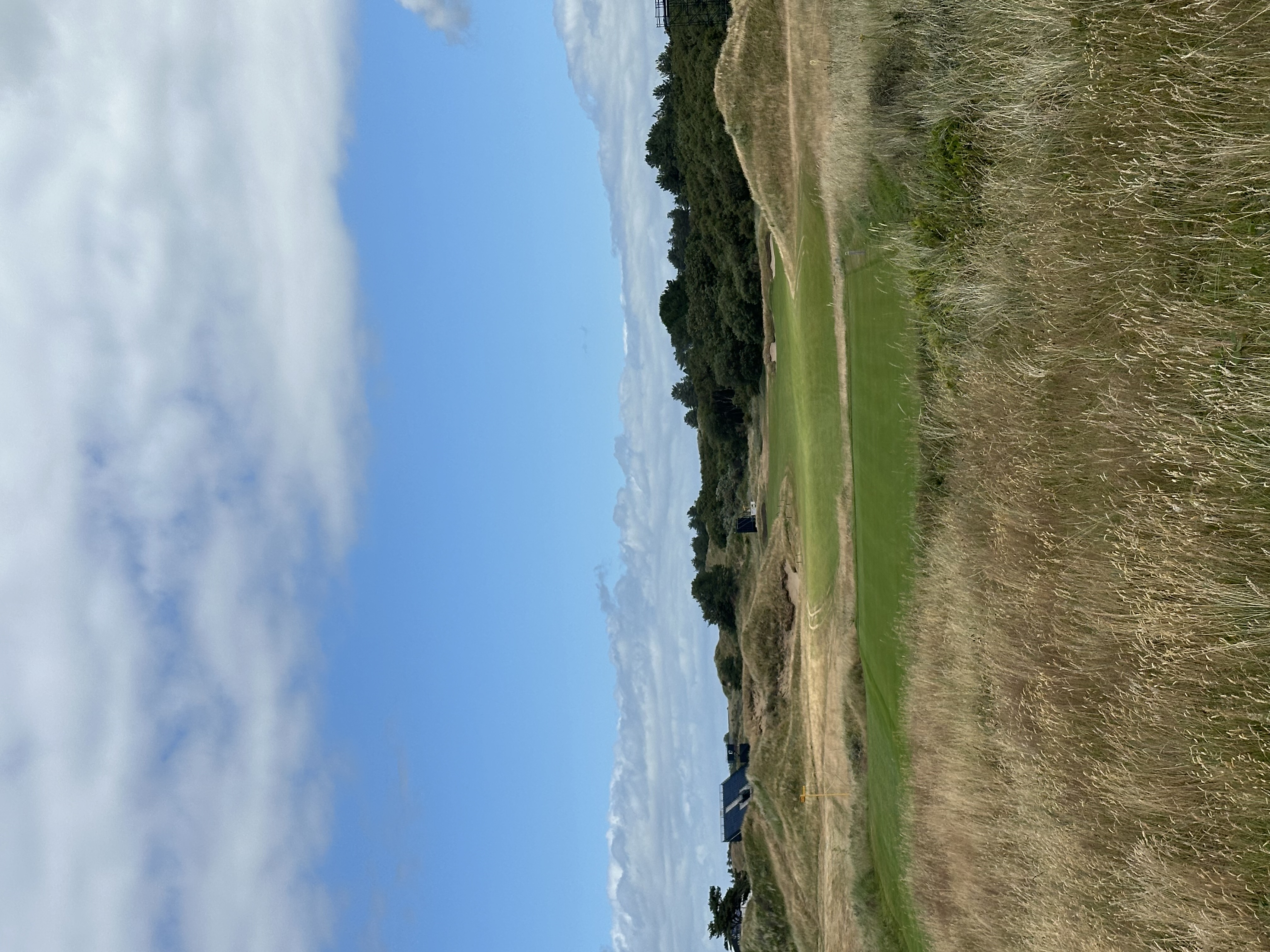
Hole 17
Hole 18

Get full access to exclusive benefits from Fried Egg Golf
- Member-only content
- Community discussions forums
- Member-only experiences and early access to events