

2026 U.S. Open Preview
On Scottie and the career slam, future stars, and Shinnecock Hills
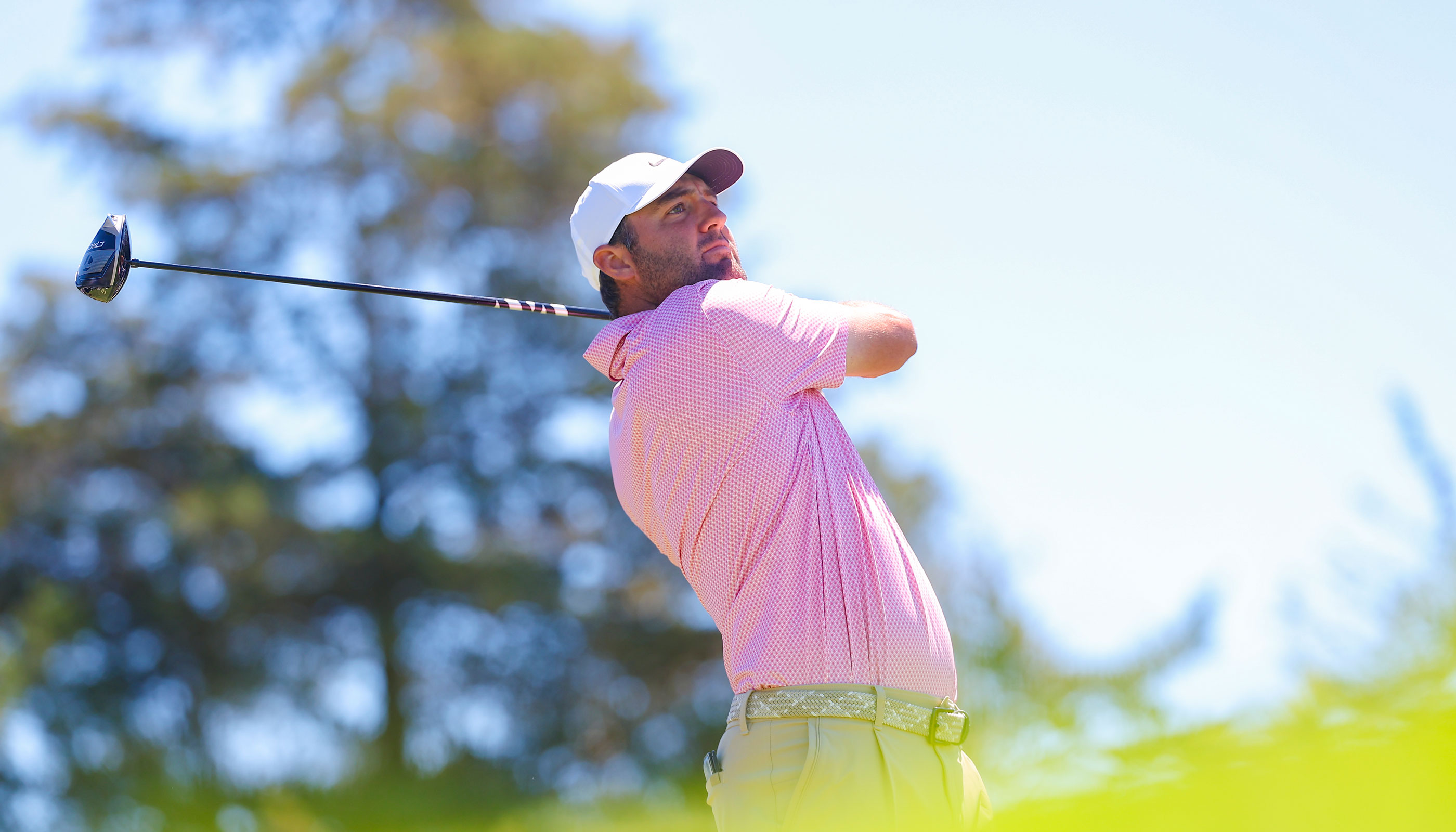

The U.S. Open is officially just 24 hours away. The venue is Shinnecock Hills, which Rory McIlroy called “the best championship course in the country” on Tuesday. The forecast is encouraging for those who subscribe to the motto “nae wind, nae golf.” Scottie Scheffler will have a chance to complete the career grand slam, and some of the world’s most promising young golfers will make their first or second major starts.
So let’s dive in. From green speeds and fairway widths to potential contenders and compelling up-and-comers, here’s what to watch for at the 2026 U.S. Open.
The Setup Tightrope
Will the USGA setup crew get it right this time?
What makes Shinnecock Hills a great test of golf is precisely what makes it difficult to set up for a championship. The winds are strong and unpredictable. The soils are sandy, making for firm, quick-drying playing surfaces. The greens are pushed up, tilted, and disdainful of middling iron shots. And the short-grass runoffs turn small mistakes into big ones, propelling the ball away from the target and toward the fescue rough.
Combine these factors, and you get a uniquely volatile golf course. Shinnecock can shift from stern to feral in just a few hours, as the USGA discovered at the 2004 and 2018 U.S. Opens.
This week, the forecast calls for sun and wind — temperatures in the low 80s and gusts in excess of 30 mph. So it’s not surprising that the greens have been slower than usual during practice rounds. Michael Kim called them “spongy” on Monday. “The golf course is definitely a lot softer,” Brooks Koepka said during his press conference on Tuesday. “Greens are definitely slower than I remember.”
The USGA’s caution may end up looking smart if the forecast proves accurate. But if there’s more rain or less wind than anticipated, don’t be shocked to see some low scores. Shinnecock is never a sure thing. –Garrett Morrison
Scottie Goes for the Slam
With his first crack at completing the career grand slam on the line, Scottie Scheffler arrives at the U.S. Open once again as the No. 1 player in the world and the clear-cut pre-tournament favorite. Despite recent struggles relative to his incredibly high standards, Scheffler still has the best chance to win come Sunday. Since the start of 2022, no player has recorded more wins (four) or top-five finishes (nine) in major championships. He remains the man to beat — the player who stokes the most fear when his name starts moving up a major championship leaderboard.
{{inline-article}}
However, by any objective measure, Scheffler enters this U.S. Open more vulnerable than he has at any point over the last couple of seasons. He has just one win in 2026, the American Express, an event that, respectfully, is far from a major championship in terms of stature and field strength. For reference, Scheffler entered last year’s U.S. Open with three wins already to his name, despite a slow start to the year as he worked his way back from a hand injury.
Any way you look at it, the 2026 version of Scheffler hasn’t quite been the world-beater of the last two years. Most notably, his iron play — the key skill this week — has fallen below the standard he set over the last couple of seasons. It remains very strong, but it is not the superpower it has been.
“I feel like I've been close most of the year,” Scheffler said Tuesday. “I feel like I just haven't been as sharp as I needed to be…Is it up to the play I've had the previous couple of years? Probably not, but it's not far off.”
I followed Scheffler for a few holes during his practice round on Tuesday and watched him hit multiple wipey fades wide right off the tee with driver and misstrike an iron shot that came up well short on No. 7. “Not far off” feels like a fair assessment of the state of his play. The problem is that not far off doesn’t cut it at Shinnecock Hills. –Joseph LaMagna
Other Contenders
Six-time major champion Rory McIlroy enters the week in strong form. He is one of only three players — along with Xander Schauffele and Justin Rose — to finish inside the top 10 at both majors this season, which includes, of course, a win at the Masters. McIlroy sounded relaxed, confident, and well-prepared during his Tuesday press conference, having made multiple scouting trips to Shinnecock in advance of the championship.
“If you can get your ball to the middle of the greens here and just putt to the corners wherever the flags are going to be, that's never going to be a bad strategy,” McIlroy stated. “The strategy that I've employed at the U.S. Open over the past few years has been a lot like that, and that's served me well. It hasn't gotten me the trophy, but it's gotten me pretty close a few years.”
The biggest question mark for McIlroy is his ability to keep his tee shots between the playing corridors. He has struggled with accuracy off the tee throughout this season, a point of weakness somewhat mitigated by the ability to hit less than driver on many of the holes. Even so, he’ll need to find fairways or he’ll spend way too much of the championship grinding to save par.
Jon Rahm should arrive on the first tee with confidence on Thursday after recording his first major championship top-five — a T-2 at last month’s PGA — since 2023. The two major titles on Rahm’s résumé undersell the caliber of player he has been for much of the last decade.
At 31 years of age, Rahm has plenty of time to add to that tally. Yet it has now been three years since his last major victory, and major championships don’t get less elusive over time. This week offers Rahm a prime opportunity to quiet those who have been critical of his performance over the last few years in majors, particularly given some of the uncertainty in Scheffler’s game.
Among the other notable names considered contenders, Brooks Koepka — the champion the last time the U.S. Open was hosted at Shinnecock Hills in 2018 — carries some concern after withdrawing from the RBC Canadian Open with a hand injury in his most recent start. It is an unfortunate development for Koepka, who has been striking the ball well all season and, after early-season struggles, began to find some form with the putter in recent weeks.
“It's just the ulnar nerve, just flared up a little bit,” Koepka told the media on Tuesday. “There's no pain.”
Koepka shouldn’t be ruled out entirely from contending in this championship. But it was already an uphill climb for Koepka to rediscover the form that produced five major championship wins, a mountain that didn’t get any less steep now that he’s dealing with a hand injury.
Zooming out, given the volatility a setup like Shinnecock can provide, combined with some uncertainty in the world No. 1’s form, I wouldn’t be surprised to see a player who isn’t one of the top four to six names win this championship. Could a true long shot win? Sure, it could happen. But given the premium placed on approach play, which is as high at Shinnecock as at any other major venue I’ve seen, it is difficult to envision a completely off-the-radar player suddenly summoning the elite level of iron play required to win here.
A player such as Sam Burns, Patrick Reed, Russell Henley, J.J. Spaun, or Si Woo Kim could easily find themselves in the final pairing on Sunday. Shinnecock Hills enables a diversity of styles to succeed, but nobody will find success on this golf course without strong iron play. –Joseph LaMagna
Will a Future Star Emerge?
An amateur winning the U.S. Open has not happened in nearly a century and is very unlikely to happen this week. But considering the quality of amateur players in this field, it doesn’t feel out of the realm of possibilities that one could find himself in contention on the weekend.
None of these amateurs should have high expectations coming in. But the sport’s future stars, the true generational talents, tend to reveal themselves early in their major championship careers, albeit typically at older ages. Scottie Scheffler finished T-4 in just his fifth major championship start. Rory McIlroy finished T-10 in his third major start at age 20.
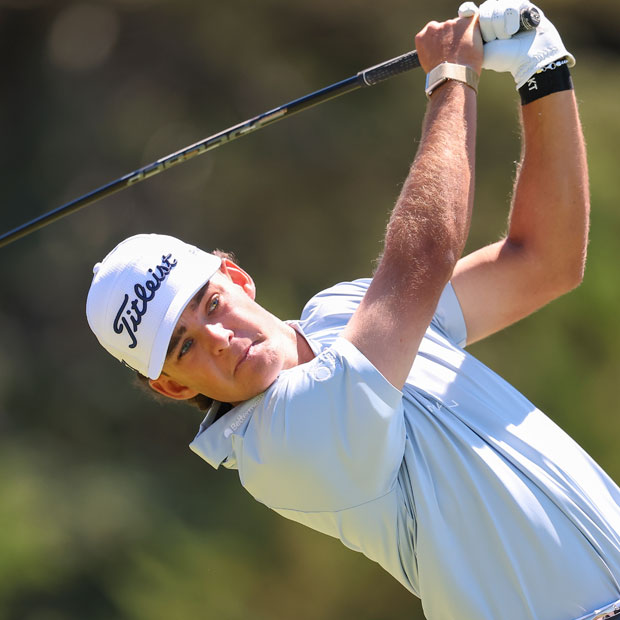
Jackson Koivun, the 21-year-old two-time Haskins Award winner who will make his professional debut at the John Deere Classic later this summer, may very well be the best amateur prospect of the last decade. Seventeen-year-old phenom Miles Russell is making his major championship debut. Reigning NCAA individual champion Preston Stout is in the field. So is Georgia commit and 2025 U.S. Amateur champion Mason Howell.
Expectations should be tempered, given these players’ ages and the level of golf required to contend in major championships. Nonetheless, the game’s true greats tend to defy odds and announce their arrivals earlier than expected. Perhaps this week will provide our first high-profile glimpse at one of the next generation’s stars. –Joseph LaMagna
Flynn-Width Fairways
Before the 2018 U.S. Open, the USGA tightened several fairways at Shinnecock Hills. Holes 3, 4, 5, 12, 13, 14, 15, 16, and 18 all played substantially narrower during that championship than they do for members. This year, the USGA has chosen to keep Shinnecock’s fairways at their normal widths.
“The fairways are very generous at Shinnecock Hills,” Jeff Hall, Managing Director of the U.S. Open, wrote in an email to Fried Egg Golf, “but that is how [original architect] William Flynn intended it to be, and that width is both strategic and practical. It’s built for the elements.”
Hall’s emphasis on Flynn’s intent represents a general shift in the USGA’s thinking about course setup. In recent years, the U.S. Open has quietly phased out its “toughest test in golf” branding, focusing instead on each venue’s distinctive history and architecture. “We are fortunate to be able to conduct the U.S. Open at venues that each have their own unique characteristics, which may challenge players a bit differently,” Hall added, “and we think that is fantastic.”
{{inline-course}}
Perhaps the USGA realized that an identity based on difficulty was bound to falter in the era of 460cc drivers and protein-rich diets. Whatever its rationale, though, the U.S. Open has landed on the right message. The courses should define the championship, not the other way around.
Still, I wouldn’t expect Shinnecock to play noticeably easier just because it’s a bit wider. The story will be the same as it was in 1986, 1995, 2004, and 2018: if the wind shows up, players will have all they can handle. As Scottie Scheffler put it on Tuesday, “You put a 20-mile-an-hour wind out there, these fairways with how firm they are, are not going to play super wide.” –Garrett Morrison
Key Hole to Watch
No. 11: The 157-yard par 3 certainly has the attention of players on site this week.
One player told me on Monday that if the wind blows at the intensity it was blowing on Monday during the tournament, the 11th green would be unplayable.
Perched up and completely exposed to the elements, the green slopes steeply from back to front. A shot that bounces over the back of the green — like Brooks Koepka’s on Sunday in 2018 — leaves a treacherous shot that is nearly impossible to stop, especially if facing an atypical headwind out of the north like on Monday.
Every hole at Shinnecock Hills is worthy of spectating, but keep a particularly close eye on scorecards as players make their way through No. 11. There will be quite a few tournaments derailed on No. 11 this week, and more than a few expletives muttered along the way. –Joseph LaMagna




Seven Takeaways from the 2026 Solheim Cup
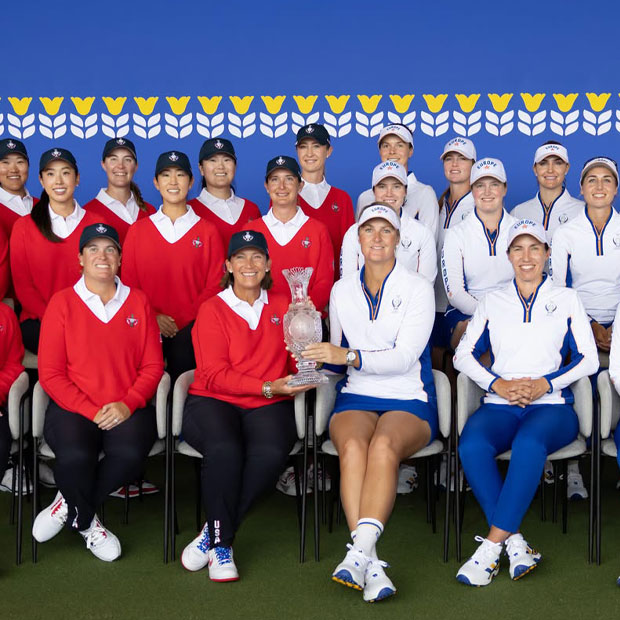
2026 Solheim Cup Preview
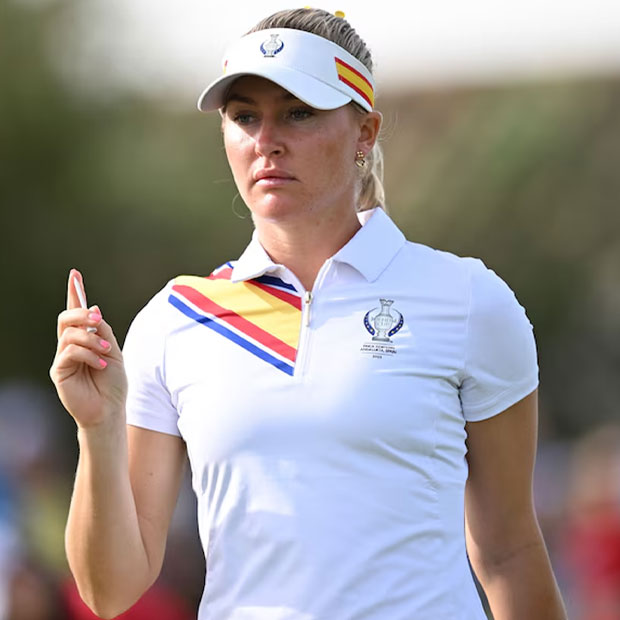
2026 Solheim Cup Player Profiles: Team Europe
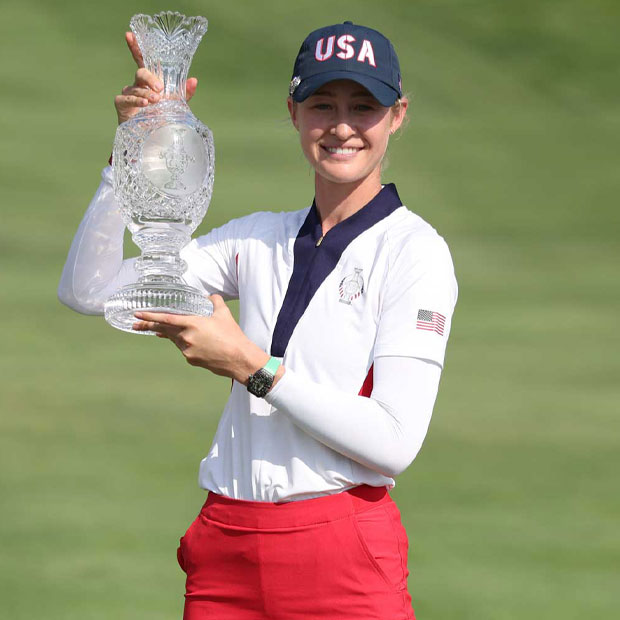
2026 Solheim Cup Player Profiles: Team USA
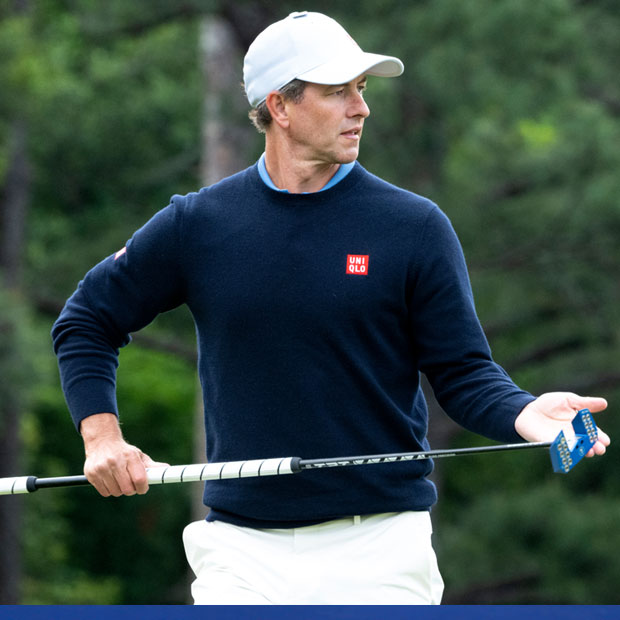
International Star Power In Decline at 2026 Presidents Cup
Jackson Koivun and a Presidents Cup Gamble Worth the Risk
Get full access to exclusive benefits from Fried Egg Golf
- Member-only content
- Community discussions forums
- Member-only experiences and early access to events