

Alternate Shot: Revisiting the 2018 U.S. Open at Shinnecock Hills
The last, true ass-kicker major championship
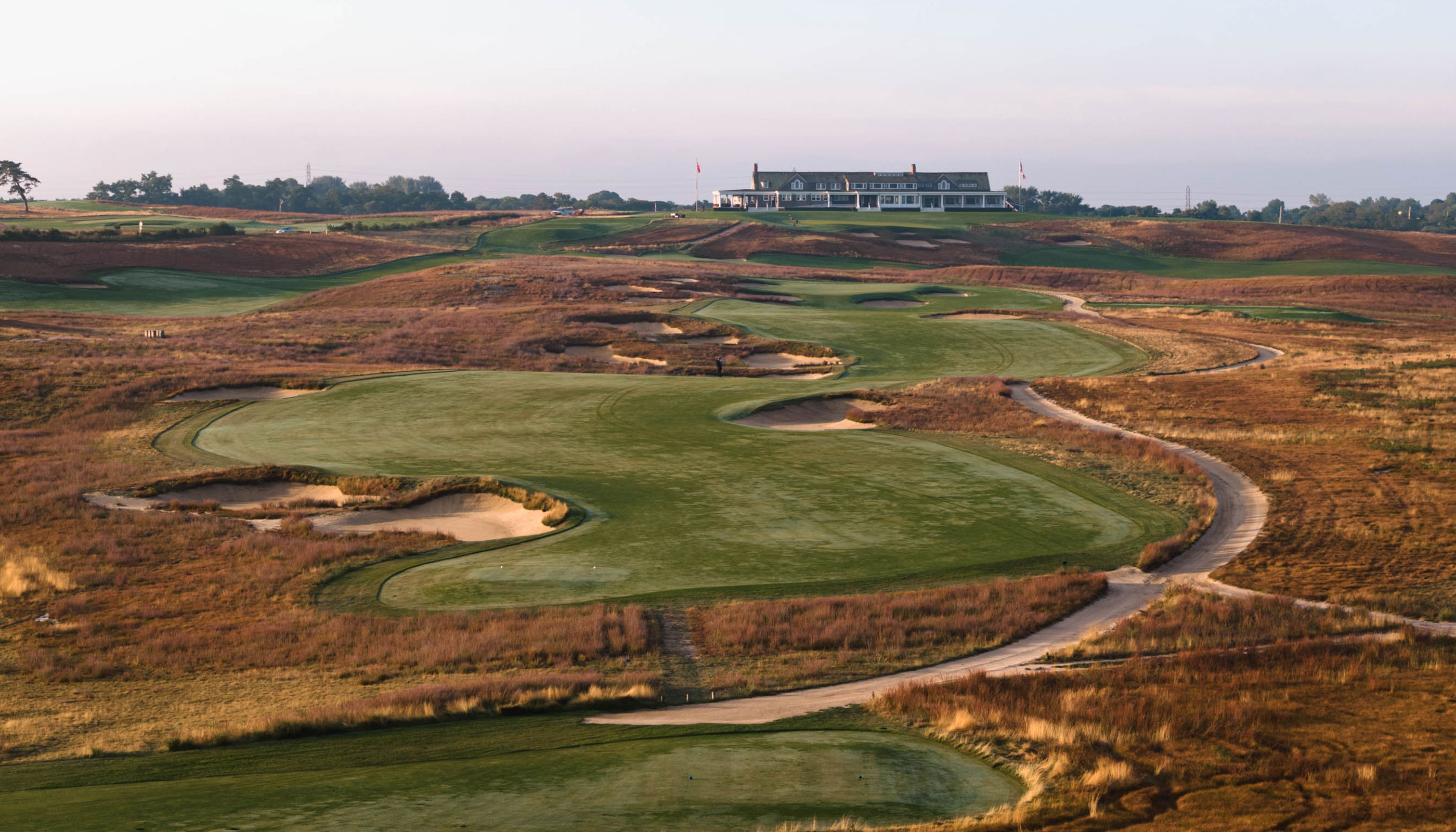

Joseph LaMagna: Brendan, today I’d like to test the limits of how early is too early to start talking about next year's U.S. Open. Entering this past year, I thought Oakmont would serve as a litmus test for whether professional golfers can still be truly challenged in the modern era. I’m not talking about the “demanding but fair” variety. You know what I mean: The kind of week that kicks the best players in the world in the teeth, gets them red behind their ears, and reduces many of them to expletives. The Pittsburgh rains this June robbed us of the chance to see if the USGA and Oakmont still had a week like that in them.
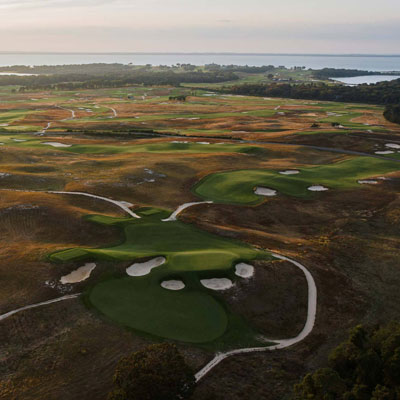
Enter Shinnecock Hills, site of next year's U.S. Open and home to the last time professional golfers got verifiably, deeply pissed off at a major championship. The first-round scoring average (76.5) in 2018 was the highest of the last 25 years and the only first-round average over 75 in the last 15.
People will recall, of course, the infamous Phil Mickelson scene on 13 on Saturday and the subsequent apology. Or Zach Johnson declaring that the USGA had lost the golf course, which is somehow funnier to watch now than I’d remembered. “Uh, no, we’re not on the edge…we’ve surpassed it.” His anger is palpable.
What’s less easily remembered: Rory McIlroy starting 6 over through five holes on Thursday en route to an 80 and a missed cut. Jordan Spieth missing his first major championship cut in 14 starts. Jon Rahm shooting 15 over across 36 holes. Michael Block opening with 85. Some of the best players in the world fully ejected. As did Michael Block.
There’s a reasonable argument to be made – in fact, I’ll make it – that the 2018 U.S. Open was the last true ass-kicker. Between pace-of-play constraints, the need to get 156 players through a golf course, and the USGA’s sensitivity to angry golfer complaints, the ‘18 U.S. Open may have been the last of its kind. Pinehurst No. 2 in 2024 represented the blueprint for the modern U.S. Open. It was a lovely challenge: dialed, stern, controlled, and safe. It never flirted with the line of getting out of control. Hard but tame.
{{inline-course}}
In taking a trip down memory lane and revisiting content from 2018 U.S. Open week, I came across this wonderful article you wrote for SB Nation – a myriad of amusements and insights from your time spent on the grounds.
So I’ll put it to you: What are your core memories from that week? Did 2018 mark the end of the pro golf test that truly enrages players? And what are the chances we see a 2026 U.S. Open that dares to approach the line of going over the edge?
Brendan Porath: Never too early to do a little Flashback Friday and think ahead to next year’s U.S. Open! I love this discussion. I have so many core memories. Without looking at that article and going off the top of my head, this major birthed many memes, amusements, and as you noted, a new era of U.S. Open control.
There was English writer John Hopkins doing an interview with Holly Sonders on FOX calling Phil Mickelson “a silly ass” and “making no apologies for it because I’m British.” Brandel went in on the USGA for myriad reasons, including equipment regulation, saying it had “no obvious leadership” and “lost the trust of the golf world.” There was the Zach Johnson “they’ve lost the golf course” meme. The weather was beautiful. The course was divine. Crowds were massive and getting there on the LIRR, or really any point west of the course, was a total nightmare. Brooks put on a masterclass and was at the peak of his powers, becoming the first player since Curtis Strange to go back-to-back at the national championship. So many memories. I could keep going.
The memory with the largest space in most brains would obviously be Phil Mickelson finally breaking and hitting the moving ball. It was chaos on the ground from that point forward, with debates raging over whether he should be DQ’d, shipped out to sea, laughed with, and so on — I distinctly remember writing this piece a few days later and the bullets here portray how he’d overtaken the coverage of the U.S. Open and USGA. His brain broke. He had enough, but the larger discussion over setup had just started.
This is where I have long maintained that Mike Davis, the USGA, and anyone else responsible capitulated and were done trying to really push the limits. The player whining had won, and we’d see a different era after this 2018 edition, which Garrett captured eloquently following Brookline. Davis went up on the Golf Channel set and apologized with his tail between his legs when I am not sure he really had to on this one — it was just a couple pins and some unexpected wind, but nothing too crazy, relatively speaking. Like a kid who keeps getting in trouble, however, they had zero margin with the players by this point and any unfair setup choice or mistake was going to trigger an outsized reaction perhaps not commensurate with the actual offense. The golf course was hard, but that this became another black eye or approached anything like the 2004 disaster, watering the redan green between groups, was an exaggeration. The larger context of Chambers Bay conditioning and the Oakmont ruling in back-to-back years was still so fresh. The 2004 Shinny embarrassment hung out there. The relationship with the players was at an all-time low. Set against the backdrop of that very public and large FOX deal, there was talk of boycotts and revolts against the USGA exploiting their talents for a one-week windfall. And then they got caught with a few borderline choices, Phil turned it into a sideshow, and a new era of U.S. Open setups would begin.
Joseph: Agree! It is the week that tipped the scales in favor of fairness, at least for the foreseeable future.
One reading is that the USGA has lost its backbone and has yielded to the path of least resistance: a comfortable, successful position to take, even if it defies the spirit of championship golf. Another more sympathetic interpretation is that the USGA has been forced to accept that modern technological advancements have compromised the ability to punch players between the eyes without venturing into the territory of unplayability.
I don’t want to fully exonerate the USGA, especially given that irresponsible equipment advancement has happened under its watch, but the impetus for the shift is easy to understand. Like a referee in any sporting event, you never want to become part of the story. In taming setups, the USGA has ensured it will not become the story of its championships.
In the wake of the ass-kicking era, U.S. Opens have still delivered great golf tournaments. Worthy champions have been crowned. The championships print money. The USGA escapes scrutiny. I don’t know what would prompt a shift back in the other direction.
Still, hasn’t some of the spirit of the game been lost if the best players in the world never walk off a green in a daze over what they just encountered? If you never go over the line, are you ever getting close enough to it? I suppose a prime litmus test is on the horizon.





2026 Presidents Cup Player Profiles: International Team

2026 Presidents Cup Player Profiles: Team USA
Whiparound Friday: Solheim Cup Ratings, Jon Rahm, and a PGA Tour Bye Week
2026 Solheim Cup Grades
Explaining the PGA Tour's New Championship, Challenger Series Pathways
Seven Takeaways from the 2026 Solheim Cup
Get full access to exclusive benefits from Fried Egg Golf
- Member-only content
- Community discussions forums
- Member-only experiences and early access to events