
Q&A on the Lawsuit Opposing the East Potomac Takeover
Breaking down the latest updates on the popular D.C. muni
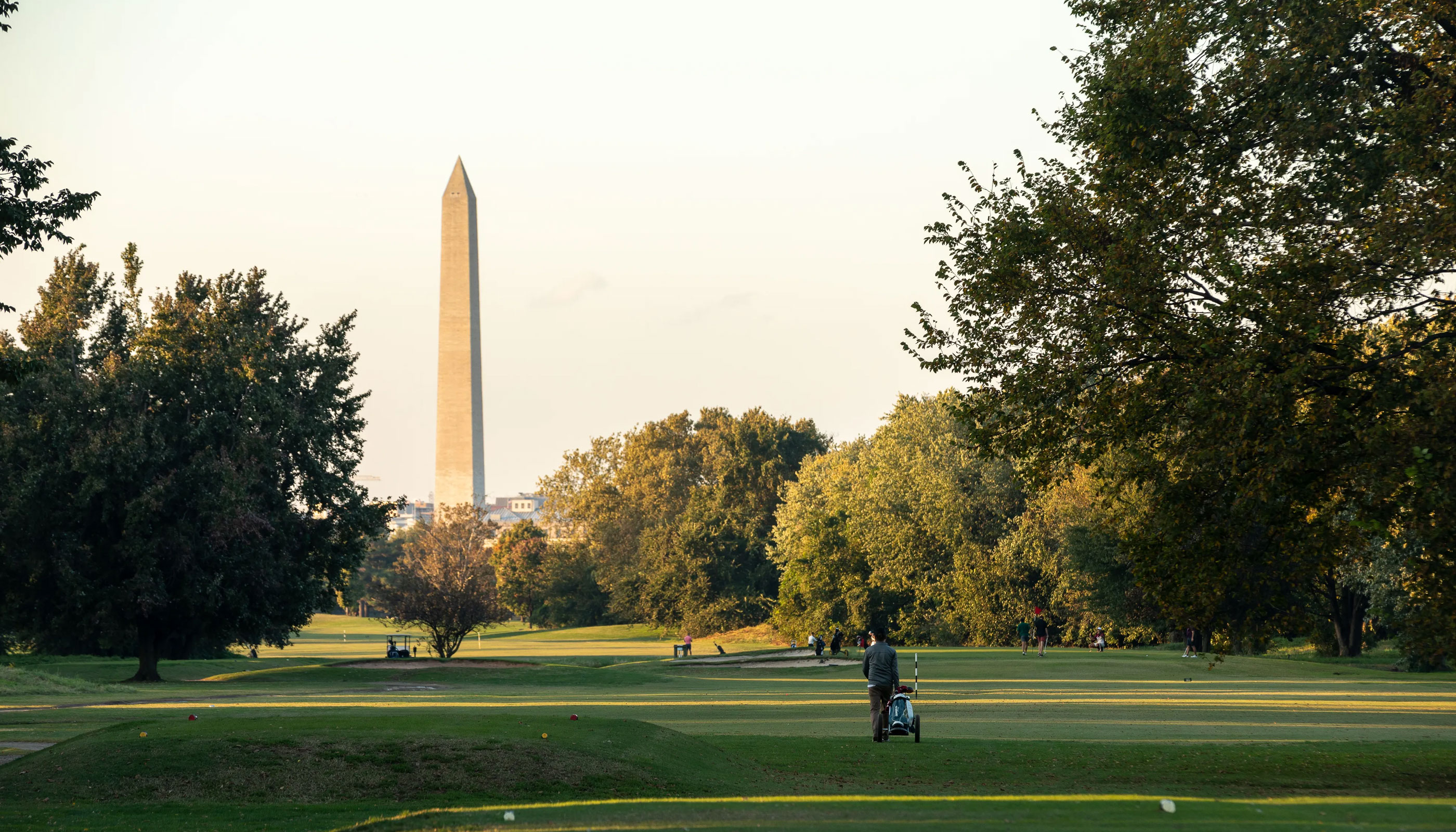

Last Friday, the news outlet NOTUS reported that the U.S. government would officially take over East Potomac Golf Links on Sunday, May 3, and begin renovation work. This appeared to be a breaking point in the Trump administration’s battle with the National Links Trust, the nonprofit group that has managed East Potomac and two other federally owned golf properties in Washington, D.C., since 2020. (Our own Garrett Morrison delved into the background and stakes of this conflict for our website and on Pablo Torre Finds Out in January.)
But Sunday came and went, and East Potomac continued with business as usual.
That doesn’t mean the Trump administration is backing off, however. The Washington Post revealed last Saturday that a prominent Trump-world fundraiser is soliciting donations to the “National Garden of American Heroes Foundation,” which says it will support the administration’s efforts to transform East Potomac into a high-end championship venue.
On Monday, the D.C. Preservation League and two D.C. residents sought an emergency court intervention to stop the administration’s actions in East Potomac Park. This group — represented by Democracy Forward, Lowell & Associates, and Democracy Defenders Fund — first filed suit against the government in February. To understand the recent developments in the case, we sent a few questions to Will Bardwell, Senior Counsel at Democracy Forward. Bardwell is also a golf writer and occasional Fried Egg Golf contributor.
Fried Egg Golf: What was the upshot of Monday’s hearing?
Will Bardwell: While Judge [Ana] Reyes did not make a formal ruling, she was clear that she doesn’t want the government moving forward with the project behind anyone’s back. [Editor’s Note: Reyes directed the administration to obtain court approval before cutting down more than 10 trees and to give proper notice if it intends to close East Potomac. “Let’s just say, given some issues around the District recently,” she said, “I would have a particular concern that we not act first and ask forgiveness later.”] And really, that’s what we always wanted: an assurance that what happened to the East Wing and the Kennedy Center doesn’t happen at East Potomac while the case is still proceeding.
FEG: The National Links Trust and Troon have continued managing East Potomac over the past four months, even though the government terminated NLT's lease at the beginning of this year. As far as you understand, did that change on Monday?
Bardwell: Based strictly on media reports, my understanding is that NLT and Troon are still handling East Potomac’s day-to-day operations. But that’s an arrangement between them and the National Park Service. It’s important to note that neither NLT nor Troon is part of our case. Our case isn’t about leases or contracts. It’s only about the public’s right to protect East Potomac from being destroyed.
FEG: Let’s take a couple of steps back here. What is the basis for the lawsuit brought by the D.C. Preservation League and two local residents?
Bardwell: The government is breaking the law in three different ways:
First, it violated the National Environmental Policy Act, which requires agencies to study the foreseeable environmental effects of big decisions and to take those effects into consideration.
Second, it violated the National Historic Preservation Act, which prevents the government from running roughshod over historically significant buildings and places (like East Potomac) without opening up the decision-making process to the public, so that everyday people can make their concerns known.
Third, destroying East Potomac would violate the National Park Service Organic Act, the law that created the National Park Service back in 1916. That law requires NPS “to conserve the scenery and the natural and historic objects and the wildlife” within national parks, “and to provide for the enjoyment of the same in such manner and by such means as will leave them unimpaired for the enjoyment of future generations.”
Destroying a historically priceless park (with one of Washington D.C.’s most diverse wildlife populations) would violate that requirement. Imagine if someone bulldozed a children’s playground and built a Six Flags in its place. Would it still be a park? Kind of. But would it leave the space unimpaired for future generations? No. It’s the same idea in the East Potomac case.
FEG: What is the next step in the litigation?
Bardwell: There are a couple of trains moving simultaneously on different tracks. The government recently filed a motion to dismiss (which is common in these types of cases), and our response to that motion is due on May 21. Separately, we will be asking Judge Reyes to allow discovery, which would let us seek documents and other information that the government hasn’t already turned over.
FEG: There is a lot of concern among D.C. golfers about how East Potomac Park might be transformed over the next few years. What do the plaintiffs know so far about the Trump administration's plans for a renovation?
Bardwell: Most of what we know is already public knowledge. By now, we’ve all seen the illustrated renderings. They show that the new, championship-style course would eat up every square inch of East Potomac Park, including recreational areas that currently aren’t even part of the golf complex.
We also now know that the fundraising is being handled by President Trump’s top campaign fundraiser, and that they’re setting up a nonprofit to funnel donations through — so that donors can write the whole thing off on their taxes. Where that leaves us is this: we know that the plan was approved, that the government has been implementing it, that fundraising is occurring, and that they’ve got illustrated renderings of the design.
Ironically, one of the government’s main arguments in this case is that they’re nowhere close to making a final decision about moving forward with the project. It’s hard to take that argument seriously anymore.
FEG: What kinds of legal hurdles would the administration face if, say, it attempted to eliminate Ohio Drive, Potomac Heritage Trail, and the various non-golf recreational areas in East Potomac Park?
Bardwell: In all likelihood, the government would run into a fundamental problem that lies at the heart of the East Potomac case: this is federal parkland, not somebody’s backyard. National parks are protected by the law because they belong to the people, not the occupant of the White House.
I don’t know of a golf course anywhere that captures that spirit better than East Potomac. It’s beloved by golfers and non-golfers alike. People who have never picked up a golf club in their lives enjoy walking there and hanging out at the field house. Who knows how many kids have played their first round at East Potomac? It’s the very best of golf.



On Finding the Fun in Golf (Again)

Golf Needs More Good Stewards

Alt Shot: Golf vs. the Machines

Good Good and Bad Things

2026 Walker Cup Preview with Lahinch Golf Club Member

Separating Schlock from Substance in Golf Entertainment
Get full access to exclusive benefits from Fried Egg Golf
- Member-only content
- Community discussions forums
- Member-only experiences and early access to events