

The Masters and the Men of Letters
A story of love and two letters from legends of the game that trace back to one week in Augusta 40 years ago
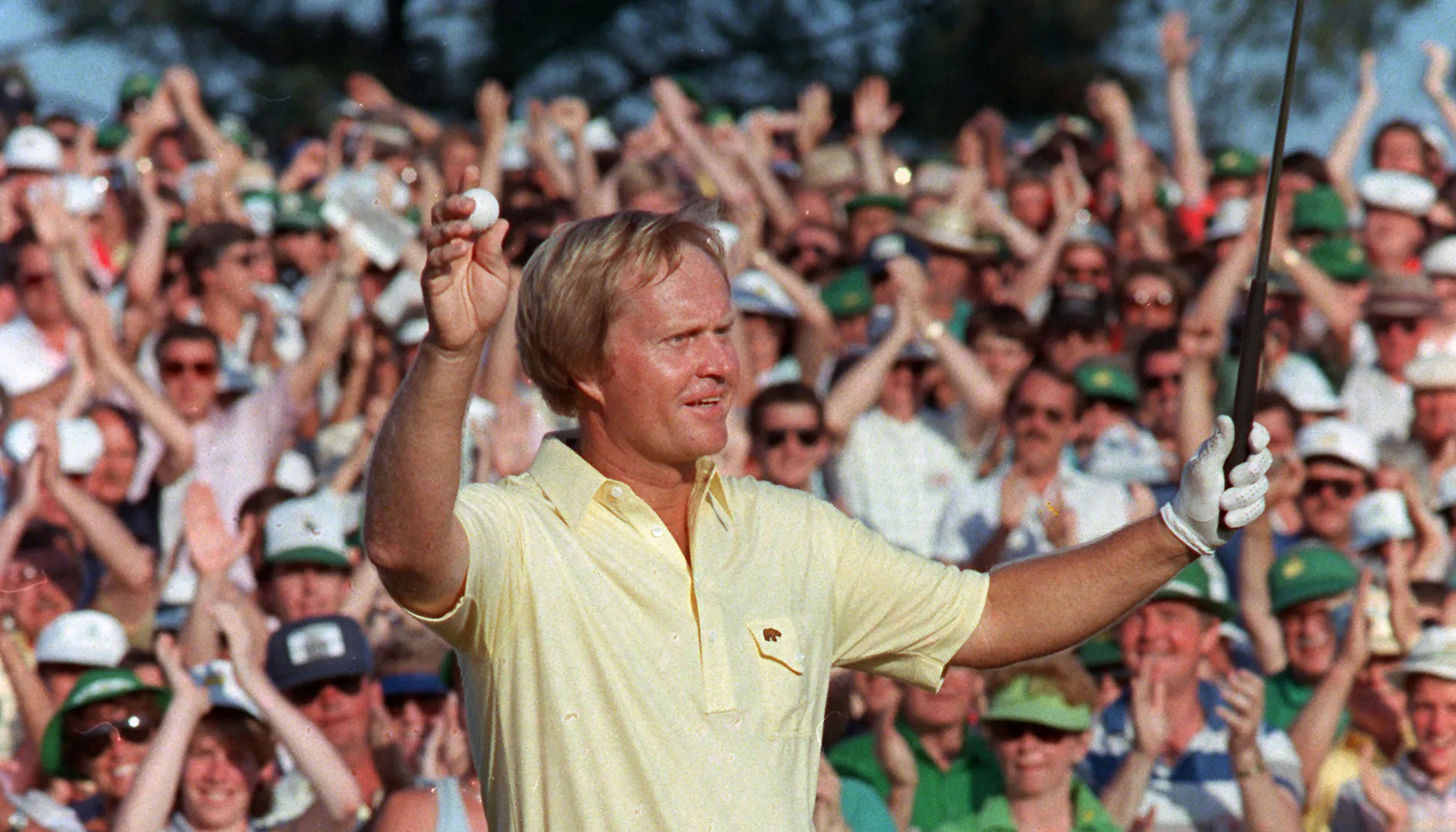
Forty years ago this week, when 46-year-old Jack Nicklaus shot 65 on Sunday to win the 1986 Masters, it felt, in the press room, like being asked to write about the moon landing.
How could you even begin to put something like that in context for your readers?
According to the legend, one golf writer began rocking back and forth in his chair, mumbling to himself: “It’s too big to write. It’s too big.”
But with deadlines looming, the titans of golf writing eventually had to rise to the moment.
Dan Jenkins of Golf Digest cracked jokes, declaring that: “If you want to put golf back on the front pages again and you don’t have a Bobby Jones or a Francis Ouimet handy, here’s what you do: You send an aging Jack Nicklaus out in the last round of the Masters and let him kill more foreigners than a general named Eisenhower.”
Sports Illustrated’s Rick Reilly leaned into the scenes, zooming in on the fist-pumping arm of the unnamed scoreboard operator who posted Greg Norman’s final bogey, channeling a famous journalism lesson that Jimmy Breslin had deployed when he wrote about John F. Kennedy’s gravedigger. When the story is too big, start small.
Dave Anderson of the New York Times wrote about Nicklaus’ joyful tears. The Atlanta Journal-Constitution’s Furman Bisher wrote about the fans' outpouring of love. Jim Murray of the Los Angeles Times penned the best prose. “What does the old song say? ‘I’d Give You a Million Tomorrows for Just One Yesterday?’ Well, Jack gave us one more yesterday. Tomorrow can wait. He is not going gently into that good night. He’s going to eagle it.”
Dave Kindred, then of the Atlanta Journal-Constitution, didn’t write about any of it.
Mostly because he wasn’t there.
“My son got married on that Sunday,” Kindred said this week, when contacted by phone. “We came into the house after the reception, I turned on the TV, and the absolute first words I heard were, ‘Jack Nicklaus today shot 65.’
“I went, ‘Oh shit.’"
MASTERS HUB: Course insights, tournament coverage, and more from Augusta
It is not uncommon — at least in 2026 — for prominent voices in golf media to be absent for majors. Travel budgets have shrunk, entire publications have disappeared, and mediums have evolved. Commentary, much of it driven by fanalysts watching tournaments on television, is now more influential than on-site reporting.
But for a previous generation of media, missing the Masters was almost unthinkable. Jenkins, starting in 1951, attended 68 Masters in a row. Bisher covered 62 consecutive editions of the tournament. The Charlotte Observer’s Ron Green covered 60.
By 1986, Kindred had attended every Masters since 1967. But when your son’s getting married, there really isn’t a decision. All you can do is tease him that a golf writer’s kid ought to know better than to schedule their wedding in April.
“I told him ‘Next time you get married, don't do it in the second week in April,’” Kindred said.
It’s not like anyone could have predicted the greatest tournament in Masters history was about to unfold. In fact, many were predicting just the opposite. The Journal-Constitution’s golf writer, Tom McCollister, ended up writing a line in his preview that Nicklaus cut out and taped to his refrigerator.
“Nicklaus is gone, done,” McCollister wrote. “He just doesn’t have the game any more.”
Kindred didn’t stress much about missing golf’s version of Halley’s Comet. He was in the middle of a legendary writing career that spanned six decades across publications like the Washington Post, the National, Golf Digest, the Sporting News, and then back to the Atlanta Journal-Constitution. He wrote a book about Muhammad Ali and Howard Cosell, a book about baseball, another about golf around the world, and covered 52 Masters in total. He never made a fuss about 1986, and certainly never mentioned it to Nicklaus. He came from a generation of journalists who never wanted to be the story. But when PGA of America gave him a Lifetime Achievement Award in 2010 for contributions to the game, Kindred sheepishly shared the story of how he missed the one tournament everyone remembers the most.
“I’ve never watched that round,” Kindred said. “I’m not sure why. Even now I’ve got one of those TVs [that connects to YouTube] and I could have watched it the other day, but I just never have.”
A few weeks after his speech at the Golf Writers Association of America dinner, where Kindred was presented with the award, a letter arrived at his house in Virginia.
It was from Jack Nicklaus.
.png)
“I heard that your acceptance speech was one of the evening’s highlights,” Nicklaus wrote. “And among the stories you told was that amid your amazing streak of Masters, the only one you missed was 1986. I can certainly appreciate you putting family first. Barbara and I find ourselves scheduling everything around our grandkids athletic events these days … and I wouldn’t have it any other way! If, however, you ever need me to fill in the blanks on 1986, I am happy to do so.”
What compelled him to write the letter? Asked about it in 2026, Nicklaus smiled.
“I think we all need to know that somebody cares about you,” he said.
The media should never be the story when it comes to the Masters, but you can explain a lot about the evolution of the tournament through its relationship with the media.
You would never know it if you tuned in now, but the tournament was not a smashing success right from the start. Ticket sales sagged in its second year in 1935 — according to David Owen’s book “The Making of The Masters” — and fell yet again in 1936. Sportswriter Grantland Rice was more than an essential piece of the Masters budding popularity through the articles he wrote; he was actually a founding member of the club and a fine player. He even advised Clifford Roberts and Bobby Jones on picking the April date for the tournament because it meant sportswriters on their way home from covering spring training in Florida could swing by Augusta to cover the Masters. It was writer Herbert Warren Wind who coined the phrase “Amen Corner” in the pages of the New Yorker. It created a ripple effect across generations, with writers aspiring to produce work each spring that became part of the fabric of the event.
That’s the world Kindred stepped into as a 26-year-old columnist for the Louisville Courier-Journal when he attended his first Masters in 1967. When he checked into the media center and received his credential, he worked up the courage to ask the woman working the desk if she could point to where Red Smith, the legendary columnist, might be sitting. She gestured to a man hunched over his typewriter, halfway across the Quonset Hut.
Kindred was too nervous to introduce himself.
“I went over and stood like 15 feet behind him and just watched him type,” Kindred said.
No one knew it at the time, but 1967 was the last Masters that Ben Hogan would participate in, or even attend. He was 54 years old that spring, and for years he’d been plagued by the yips. It got so bad that Hogan no longer found much joy in the game. But for one magical afternoon, that Saturday, he found his old self, just like Nicklaus would two decades later. He kept making birdies on the back nine, and so a group of writers (Kindred among them) hustled out to the tall media tower that overlooked the 18th green. He had a putt to shoot 6 under and pull to within two of the lead.
“I remember how Hogan trucked — and that’s probably the right word — up that hill to the 18th fairway, to the green,” Kindred said. “And then he stood forever over a 20-foot downhill putt. He couldn't bring the putter back. Finally did, and made it. That’s probably my favorite moment in all my time going because I was just a kid. One minute I’m covering the city championship in Lincoln, Illinois, and the next I’m watching Hogan shoot 66 at the Masters.”
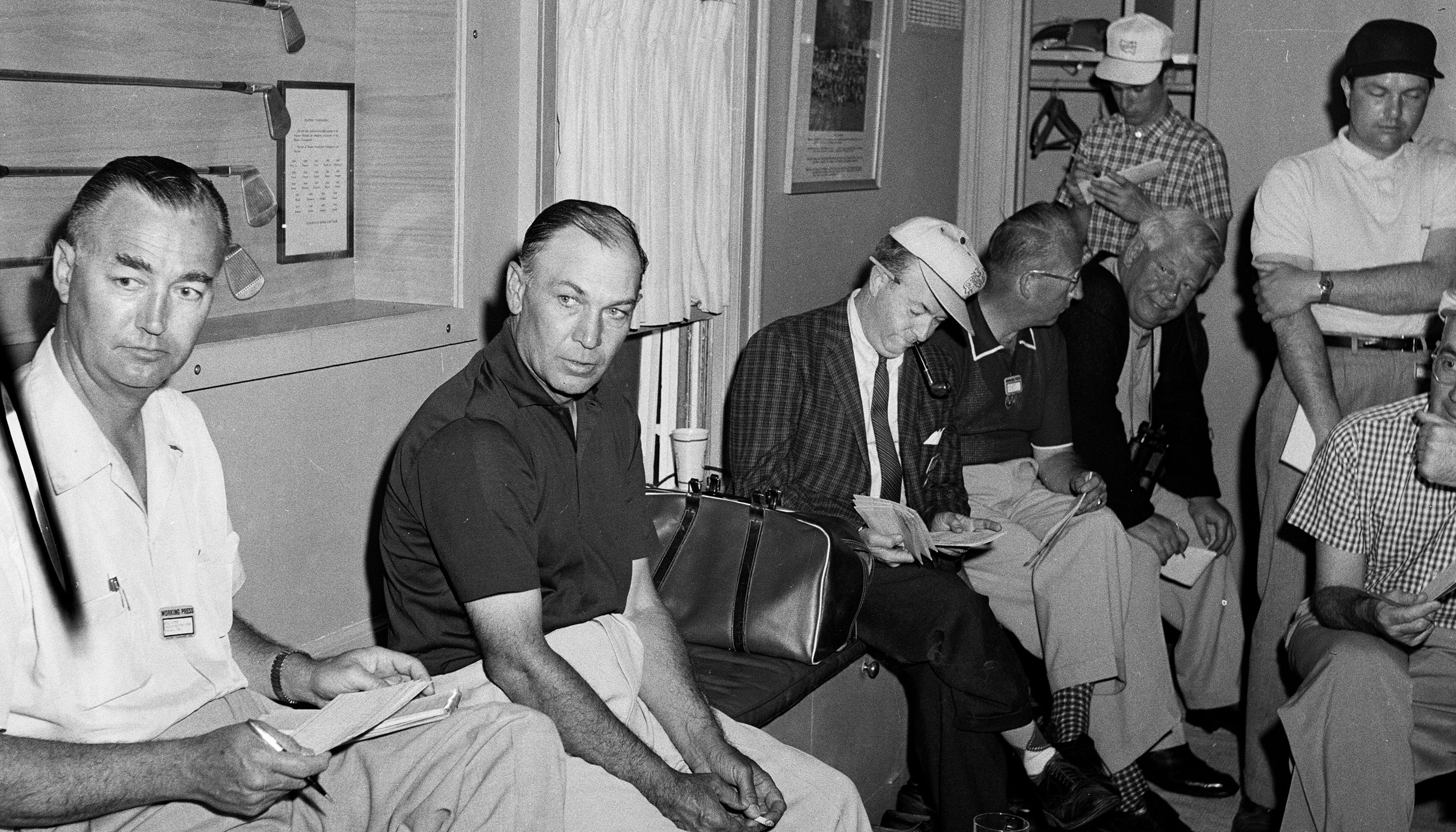
There were no press conferences in those days. There wasn’t even a Champions Locker Room. Hogan held court in the club’s locker room, smiling and smoking a cigarette, with a group of writers as he recounted his round.
“The thing that I remember about it was his hands, because his hands reminded me of my father's,” Kindred said. “My father was a carpenter. Both thumbs had been hammered for years, they were kind of wide and strong and Hogan's hands reminded me of my father’s.”
Hogan scoffed at the suggestion he could win the Masters at age 54. But he was gonna give it a hell of a try on Sunday.
“There’s a lot of fellas that have got to fall dead for me to win, but I don’t mind telling you I’ll play just as hard as I’ve ever played in my life,” Hogan said.
Hogan’s prediction proved to be a prescient one. He shot 77 that Sunday, and finished 10 shots behind Gay Brewer. He never played in the tournament again, and infrequently turned up for the Champions Dinner, a tradition he started. He played in just one more major championship, the 1967 U.S. Open, then walked away from professional golf.
{{inline-article}}
In 1986, knowing he was going to miss the Masters for the first time, Kindred decided to revisit Hogan’s magical Saturday in a column. His description of the locker room scene is better than any picture could ever do justice.
“Hogan sat on a padded bench in the clubhouse. His back was to a sunlit window with lacy curtains. He was balding, gray at the fringe. His face was a Texas rancher’s, shaped by wind across flat land and sun without rain. But the sunlight this day came through the lace curtain, golden and soft, and Hogan’s face was an angel’s under a halo.”
A few weeks later, a letter arrived addressed to him.
What pleasant memories you gave me when a friend of mine sent me a copy of the article you wrote which appeared in your newspaper on Thursday, April 10, 1986, titled ‘A Masters memory.’ It was a very nice article, and I appreciate your remembering and including me in it.
With best wishes, I am
Sincerely, Ben
Dave Kindred kept going back to the Masters, kept writing stories as it evolved. In 1991, he was given the Red Smith Award in recognition of his outstanding contributions to the profession, a full-circle moment if there ever was one. The media’s relationship with the club and the players evolved in myriad ways, and not always for the best. Access shrank, ropes and fences went up, and the relationship between the two sides became occasionally adversarial. It’s not unthinkable to imagine a player writing a letter to anyone in the media in this era, but it’s highly unlikely. The kind of post-round scrums that Kindred described are as common now as typewriters.
The Masters has welcomed new technology and new generations of writers inside its gates, and brought order to an occasionally chaotic week. But it is not without its hiccups. During his last Masters in 2019, Kindred was sitting in an early week press conference, writing a piece about a player of little renown when his contemporaries in the room seemed to run out of questions. He waited patiently through several seconds of dead air, then did what he’d done for more than 50 years. He asked his question. He thought little of it. He was on a deadline so he got to writing.
“A couple of hours later, I get a messenger who comes to my seat and says someone from the press committee needs to see you,” Kindred said. “So I go in there and I get scolded like an eighth grader for asking a question without being first recognized by the [moderator]. I mean, how do you explain you once sat next to Hogan?”
When Tiger Woods won his fifth green jacket that year, Kindred decided it was a sign to walk away from covering the Masters. Like Hogan, he has not been back. He might have missed Nicklaus in 1986, but he’d been there to witness another once-in-a-lifetime winner. “I told myself, ‘It can’t get any better than this,’” Kindred said.
He also had something singular, something no writer or podcaster or maybe any human could ever replicate:
Two personal letters from two of the greatest golfers to ever live, both of which could be traced back to the one Masters that he chose — out of love — not to attend.
.png)




It's Too Soon for Jon Rahm's LIV Golf Retrospective
Lauren Coughlin's Brush With Perfection
Weekend Update: Tom Kim Earns Military Exemption, Michael Block Stumbles
How Can Team USA Solve a Problem Like Foursomes?
If Not Now, Then When for the Internationals?
Team USA Avoids Major Upset With 2026 Presidents Cup Comeback Win
Get full access to exclusive benefits from Fried Egg Golf
- Member-only content
- Community discussions forums
- Member-only experiences and early access to events