

Scottie Scheffler's Search for Meaning
Profiling the world No. 1 ahead of the 2026 Masters
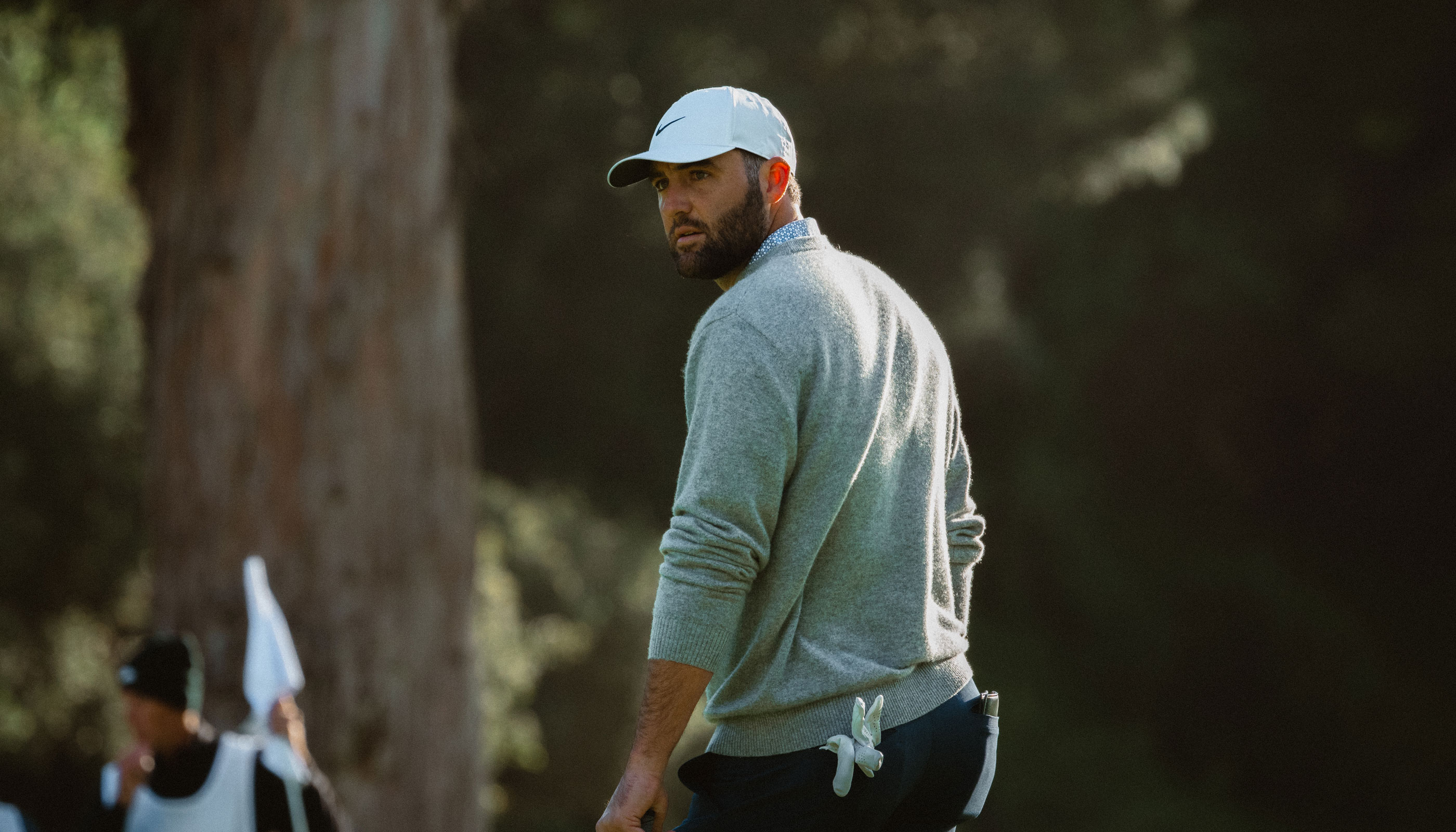
One of the best ways to spend an afternoon, if you are ever presented with the opportunity, is to watch a professional golfer play a practice round with no one by his side except for his caddie and his thoughts.
It is different from a tournament round. Tournament rounds typically have a manic energy. The best to ever do it — Ben Hogan, Jack Nicklaus, Tiger Woods — excelled because of their ability to calm themselves in the wave of that energy. Their intensity and focus was part of their genius. But if you are willing to buy into the idea that an athletic endeavor can, at times, also become an artistic one, then a practice round might be the perfect stage to understand how a great golfing mind truly works.
Every professional golfer, once they reach a certain level, can do things in practice rounds that seem to bend the laws of physics. They can make the ball curve and dance and tumble out of the sky, then make it screech to a halt, almost as if it were attached to the end of a string.
The worst player on the PGA Tour can hit shots, on a regular basis, that outclass not just any shot you’ve ever hit during your lifetime, but also most of the shots you’ve ever dreamed of hitting. They are (to put it bluntly) better in reality than you are in your fantasies.
But the best golfers, the handful of truly transcendent ones, are at their core great thinkers. That is where they achieve a real separation from their peers. They can look at a hole and plot their way from one end to the other — typically in reverse, starting mentally at the green and working back toward the tee — the same way an artist will look at a blank page or an empty canvas and see a painting.
This, at its essence, is what makes Scottie Scheffler a genius.
{{scottie-essay-spieth-quote}}
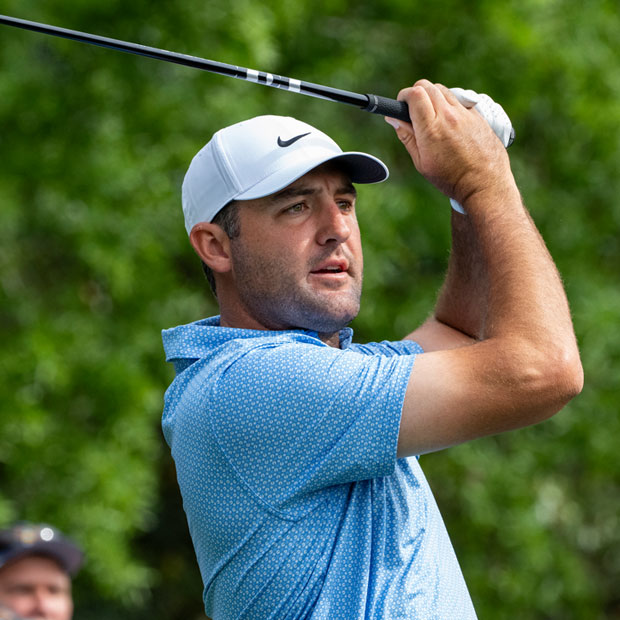
I’ve seen Scheffler play some of the most important rounds of his life in recent years, and watched him dominate everywhere from Augusta to Royal Portrush. This year, he’ll try to win his third green jacket in five years, something only Arnold Palmer, Jack Nicklaus and Tiger Woods have accomplished.
As dominant as he’s been on those stages, I’ve grown to love watching Scheffler’s practice rounds. There is a lightness to them, a playfulness that often disappears in the throes of competition. He does not simmer with rage when his shots drift off line. He is prone to experiment, to chuckle at his poor shots, to make small talk in the fairways. All the annoyances that come with being the best golfer in the world fade away.
If you are lucky enough to spend an afternoon observing him at a historic golf cathedral like Riviera Country Club — something I did earlier this year — it can feel a bit like you’ve been granted a private audience to watch Edward Hopper paint a lighthouse.
Scheffler, I’m convinced, would scoff at such a lofty analogy. He does not engage in the exercise of mythmaking, and does not like giving oxygen to those who traffic in it. Much of his adult life, in fact, has been a rejection of the idea that there is a larger meaning to any of this.
He is a golfer, likely the best of his generation, but he is not interested in changing the world or inspiring little kids to golf or transforming the way we think about the sport. He is extremely competitive, a trait that emerged at a very young age, but there is a simplicity to how he wants to live. He loves being married, loves going to church, enjoys a beer now and then, and he loves being a dad. He will do his absolute best to destroy you in darts or pickleball or a game of pick-up basketball, then he will chuckle and pat you on the shoulder and thank you for the fun time.
“He wants to beat everyone in everything because he’s that competitive, but he doesn’t give one shit about anything that comes with it,” said Jordan Spieth. “It’s unusual. I’ve been there, and there is a lot of shiny shit. Something human in you can’t help but feel the appeal, and he just doesn’t care. It’s kind of amazing.”
There is something revealing about the fact that his favorite television show is “The Office,” mostly because it’s what millions of Americans (particularly those around Scheffler’s age) would cite as their favorite TV show. They are drawn to its warmth, its humor, its cast, and the writing. It does not have to be more complicated than that.
Scheffler is, at his core, the most normal person to wear the theoretical crown of Greatest Active Golfer since Jack Nicklaus. It’s a trait that often contributes to the idea that he is boring, even though he is among the most thoughtful people in his sport. He gives interesting answers in interviews, gets emotional when he talks about his family and close friends, and shares anecdotes about his life willingly. Yet the boring label endures, but it’s easy to understand why. For years, golf’s discourse has been shaped by Tiger Woods idolatry, and Woods — at one point arguably the most famous person on the planet — lived a life that was anything but normal. He rarely said anything interesting, but he had the aura of a deity.
Scheffler, by contrast, reminds me of a lot of men I’ve known throughout my life: guys who love sports, who love their spouse, who don’t have passionate opinions about politics or art or world affairs, who just want to be good at their job, loyal to their friends, and let their Christian faith be the roadmap that guides life’s important moments and decisions.
They cannot hit a 3-iron 230 yards through a crosswind to a back-right pin with millions of people watching, and they do not have a bank account with a quarter billion dollars in it, but they are otherwise living on the same astral plane.
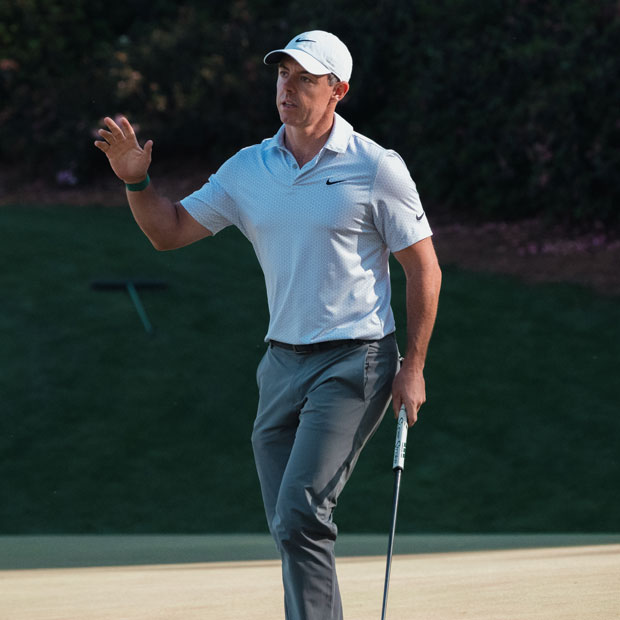
“He doesn’t have many distractions,” said Rory McIlroy. “He lives a relatively simple life, where he could live a very [different one]. He’s got access to everything and everyone in the world if he wants it, but he actively chooses not to go that way, and I think that works in his favor. He seems to be of this mindset that whatever happens on the golf course happens and it doesn’t make him any more or less of a man. I admire him so much for that because I’ve experienced this world where you can be pulled in so many directions, you have all these other opportunities that you can go and chase. And I have quite a curious mind, so I do go and chase those. But sometimes I do look at Scottie and wish maybe I didn’t have so much going on because it works for him so well.”
In the past couple years, I’ve become convinced that Scheffler’s superpower might just be his ability to look at all the romance and grandiosity that is typically a burden for someone in his position and simply… roll his eyes. (Or at least treat it with a healthy skepticism.)
In anticipation of this year’s Masters, I wanted to attempt to unpack that theory a bit, which is how I found myself at Riviera in February, shadowing Scheffler for the week. Golf has a way of torturing its greatest players, suffocating them with fame and worldly expectations. Maybe by rejecting the big picture stuff, Scheffler was better equipped to survive for the long haul.
Scheffler chuckled when I asked him on the first hole if he minded if I tagged along for his practice round. “Seems pretty boring,” he said. “But go ahead.” The course was nearly empty. Most players had already played it once during the pro-am that morning, but there was one other person following along with me outside the ropes, a quirky-but-friendly gentleman in his early 60s. He was wearing a green hat with an Augusta National logo on the front.
We made small talk while we listened to Scheffler discuss a particular shot with his caddie, Ted Scott, that had been frustrating him of late.
“It’s just hard for me to turn that ball over with 3-iron,” Scheffler said.
The stranger next to me shook his head. He smacked me playfully on the shoulder with the back of his hand, as if inviting me to share his mock disgust.
“A hard shot? Does that seem like a hard shot?” he said. “I’m not sure he could convince me anything is hard for him.”
It took me a second before I realized who I was talking to — Scott Scheffler, Scottie’s dad.
“Listen, I talk to everyone,” he said. “I just like going places and meeting nice people.”
On the second hole, after Scottie hit his drive in the left rough, I watched his father wander toward the driving range net, which is sandwiched between Riviera’s second and 11th holes. He started poking around in the grass. A handful of golf balls had managed to trickle through gaps in the netting, and for several minutes, I watched him toss several of them back toward the range through a hole in the netting so that a range picker might be able to scoop them up. Scott Scheffler examined one closely, then waved me over to look at it before he put it in his pocket.
“I keep the ones with scuff marks or ones that get chewed up a little,” he said. “I figure nobody else wants ‘em. Scottie keeps telling me I’m crazy. He says ‘Dad, I’m a professional golfer. Just use the balls that I get for free.’ But I don’t want those balls. I’m not good enough for those. Mine usually only last for one or two swings anyway before they find the water.”
He grinned and smacked me playfully on the arm again.
If you want to understand Scottie Scheffler’s superpower, this is as good a place as any to begin.
You might think of Scottie Scheffler as Texan, a designation most people would agree with, including Scheffler. Much of that sentiment is accurate. He loves the University of Texas, the Dallas Cowboys, and the Dallas Stars. He attends a Presbyterian church in Dallas and talks regularly about how he came to understand his faith while attending college in Austin. He even made it a point to put Texas Chili and Texas Ribeyes on his Champions Dinner menu after winning the Masters twice. But there is a bit of nuance to Scheffler’s Texas narrative.
“I could make so much money out here on bets, asking people where he was born,” Scott Scheffler said. “They’re like ‘Oh he’s from Texas.’ Nope. New Jersey. And he’s got a lot of New Jersey in him, trust me. I know because I was there. He hates it when I point it out to people. He doesn’t even like to have it in his bio. But that’s where his grit comes from, okay? Whenever he would dive for basketballs or go crashing into the stands, I’d tell people ‘That’s the Jersey in him.’ I had all the grit, but no talent. He ended up with both.”
There was no country club to speak of when Scheffler was first introduced to the game by his father at age 5. That would come later, when the family moved to Dallas. The real origin story begins at a nine-hole dog track in Paramus, New Jersey, called Orchard Hill. Scott Scheffler first told it to the New Jersey Star Ledger in 2022. Scheffler’s older sister, Callie, was part of a swim team that trained at the Bergen County Community College pool, which was right near the golf course. His father needed a way to entertain Scottie while Callie was at practice, so he took him to Orchard Hills.
There was no driving range, so father and son would sneak onto the course at dusk to hit balls. When it got dark, Scott would stand next to the pin with a flashlight and tell his young son to hit balls directly at him. The course would repeatedly call the cops or chase them off until one day, Scott Scheffler pleaded with someone from the pro shop to just come watch his son swing. According to the legend, no one bothered them again.
The full story, however, is more interesting than the legend. The Schefflers made the decision to move to Dallas in 2002 when Diane Scheffler was offered a job as the chief operating officer of the Dallas law firm Thompson & Knight, a welcome change from the daily commute to Manhattan. Scott Scheffler decided to give up his career as a carpenter to be a stay-at-home dad, and immediately went to work ferrying his four kids to their various endeavors. It was an atypical family arrangement, particularly for Texas, and even more among the Alpha Dad community of youth sports.
“It was really weird being a stay-at-home dad in Dallas,” Scott Scheffler said. “All these dads are making all this money, and they’re looking at me like ‘Oh, there he is, he doesn’t even have shoes with shoelaces.’ But I didn’t know any better.”
The Schefflers were not sports fanatics. They were not looking to raise prodigies. They wanted their kids to focus on education, to go to college with a thirst for discovery and knowledge, to live abroad and better understand the world. But they also watched their kids find community in sports, particularly Scottie. He loved basketball, football, baseball, and lacrosse. He swam. But nothing captured him quite like golf. Callie had already shown an aptitude for the game (she would eventually play at Texas A&M), so it wasn’t long before they made a hard decision: Take out a $50,000 loan so they could join Royal Oaks Country Club and give the kids a place to practice and play regularly.
It was there that Scheffler learned under the tutelage of Randy Smith, a fortuitous pairing for reasons most people still do not understand. The reason? Smith looked at Scheffler’s unique action — bent left elbow, very little wrist set, feet flying in multiple directions — and didn’t try to change any of it, even when he grew nine inches in 16 months and completely lost his game. People around him, including his parents, wondered if he’d ever hit a golf ball straight again. But Smith wasn’t trying to mold a great teenage golfer, he was trying to mold a future pro who would soon grow into a man.
“Ending up with Randy Smith saved his golfing life,” one of the top swing coaches explained to me recently when I asked for a candid breakdown of Scheffler’s swing. “A lot of coaches would have tried to change him. But if you’re smart like Randy, and you’ve got a kid who finds the middle of the face every time, you just take him over to the bunker and say, ‘Okay, let’s figure out your short game.’ If he tried to swing it like Viktor Hovland, he’d be dead. But that’s why every swing is different.”
Smith wasn’t just Scheffler’s Yoda, he also gave the Schefflers lessons in parenting. By the time Scottie was 12 years old, it was clear he was going to be very good, so Smith pulled Scott Scheffler aside with some advice. He pointed out some of the golf dads on the scene, the ones who dressed in the same outfits as their kids, who reacted with disgust at every double bogey, and glee over every birdie. Do not emulate any of that, he said. Love them, support them, drop them off, and pick them up. But do not live and die with their success, or make that success any part of your relationship.
The Schefflers listened. They even learned to be neutral with their body language when watching tournaments.
“The only advice I give parents is don’t ever ask [your kid] what their score was. Ever,” said Diane Scheffler. “If they want you to know, they will tell you. If they don’t, great. We would always just say, ‘Did you have fun? Did you meet anyone new?’ when we picked up the kids. Because otherwise, they would become the score. They’re happy or sad based on the score.”
As wise as the Schefflers were, Scottie still struggled with the competitive mania that swirled inside of him. He would pout and rage after bad shots, and he’d scowl between holes after making a bogey, even when he was winning tournaments by five shots. Sometimes a bad hole would affect his entire tournament. He told his father at one point that he missed a putt on purpose because he was playing so poorly, he didn’t think he deserved to win. The other kids started to notice and make fun of him behind his back. The Schefflers could hear it, and not just from the kids, but from their parents, too.
“I finally told him, you can’t beat these kids by 10 and get mad because of your ego, or because your chip didn’t go in the hole,” Scott Scheffler said. “And I’m telling you this because I care. Because I love you.”
There were times when even the Schefflers began to wonder if there was too much golf in their lives. At one point, Scottie’s sister Sarah asked half-jokingly but also half-seriously: Are we ever going to take a family vacation without bringing our golf clubs? Scottie stopped playing basketball his junior year of high school to focus on golf, and quickly regretted it. His senior year, he told his parents he was thinking he might try to rejoin the team.
Son, I don’t think you can just waltz back in there and make the team, his father said.
Actually, Dad, I’m pretty sure I can, Scottie answered.
He was right. Scottie not only made the team, but he was a valuable contributor off the bench, and a sharpshooter from the three-point line, making people wonder how good he could have been if he’d made it his main sport. His friends started to joke that every time he drove the lane, the defenders would part like the Red Sea because no one wanted to be responsible for injuring the best high school golfer in Texas, for wrecking his shot at a third consecutive state championship. The sentiment turned out to be weirdly prescient. The week before the state tournament, Scottie was playing basketball at a friend’s house when he crumpled in pain while running up the court on a fast break.
“I stepped on an acorn of all things,” Scheffler said. “[My friends] were freaking out. They were like, ‘Oh my gosh, we heard a pop, we heard a pop.’ I was like, ‘My ankle isn’t broken. I stepped on an acorn of all things.’ They still make fun of me to this day because of it.’”
He won the state championship anyway. He couldn’t put a ton of pressure on his left foot, so he just used his hands more and grinded it out. As the years went by, the legend grew. By the time he turned pro, he had reporters asking him to recount the time he won a state championship with a broken ankle, as though he were the second coming of Tiger Woods at the 2008 U.S. Open. He seemed bemused by all the hyperbole.
“It was an acorn,” he said, channeling the same deadpan delivery as Jim Halpert on “The Office.”
His love of basketball continued. When he qualified for the 2016 U.S. Open at Oakmont as a 19-year-old college sophomore at Texas, he opened with a 69, a hell of a score to post in your first-ever major championship round. But he admitted afterward, he’d actually rushed a three-footer for par on the final hole because play had been suspended by bad weather and he didn’t want to have to return the following morning to finish up. The reason? He wanted to stay up late and watch Game 6 of the NBA Finals between the Cavs and Warriors.
“Maybe wasn’t the smartest idea,” Scheffler said. “I just love the NBA, and I wanted to watch.”
Sunday morning of the 2022 Masters, Scottie Scheffler woke up in a panic.
Faith plays an important part in this story, but its role is often slightly misunderstood. If a discussion of faith makes you uncomfortable, you are welcome to exit this piece now. This is not an attempt to convert anyone. But it would be dishonest to try to explain Scheffler’s worldview without discussing his faith.
If you follow golf closely, I am not telling you anything you don’t already know, but it’s an essential anecdote in understanding Scheffler even today, so it bears repeating.
He had a three-shot lead going into the final round, and had played beautifully through the first three days of the tournament. He was so at ease with his game, on Friday, he hit a low skipping chip on No. 9 to a back pin, and when it checked up near the pin, he spotted his sister Callie in the front row of the crowd. That kind of shot had always been her favorite to watch him hit when she was caddying for him in tournaments, and now he had pulled it off for her — in the Masters no less. He was vibing.
But when Sunday came, he was sobbing, stressed, and overwhelmed. He could not calm himself down. He had dreamed for so many years about winning this tournament, about slipping into that green jacket, and now the opportunity had arrived and all he could think about was throwing it away. This had all happened so fast. Eventually, he admitted something to his wife, Meredith:
I don’t think I’m ready for this.
“She told me: Who are you to say that you are not ready?” Scheffler said. “Who am I to say that I know what's best for my life? And so what we talked about is that God is in control and that the Lord is leading me; and if today is my time, it's my time. And if I shot 82 today, you know, somehow I was going to use it for His glory.”
He had not been particularly religious growing up. His family belonged to a Catholic church and he would sit in the pews and try to follow what the priest was saying, but he later confessed he did not listen to a thing that was said. He was counting down the minutes until it was over. It wasn’t until college that he started to feel a little empty, a little adrift and without purpose. He and Meredith had dated in high school but had broken up because she was going to Texas A&M. But a few weeks into his first semester, he bumped into one of Meredith’s friends, and she invited him to church at Austin Stone. He didn’t really want to go, but he didn’t want to be rude, so he said yes.
What happened next wasn’t sudden, it was gradual. To hear Scheffler talk about it, the transition continues to this day. He stopped thinking of God as some omnipotent being in the sky and came to understand him as someone involved in his daily life, reminding him that he could choose to value what was important. He and Meredith reconnected, fell deeper in love, and decided to get married. He could still pursue excellence, he realized, and that was an honorable way to bring glory to God. But the why was more important than the results.
If he lost the Masters by 10 shots or won it by 10 shots, nothing about his life would change. Meredith would still love him. Jesus would still love him. So why not be at peace?
His stomach had been a wreck for much of the week, but on that final Sunday, when he arrived at the first tee, he felt calm. He chipped in for birdie on the third hole, played smart, and won easily. The only moment when he lost focus was on the final hole, when he four-putted for double bogey (and still won by three).

The power of that story is not that Scheffler's faith helped him stay calm enough to win the Masters, it’s that it helped him understand that the Masters was meaningless in the larger scheme of his life. When Meredith was nine months pregnant with their first child, Scheffler was attempting to win the Masters for the second time. He and his family put together a plan for the week in case she went into labor. A friend even got permission from Augusta National to carry a cell phone, and if Meredith went into labor, she was under strict instructions to call her husband. A private jet would rush Scheffler home, even if he was on the back nine and leading the tournament.
A reporter couldn’t resist asking: What if you’re winning and there are only a few holes left? Do you think she’ll call you in that scenario?
“She better call,” Scheffer said.
Not every decision, however, is as black and white as rushing home to see the birth of your son. In reality, Scheffler treats his faith more like a living, breathing thing. He is tested, over and over, by his wants and desires, and knows he likely will be forever.
At the Genesis in February, once play began, something seemed amiss for the first time all season. He was spraying his driver to places he could not fathom. Missing the cut for the first time in four years felt like a real possibility. The serenity and zen I’d witnessed during his practice round had disappeared. After he finished the seventh hole, I could see his temper simmering, even from afar. He flipped his putter in the direction of his bag, then walked away from his group. For a minute it seemed like he might keep walking, right up the canyon walls, and into the ocean. Eventually he found a chair he had spotted from a distance. He plopped down in it, then stewed in silence for nearly 30 seconds.
It looked, if you squinted, like the world’s best player had put himself in time out.
Why did he care so much if the joy he got from winning these tournaments lasted about five minutes after the last putt had dropped?
It was hard — maybe even impossible — to articulate an answer.
The curse of being the best player in the world is not just that you lose a lot of your privacy, it’s that when you do appear in public, we tend to look for meaning and purpose in everything you do. This is particularly true in this era of media consumption, where the appetite for content is bottomless, and access continues to diminish. Tiger Woods lived through it, Rory McIlroy lived through it, and now Scheffler is living through it. This might be one of the things Scheffler rejects the most about his life, the idea that anyone should waste time decoding his actions and assigning meaning to them.
Sometimes, he will respond playfully to it. At the Players in 2023, I noticed he went to hit balls on the range after his third round, and was even hitting them after the sun went down. Someone had turned on the driving range lights for him, in case he wanted to continue. When he strolled into the interview room for his press conference, I waited my turn for the microphone, then asked why he’d spent time “beating balls” at dusk. The moment the question came out of my mouth, I knew I’d made a malapropism worthy of Michael Scott from “The Office.”
“I did not quite beat balls,” Scheffler said, trying (and failing) to stifle a laugh. “I hit like 10 balls. It’s usually just part of my routine.”
My face went crimson red, knowing our exchange had just been broadcast on Golf Channel. People soon began to tag me on Twitter, informing me what a moron I was. But when Scheffler finished his press conference, he made it a point to walk by my seat and playfully smack me on the shoulder with a water bottle (a gesture I would recognize years later from his father), letting me know it was all in good fun. It reminded me precisely of how most of my high school friends would’ve handled a similar situation.
This year at the Players, it played out a bit differently. Scheffler struggled during his first round 73, then spent an hour hitting balls on the range in the rain, looking miserable the entire time. Golf Channel spent a segment on “Live From” breaking down how different his swing looked in 2025. When he shot 67 in the third round, he was asked afterward if he “found anything” during that soaking-wet range session, a question that provoked an obviously irritated response.
“Did I find anything?” Scheffler said. “I think that would imply that I was lost, which was not the case.”
He also did not particularly love it when he was asked how he felt about the slow start to his season, an understandable irritation considering he’d already won the American Express, finished T-2 at the WM Phoenix Open, T-4 at the Pebble Beach Pro-Am, and T-12 at the Genesis Invitational. But it was also a sign he’d raised the bar to such a significant height, our expectations had become detached from his own.
“Your expectations of me are living week by week. My expectation of myself is almost more shot by shot,” Scheffler said. “When you look at the perspective from the media, the media is always trying to create a story. Which can be a great thing. I think that's part of your job. But when it comes to my golf game and my expectations of myself, my expectations all are based around what I want for me mentally on the golf course.”
At Bay Hill, he fired a ball into the pond in anger after putting out on 18 one day, a clear indication he was disgusted with his play. At the Players, he threw several sarcastic fist pumps after missed par putts. At times, he’s been so irritable this spring that someone eventually pulled him aside and encouraged him to reset.
His peers, perhaps because they understand how difficult it would be to continue winning at a Tiger-esque clip, remain universally in awe.
{{scottie-essay-lowry-quote}}
I spent much of my spring turning over this idea that Scheffler’s greatness comes from his ability to detach himself from earthly expectations. At some point, I realized I wasn’t giving enough credit to a part of his game that had existed his entire life, dating back to his junior days when Brad Dalke was outdriving him and looking like golf’s next superstar. He was able to separate confidence and ego.
“Scottie has no ego when he plays golf,” said McIlroy. “He doesn’t really care if he’s the longest, if he’s the straightest, if he’s the best iron player, the best putter. He just competes. He gets it done. Sometimes it’s not always pretty, but when you add up his score at the end of the day, you’re like ‘Oh, it’s a 67. Again.’”
Did he see it that way? After hearing it from enough people, I put the question to him.
“Yeah, I'm not the guy that hits the ball the furthest. I may not be, like, the flashiest player, but I feel like my mind has always been my greatest tool, and I just try to use that to my advantage,” Scheffler said. “Like if I wanted to be the longest driver out here, I have a rational self-confidence in myself that I can do that type of thing.”
In his prime, Tiger Woods could hit shots that looked like they belonged on a higher plane of existence. Scheffler is different.
“He’s not doing anything spectacular when he’s playing,” said Ludvig Aberg. “He’s just really good at hitting greens, hitting fairways, rolling in putts, going about his day. He gets almost the same satisfaction hitting it to 20 feet right of the pin when he wants to than someone else would hitting it to a foot.”
He has been known to drive opponents a little crazy because he rarely needs to deploy hero shots to beat you. Sahith Theegala watched up close when the two were battling down the stretch at the 2022 WM Phoenix Open.
“If anything Scottie kind of gives everyone some hope because in a weird way, everyone can kind of hit the shots that he can,” Theegala said. “It’s not like Rory hitting 2100 topspin and 190 mph ball speed. It’s not even how good his good can be. But he just never plays bad. It’s kind of demoralizing.”
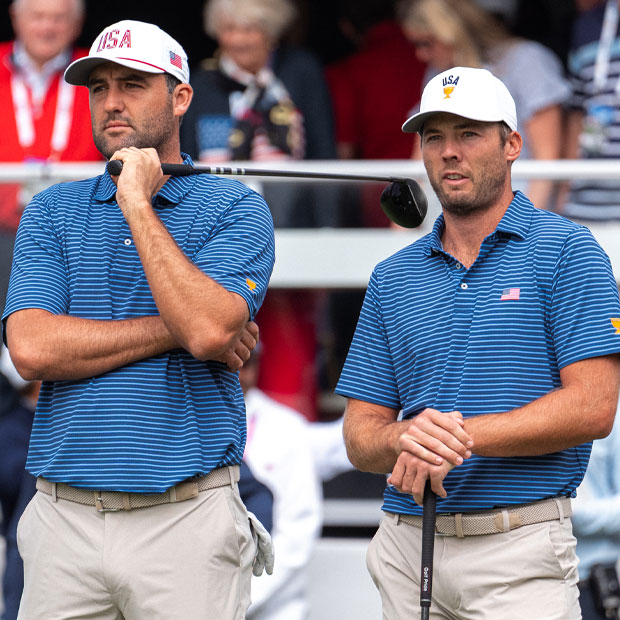
Few golfers understand that better than Spieth, who has become — in recent years — one of Scheffler’s closest friends on Tour. There was a time, growing up in Texas, when Scheffler lived in Spieth’s shadow, so to speak. When Spieth won the Masters in 2015, Scheffler was still in college at Texas. He’d won a third major before Scheffler had even won on the Korn Ferry Tour. Every time Scheffler played in a PGA Tour event early in his career, he was asked how well he knew Spieth (not well), and if he’d sought out his advice (infrequently). But eventually, they started playing practice rounds in Dallas together. Spieth was initially the superior player, but it wasn’t long before the dynamic flipped.
“It’s hard to remember the before,” Spieth said. “When you’re playing him, the expectation is that the shot is going to launch right at the hole. You can see it out here [on Tour], but we do cooler stuff at home, so imagine what he can do at home. The ball doesn’t really ever leave the flagstick. It’s an evolution that I wish had never happened. I’d like to reverse it, but… c’mon.”
The weight of our expectations, as time goes by, will likely intensify for Scheffler. Each major victory brings with it a larger spotlight, and the belief that those results should be the norm.
That same weight did tremendous damage to Tiger, and though he achieved great things, it has become obvious in recent years that he paid a physical and emotional toll to achieve them.
The better comparison for Scheffler, or at least the more optimistic one, has always been Jack Nicklaus.
Nicklaus loved basketball, too. He even thought about playing at Ohio State, which recruited him. He took one look at Buckeye classmates John Havlicek and Jerry Lucas and decided he’d stick with golf. But he couldn’t resist playing pick-up basketball into his 40s, something that’s easy to imagine Scheffler doing.
Nicklaus was once thought of as boring, too, back when he was wrestling the game away from Arnold Palmer. He did not have Palmer’s aggression, Seve Ballesteros’s panache, or Lee Trevino’s wit. But when he kept capturing majors, the sentiment changed. He became a symbol of dominance, the epitome of sportsmanship, and eventually a time machine who coaxed people into believing anything was possible on a spring afternoon, even at age 46.
History is unlikely to repeat itself, but as Mark Twain supposedly said, if we are lucky, it might rhyme.
Of course, none of this is preordained. We bought into the idea that it might be when it came to Tiger. He was going to achieve unthinkable heights. Nicklaus and Palmer predicted he’d win more green jackets than the two of them combined. His own father referred to him as The Chosen One. We understand now that reality was messier than the fable.
We’re in the middle of Scheffler’s story, and there is a conflict at the heart of it. How can he want to win every golf tournament — to the point where he occasionally still gets so angry after a bad hole, he will rage toss a ball into a pond or the woods — but at the same time acknowledge that this is not a fulfilling life and that it doesn’t fill the desires of his heart?
I’ve never been much for organized religion, although like Scheffler, I was raised in the Catholic Church. But for a couple years, I played college football, and before every game, our team Chaplain — Father Jim Hogan — would lead us in prayer and deliver some version of the same speech. I had not thought of him in years, but something about Scheffler sparked a memory that I’d long since buried. Father Hogan had a mantra he asked us to repeat before we ran through the tunnel into the field that I couldn’t properly recall until I watched Scottie wrestle with the idea of fulfillment and purpose in Northern Ireland last summer.
Excellence is not a moment in time. It’s a commitment to a fidelity, a way of life.
It didn’t mean that achievements were actually meaningless. It’s just that the act of striving, even if you experience failure, means so much more.
.png)




How Can Team USA Solve a Problem Like Foursomes?
If Not Now, Then When for the Internationals?
Team USA Avoids Major Upset With 2026 Presidents Cup Comeback Win
2026 Presidents Cup Grades
Internationals on Verge of Historic Upset at 2026 Presidents Cup
Internationals Sweep Friday Foursomes at 2026 Presidents Cup
Get full access to exclusive benefits from Fried Egg Golf
- Member-only content
- Community discussions forums
- Member-only experiences and early access to events