
Ryan Gerard’s First Masters: Episode V
Documenting Gerard’s final round at Augusta National
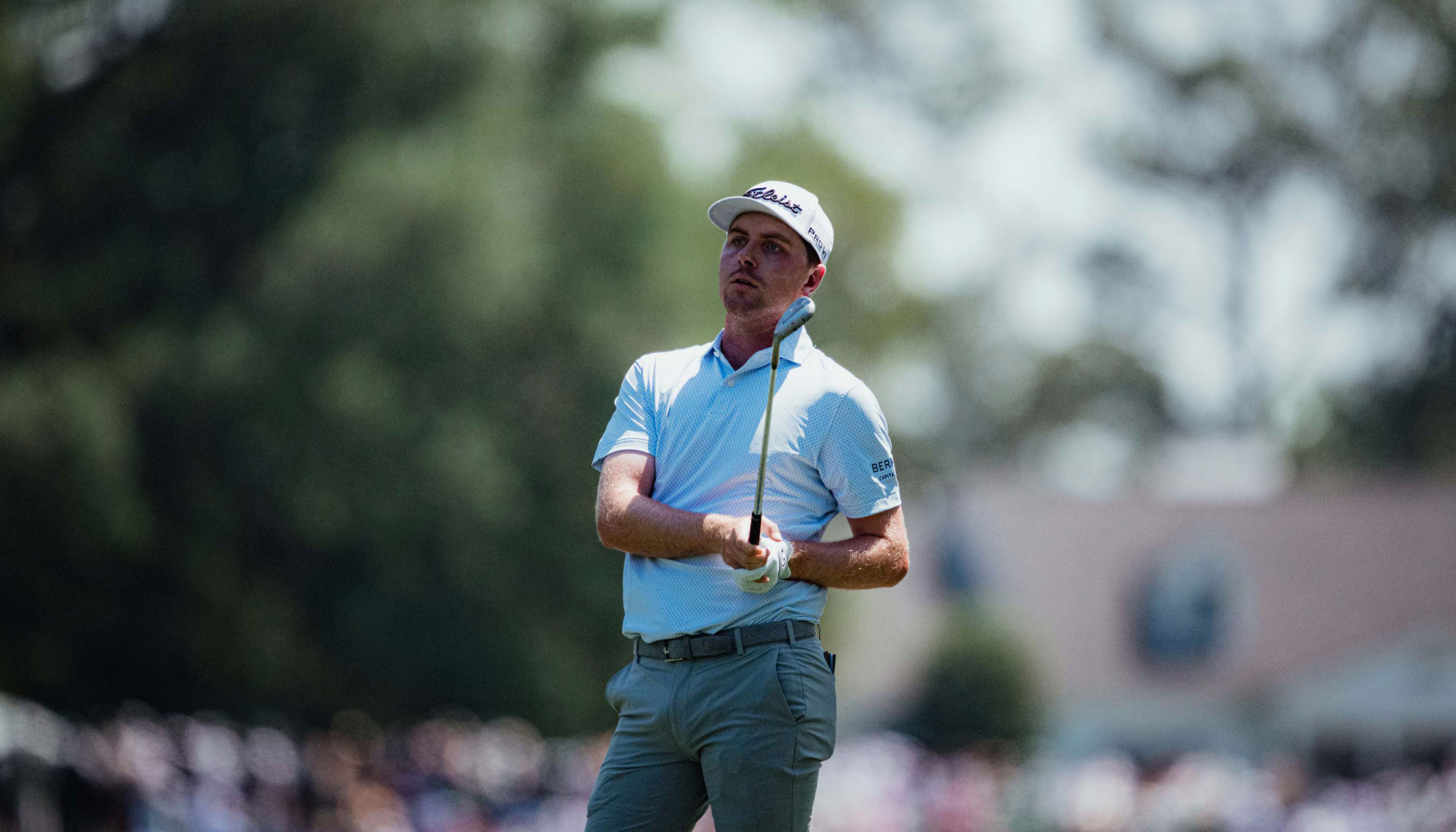

Ryan Gerard didn’t have the Sunday he hoped for at the 2026 Masters, shooting a final round 5-over 77 to finish 1 over for the week and tied for 38th place. Nevertheless, on his drive Monday morning from Augusta to Hilton Head, he hopped on the phone to debrief a disappointing Sunday, discuss what he learned about Augusta National, and reflect on his Masters debut.
MASTERS HUB: Course insights, tournament coverage, and more from Augusta
Gerard started Sunday on the right foot, birdieing the first and missing quality birdie looks on Nos. 2 and 3. Then came a rough stretch of 5 over from Nos. 4 through 7.
“It was kind of a shit show,” said Gerard. “I feel like I didn’t play that badly. My speed on the greens was a lot worse. I got a little freaked out by how purple and brown the greens were and expected them to be really fast. And they really weren’t. So I was leaving putts six to eight feet short.
“I maybe tried to get a little bit too much out of some golf shots, tried to chase maybe a flagstick or two that probably weren’t great ideas to chase. Then, on No. 7, I hit into the back bunker, which, I honestly was just trying to hit in the front bunker, but it just kind of skipped across the side of it and went into the back one. It was kind of death back there.”
The result was a double bogey.
Despite the finish, Sunday still produced his favorite memory of the week on No. 15. “I didn't really have a legit eagle chance all week, “ he recalled. “But I just stepped up and hit a really sick shot in there and made the putt for three, which I think gets me some pretty cool hardware. I think that was my favorite memory from the week.”
His biggest takeaway, though? How much fun he had competing against the best players in the world for four days at Augusta National.
“I had so much fun this week,” he said. “Maybe that’s expected, but I don't know if there's another tournament in recent memory where I’ve had so much fun. It didn’t matter if I played well, played badly. The Par 3 Contest, the tournament, the whole week was fun. It’s just a different feel. I was almost like pinching myself smiling half the time. It was still competitive, and I was working hard, but I was having so much fun doing it.”
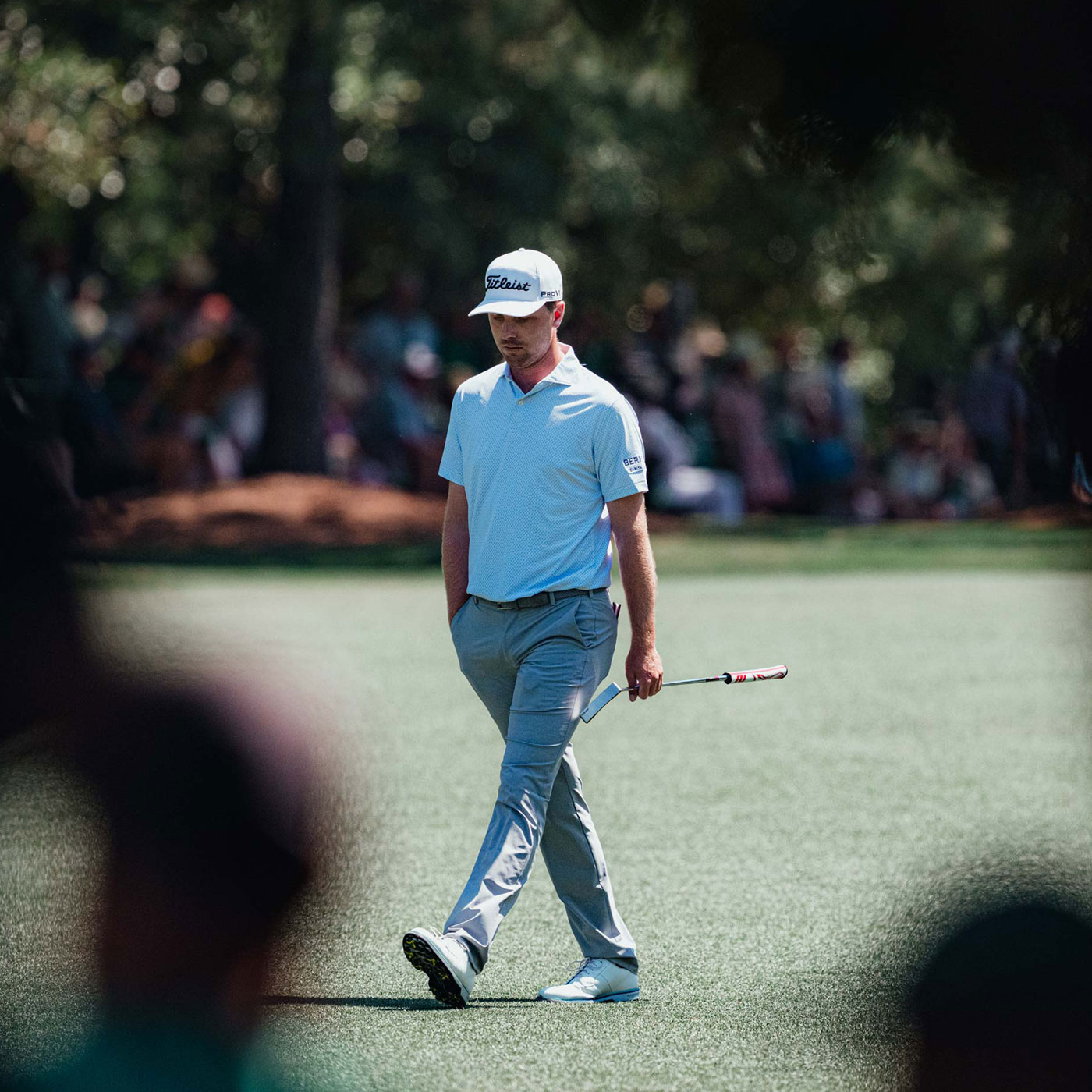
He also came away impressed by playing partner Xander Schauffele, noting that watching Schauffele plot his way around will aid him in the future.
“Xander stayed extremely patient all day,” Gerard said. “It’s cliche, but you truly just have to take what the golf course gives you, especially when the course gets firm with the really, really tough pins and when the wind starts picking up. There really aren’t good places to miss unless you leave yourself an uphill shot somewhere. And if you get a little bit out of position, it's almost automatically an eight-to-10-footer for par, so you’re staring at a lot of bogeys.
“Obviously, Xander hits it really well. But he does a really good job of hitting quality shots away from the flag, which is a very, very important skill.
“On No. 6, he hit his approach into the front bunker to a back-right hole location and didn’t even try to hit the bunker shot super close to the pin. He hit an awesome shot, but just took what he had and made bogey, when it easily could have been double bogey or worse.
"On Nos. 17 and 18, he wasn’t in a great spot off either tee. But he did a really good job of controlling flight and spin on the approach and hit to the fat part of the greens and lagged putts to tap-in range both times.
“Any time things could have gotten away from him, he did a great job reining it in. And whenever he had the opportunity to pounce or use slopes to his advantage, he knew exactly where they were. It was really impressive.”
He also praised Schauffele’s caddie, Austin Kaiser.
“Austin gives really, really good numbers,” Gerard added. “During the round, I could hear him talk about precise run-out numbers, like it’s 308 yards through the fairway on No. 13 on line with the tree he was aiming at. And I was just ballparking like 300 on that line. I’ll put in a little more effort going forward, but that was good to experience. It was really impressive to watch those two put on a clinic.”
Throughout the weekend, there was some blowback about the setup, both from fans and a few players in the field. “I'm not in charge of course setup,” Scottie Scheffler said after the tournament. “I would have liked it to have been a little bit more equal in terms of the firmness on Thursday and Friday. I was a bit surprised at how soft things were on Friday afternoon, especially as it got late in the day.”
Some felt the course could have been pushed further over the weekend. Gerard offered his perspective on the setup discourse.
“I think the way it was set up on Thursday was awesome,” he said. “When it got really, really hot on Saturday and Sunday, into the high 80s temperatures, there's only so much that you can do to not kill the greens.
“The only thing I do wish though, I wish some of the fairways had been a little firmer. They mow the fairways back toward the tee to slow down the ball. But there is no reason why golf balls should be landing softer off the tee with a driver than into the green with a 6-iron.
“The course becomes so much more interesting when the ball starts rolling around more with how the fairways move, getting into the trees or pine straw or bush or whatever might be off the fairways. So that’d be my one thing: I wish the fairways were a little firmer. I understand they're trying to make the course play longer so the shots into the green are a little bit more difficult.
“But if you had balls rolling out another 15 yards, off to the sides into the second cut or the pine straw, it makes everything a little bit more difficult and potentially opens up opportunities for guys to be a little bit more creative and pick their spots a little bit differently.”
Beyond the setup, I wanted to hear what Gerard learned about golf course design through his experience playing Augusta National, perhaps the best test in professional golf.
“With proper design, you don't need rough to really test the best golfers in the world,” he explained. “It’s more about: how can you create a hole that's playable for everybody but also test the best players? It’s difficult. Some of that has to do with length, some of it has to do with firmness, but a lot of it has to do with slopes designed in the right spots and bunkers being in the right places. Every shot at Augusta has a specific value that is important not only to the cadence of the hole but also the overall round. You don’t want to have players hitting shots where they can kind of fall asleep at the wheel and get away with it.
“The difference you see between Augusta National and somewhere like Memorial Park in Houston, where they're both golf courses that are considered wide with no real rough, is that the tee shots and especially the second shots at Augusta have a lot more importance. You can't just blow it all over the place off the tee. You need to leave it on the proper side of the fairway on No. 11 to the Sunday pin, for example, in order to get anywhere near it. Whereas you kind of just spray it all over the place somewhere like Houston."
{{ryan-gerard-first-masters-episode-5-quote}}
If he were in charge of hosting a professional golf tournament, there were a couple Augusta-inspired elements he’d incorporate that differ from what players see most weeks on Tour.
“The one thing that Augusta does a little differently than somewhere like the Players or a high-level signature event,” he said, “is that when we get out on those golf courses, they feel big, but they don’t play big.
“There is a certain gravitas you feel when walking on the Augusta property and seeing how wide and large and slopey it is. You don’t really get that at a lot of PGA Tour events. They might feel big and fast, but they don’t really play that way.
“The biggest things would be: green firmness, tucking the pin locations, having more slope, feeding some balls to holes but also feeding some away, which I think is cool. Just making sure every shot means something, and that there is a thin line between really good and great.
“Augusta allows you to separate yourself if you're hitting it well, and if you're hitting it badly, good luck. That place is special. If you're a little off, like I was on Sunday, you just get completely exposed.”
Augusta limits how much information they provide in the yardage book. Gerard said he’s looking forward to returning because he put 10 times as many notes in his yardage book as he does most weeks. He anticipates being more prepared next time.
“Within that vein, one thing Augusta does that I like: you can’t bring levels or any sort of green-reading equipment. No levels, no devices on the greens, no Trackman on the course. I appreciate it because it feels more pure and about the experience of playing a golf tournament, not trying to play math.”
When I asked him to evaluate if his game feels closer or further away from where he wants it to be after getting tested at Augusta, Gerard offered a candid assessment.
“In a way, closer to where I want to be,” he reflected. “At the beginning of the week, I would have told you my game is good. And it was good for the majority of the week. I think it’ll play really well at Harbour Town and at the Zurich and Doral and at the Truist. I think it’s good for that.
“But I don’t think my game — the way it was this week — was as prepared for the test of a Sunday at Augusta as I thought it was going to be.
“I take a lot of lessons away from this week. Statistically, my Strokes Gained: Off the Tee was not very good this week. So there are some things I’m going to work on both with my equipment and my coach this week to get the driver figured out a bit better. I need to be able to turn over a 3-wood more than five yards on No. 10 so that I don’t keep hitting it in the trees. A few things like that.
“I went into the week thinking that I probably could win if I played really well, and looking back on it, I played really solidly for 54 holes with some mistakes, and I was seven back, and then I didn't even really give it a chance on Sunday. So overall, it kind of leads me to believe that it's not super, super far away, but it's not as close as I thought it was.”
{{ryan-gerard-first-masters-episode-5-gallery}}
And when I asked him what his lasting memories and takeaways will be from his Masters debut, he shared a couple of thoughts.
“How much a golf course can change on Sunday afternoon at a major,” he said. “Even just from shots that I was watching on coverage Sunday morning to the way the course was playing by Sunday afternoon, the change was drastic. And just the whole feel of the place, and having to back off from putts because guys were making charges and you could hear the roars. That's something we don’t deal with very often. From a learning standpoint, experiencing that will be very beneficial going forward.
“And now I know what I need to clean up, and I know exactly where the bar is and how to get there. Can I get there immediately? I don’t know, but we’re going to find out. At least I know where the measuring stick is, where I stack up, and the things I need to do to try to get close.
“Overall, I played good but not great golf for three days and was tied for 15th in a major I’d never played before on a golf course where course history and experience is a big help. If I continue learning, growing, and getting better, then I think I’m in a good spot for the future.”
Ryan Gerard has generously agreed to take us along on his journey as he competes in his first Masters Tournament. You can read about the lead-up to his tournament in Episode I, his first round in Episode II, his second round in Episode III, and his Moving Day in Episode IV.
.png)





Winners and Losers from LIV Golf 1.0

It's Too Soon for Jon Rahm's LIV Golf Retrospective
Lauren Coughlin's Brush With Perfection
Weekend Update: Tom Kim Earns Military Exemption, Michael Block Stumbles
How Can Team USA Solve a Problem Like Foursomes?

If Not Now, Then When for the Internationals?
Get full access to exclusive benefits from Fried Egg Golf
- Member-only content
- Community discussions forums
- Member-only experiences and early access to events