
The State of Australian Golf with Mike Clayton
The golf course architect and former pro dishes on Australia's place in the game, Royal Melbourne, and more
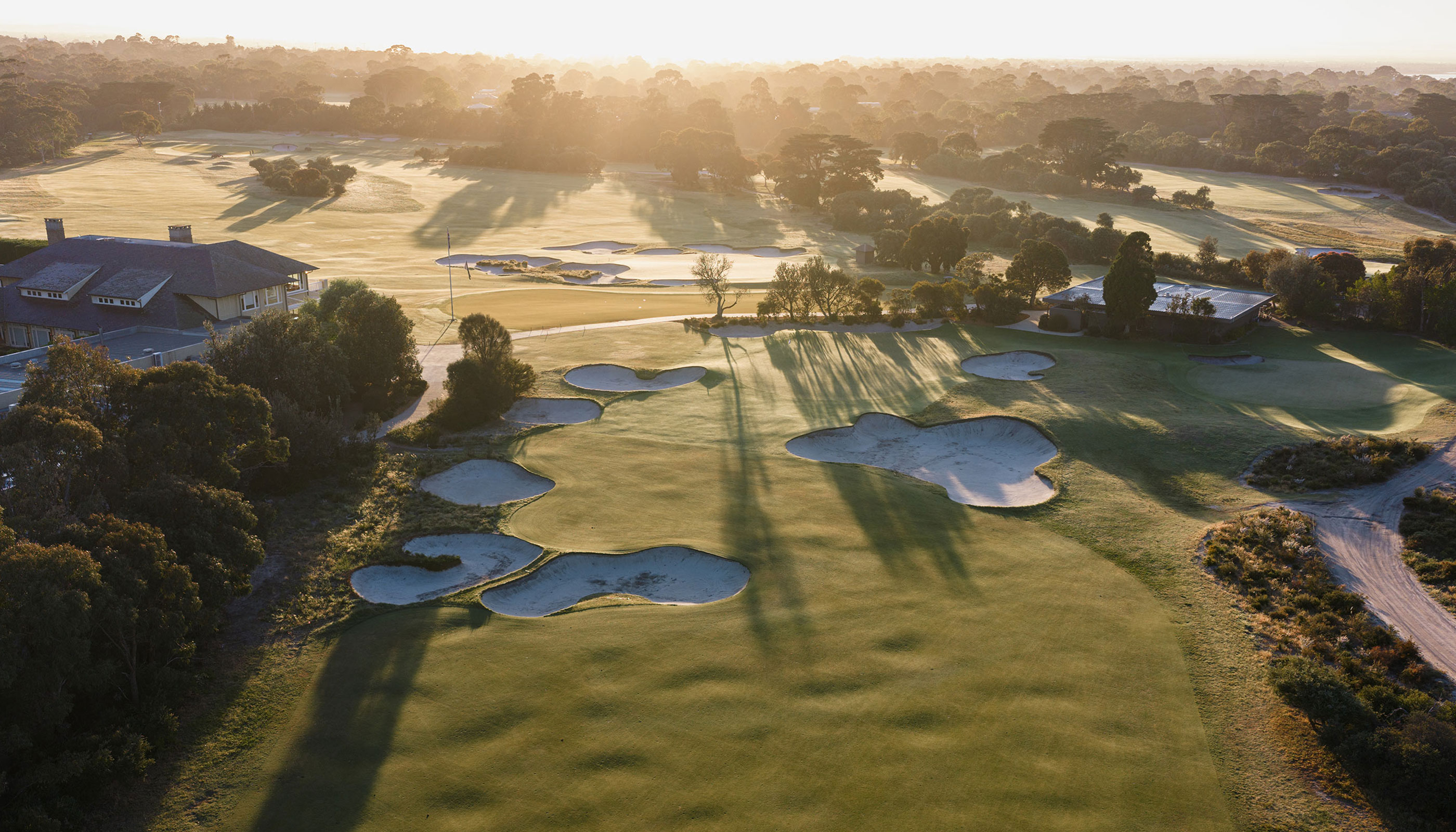

Mike Clayton’s professional playing career spanned more than two decades from the time he turned pro in 1981. Today, the Aussie is an esteemed architect and partner at Clayton, DeVries & Pont, a firm that designs golf courses all over the world. He is also an important voice in the game, never afraid to express his opinion on the direction the sport should go.
In advance of this year’s Australian Open at Royal Melbourne, I chatted with Clayton about the decline of professional golf tournaments in Australia, the test that Royal Melbourne presents, changes he would like to see brought to the sport, and more.
Let’s start here. How has the prestige of Australian professional golf tournaments changed over time? And what have been the primary drivers of that change?
As a kid, the first Australian Open I went to was in 1970. Gary Player competed in that one. Player, Jack Nicklaus, and Arnold Palmer had a deal with Dunlop Slazenger and probably 50% of the clubs in Australia had one of their names stamped on them. As part of that deal, those golfers would come and play in Australia, so I grew up watching those guys play.
There were a lot of household Australian names – David Graham, Graham Marsh, Bob Shearer, Jack Newton, Kel Nagle, Peter Thomson – because golf was in the newspapers. The tour was big. Then Greg Norman turned up and he took it to another level. We rode through the great era of the Australian tour in the 80s and 90s.
Now it's a shadow of what it was. We have a bunch of $250,000 tournaments where it's mainly the locals who play, the young kids. None of them are household names because there's no golf in the newspapers and it's not on network TV. It's fair to say Australian golf is a shadow of what it once was for a whole bunch of reasons.
One is that the European Tour used to start in April and finish in October. Then it became a year-round tour and they’d come here for two weeks, the Australian PGA and the Australian Open.
The PGA Tour had a wraparound season for a long time. Guys like Greg Chalmers, for example, guys who fought just to keep their PGA Tour cards, were keen to get off to a good start in the new year, so they would play in America in October, not in Australia. David Graham, Graham Marsh, Jack Newton, Bob Shearer, Stewart Ginn, they weren't coming back to play in Australia anymore.
Another reason is appearance money. The unintended consequence of Tiger getting $3 million to play in Australia in 2009 at the (Australian) Masters was that he was worth it. The crowds were nuts, the tournament was nuts. Rory's probably not getting quite as much to play this year, but he's getting a lot, I assume. If Tiger thought he was worth $3 million, then Ernie and Phil thought they were worth $1.5 million or $2 million or whatever. And they weren’t.
And Sergio (Garcia) wasn't worth $800,000 and that was what those players asked, so they didn't come. We lost that era of great overseas players coming down here to play. Players on the PGA Tour now have zero interest in coming down here to play.
They’re playing for $2 million Australian dollars with a 48% tax, so they're just not coming, which is not only to the detriment of Australians but to the players, too, because they would have a great time playing Royal Melbourne this week. It’s the best course that pro golf goes to all year. And it's great practice for Augusta – same greens, same architect, same golf course basically. Big, wide fairways where you have to hit it to the right spot.
I was caddying for Elvis Smylie in New Zealand a couple of years ago and Steve Williams was in our group caddying for Daniel Hillier. Elvis asked him his favorite week to caddie and Steve said Augusta because most weeks on Tour you have three or four yards of margin to play with. At Augusta, you often have one or two. Royal Melbourne is the same way.
At the Open Championship, Scottie Scheffler said it's not his “priority nor responsibility” to travel the world to play golf. Do the best professional golfers in the world have a responsibility to bring golf throughout the world?
I’ve got an old-fashioned view, but of course they should. Look at what the great players did. Snead came here, they all came here. They often went to Japan. They went to Europe when they got paid. Australia is such a golf-loving nation. I think they do have a responsibility, but I can see the argument of “Why would I go down there?” But I think if they came, they would actually enjoy it because it’s the sort of golf that they're not going to play in America. They don't play it in Europe. We don't play links golf down here, as in the Open Championship type of links golf.
If you said to 14-year-old Scottie Scheffler, “Do you want to come and play the Australian Open if we give you a sponsor's invitation to play?” You think he wouldn't have wanted to come? But you get rich and cynical and you can't be bothered and you have a family. I get all that stuff. They spout all this grow the game rubbish, but if you truly want to grow the game, then come and let us see you play. People want to see it.
It’s a free world, you can do what you want, but it's a pity. I think Nicklaus and Palmer and Player truly enjoyed their time down here. Nicklaus won six or seven Australian Opens? Player won seven or eight. They loved the courses. They enjoyed the crowds. The crowds enjoyed them. Is that such a hardship?
One year, Player came here to play at Royal Melbourne. He left the World Cup in Paris on Monday night because there had been a fog delay and the event ended on Monday. He flew from New York to LA to Fiji, I believe, then I think to New Zealand. He got to Royal Melbourne at 10:00 on Thursday morning, played with a set of Slazenger clubs he'd never seen before and a small ball and won by seven shots. That’s dedication.
Some would argue that LIV Golf has delivered on bringing high-profile golf to Australia. What is the Australian view of LIV Golf and how does the Australian view align or differ with opinions you see from outside Australia?
I've never been to a LIV tournament, but I assume the tournament in Adelaide is by far their most successful tournament. It’s massive. People fly from all over the country to watch it because they don't ever get to see players like Bryson and Brooks play. There are about 40 guys on LIV that you couldn’t care less if you watched them play, but they have probably four or five players that people do want to go see.
I assume Adelaide is by far their most successful event. The crowds are nuts. They love it. It shows how starved Australians are of watching the best players in the world play. Until this era, we were used to seeing them, but we don’t now.
Having said that, Rory is playing this week, and Royal Melbourne is going to go completely crazy. The galleries will be nuts. This will be a massive tournament. This is close to when Tiger played at Kingston Heath in 2009, in terms of the anticipation and how many people are going to come and watch him play.
Let's talk about this week’s Australian Open. How will Royal Melbourne stand up to the modern game?
The weather has been horrendous. You look outside, it's gray and cold and it's the beginning of summer. It’s like it’s still winter here. It's been raining, so the greens won't be as scary and hard and fast as they normally are. The greens not being as fast as they normally are is actually a good thing because Royal Melbourne's greens have been ridiculous in the past, which is why it always takes five and a half hours to play.
I think the course will be great this week, but it's been an unusually cold, wet spring. If we get a couple of hot days and the course gets fiery and hard, it'll be great fun to watch.
In terms of how it will set up for the modern game, I caddied for Ryo Hisatsune, the 23-year-old kid from Japan, at Royal Melbourne this past Friday. He hit driver off the tee on nearly every hole to see what he could do with the driver. He hit more than wedge into three par 4s. One of those par 4s, the second hole, is a converted par 5. He hit 9-iron in there. The last hole is a 450-meter (492-yard) par 4. He hit driver, 7-iron. On the sixth hole, he hit 3-wood off the tee, pulled it offline, and he had an 8-iron for his second shot. Every other hole was a wedge. He was taking his ball down some scary, scary lines, so it will be interesting to see how he actually plays them when the tournament starts.
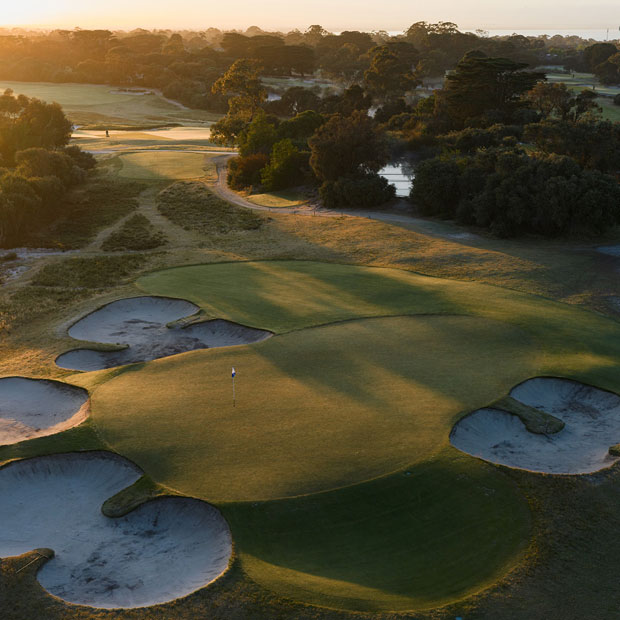
{{inline-course}}
Royal Melbourne is a wide golf course. Do you have to hit the ball straight to succeed?
It's a wide golf course, but the further down you go, the narrower it gets. It gets super narrow between 300 and 350 yards off the tee on a whole bunch of holes.
Sure, the fairways are really wide. But if the greens firm up and if you want to get anywhere near the flag, it's much easier to be playing from one half of the fairway. If you just blast it into the wrong side of the fairway and the pin is on the wrong side of the green, with any touch of wind and firm greens, you can hit an almost perfect shot that turns a yard too far, hits the wrong side of a bump on the green and a shot that would’ve been 15 feet away at the Ryder Cup at Bethpage would be 45-50 feet away at Royal Melbourne. That’s how Royal Melbourne plays.
The problem is the ball goes too far. If the measure of obsolescence is how Alister MacKenzie and Alex Russell saw their course playing, it's obsolete. It doesn't play anywhere near the way they envisioned it. MacKenzie would have been horrified to watch the shots Hisatsune was hitting.
Can you give an example of a hole at Royal Melbourne that would play better if the game were scaled to a more appropriate size?
No. 17 this week is from the East Course. The East was designed by Alex Russell, who was MacKenzie’s partner in Australia. No. 17 measures 570 yards. It’s one of two par 5s and it has diagonal cross-bunkers 50-60 yards short of the green. When we played it in the 80s, almost everyone had to lay up short of them.
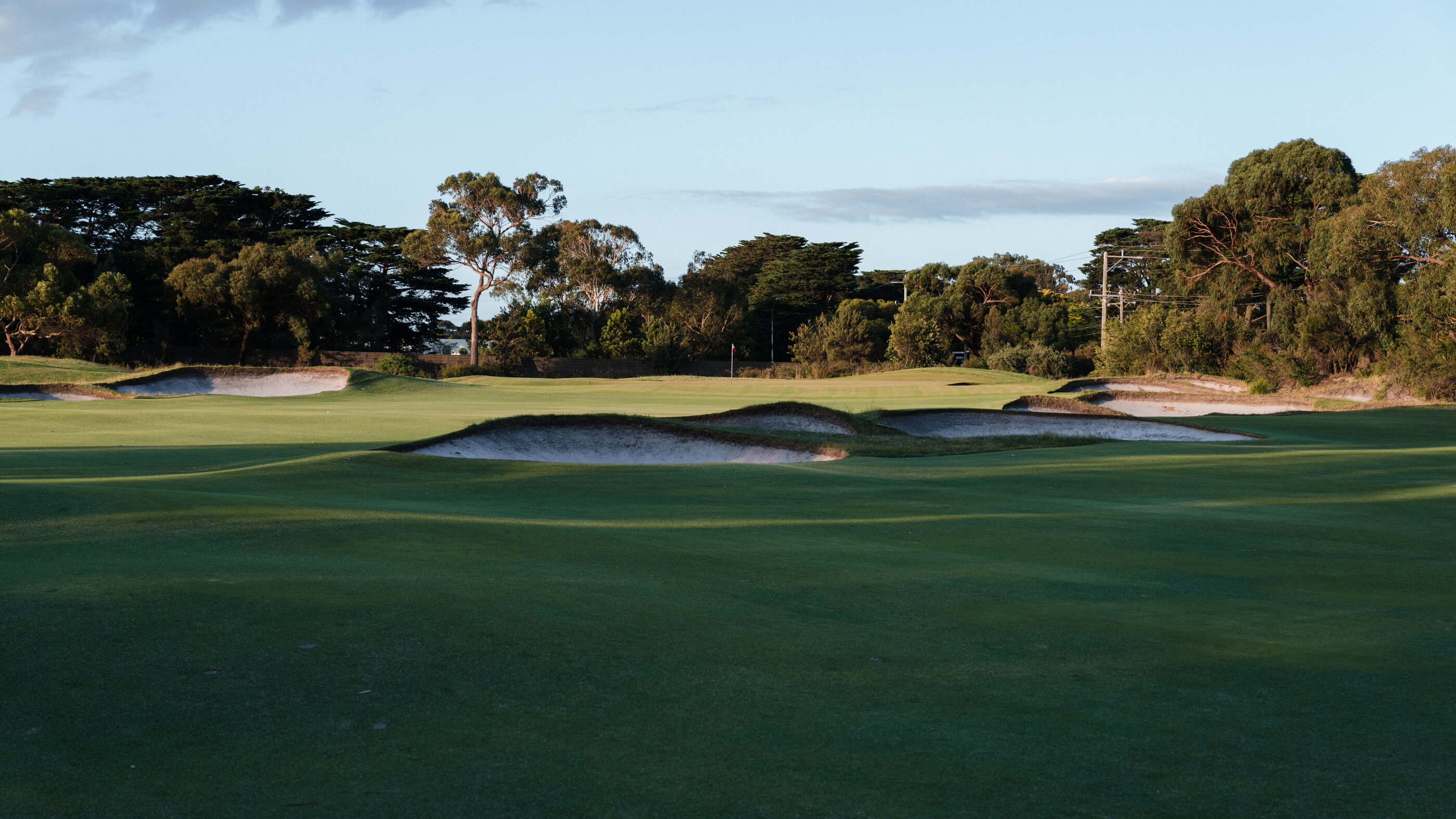
You could take an aggressive layup down the right, but if you pulled it, you would end up in the short left-hand diagonal bunker. Or you could try to carry it over the left bunker, but maybe you wouldn’t end up getting it over the right bunker. There used to be a whole bunch of options. If they moved the tee way up today and played it as a short par 4, it'd be an amazing short par 4.
But as it stands now, every player hits over the cross-bunkers. It's just a driver and a wood. Hisatsune hit driver, 3-wood onto the green. Back in the day, only Greg Norman and Seve Ballesteros could reach that green. And they were playing with persimmon-head drivers and steel shafts. That was a great example of architecture letting the best players identify themselves. The rest of the field didn’t have the skills to hit those shots. It was just a different game.
That same sort of thing is repeated over and over and over on every hole now. No. 11 on the West Course used to be driver, long iron, or driver, middle iron. If you take driver now, it’s driver, wedge. The whole course has completely changed from the way it ever played.
Royal Melbourne can't go and buy roads and houses like Augusta National can. There's almost nowhere to go to extend it past where it is now.
The idea of taking the Open Championship to Royal Melbourne in July gets floated around from time to time. What do you make of that idea?
The perfect place to play the Open Championship, if you played it in Australia, would be Seven Mile Beach, which opens on Thursday. Plug: Mike DeVries and I did design the golf course. It's a links course on the sea that's 700 yards longer than Royal Melbourne is if you play the very back tees. All of the Sandbelt courses nowadays are Bermuda grass year-round, so in July you’d have dormant Bermuda at Royal Melbourne. It doesn’t look as good but still plays fine.
The PGA Championship is the tournament that should travel.
The PGA is like the Australian Open tennis tournament used to be until the late 80s. It was the fourth major of tennis by so far it was a joke. Then they built a new stadium. They went from grass to hard court. All the best players started to come down. Now they all come and play, and it's become the equivalent of the French Open, Wimbledon, and the U.S. Open.
Compared with the other three, certainly the PGA is the fourth major. Everyone would say that. If they had a 50-year view of elevating the PGA Championship up to the level of the U.S. Open and British Open and the Masters, that's what you would do. You would take it around the world. Every four years, you would go around the world. In 50 years, it would be the equivalent. The Australian Open in tennis proved you could do that.
What time of year would you do the global PGA Championship?
In Australia, you’d do it in November. The majors are condensed into too short of a time anyway. For all the faults of professional tennis – and there are many of them – they have a great major schedule. Australia in January, Paris in June, London in July, and New York in September. It's an amazing schedule for tennis. Golf is a much better-organized sport professionally than tennis is, but they have a much better major schedule than we have in golf.
If you were starting from scratch, there is no way you would play three majors in the United States. You would have at least one tournament that travels around the world. I understand why the PGA of America doesn’t want to do that, it's the U.S. PGA Championship. Why would they go to Australia or Japan or Argentina or France?
Well, one, it would be a great thing for golf. Two, you would bring it up to the level of the other three majors. It's always going to be the fourth major while they stay stuck in America.
Should there be more guardrails around equipment sponsorships?
No, you just need an administration who is prepared to take those companies on. And you need the equipment companies to understand that there are more important things than making the ball go 400 yards.
Just as cigarette companies wanted to addict every person in the world to nicotine, the ball companies want a golf ball that Rory McIlroy can drive onto the first hole at Royal Melbourne 400 yards off the tee. That's what they want. And that's fine. It wasn't the cigarette manufacturer's job to worry about lung cancer. It was their job to sell cigarettes. To hell with the consequences. Titleist wants to make the ball go 400 yards. That's their aim.
The government – certainly in Australia but all around the world – eventually put guardrails around nicotine companies. You can't advertise in certain places, you can't smoke in restaurants, etc. But the R&A and the USGA have conspicuously failed to put any guardrails around the manufacturers. And the rollback is not going to do anything. So what do you do?
It's been completely mad for 25 years. The only guys who are big enough to come out against the ball manufacturers are Tiger and Rory.
Tiger can say what he wants and he does, but I know players who have been told by Titleist, “Stop talking about the golf ball. We’re not paying you to talk about the golf ball going too far.”
So they just shut up because what are they going to do? They're getting paid a lot of money. And that's fine. Titleist can do whatever they want. It’s the failure of the administration to regulate the game properly. It was obvious what was happening 25 years ago.
And it’s obvious what is going to continue to happen. The freak in one generation, all the way back to Ted Ray, has always been the norm in the next. So why isn't DeChambeau going to be the norm? We know that there are a bunch of 14-year-old kids out there on Trackman working with teachers to swing it as fast as they can. And the equipment companies will build stuff that goes a yard farther every year. They’ll figure out another driver head where you can hit it anywhere on the face and it'll perform just as well. Where's the end? There is no end. There will be an end at some point, but it's not where it is now.
So if you're an architect, how do you build a hole that asks a good player to hit a driver and a long iron into a par 4? Well, you don't anymore. There isn't such a thing.
Who are the up-and-coming talents out of Australia that you're most excited about and that people should keep an eye on?
Elvis Smylie. I caddied for Elvis in the Australian Open in 2019 when he was 17. I had told his dad I had to work Australian Open radio on the weekend. And he said, “Look, he really wants you to caddie.” I figured he was going to miss the cut so that would be fine and I’d be able to work the weekend.
He was 17, playing the Australian Open at the hardest course in Australia, paired with Mike Weir and Rod Pampling. And he opened 70-67, tied for about 12th after two rounds. I saw something in him that week where I knew this kid was going to be really good. He never complained, never lost his head, he just played golf. He had an incredible attitude and hit the ball well.
He went to three European Tour Qualifying Schools. He got through the first stage one year then missed in second stage. Then he missed the cut by a shot in final stage the next year. Then last year, he missed in first stage.
His mom Liz, who is a Wimbledon doubles champion, a fantastic tennis player, said she was kind of stressed out about it. I said, “Liz, he's going to be fine. He's a really good player. He's going to be fine. Don't worry about him.” Then he turned up at Royal Queensland last November and won the Australian PGA and got a two-year exemption on the DP World Tour. This year, he barely lost the French Open to Michael Kim, who made a 25-footer for par on the last hole to beat him by a shot.
He's our best player.
How would you describe Elvis’ skill set?
He hits the ball a long way, but all these guys do. When I caddied for him, I’d say, “Tee your driver down and hit a low ripping cut down there.” He could do that. He hit these low running cuts into the wind on narrow holes, which works in Australia. He was great at that shot.
He's a good chipper, he's a really good iron player, but he just has a great head on his shoulders. You never, ever hear Elvis complain about anything ever. He never whines, and he never loses his head. He’s the best player we have down here by some way, I think. There are lots of good young players here, but he's really good.
Two more for you. Most of the players we’re seeing sign with LIV Golf now are non-Americans. If you were a professional golfer today and in your early 20s, how would you navigate a potential deal with LIV Golf versus going down a different path?
Well going back to Elvis, he spoke to them. But he wants to be the best player in the world. If you want to be the best player in the world, you don't go there. If you want to be rich, then you go there. That’s the dilemma players face.
If someone had come to me in 1984 and offered me a whole bunch of money, I probably would have taken it. Most guys would take it, I think. But how are the LIV guys doing now?
I’m a huge admirer of Peter Thomson. He was an incredible brain and an incredible player. His mission in golf, aside from winning Open Championships, was creating more jobs for more players. He traveled around the world as the best non-American player. He played in Asia, Japan, Europe, New Zealand, and Australia for no appearance money. He truly grew the game.
If the Saudis had come to Peter Thomson in 1970, Peter would have said, “Let's create 120-man fields and we'll have 35 tournaments and we'll go around the world and create something that competes with the PGA Tour in America.” Something that gives non-American players a chance to play around the world.
That’s what he would have sold the Saudis as opposed to what Greg sold them, which was to have 50 golfers play 14 weeks and go to a lot of places where not many people watch golf. You could have created an incredible world tour.
Peter and Greg were much different personalities. Greg is a massive character and gregarious. Peter was much quieter and just let his golf talk and let his pen talk, too, because he was the greatest golf writer ever in Australia.
As we approach the end of 2025, what is one thing on your wish list for the golf world in 2026?
We've touched on some of them with equipment regulation and moving the PGA Championship around the world every Olympic year. I think it’d be good if the best players traveled more throughout the world.
One other thing: the Australian Open used to rotate around the country until Kerry Packer, who was the richest guy in Australia, sponsored it on his course, the Australian Golf Club in Sydney. It’s basically been hosted in Melbourne or Sydney ever since. They had one in Adelaide and one in Queensland. They haven't seen the Australian Open in Perth in 50 years. That's ridiculous. Surely you can't go 100 years. Australia only has six big cities. You can't go 100 years without going to one of the biggest cities in the country. It's ludicrous.
So one thing I'd love to see in 2026 would be Golf Australia – who is our equivalent of the R&A – decide to take the Australian Open back around the country. There’s a great course in Perth, a great course in Adelaide, a terrific course in Brisbane. Gil Hanse just redid Royal Sydney, which is a great tournament venue. Tasmania has a great venue now. The Australian Open needs to go back around the country.
That would be an amazing thing for Australian golf.
{{inline-article}}




Reimagining Golf As College Football Conferences
An Ode to Odd Sets of Clubs
2027 Fried Egg & FEGC Event Lottery and Registration Process
Five Things: A Reinstated Amateur Solution, Kapalua Returns, and LPGA Players to Watch
September FEGC Virtual Hangout: Get to Know Meg Adkins
On Finding the Fun in Golf (Again)
Get full access to exclusive benefits from Fried Egg Golf
- Member-only content
- Community discussions forums
- Member-only experiences and early access to events