

The Problem with Royal Birkdale’s Recent Changes
Are Open rota venues getting the best-in-class architectural stewardship they deserve?
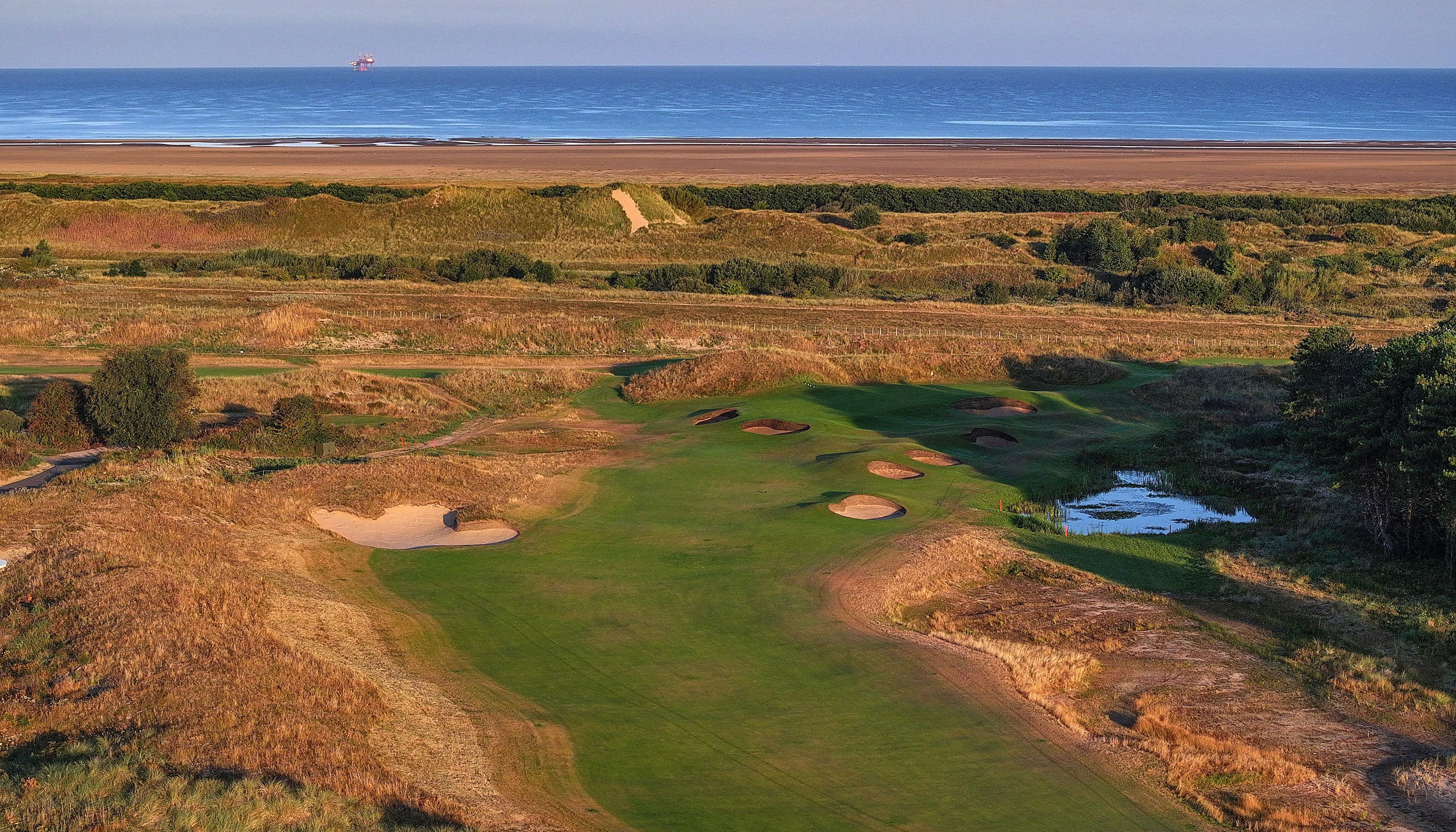

On Tuesday, Scottie Scheffler fielded an innocuous question about his first impressions of Royal Birkdale Golf Club, the host of this week’s Open Championship. His answer likely sent a shiver down the spine of the club’s consulting architect, Tom Mackenzie.
“The one thing I found interesting is it’s so obvious as to which holes had been redone,” Scheffler said, referring to the renovation work Mackenzie performed in 2024 and 2025 on behalf of his firm Mackenzie & Ebert. “They look like they’re not even on the same golf course.”
To be clear, I doubt Scheffler meant to be critical. I think he was just offering a neutral insight. What he apparently didn’t know, however, is that Mackenzie very much hopes his changes to Royal Birkdale are not obvious. In an interview with my colleague Joseph LaMagna on Monday, the architect asserted that he placed “the absolute highest priority” on blending the new with the old.
“We would really hope that people who have been here before come along and notice that something is different but aren’t quite sure what it is,” Mackenzie said. “That’s certainly a big test from our point of view, and we hope that we’ve delivered on that.”
{{inline-course}}
Scheffler, for one, had little difficulty spotting Mackenzie’s fingerprints. He specifically called out the fifth, seventh, 14th, 15th, and 16th greens — all either new or substantially altered since the club last hosted the Open in 2017. “Those green complexes and the amount of slope that they have off of them are pretty severe and quite challenging,” he said.
This comment could use some clarification. Scheffler is not talking about the slope of the greens but rather the slopes around the greens. He’s pointing out the new short-grass runoffs around several of Royal Birkdale's putting surfaces are uncharacteristically sharp and large.
Take the green on the brand-new par-3 15th hole. The collection areas along the right side are unusually deep by the course’s established standards.

The same is true of the reshaped surrounds of the seventh and 16th greens.
{{royal-birkdale-nos-7-16}}
On the redesigned par-4 fifth hole, Mackenzie’s crew created a series of prominent humps in the approach to the green. The aggressive shaping here immediately registers as different from Royal Birkdale's traditional style.
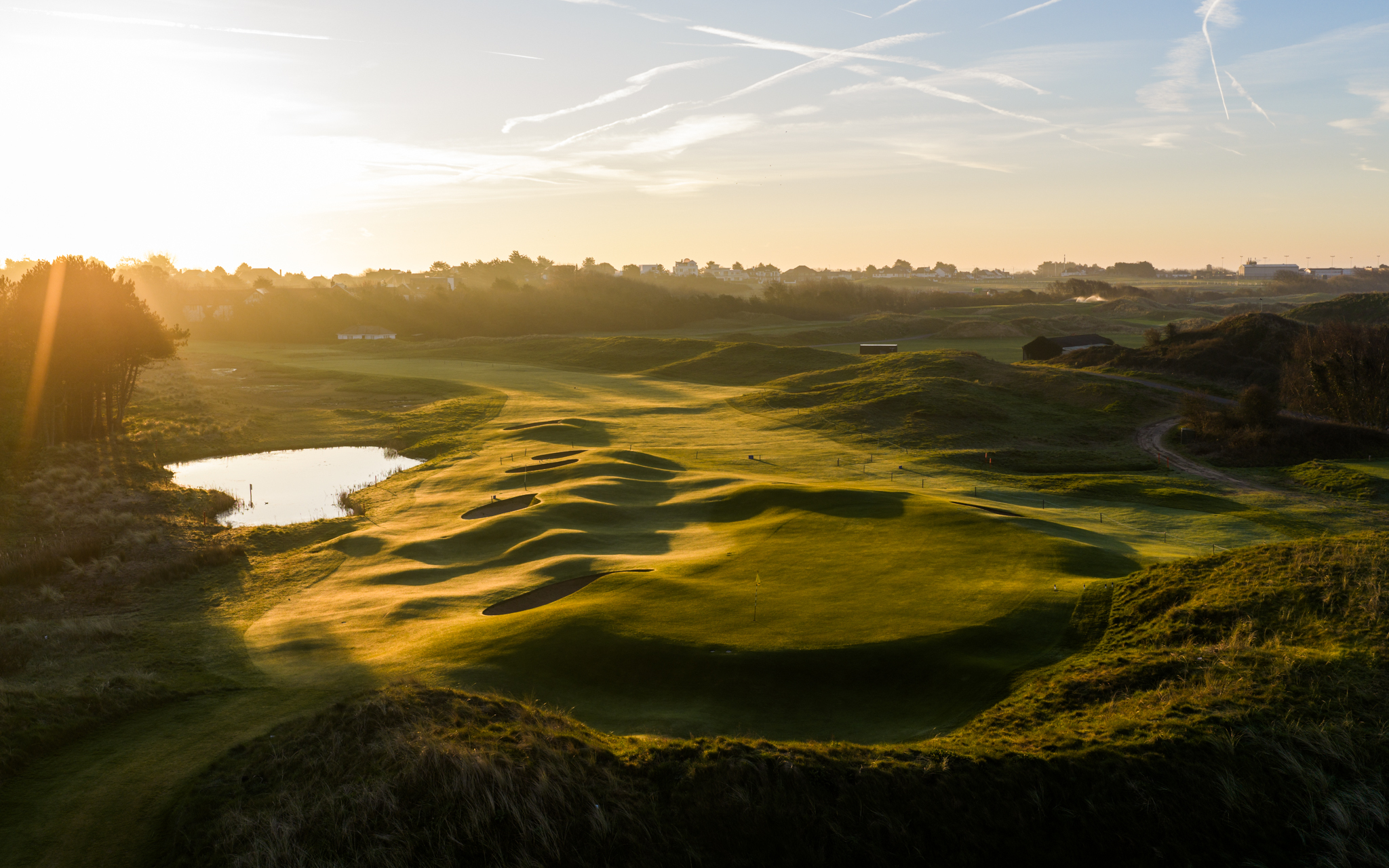
For contrast, look at the first, third, and 13th greens, which were designed by Martin Hawtree in the 1990s and left mostly intact during the recent renovations. These greens, too, have a faintly artificial appearance. But since they sit closer to the natural grade, their tightly mown runoffs don’t announce themselves as loudly.
{{royal-birkdale-nos-1-3-13}}
It’s worth noting that Mackenzie & Ebert is now the architecture firm of record at every club on the Open rota.
Now, I’m not asking anyone to reach for the nearest pitchfork. Royal Birkdale has never been precious about its golf course. For the past century, the club has devoted itself to hosting championships and making the necessary updates to keep challenging elite players. Mackenzie’s work continues that mission. He has introduced more variety to the course’s set of par 3s, boosted the difficulty of several holes, and opened up room for spectator infrastructure. These improvements will be evident and meaningful this week.
But I agree with Scheffler: the renovated holes don’t look like they’re on the same course. And that’s a shame.
I realize that complaining about green design and construction on a major championship week can come off as nitpicky. But I find these details important. There’s a reason Alister MacKenzie was obsessed with camouflage — that is, the art of building artificial features that a stranger might mistake for natural landforms. Great golf courses immerse us in a kind of dream, making us believe we’re battling a landscape, not a manufactured game board. Poor shaping jolts us out of that experience. Suddenly we become aware of the architect’s hand, and the spell dissolves.
Open rota venues are among the finest, most important, most immersive golf courses in the world. They deserve best-in-class architectural stewardship. Right now, I don't think that’s what they’re getting.








A Great Weekend for the Future of American Golf
Winners and Losers from LIV Golf 1.0

It's Too Soon for Jon Rahm's LIV Golf Retrospective

Lauren Coughlin's Brush With Perfection
Weekend Update: Tom Kim Earns Military Exemption, Michael Block Stumbles

How Can Team USA Solve a Problem Like Foursomes?
Get full access to exclusive benefits from Fried Egg Golf
- Member-only content
- Community discussions forums
- Member-only experiences and early access to events