

Architect Tom Mackenzie on Royal Birkdale Changes for 2026 Open Championship
One half of Mackenzie & Ebert describes the recent renovation work
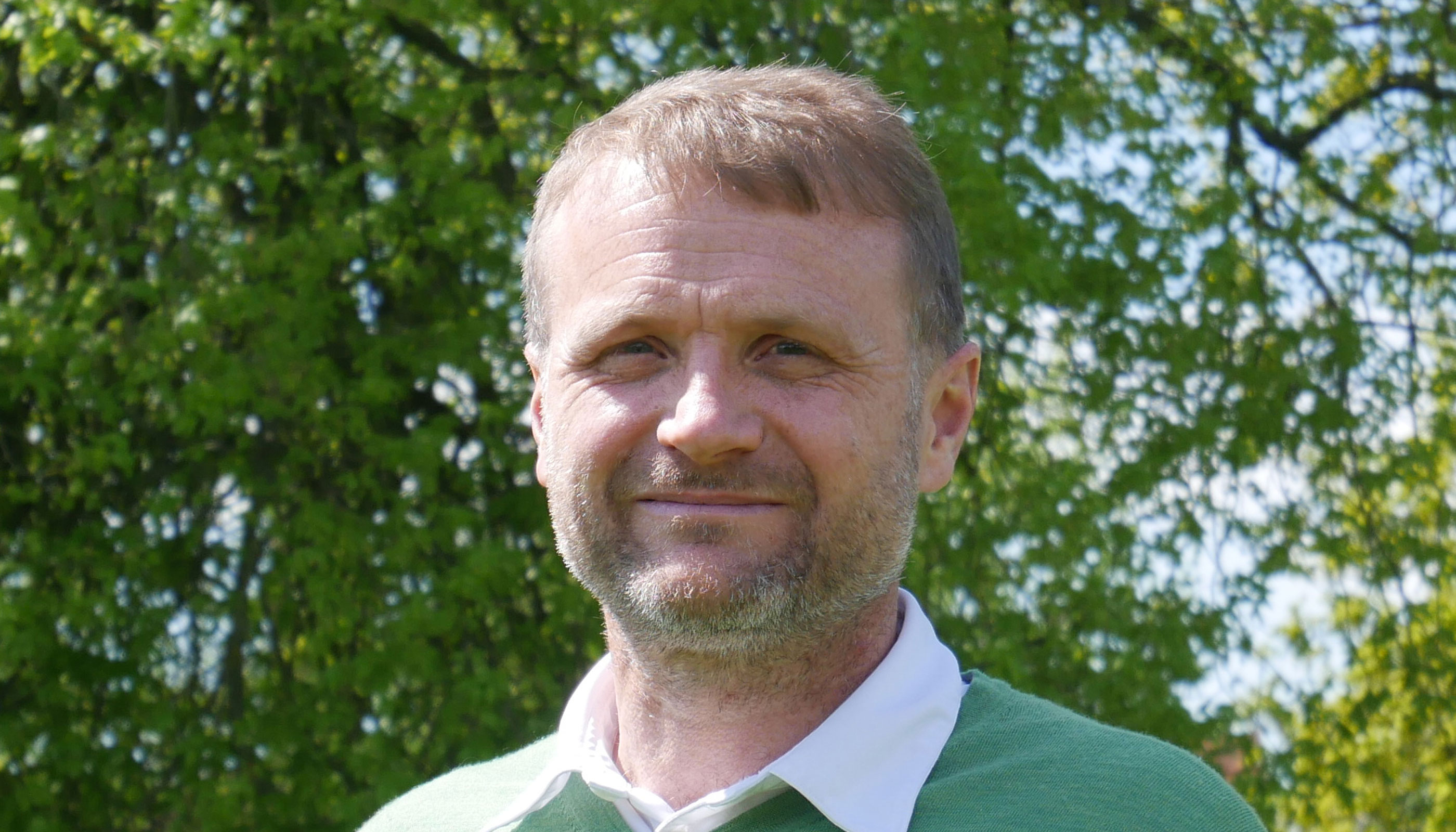

Ahead of this week's 2026 Open Championship at Royal Birkdale, golf course architect Tom Mackenzie agreed to sit down to talk about the changes his firm, Mackenzie & Ebert, made to the course in advance of the final men's major of the season.
Tom, how would you describe the DNA of Royal Birkdale and the test that it presents?
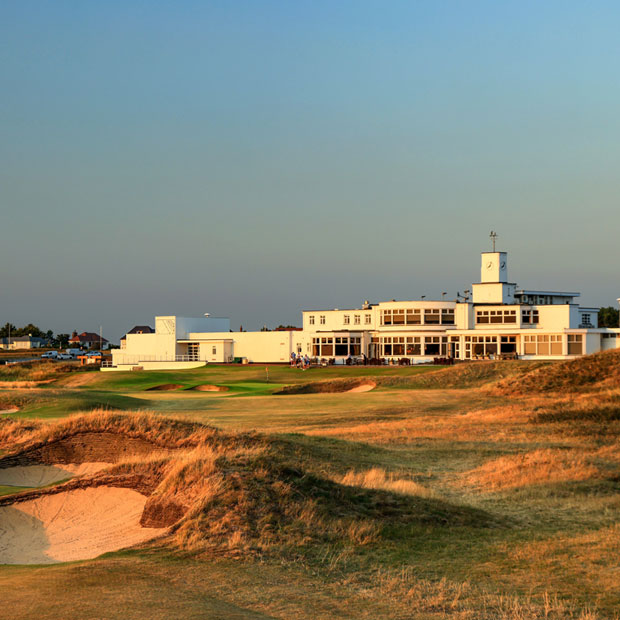
The DNA really goes back nearly 100 years ago, when the course, pretty much in its current form, was created. The goal was very specifically to create a championship venue, and that shaped what you have today.
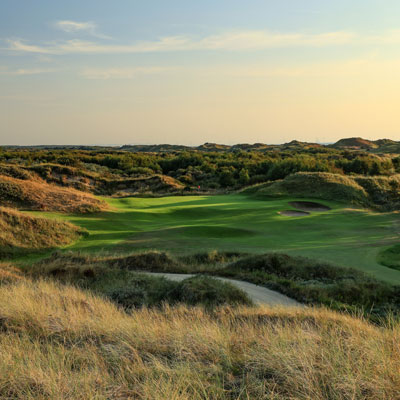
It’s a course that plays between magnificent dunes, with greens sort of set among them. It’s a wonderful spectating venue, and it’s been designed in a way that is very popular for championship golf, as you can see from the incredible roll call of tournaments it has hosted over the last 100 years: 11 Open Championships, Ryder Cups, Women's Opens, Walker Cups, Curtis Cups.
It has delivered on what it was asked to deliver.
You walked Royal Birkdale recently with the R&A agronomy team. What did you learn?
I learned that I didn’t know as much about grass as I thought I did (laughs). The level of knowledge and science that goes into preparing a course for a major championship is just extraordinary.
Things about mowers that I would never even have thought about – where the springs are relative to the reels and how that affects the cutting height. If you take the springs out and lower the cut height, the grass is actually longer than when the springs were in.
The other part I found fascinating was how, given the forecast, they're planning water and moisture levels in the turf and how interrelated it is with green speeds. So much thought goes into it.
It’s unusually hot right now in the U.K., so it's a bit of a fine line to make sure the Open is presented in optimum playing conditions that don't go the wrong way.
{{inline-course}}
Extensive changes have been made since the last Open Championship here. Your firm, Mackenzie & Ebert, was hired for the project and you personally oversaw the work. Can you describe the motivation behind the changes?
It was very much the club driving the whole process. I think they are mindful that it is written into their lease that they must maintain the championship status of the course.
Obviously, the professional game is changing enormously these days in terms of power. They recognised they had to keep up with the times. They also had more specific goals, particularly the weakness of the par 3s. They were all a similar length, and in a two-club wind players would often hit pretty much the same club on all four. Three of them also played in the same direction. They wanted us to look at that and make recommendations.
They also had chronic drainage problems in many areas of the course. One of the effects of climate change in this area of the world is that this part of the country was already wet, but winters have become significantly wetter. The groundwater table levels were rising, so the bunkers sat wet for long periods all the way through the winter.
It's like the old joke at Royal Liverpool when some comedian asked in the suggestion book when the club was going to change the water in the bunkers.
It’s a real problem for members. Over the years there has sort of been an arms race where bunkers have become smaller, deeper, and steeper. Combined with the dampness, members were finding that the bases were getting so firm that balls were running up against the faces and the bunkers were pretty much unplayable. That led to the full package of recommendations that we made, along with restructuring all of the tees to try and create a better, broader test for golfers of every level.
What's the change that you're most proud of?
I think delivering the variety of tests in the par 3s. The introduction of the 15th as a long, downwind par 3 where you can actually run the ball onto the green — something you couldn’t do on any of the par 3s before. Then shortening the seventh, playing from a high tee to a tough green that will be a really, really interesting test on a windy day.
I think we delivered in creating a really solid, balanced set of par 3s that presents a strong examination for all levels of golfer.
The changes were fairly extensive, touching every hole — some big, some small. What percentage would you bucket as absolutely essential versus enhancements that you might as well make while you’re there?
I don't think about it in those terms at all. You’ve been given a brief, and then you determine the best way to achieve it. Similar to having work done on your house, you tell people what you want to have done and then decide what your priorities are. It was all very clearly thought through. I don't think any of it was wasteful in any way.
At least half of the bunkers had to be rebuilt because they weren't draining properly, and they'd all become, in our book, absurdly small over the years. That was something that urgently needed to be addressed.
The green surrounds were never really a feature of Birkdale because they were all sort of compact and tight up against the dunes. So where we built new greens, it would actually have been very difficult to try and replicate that character. The work on the green surrounds was intended both to create a more varied examination of short-game skills and a more consistent theme throughout the course.
When you're making extensive changes to a historic golf course, how much of a priority is making them blend in so that it doesn’t appear as if you were ever there?
That's the absolute highest priority. We would really hope that people who have been here before come along and notice that something is different but aren’t quite sure what it is. That's certainly a big test from our point of view, and we hope that we've delivered on that.
The two bunkers on the left side of the par-3 12th have been removed. Can you explain the motivation behind a subtle change like that?
The 12th had four bunkers in a square configuration, two right and two left in front of the green. Most of them weren't really in play for better players, but they made the hole basically unplayable for shorter players.
We felt it was better to guard the right-hand side of the green a bit more stoutly and to have a runoff area on the left. If you come up short or left now, the ball will run back 20 or 30 yards from the green, leaving arguably a much more difficult recovery shot than a bunker shot.
A pretty consistent theme is that we feel closely-mown turf around greens is probably a more effective hazard for elite golfers than bunkers because they are just so good at bunker play. Quite the opposite is true for the less-confident players, who absolutely dread going in bunkers. Birkdale is an absolute beast for member play, so this eased it up a little for the majority of members while still testing the best players. Bunkers are sort of the obvious spot to do that because the best players in the world don't really care about them.
On that theme of improving member playability while still testing the best golfers in the world: are those competing priorities? What is your perspective on the gap between the amateur and professional game right now and how does it compare to 20-30 years ago?
My career is 40 years old now, and the game is just getting more and more stretched. There is very little you can do to lengthen courses enough. There are very few venues that you can make long enough to ask players to hit the same clubs into greens that Tom Watson would have hit in his heyday, for instance.
All that we can really do is try to position hazards that sow seeds of doubt.
At the other end of the scale, if people are living longer, they are playing longer, getting stiffer and having slower swing speeds — but they want to carry on playing. We're trying to defend courses against the very best, but we also want to keep people playing until as close to being in their coffin as possible.
{{inline-article}}
Where does the professional golf domain expertise come from at your firm? Do you look at shot-level data?
We have all that data in the background in terms of driving distances and we discuss how holes will play, but there are many other important aspects of the design than how it sets up for an Open Championship. My colleague Mike Howard played the game at a very high level and has a great understanding of elite golf. Back at the start of my career, I carried on Tour for a season because I knew I needed to get a good understanding of the game at that level, albeit in those days. That combination really is what gives us an insight into designing for the modern game.
We’ll end on this. You've worked on many Open venues. What is your perspective on where distance stands in the professional game? Is there a distance problem?
My own personal opinion may differ from other people's, but I don't think there's any doubt the game has been a bit overwhelmed by length. Gauging where fairway bunkers have to be positioned, for example, is extremely challenging, especially on a windy course like Birkdale. They have to be located well over 300 yards to do what they are intended because of the distances people hit the ball.
But more than length, what I find most frustrating is that the game has been de-skilled.
I think much more could be done to emphasize skill, whether that’s limiting the number of wedges, the length of putters, etc. I don’t think it’s just about limiting the ball.








Redefining Modern Amateurism in Golf's Reinstated Amateur Era
Q&A: Neil Hutchinson, Superintendent at the Evans at Canal Shores
Chicago Golf Eclectic 18
New-Look Medinah in the Spotlight at 2026 Presidents Cup
A Q&A with Ashley Mead
Cabot Announces New Resort in Nova Scotia
Get full access to exclusive benefits from Fried Egg Golf
- Member-only content
- Community discussions forums
- Member-only experiences and early access to events