
Lost and Found Among the Dunes at the Open Championship
On a life-changing adventure to Ireland

In the summer of 2025, I was lost.
I found myself, at age 47, without a full-time job. For 25 years, my job had been an essential part of my identity. At least for the moment, I was adrift. It was the first significant setback of my career. I had not been sleeping well. I would lie in bed each night replaying recent disappointments and conversations. I was trying to move forward, but I kept returning to the same place.
I decided to travel to Northern Ireland for the Open, hoping to find myself among the dunes.
I suspected a transatlantic flight from Baltimore to Dublin wouldn’t help my sleeping woes, but Ireland seemed like a good place to mull my self-worth. I had been once before — to profile UFC miscreant Conor McGregor — but I spent most of my time in the cheerless suburb of Crumlin, and didn’t venture outside of Dublin. On the final day of our trip, I’d secured a tee time at Royal County Down and was elated to make the trip, but I had to cancel at the last minute to fly to Portugal for an interview.
Ireland still felt like a fever dream, one I could barely remember.
Even though my surname (Van Valkenburg) was Dutch, I had been raised in a large Irish Catholic family in Montana, and had heard stories and songs about who we were and where we came from. Money was tight, and the future uncertain, but as I attempted to write the next chapter of my life, I wanted my wife to understand my origins. I asked her to come along on the journey.
We didn’t have a concrete plan, other than a pair of tickets to the Open Championship at Royal Portrush. Not only had my wife not been to Ireland, she’d never been to the Open, nor to any golf tournament. It felt important to me that she get the chance to experience all the things I loved about it: the genteel afternoon breeze with a beer in your hand; the polite applause after someone hits a “proper shot” that stops 30 feet from the pin; the way the ball caroms and pinballs off the turf before it finally settles in a spot determined by gravity and fate. I wanted her to see Rory McIlroy in the flesh, in the region that raised him, and try to explain why he was so important to so many people. Myself included.
GUIDE: Where to eat, stay, and more importantly play golf in Northern Ireland
She asked if I was going to play golf while I was there. I didn’t know how to answer. I told her I did not have any tee times booked. She encouraged me to bring my clubs with me, but I wasn’t even sure I wanted to use them. It felt like a sign when they didn’t make our connection in Chicago, and would be several days behind us. I wasn’t sure my heart would be in it even if I did get to play. For months, I’d felt miserable standing over the ball. Playing golf was once something I did as an escape, a way to relieve stress and unwind. Once it became part of my job, those feelings grew complicated.
But when we arrived in Dublin, and as we began to make our way North in a rental car, the mental fog that I’d been struggling to free myself from for a month began — ever so slowly — to lift.
No shade of green in my life has ever looked as alive, or felt as spiritual, as the green that covers the hills outside Dublin. The anxiety I have that typically accompanies driving on a different side of the road quickly abated, and we fell in with the rhythms of traffic on our way to Portballentrae.
As a writer, I’d spent half my life recoiling at clichés, but I am not ashamed to admit that I cued up Van Morrison on the stereo, then let the sounds of “Astral Weeks” wash over me. A pensive American listening to Van Morrison as he drove through Ireland searching for meaning was definitely a cliché, but I was reminded of something David Foster Wallace once wrote: “Clichés earned their status as clichés because they’re so obviously true.” Here I was, on the soil that my distant family once called home, listening to my favorite Irish poet, yearning to be born again.
On the drive north, we made a spontaneous decision to take a detour into Belfast, uncertain of what we might find. I attempted an admittedly tortured explanation of The Troubles to my wife, but we passed on a tour of the peace lines and instead enjoyed the single greatest plate of fish and chips of our lifetimes, courtesy of John Long’s Fish and Chips, the oldest chip house in the city.
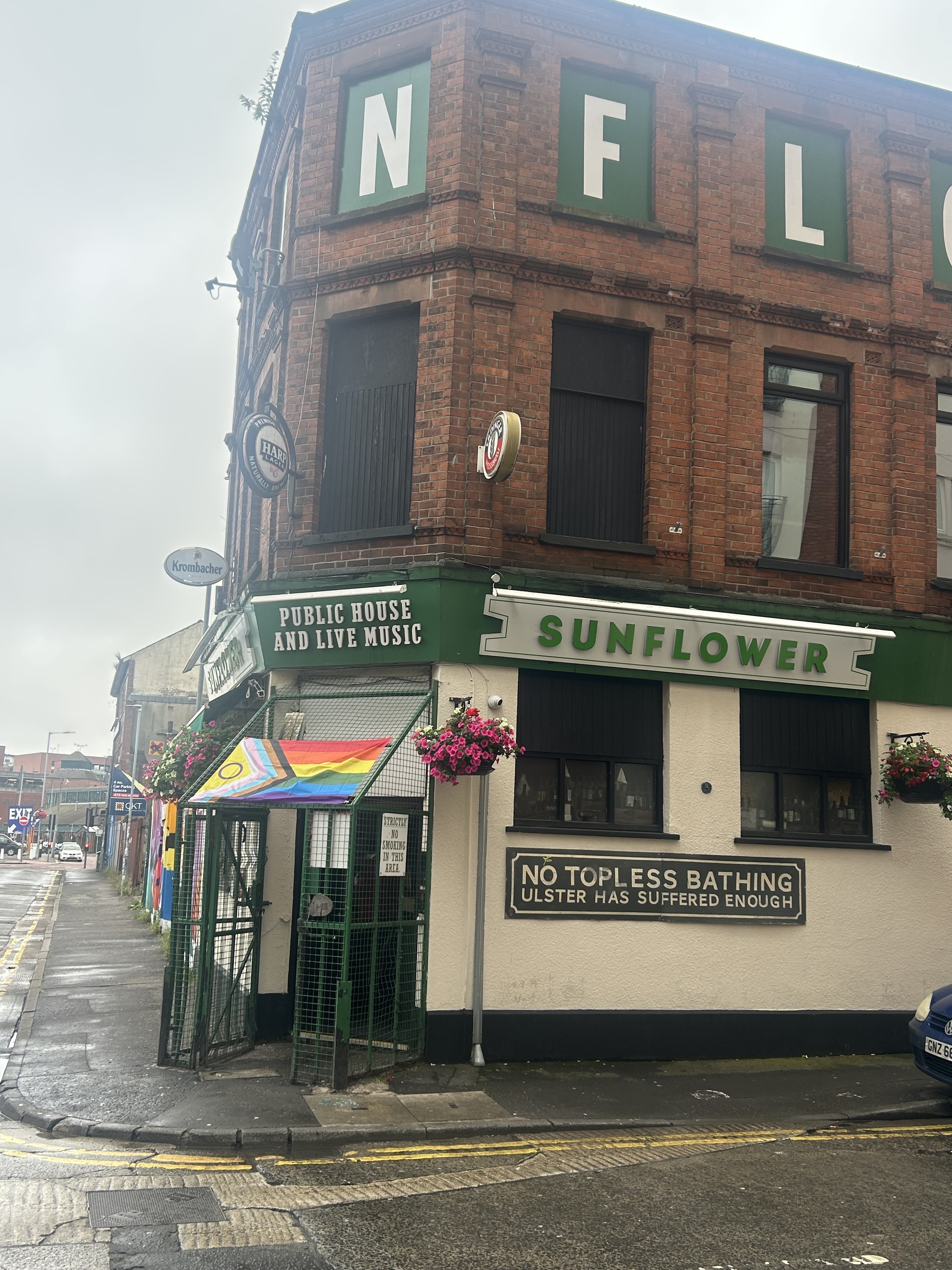
We spent much of our afternoon bouncing between the Belfast of the Past and the Belfast of the Present, perhaps best illustrated by grabbing a Guinness at the Crown Bar, then a Beamish at the Sunflower Public House. The Crown, I’m convinced, might be the most beautiful bar on the planet, a living monument, and a reminder that wood, marble and glass can be shaped into a work of art that is just as stunning as paint on canvas. But the way the sun felt on my face in the Sunflower’s outdoor beer garden will stick with me, even when my hair is fully gray, or fully gone.
When we arrived in Portballentrae, we walked along the ocean. The Giant’s Causeway loomed in the distance, but the sun was going down quickly, so we vowed to save it for another day. The tide had fully receded, so we climbed over the rocks and examined the marine life, and our own reflections, in the numerous tide pools. By chance, we bumped into a friend, Paddy, who I’d met through my old job. I reluctantly shared my life update.
“Do you want to play Royal County Down later this week?” he asked. “I’ve got a guy who would love to take you out on Monday if you’re interested.”
I’d been dreaming about County Down for years, lamenting my missed chance. I wasn’t going to let it slip through my fingers a second time, even if I was playing poorly and lost in my own head. Paddy gave me his friend’s contact information. All I needed now was for the airline to deliver my clubs to me by Friday.
{{inline-course}}
When it got dark, my wife and I grabbed bowls of seafood chowder and beers at the Bayview Hotel and talked about how fate had brought us here.
This was the second marriage for each of us, and in every second marriage, there is an optimism that you are grateful for, the belief that you were not destined to be alone. We had learned, early on in our relationship, that we were good travel companions. She was not afraid to explore on her own, to chase an adventure in a strange place, even if it did not interest me. We would always reconnect at the end of the day. But I could tell, on this trip, she wanted to stick close to me as much as possible. She wanted me to know she would hold me up if I began to wobble, or pull me free if I became stuck in the caverns of my own head.
Growing up in Albuquerque, New Mexico, she had almost no conception of what it meant to be Irish. She was only vaguely aware of the Great Famine that sent families like mine sprawling around the globe, some to the United States, some to Australia. Her family story could be traced back to an adobe brick house, hand-built by her grandfather, on a dirt lot in the desert at the foot of the Sandia Mountains. I had grown to love hearing about her ancestors. Now I wanted her to understand mine.
We cast an unusual visual when holding hands in small Irish towns — her brown skin and dark hair, my pale and freckled complexion. She liked to joke that my skin looked like a tortilla. But as a college student, she had fallen in love with the novels of James Joyce and dreamed for years of visiting the scenes he’d painted in her head. She insisted we listen to an audiobook of “Ulysses” as we made our way through the spiderweb of two-lane roads. Words had been a North Star for each of us, and as I listened to the novel, it made me love her all the more. At night, she leaned on my chest and read from Dubliners, Joyce’s collection of short stories. One sentence from The Dead felt like a mirror.
He felt that they had escaped from their lives and duties, escaped from home and friends and run away together with wild and radiant hearts to a new adventure.
I was not ready to take her to the Open Championship just yet. I wanted to wait for the competition to start. I was also nervous about seeing a few colleagues, having to explain my situation. We headed East along the water, stopping at the Carrick-a-Rede rope bridge to feel the wind on our faces. We grabbed more fish and chips in Carnlough Harbor, ate scones and drank coffee in rocking chairs overlooking Ballygally Beach. This was not a route tourists tended to travel, the locals kept telling us. But to us, it was peaceful.
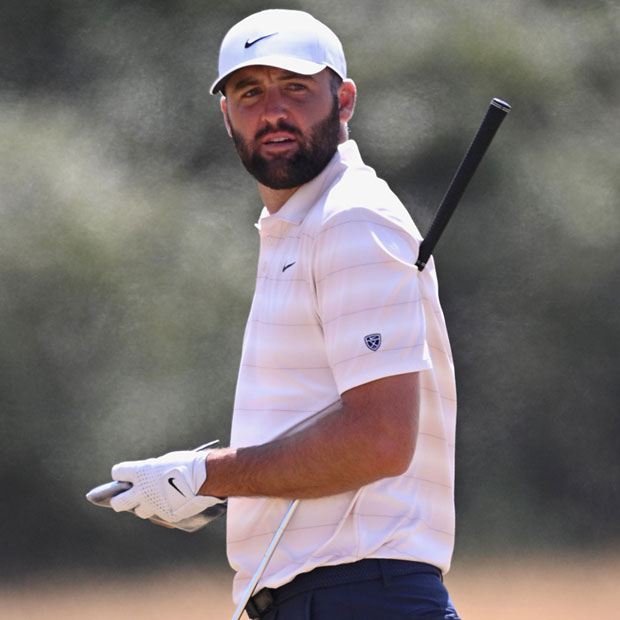
It was in Ballygally that I finally looked at my phone for the first time in hours. That afternoon, back in Portrush, Scottie Scheffler had been asked an unusual question during his pre-championship press conference: “What was the longest you’ve ever celebrated something, and what was your most crushing loss?” Scheffler did not exactly answer. Instead, he delivered a soliloquy that was now mushrooming across social media. I stared at my screen, transfixed as I watched a video of his speech.
"This is not a fulfilling life," Scheffler said. “It's fulfilling from a sense of accomplishment, but it's not fulfilling from a sense of the deepest places of your heart. There's a lot of people that make it to what they thought was going to fulfill them in life. And then you get there, then all of a sudden you get to No. 1 in the world, and they're, like, what's the point? I really do believe that because, you know, what is the point? You are like, what? Why do I want to win this tournament so bad? That's something that I wrestle with on a daily basis. It's like showing up at the Masters every year. It's, like, why do I want to win this golf tournament so badly? Why do I want to win the Open Championship so badly? I don't know. Because if I win, it's going to be awesome for two minutes.
“I love being able to play this game for a living. It's one of the greatest joys of my life, but does it fill the deepest wants and desires of my heart? Absolutely not."
I am not a Christian, nor am I a believer in fate. But there are times, I think, when the universe sends you a message when you need it the most. For a couple years, I’d struggled to connect with Scheffler, to understand what motivated him. But in my current predicament, he’d arrived and offered unexpected clarity.
I cannot let my job define me.
For years, I’d been driven by ambition. At times, the attention that accompanied that success had become addictive. The likes and the compliments I’d received when my job situation changed were comforting, but ultimately fleeting. My job and the self-worth I derived from it were meaningless compared to what mattered: Being loved and giving love in return.
I felt lighter on the drive back to Portballentrae.
It was time to show my wife the Open.
The most striking thing about Royal Portrush, when you walk the course, is just how massive it feels. Only nature could shape the land like this. I’m aware that Harry Colt is credited with the design of the Dunluce Links, but it would be blasphemous not to acknowledge that something bigger played a role, too. The dunes look like someone buried a herd of dinosaurs, then placed green complexes in the spaces between them. Somehow, it never feels random. It is, instead, a cathedral.
For several hours, we jostled for space inside a massive-yet-friendly partisan crowd, all of us craning our necks just to get a glimpse of McIlroy as he sent drives screaming across the sky. I explained to my wife that the last time he played here — in 2019 — the moment was so big that it had completely overwhelmed him. His job had consumed him. He ended up beating back tears as he fought to try to make the cut. Now McIlroy was returning as a different man, a Masters champion, a husband, and a father. I had come to know him a bit through my work, and over the years, we had talked about our families, our hopes and disappointments. I was hopeful I’d find an opportunity to keep writing about him, but the possibility existed that this was the last major I’d see him up close.
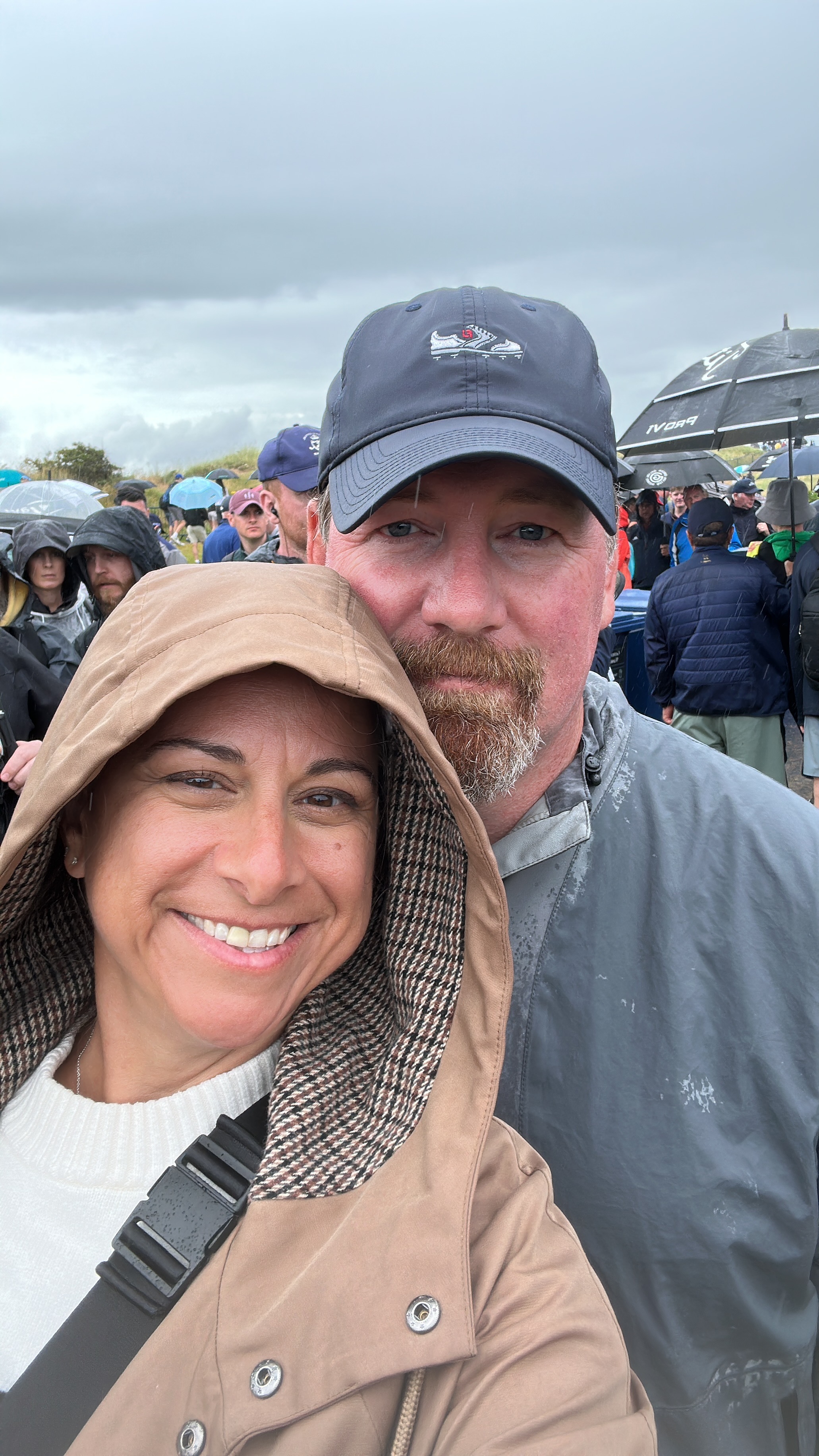
By mid-afternoon, the sky opened up, pummeling our jackets. We’d foolishly forgotten an umbrella. My wife and I huddled in front of a chip stand, sipping Guinness, making friends with strangers, and laughing as the rain soaked us to the bone. Occasionally we’d hear an explosion of sound as McIlroy made a birdie.
It was the happiest I’d felt in weeks.
My golf clubs were delivered to our rental house several days in advance of my scheduled round at Royal County Down. On the final day of the Open, my wife decided she wanted to take a ferry and explore Rathlin Island, to stroll among the birds, and I decided to return to Portrush to watch Scheffler’s march to victory. He was playing like his mid-week soliloquy was just a prelude to his magnum opus.
My wife could tell, even without asking, that I, too, was more at peace.
After dropping her off at the ferry in Ballycastle, a feeling I cannot quite explain steered my car in the opposite direction of Royal Portrush. I drove instead to Bushfoot Golf Club, a nine-hole course just up the street from our rental house.
I doubt you’ve ever heard of Bushfoot. It is not on anyone’s bucket list, and will not be recommended in any of the guides given to tourists looking to explore the best of Ireland. It is a place for locals, a place to have a stroll and a bite to eat, to carry your bag by yourself and play the same nine holes twice from different tees if you want to post a score.
I told myself I wanted to use Bushfoot to work on my swing, to loosen up and try to find a feel before my round the following day at County Down. But I also pulled into the parking lot for reasons I’ll never be able to articulate. I just knew it was where I needed to be.
When I inquired in the clubhouse about a tee time, the head professional told me they were booked for hours. I thanked him for checking, then headed for the door.
“Actually, we have a couple members about to tee off right now that I think would take you out,” he said. “Jog up to the first tee and tell Peter I sent you to play with him.”
Without hesitating, I dashed through the parking lot, then climbed a hill that towered above the first fairway. Two men in their 70s — Peter and John, apparently my apostles — greeted me warmly. They had been playing together, often here, for decades.
“You’re welcome to join us,” Peter said. “But fair warning. We’re quite shit players.”
“At the moment, so am I,” I told them.
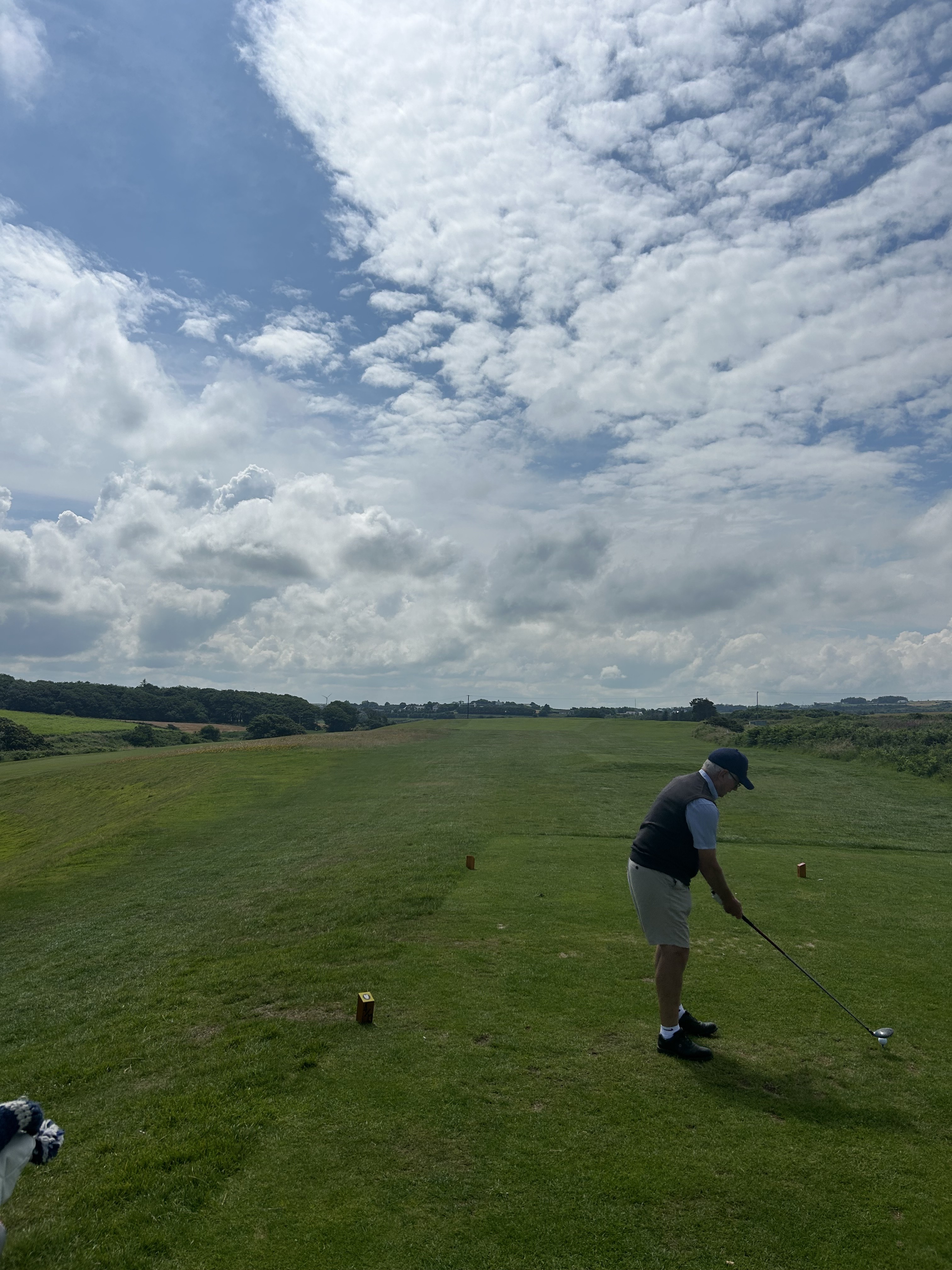
They encouraged me to hit driver, and I nodded in agreement. Why not? I subscribe to the theory that any time you’re feeling doubt, it’s wise to choose the club with the biggest face. I closed my eyes and imagined myself on the first tee at County Down, ripping a bullet cut into a left-to-right wind. I drew the club back with intent, then lashed out with violence.
I barely had time to whimper “Fore!” before I watched my ball go screaming off to the right, where it ricocheted off the clubhouse restaurant. A lovely couple, also in their 70s, flinched at their table as the ball careened sideways, back toward the fairway. I looked down at my shoes in horrified silence.
“Well,” John said. “That’ll wake you up while you’re enjoying a bowl of soup.”
I laughed and so did they.
It felt good to laugh again. I could not stop chuckling as I walked to my ball.
I made a miraculous bogey from the shadow of the clubhouse, and then, something surreal began to unfold. The ball began to rocket off my clubface in the direction I was aiming. I made pars on the next three holes, then a pair of birdies late in the round. For the first time in months, I felt like I knew how to play golf. I gave myself permission to love it again.
As we strolled up one of the shaggy fairways, Peter asked what brought me to Ireland.
“I’m not sure, exactly,” I admitted. “I’m kind of between jobs right now.”
Peter nodded. He had worked in finance for years but found, in retirement, that he didn't really miss it. He confessed that, in recent months, he’d been battling a form of dementia. Sometimes it was hard to remember how many strokes he’d taken on a hole. But he wanted to keep playing. His love for the game remained, even though life had begun to take certain things from him. Playing with friends, appreciating the way it felt to occasionally strike it pure, was what mattered.
I do not know, a year later, if Peter would remember me. I suspect he might not.
But I will remember him and Bushfoot Golf Club — and Portballentrae and James Joyce and the Sunflower Pub and the sounds of the Open — for as long as my tender heart will mercifully allow.




2027 Fried Egg & FEGC Event Lottery and Registration Process
Five Things: A Reinstated Amateur Solution, Kapalua Returns, and LPGA Players to Watch
September FEGC Virtual Hangout: Get to Know Meg Adkins
On Finding the Fun in Golf (Again)
Golf Needs More Good Stewards
Alt Shot: Golf vs. the Machines
Get full access to exclusive benefits from Fried Egg Golf
- Member-only content
- Community discussions forums
- Member-only experiences and early access to events