
Investing in Golf Behind the Scenes
How the Super-Scratch Foundation is helping the turf industry
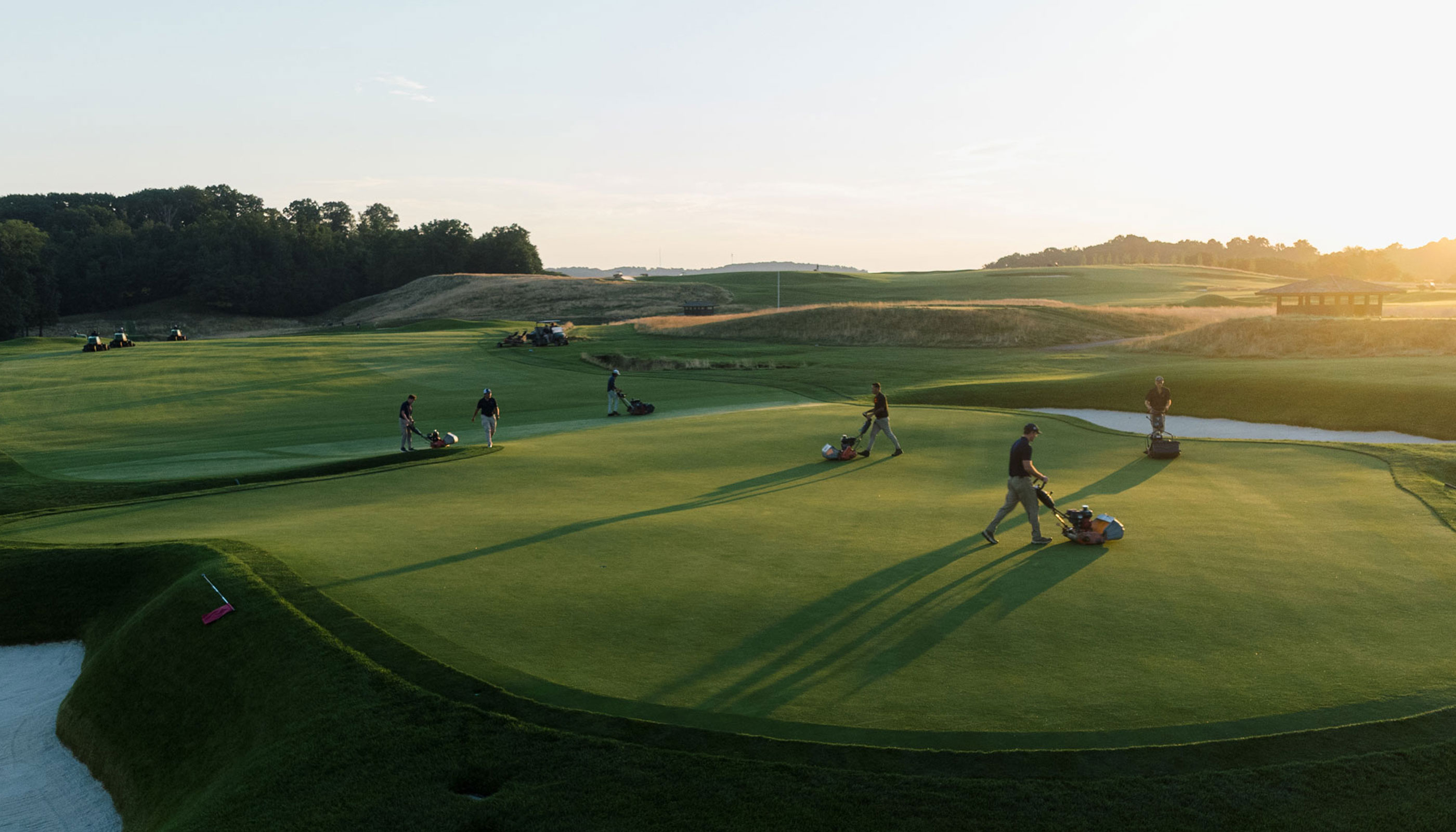

While golf’s popularity has boomed in recent years, a troubling trend has been bubbling under the surface: the turf industry is struggling. Not with its practices, but its pipeline of talent.
In the early 2000s, the top turfgrass programs in the United States routinely had more than 100 students enrolled. Iowa State, Michigan State, Ohio State, Kansas State, Texas A&M, and Penn State regularly churned out crops of promising future golf course superintendents. By 2023, those numbers had plummeted, with Penn State being the only school with more than 40 students in its class. Illinois shuttered its program while Maryland, Minnesota, and Wisconsin saw their enrollments drop below five students each. All told, turfgrass programs in the United States have seen a 75% decrease in student enrollment in less than 20 years. “When we put out an ad for an assistant superintendent job, we used to get 30 applicants that you'd be shuffling through,” Scott Bordner, Director of Agronomy at the Union League of Philadelphia, told Fried Egg Golf. “Now, you might get two to three.” And while turfgrass schools don’t comprise the entirety of your local grounds crew, they are the lifeblood of turf leadership. Needless to say, with so much development happening across the country as golf continues to boom, the decreasing participation in turfgrass programs is a serious concern.
As with anything in life, the drop in enrollment in these programs is multifaceted. The economic issues of 2008 and 2009 led to many cutbacks at courses across the country, affecting both the number of jobs available and the finances available for those positions. Working in turf is also an undeniably different way of life, requiring early mornings and a lot of time spent outside in adverse weather conditions. But without a doubt, the number one reason for the decrease in turf participation is the cost and lack of funding to help those endeavors. The Golf Course Superintendents Association of America (GCSAA) has scholarships available, and there are other organizations that help on a smaller scale, but their reach is limited.
This isn’t to say that educational support within the golf industry doesn’t exist. The Evans Scholars Foundation brings in tens of millions of dollars for its caddie program every year and helped award a record 340 scholarships in 2024. In the Northeast, the Francis Ouimet Scholarship Fund awarded $3.4 million and more than 150 scholarships for the 2024-2025 school year. The J. Wood Platt Caddie Scholarship Trust, affiliated with the Golf Association of Philadelphia, raised more than $1.8 million in 2024 from its top 20 donor clubs alone. Serious work is being done to help support the futures of young students, a huge feather in the cap of the golf industry writ large. But when it comes to the turf industry, financial assistance is severely lacking.
{{inline-article}}
In 2020, a few local Philadelphians decided to do something about the lack of assistance and founded the Super-Scratch Foundation, a nonprofit that provides secondary education funding within the golf industry. That fall, the organization ran the first Super-Scratch Invitational, where 12 teams raised $1,500 in donations to the winning club’s turf program. This year, the organization received more than $150,000 in donations, promising early returns for an operation with lofty goals.
Headed by President Andrew Mason, Super-Scratch brought on industry leaders to help guide its mission. Bordner came on as co-Vice President alongside Tim Zurybida, Director of Agronomy for the National Links Trust, and the trio helped expand the organization’s reach nationwide. This fall, they brought on Brian Laurent of the Superintendent Network to help further facilitate a national connection.
It seems counterintuitive to think that the turf industry would struggle to receive the same support as other areas of the golf experience. Without the grounds crew, golf doesn’t happen. But in talking to Bordner, Zurybida, Mason, and Laurent, it becomes pretty clear why there is such a gap. According to Bordner, five members of his grounds crew have been on the first green before a golfer hits a putt. “Especially at a high-end club, we're doing everything that we can to limit interaction with the maintenance staff,” he said. “We're trying to get out there ahead so we're not seen.” This practice is commonplace at golf courses across the country, especially private clubs. The grounds crew begins work in the dark and often finishes a high percentage of morning activities before a golfer sets foot on property. And while this dedication and effort are both necessary and (hopefully) appreciated by those playing the course, it creates a disconnect between the staff and the course's players or members.
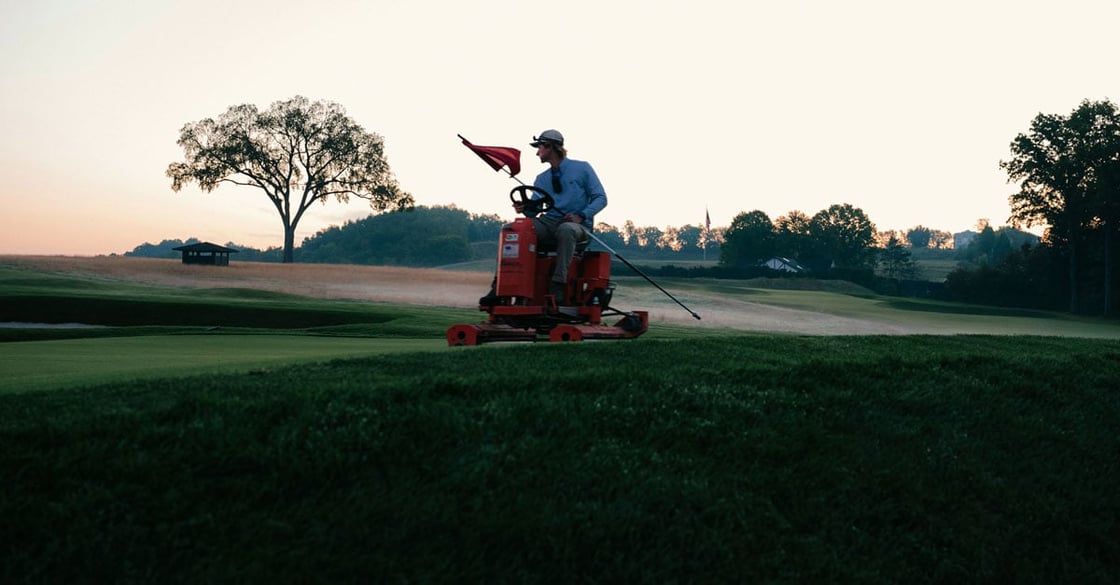
Some clubs make a point to bring their turf team into committee meetings to interact with the membership, but that’s not always possible, especially at courses strapped for staff. “The high-end clubs that do have four or five assistants are trying to teach the soft skills because they understand that those skills are going to be critical to their advancement in this industry,” Laurent said. "But again, many private clubs and public courses don't have those assistants to try to bring into those meetings. They don't have the time necessary to make all the board meetings themselves. They're so inundated with all the other work and they don't have the people to really help them out.”
This holistic lack of communication has lasting effects that step far beyond day-to-day interactions. “There have been a couple groups in our industry that have looked into this issue,” Laurent noted. “The top reason being a lack of awareness, not enough people know about (the turf industry) as a profession. The second being a misunderstanding of what a superintendent does. You know, they think it's just the guys mowing grass and digging holes.” Golfers constantly see the results produced by the grounds crew, but they rarely communicate with them. To that point, Zurybida noted how much more there is to the job than riding a fairway mower, a task he joked is akin to his “living hell.” But the real passion comes from the job’s tangible outcomes. “The job allows me to get in touch with my artistic side,” Zurybida said proudly. “You can't BS your way through this. The fruits of your labor are out there for everyone to see, both good and bad.” In Bordner’s words, “There are so many professions where you can't see the impact of your work. But in maintenance, you can look back at the end of the day and you can literally see the impact that you had.”
While the future of the turf industry may be tenuous right now, the human element of this cause provides a spark of hope. Zurybida is off to a graduation ceremony for a former staffer who completed the police academy. Bordner is managing wedding invitations from former employees, something he and his wife thought they were done with for a while. “Anytime you talk to a superintendent, they care less about the rankings than they do about moving people along,” Bordner said. “When they're getting ready to retire, they're not thinking, ‘Oh, we took XYZ club into the top 10 worldwide.' It's always, ‘I sent along 25 guys and gave them better lives.’” The ability for students to find a profession they can succeed in while making lifelong connections is a powerful thing, yet another way golf provides real opportunity when given a chance.
Still, the battle persists. The turf industry has a long road ahead if it hopes to refill the pipeline of promising young talent. The work being done by the Super-Scratch Foundation is important in helping make school more affordable, and universities are thinking outside the box by offering two-year programs and faster ways to get certificates. It’s a game of awareness, but one that can be addressed if enough people help row the boat.
If you’re interested in the work the Super-Scratch Foundation is doing or would like to help the cause, I’d highly recommend visiting the foundation’s website to stay up to date on its efforts. And next time you’re at your local course, take a minute to learn the name of one of the grounds crew members. You never know what kind of difference you could make.





On Finding the Fun in Golf (Again)
Golf Needs More Good Stewards
Alt Shot: Golf vs. the Machines

Good Good and Bad Things
2026 Walker Cup Preview with Lahinch Golf Club Member
Separating Schlock from Substance in Golf Entertainment
Get full access to exclusive benefits from Fried Egg Golf
- Member-only content
- Community discussions forums
- Member-only experiences and early access to events