A.B. Mengel
Any Kevin Kisner shot to force a playoff, followed by him losing said playoff?
Link to commentMichael Hayes
Hello All! I am very excited for another year of Fried Egg Events. I will be travelling in my van down from McCall, ID. to Ojai, Ca. and am up to see a few more SoCal courses as well. Then I will be driving Route 66 all the way to Chicago, where I will be capping off my road trip with the TFE SW Michigan trip! I need golf suggestions for OK and MO, 2 states that I have never played in! It's going to be a great spring!
Link to commentBen Denison
Justin Rose's back 9 at Augusta this year would count I feel like
Justin Thomas getting a plaque at Erin Hills for his 18th hole 3 wood that didn't win him the tournament
Sergio on 16 at Medinah probably best example?
Link to commentBrian Decker
For what it's worth, I took it in good humour. There's a reason I put Joseph's 'there's also TPC Toronto' tweet in my post. Being subject to that kind of criticism and humour comes with the category TPC Toronto and the other courses occupy.
In fairness, though, I'd say the same about the high standards that apply to FEG. If you're going to put a course in that kind of category, it's pretty unsatisfying not to have a thoughtful justification alongside it. And not to make this too much of a meta-take, but it was hard to find substantive critiques *anywhere* including outside of FEG, which left the void to be filled with commentary like "unfortunately, it's a golf course," "garbage golf hole," and "bad golf course." The last two are direct SGS quotes - Please Do Not Put In The Newspaper That I Got Mad.
For someone who comes to FEG for thoughtful analysis of golf courses, why *wouldn't* their takeaway be that TPC Toronto is, in fact, a very bad golf course? That's why I framed the discussion around what the definition of a bad course actually is.
Link to commentAlex Hunter
Nice Analysis Brian. As a local to Osprey Valley I have always had varying levels of appreciation for the golf courses on offer. I don't think I have a preference of pre-reno North vs. post-reno. Neither are my favourite on property. It feels like not much changed for me to differentiate it and given the price tag associated with those changes I ultimately question why. Sure there are overall improvements in quality. But these changes have just made the experience more expensive for everyday golfers with little value added outside of a TOUR event.
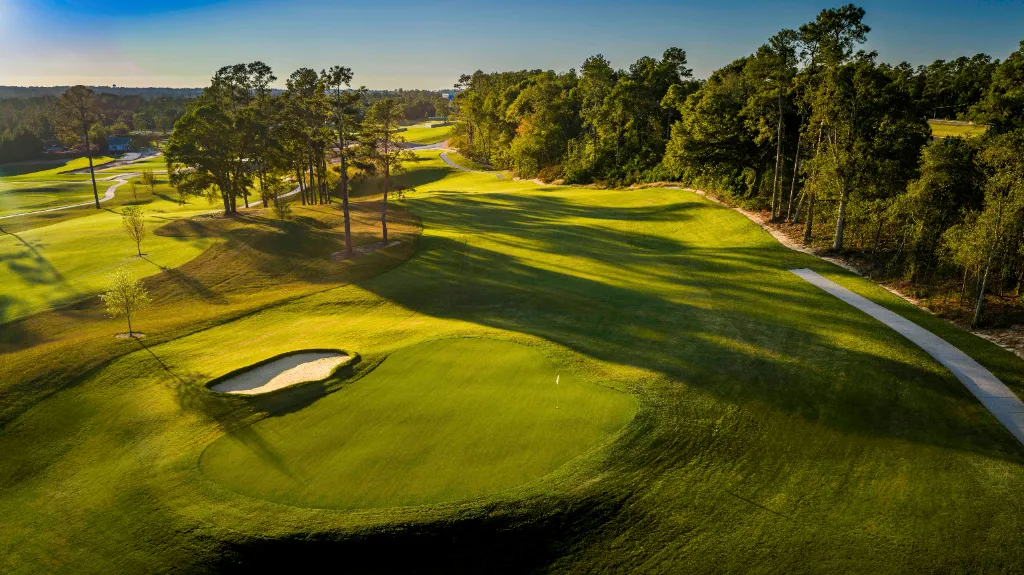
I think you know my partial affliction for the North course. From hole to hole I find its visual variety lacking in comparison to my personal preferences and the two other courses on offer on property. North's drawbacks are mainly due to the bunker shapes and sizing - scale and repetitive nature of the single thumb really draw my attention away from the enjoyment of the other elements on offer. That is amplified on TOUR because of the elevated nature of the shots presented. It detracts from North's strongest characteristics because it's easy to pick out. For example, North has a number of notable green sites like the 3rd, 9th, 10th, and 13th, that I think are worthwhile to see. You'd probably never know that without playing the golf course though.
Is North a "bad" golf course. Surely not. The land is decent enough to help achieve some form of engaging golf from hole to hole. Is there room for improvement and a stronger architectural design that could warrant a better evaluation of the golf course for both TOUR players and everyday golfers, yes.
Link to commentSteven Brooke
I just got back from playing RM, Kingston, 7 mile, and a few others in NZ last month, so here’s my 2 cents. Overall it was amazing.
Play RM and Kingston Heath. Take caddies (you need a caddie at RM for international visitors, and they gotta be paid in cash). But they’re also useful because the courses are such that having someone to point out lines and tricks will help you get the most out of your round. Make sure to take enough time to play the Furrows at Kingston (free and super fun) but also to walk around the clubhouses/facilities and enjoy it/sightsee. I had a blast.
Play Sandringham (Sandy golf links). It’s literally across the street from RM and superintended by their grounds crew. It’s an awesome public course and facility and such great value. No brainer to hit this one.
I played Cheltenham one evening. Fun 9 holer that shares a border with Victoria. Much more working class and not really the sandbelt feel but I really liked it.
It’s not necessary to rent a car. I stayed in the CBD and took public transport down to the courses (train, bus, tram). It was super simple and convenient. I did hop an uber once or twice because I was pressed for time, but those were cheap once down around the courses.
Do not forget your sun protection. The sun doesn’t feel super strong but it will absolutely roast you.
7 mile was awesome but hard- I had winds over 40 starting on about #6 and just got beat up from there on in. People were extremely nice, views are amazing, course was very good. Be careful going into the brush b/c of snakes.
Link to commentGarrett Morrison
Meh. It was clearly a lighthearted barb in the context of a tiering graphic. I think we need to allow for some fun in the discussion of golf courses.
Link to commentAlex Hunter
You just shouldn't have categorized the golf course as "Unfortunately, it's a golf course". That was in poor taste.
"Shouldn't host a TOUR event" would have been better simplification of your analysis.
Link to commentBrian Decker
Hey, thanks! I appreciate the responses here. The critiques are fair, and I would love to see these fleshed out a bit more in next year's tournament coverage. That's why I asked the 'what makes a course bad,' question, because whenever I did see criticism of the course last year it wasn't often accompanied with much substance. I have been a FEG/SGS reader for a long time and if anyone is going to do that, it's you guys.
Re: Toronto weather, I don't think the early June date is necessarily the most reliable time of year to produce firm and fast conditions, but last year's spring was an outlier. There was snow well into April, and it wasn't until about two weeks before the event we really got much sun. Our turf guys pulled off some magic tricks just to get it where it was by tournament week. The event is a week later this year (June 8-14 instead of 2-8) and I legitimately think that one week will make a material difference.
If replies here could include images, it would be the 'Sad Wolverine Holding A Picture Frame' meme and the image in the frame would be the conditions we had in September '24 when we hosted the Americas Tour Championship. The course played completely differently then; the fairway width was actually super important, not only because the firmer greens emphasized approach angles a bit more but actually just keeping the ball in the fairway was an interesting skill test. I'll never forget, in the final round Johnny Keefer hit an iron off the tee on 1 (which should be an auto go-for-it par-5, and he was in contention!) just to keep driver in the fairway, because guys had to turn it right-to-left against the camber of the fairway and the prevailing left-to-right wind, otherwise everything was running into the fairway bunker. The course was playing much shorter, but I'd say far more interesting. Here's hoping we get something more like that in '26.
Link to commentJoe Zwickl
Side note. Whose career would you rather have. Speith or ZJ?
Link to commentJoe Zwickl
I will never understand how a golfer who has had way more bad years than good holds so much weight in fans eyes. He had 3 good years and lost it. He hasnt been relevant in a long time yet people feel the need to hold on to the past. Sure he won the masters and us open in the same year but in my eyes he holds the same stature as Zatch Johnson.
Link to commentJoseph LaMagna
Oh, also, I should follow up just a little bit: the premise of your post is what makes a golf course bad. I don't necessarily think the golf course is "bad." As you've noted, I've never been there. I think - at least currently - it isn't of the quality to host a professional golf tournament on the most competitive Tour in the world, but again, happy to re-evaluate that this summer.
Still doesn't mean it's bad. It could be delightful place to spend a day. It just doesn't pose a significant challenge to the best players in the world (from my perspective).
Link to commentJoseph LaMagna
Hi Brian,
I really appreciate this post. Very thorough and well-reasoned. When I do the course tiers each year, I hope for some intelligent pushback. Thank you for providing that.
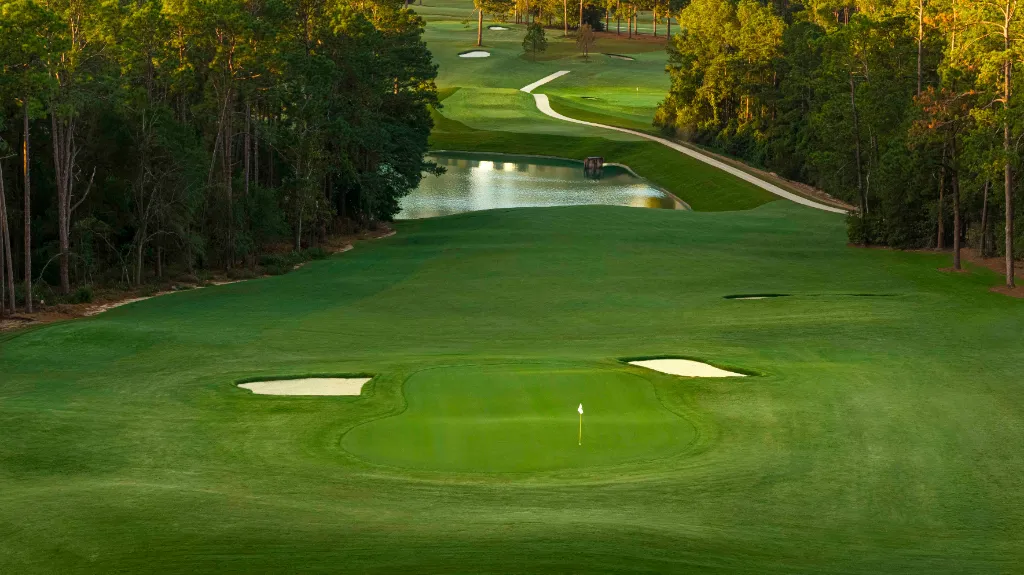
"Unfortunately, A Golf Course" is admittedly a harsh category title, so I understand taking exception to it. You've given me some new things to watch at this upcoming Canadian Open, especially with what you've outlined on 16. Also, I like that the philosophy wasn't to make an artificially difficult golf course with a bunch of thick rough and penal hazards.
My dislike for the course the first time around came from finding very little strategic intrigue, especially from tee to green. It's a wide golf course with little penalty for a miss off the tee with relatively large greens. The first time I took my measurements of the course, I immediately thought "Oh yeah, this will not challenge them." And I do stand by that after watching the first edition.
If conditions were firm and windy, the golf course would provide a sterner test, though I'm not sure it'd still be especially challenging or how often we should expect firm, windy conditions. I'm sure you can speak to the Toronto weather much better than I can. With respect to the DataGolf chart, I think you'd find similar(-ish) results for Valhalla, another venue I'm not particularly fond of.
I wouldn't have tiered TPC Toronto as low as I did if it weren't for the cookie-cutter bunkers you acknowledged. I understand the golf course isn't played from Google Earth, but I've only grown to further appreciate the importance of variety as I've seen more golf courses, and I have a hard time reconciling the repeated use of the same-styled bunkers everywhere on that golf course. That played a significant role in how I evaluated the course.
Regardless, I will watch this upcoming Canadian Open with an open mind and am happy to upgrade the venue if it should be. I sort of expect more of the same from last year, which was a lot of relatively thoughtless bombing away off the tee and uninspiring approach shots into soft greens. I have been wrong about courses before though, and I respect Ian Andrew's design philosophy, so maybe we won't be too far apart after seeing the tournament the next time around.
Appreciate your post. Sincerely!
Link to commentStephen Gronsbell
Love your long form and narrative stuff. Your passion shines through everything you do, but on a personal level, do you get more excited to cover greatness/redemption stories (e.g. Tiger, Scottie, Rory, etc.) or new or unexpected stories (Harman, Spaun, etc.). Narratives aside, what gets your creative juices flowing more?
Link to commentBrian Decker
Thanks Garrett, I appreciate the reply. I don’t mean to be entirely dismissive of the bunker shape critique, though I do believe they look much better when actually playing the course than from the air, and will continue to look less similar over time. But I can’t really argue about the sameness of their shape. I want to be careful about not speaking on behalf of Ian here, because as you know, the man knows a thing or two about good looking bunkers. Speaking for myself, I think it actually looks kind of cool in some places (the corridor up nos. 6 and 4), but certainly jarring in others (18 fairway, especially looking at them from right of the tee). I will say the renovation was completed very quickly (August-November 2023), which necessitated certain efficiencies. Could we have done the project with a clearer mandate, and is the bunker sameness hard to look past? That is absolutely a fair critique, and we own that. Do those make it a bad golf course? That is subject I’ve tried to pick at here, and I really appreciate the earnest discussion.
Link to commentGarrett Morrison
Appreciate this thoughtful and thorough post, Brian. I particularly like and find myself persuaded by your analysis of the 16th hole. I'm also glad that you acknowledged your potential bias, given your role as director of marketing at TPC Toronto. But I don't get the sense that you're being insincere. The depth of your defense of Ian's design work does indicate genuine passion.
I didn't watch last year's tournament, and I haven't looked at the shot trails, so I don't really have an opinion on the course's merits. But the one part of your writeup I bumped on was your dismissal of the critiques of the repetitive bunker shapes. Yes, obviously the course is meant to be experienced on the ground, not Google Earth. But ground-level images seem to confirm that the cashew-type bunker shapes at TPC Toronto are quite repetitive, even bizarrely so. I have very, very high regard for Ian Andrews's intelligence and design chops, so I'm not inclined to be derisive about this. I'm mostly just curious: why were the bunkers designed and built in this manner? Was it an artistic choice? Or a practical one, allowing for simpler construction and maintenance?
For me, repetitiveness is indeed a key characteristic of many bad courses. But shaping is just one consideration. Variety in hole types, shot types, routing, topography, and greens is important as well. Probably more important.
Bad courses often lack an identifiable, well-thought-through philosophy of hazard positioning. They are sometimes extremely difficult for average players without posing an interesting challenge to skilled players.
I'm most angered by courses that waste whatever natural assets they have. I think golf architects are obligated to "do no harm" to good land.
Bad courses might have poor drainage design, causing unnecessary costs/headaches.
Typically I don't find myself inclined to call amateurishly designed courses "bad." True badness, for me, comes from highly professional architecture that lacks a connection to or respect for the spirit of the game.
Link to commentGarrett Morrison
Appreciate this thoughtful and thorough post, Brian. I particularly like and find myself persuaded by the analysis by your analysis of the 16th hole. I'm also glad that you acknowledged your potential bias, given your role as director of marketing at TPC Toronto. But I don't get the sense that you're being insincere. The depth of your defense of Ian's design work does indicate genuine passion.
I didn't watch last year's tournament, and I haven't looked at the shot trails, so I don't really have an opinion on the course's merits. But the one part of your writeup I bumped on was your dismissal of the critiques of the repetitive bunker shapes. Yes, obviously the course meant to be experienced on the ground, not Google Earth. But ground-level images seem to confirm that the cashew-type bunker shapes at TPC Toronto are quite repetitive, even bizarrely so. I have very, very high regard for Ian Andrews's intelligence and design chops, so I'm not inclined to be derisive about this. I'm mostly just curious: why were the bunkers designed and built in this manner? Was it an artistic choice? Or a practical one, allowing for simpler construction and maintenance?
For me, repetitiveness is indeed a key characteristic of many bad courses. But shaping is just one consideration. Variety in hole types, shot types, routing, topography, and greens is important as well. Probably more important.
Bad courses often lack an identifiable, well-thought-through philosophy of hazard positioning. They are sometimes extremely difficult for average players without posing an interesting challenge to skilled players.
I'm most angered by courses that waste whatever natural assets they have. I think golf architects are obligated to "do no harm" to good land.
Bad courses might have poor drainage design, causing unnecessary costs/headaches.
Typically I don't find myself inclined to call amateurishly designed courses "bad." True badness, for me, comes from highly professional architecture that lacks a connection to or respect for the spirit of the game.
Link to commentBrian Decker
Very few things make me happier than taking some interested folks around the course to explain what I’m talking about. I try to show course raters around personally as much as I can for that reason. Be careful what you wish for, though - I don’t really stop talking!
Re: Technical goals of the renovation, that is indeed what we were aiming for - at least partially. We started with an extremely wide resort course and the mission was to make it a credible Tour course. The other part though is, it’s a public course and we want people to see it and say ‘I want to play there.’ The early returns were certainly good, based on tee time and event demand. We’ll see how the reaction continues to evolve after this year’s event. I’d really like if we didn’t have a spring from hell and wildfire smoke hanging around the whole week, because I think the course can show a lot better than it did in ‘25 (and even getting to that point was a huge achievement by the turf team).
Link to commentBrian Decker
Hey thanks! Yes, the aerial broadcast shots did elicit some commentary on the sameness of the bunkers. It doesn’t help that the course is on a relatively narrow piece of land, so those aerial shots always show a few holes at the same time. I will say that we are expecting the bunkers to soften and adjust their shape over time. I am making sure to take lots of same-angle photos yearly to see whether that is indeed the case. We were also initially expecting 2027, not 2025, to be our first Canadian Open so the world got a look at them in a bit more ‘raw’ of a state than expected.
Link to commentWill Knights
Only reason I haven't yet is because I didn't play it during my days on property. Very cool place though. Will be done this year!
Link to comment