

Chris Gotterup on His Path to the PGA Tour and the 2026 U.S. Open
A wide-ranging interview with the four-time PGA Tour winner
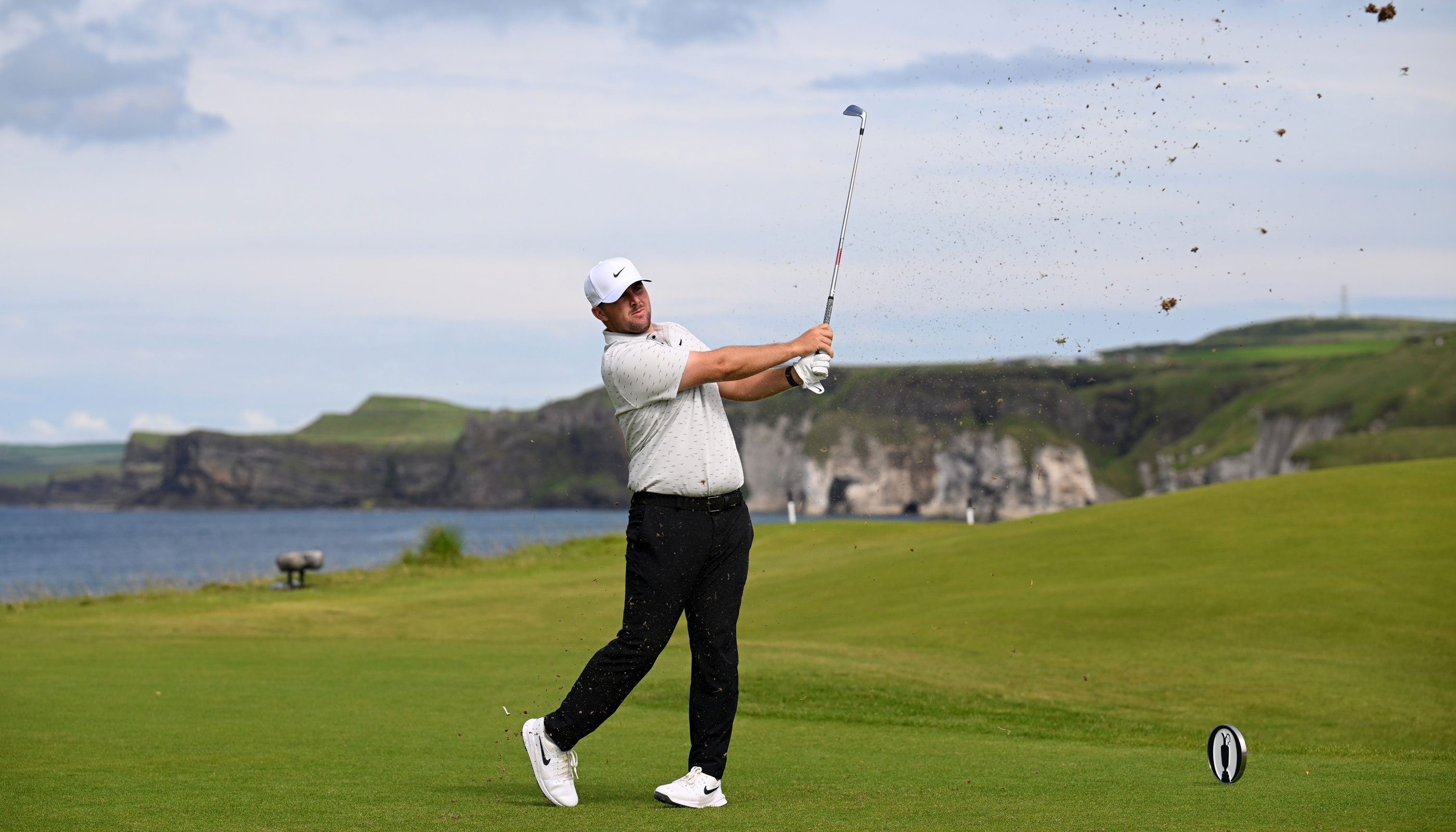

Chris Gotterup is making his third U.S. Open appearance this week at Shinnecock Hills, a few hours from where he grew up in Little Silver, New Jersey. Since turning professional in 2022, Gotterup has quickly proven he belongs among the best players in the world. Now in his third season on the PGA Tour, he has already racked up four wins, including three within the last 12 months: the 2025 Scottish Open, 2026 Sony Open, and 2026 WM Phoenix Open.
Last week, ahead of the 126th U.S. Open, Chris sat down with Fried Egg Golf for a wide-ranging Q&A on his path to professional golf, his unique playing style, expectations for Shinnecock Hills, and more.
Chris, you’re a New Jersey guy, so I have to start here: what’s the correct term: pork roll or Taylor ham?
Pork roll. Funny enough, I get asked that question all the time on the course, especially when we're somewhere like Philly. I'm a pork roll guy.
While we're on food, you posted pictures a couple of weeks ago celebrating with some friends at a Chef José Andrés restaurant in New York. What were you celebrating, and what’s the backstory behind how you got to know Chef Andrés?
I met him at the Masters this year at a Wheels Up party. I was also paired with Jon Rahm, who he was cooking for that week. I told him I’m from Jersey, and he said he enjoyed watching me play and that if he could ever do anything to help me out, to let him know.
Right after the PGA, I was going into New York and texted him to ask if he was in town. He said he was and that I could come in the next night.
I asked if I could bring a few friends. It started off with about eight people and ended up being 13 or 14 once people found out that we were going to his restaurant, The Bazaar. It’s in New York City.
We weren’t celebrating anything in particular, just that everyone was getting together. That doesn't happen very often. It was an amazing time.
Can you paint a picture of what your golf upbringing was like in New Jersey? What was the facility like where you grew up playing? How did your junior golf experience compare to that of a lot of other Tour pros?
My dad got me into golf. He had played tennis in college and picked up golf afterward. We live pretty close to the course where I grew up playing, and he would bring me around. I started hitting balls in the backyard and eventually got more and more into it.
We had a really good junior program at our course, and they let me play with the older guys when I was a younger kid. I just got really into it. But I played other sports too. I played a lot of lacrosse.
I shouldn't say I didn't take golf seriously because I really did enjoy it and practiced all the time. But I didn't like the idea of traveling when I was a 14-year-old. I didn't like the idea that I had to go to Texas to play golf and then, if I didn’t play great, feel like I’d wasted my time, my parents' money, and their time. I just felt guilty about it.
So I loved staying local and playing all the New Jersey State stuff and the MET stuff. I grew up caddying here, too. I just liked staying local, which obviously limited my college exposure, but I didn't really care.
I ended up going to Rutgers, which I thought would be a great fit for me, and I had a great four years there. Then I went on to Oklahoma.
I definitely think my route — staying local, being home, and not traveling as much — was different from a lot of current Tour pros who did the whole AJGA circuit and whatnot.
But yeah, it was great, and I wouldn’t have wanted it any other way.
What's your perspective on the path you took now? Do you wish you’d traveled more? How would you advise junior golfers who want to play professionally someday?
Knowing myself, I think I would have gotten burned out and hated golf by the time I got to my age if I’d gone a different route. So I don't regret my journey.
For one, I don't think I was good enough at the time to be involved in that whole world. And two, I was just much more comfortable playing here. I wasn't ready to push myself.
I was still trying to figure things out in an environment where I felt comfortable. I hadn’t figured it all out yet.
MORE Q&A's: From Patrick Reed and Frank Nobilo to Mike Clayton and Edoardo Molinari
This year, you cracked the top five in the Official World Golf Ranking. What do you view as one or two key inflection points that helped you realize you could be one of the best players in the world?
When I got to Rutgers, I thought, “I’m playing Division 1 golf, I got a scholarship, the whole nine yards.” I felt like I was pretty good.
Then I got there and realized, “Whoa, I am not.” I got my ass handed to me.
After my freshman year, I was like the 600th-ranked college player. I put some work in and started seeing some improvements toward the end of my freshman year and during the following summer. I played well in some MET events, started spending more time in the gym, and began putting everything together. I started putting in serious hours on the course and on the range and probably started practicing a little more efficiently.
By my sophomore year, I got my ranking down to around 200th. At least I could see that what I was doing was working.
By the time I got to my junior year, I was an All-American. Then my hand kind of blew up and I tore a ligament in my thumb. Plus, then COVID hit.
After that junior year, I could look back and say, “I just put in three years of work and got my ranking down from 600th to 15th. I'm doing something right.” And then I hit this roadblock and shattered my hand and I needed basically an entire year off because of COVID and my hand.
When I transferred to Oklahoma, I was pretty nervous. I knew I was good, but I hadn't played much in like a year. I didn't want to go there and then not qualify for the first tournament. But I think I won the first qualifier by five or six. I started beating guys that everyone was saying were going to be the next guys on Tour. That’s when I realized I could do this.
Before that, I wasn't always thinking I’d try to play professionally. It was more of a “we’ll see.”
But once I started putting the pieces together and seeing results at Oklahoma, I knew this was what I was going to do.
You mentioned the importance of home. As you’ve become one of the best golfers in the world, how has the experience been trying to retain the parts of your life that are important to you while so many more demands are made on your time?
I like to think that I do a pretty good job of making that a priority. I came back into town yesterday and was over at Rumson Country Club, the course where I grew up. Just talking with some of the guys and hanging out.
They're about to go through a big architecture renovation project, and I wanted to sit in on the meeting and listen and see if I could help out in any way from my experiences traveling and seeing places.
I don't want anyone to look at me any differently than they did two years ago. I still play Xbox on the road. I watch sports. Hang out with my friends.
All the normal stuff I’ve always done. I’m still the same person, just hopefully playing better.
You're a great driver of the golf ball, and you have a unique ability to control your trajectories off the tee. How did you learn to control different shot shapes?
Growing up, I actually used to play a big draw, basically through high school, and that was not predictable whatsoever. When I started working with my coach, Jason Birnbaum, who I’ve been with for 12 years now, we started working a fade into my swing. Then I started hitting kind of a peel slice. It worked, but it was also unpredictable.
So I've experienced both sides of the spectrum: a huge draw and a mega fade.
It was super windy at Oklahoma, so I had to learn to control my flight there. I've always been someone who, if I have a number that’s between clubs, I like to hit like the longer one, flight it down, and hit it hard to take the spin off. It’s probably still spinning the same amount, but it has the lower flight gives it the effect of taking spin off.
My dad and I used to always argue about it. He’d tell me I had to hit the ball straight, and I'd tell him I couldn’t. Hitting it straight is the hardest thing to do. I'd rather make it draw 20 yards. It’s easier for me to make it draw 20 yards or cut 20 yards than try to hit it straight. I always like to see something happen to the ball or make something happen to the ball rather than just point and shoot.
Once the shot pops into my head — a low draw or a high cut because that’s what the shot calls for — then that’s the shot I’m hitting. It’s a visual thing for me.
As for how I do it, I'm just comfortable with my stronger grip and with flighting it down. That's been my way of controlling the ball while still being able to move it around.
As somebody who likes to see the ball move, which venues have you played that do an effective job of rewarding that skill?
Augusta National does a good job of that. On the first hole, you have to hit a cut. On the second, a draw. Fifth hole, draw. There are a lot of holes where you really need to work the ball, especially off the tee.
At U.S. Opens, at least the couple I've played, I don’t think it’s really required to work the ball around the course. It’s more about whether you can execute at a high level for 72 holes.
The British Open is probably the major that rewards working the ball the most. I've only played one British Open, but based on my experiences at the Scottish Open and the British, I would imagine that style of golf rewards flighting shots more than any other major.
You won the Scottish Open last year and finished third at the Open Championship. Did it feel like a part of your brain unlocked while you were playing overseas? Did you come away from last summer thinking that some of your best opportunities to win majors might come on links-style golf courses?
Yeah, so I missed the cut at the Scottish Open two summers ago, but I thought the course was unbelievable. I loved that style of golf, I just didn't play well that week.
What I love so much about it is I feel like I can step up to a hole and hit whatever club I want. I can hit a 4-iron off the tee that goes 300 yards, or I can play super aggressively and hit a driver and try to run it past bunkers.
You can stand in the middle of the fairway and hit a standard PGA Tour 8-iron at the middle of the green, just a normal basic one. Or you can hit a sling draw that lands on a slope that feeds into the green. Or bounce a little fade up the front. There are just so many shots you can hit.
So yes, I enjoyed it and came away thinking I could play well over there. It definitely changed my outlook on overseas golf, for sure.
How did your win at the Scottish Open last July, standing toe to toe with Rory McIlroy, impact your confidence?
It totally changed my whole perspective on myself.
I’d been playing well. I’d been in the top 25 almost every week for like eight weeks leading into that event. Never in contention, really, but I felt good about what I was doing.
Then to get thrown into the fire, playing in the final group with Rory and Wyndham Clark in Europe, I told myself that day I needed to bring it. I ended up playing great and felt like I was ready for the moment.
Winning in Myrtle Beach during my rookie year was great and it bought me time to get settled on Tour. It removed the pressure of having to play to keep my card.
But winning the Scottish gave me a level of confidence, knowing I had just beaten guys who have won 10 or 20 times on Tour. It proved to me I could do it.
It was a huge, huge step in the right direction.
You then contended the following week at the Open at Royal Portrush. What was the experience of contending in your first major like, and how did it compare to your expectations?
It was a really fun week.
Honestly, I felt like I played the best golf of my life that week and came in third. I remember playing with Harris English on Sunday and we were duking it out, both playing great. Then he made about a 50-footer on No. 17 and I was like, “Son of a bitch, you just took second place from me.”
But it was a lot of fun.
At the Scottish, I felt like I had the weight of the world on me because it was such a big moment. At the British, I could just enjoy it. It probably helped that Scottie was well clear of everyone.
The course was amazing. The fans were amazing. I was playing great. And I wasn’t stressed at all.
Probably the coolest moment — and the moment where I understood how different that tournament is — was on Sunday when Rory walked onto the range, with the tournament obviously being in Northern Ireland.
I was playing in the group in front of him so I was already out on the range. When Rory walked out there, the place went absolutely bananas. I've never heard a louder roar than when he walked out onto the range.
The whole week was very cool. I just enjoyed every minute of it.
You already have two career top-10 finishes in majors through your first six starts. Why do you think we see different performances from players in major championships compared to week-to-week Tour events?
I think there’s a certain level of patience required.
At tournaments like the Waste Management or John Deere or the Travelers, you go in knowing you have to shoot 18- or 20-under, so you kind of have to fire at everything. If a shot one-hops over the back of a green, it’s not the end of the world because you’ll have a relatively easy chip.
But when you get to majors, you have to be okay with hitting it to 20 feet. Sometimes that’s the best shot you can hit on a hole.
You just cannot make big mistakes. And when you do make one, you have to be able to pull off a shot to get it back into the right spot and avoid disaster. Just make a bogey and get on with it.
I don't know if that’s the answer. I just think there's a lot of pressure on the week. The weeks feel longer. They're harder. The juice you feel at a major is way different than a normal Tour event. But they’re a ton of fun.
Last one before we get into Shinnecock. You finished T-10 at the PGA Championship. What did you think of the setup at Aronimink and the golf course itself?
Well, before even getting into the setup, the wind was a big factor. We’d get to the course and the forecast would say eight mph of wind, but you'd walk onto the course and it felt like it was blowing 30. Between the wind, firm and fast greens with a lot of slope, and the thick rough, it was a nasty, nasty test. But it was awesome. I thought the course was awesome. There were a ton of fans out there, too, which also made it great.
As for the setup, and I said this after I played my round of the week and shot 5-under on Friday, I didn’t think anything was unfair. I did think some of the hole locations were aggressive.
Pace of play is usually a hot topic, and it doesn’t help pace of play when you have to grind over every four-footer for par on every single hole. Even if you hit a good putt, it just kind of rolled over and kept going. Everything was kind of up and over knobs and ridges. That doesn’t make for fast pace of play.
At the same time, you can separate guys by having a really tough test. Even though the leaderboard was jammed, I still think they got that, and the players who executed at a high level could separate themselves.
Not once did I think it was out of line or over the top. I just thought it was really hard and that you can’t criticize guys for playing slow if that's how difficult it’s going to play. There has to be some give and take.
Let’s talk about Shinnecock, where setup will yet again be a hot-button topic. What is your experience and familiarity with that golf course?
I've only played it once, either last year or the year before.
I thought the course was awesome. It obviously wasn’t set up the way it’s going to be for the U.S. Open, but the premium it places on second shots is really, really different from anything you generally see. I haven't played Pinehurst No. 2, but based on watching it on TV, I would imagine it's similar. There are all these runoff areas and spots where balls can roll into no-man's land.
If it's windy, it’s going to be really tough.
But I'm excited. I think it's an awesome course, and I love playing in the Northeast.
{{inline-article}}
Do you think success overseas will translate more to Shinnecock than it does at many other U.S.-based venues? The wind, the ability to control trajectory, will those be rewarded here more than at other courses?
It definitely has the feel of links golf.
I'm assuming it's going to be firm. I'm assuming it's going to be dry. But I haven’t played it enough to know exactly how to answer that.
I'm sure that flighting shots will help. But there is also a unique mix, which you can see overseas too, where sometimes you can use slopes and run the ball in, while other times you have to land it 10 paces on and stop it. Or five pace on or it’s going over the back of the green and it’s the only option you have.
If it's windy, it's going to require some serious shot-making, including off the tee. There are a lot of diagonals, runouts, and sort of mini doglegs that are hard to see.
It’s a unique test, and hopefully it blows enough to where it brings the best out of the course without getting crazy.
When it comes to preparing for a major championship, did you want to get to Shinnecock earlier this year and scope it out? If not, why isn’t it a bigger priority for you to see the course before tournament week?
It’s tough.
If it's easy for me to do it, I’ll go early and check it out. But I have also realized there’s value in taking time off and easing away from golf for a week.
This year I'll get there on Sunday before the tournament and get four days of prep in. I feel like that’s enough. I like seeing courses ahead of time, but they play much differently during tournament week than they do when we visit months ahead of time.
So if it's super easy to get somewhere, I'll go and check it out. But I don't place too much importance on it unless I’ve never seen the course before.
It was helpful before the Masters. Going to Augusta and seeing the course and knowing what to expect when I come back. For example, I knew No. 2 was going to be an important tee ball for me to practice. When I got back home, I started practicing hitting a draw driver that I would never really hit otherwise for the most part.
Those are the little things that you pick up on a visit.
But when I went to Shinnecock, there wasn’t anything like that that I needed to practice. There aren’t many trees. It's just going to come down to wind, firmness, and executing shots at a high level.
What are other Tour players you’ve talked to saying about their experiences playing in the 2018 U.S. Open? Do you sense any level of concern among your peers about how the USGA will set up the golf course, given what happened in 2018?
I was paired with Tony Finau and Ludvig Aberg last Sunday at the Memorial. Ludvig didn’t play in 2018, but his caddie, Joe Skovron, was on Rickie Fowler’s bag that week. We were talking about the Saturday round when the wind switched and everything kind of turned into a shit show. Rickie shot a big number (84) and Tony went out early, beat the wind, and ended up in the final group on Sunday.
From what I’ve heard, I don’t think anyone thinks the USGA is going to ruin the golf course. I assume they probably learned their lesson. So no, I don’t think guys are sitting in player dining talking about how the USGA is going to screw up the setup at Shinnecock and that it will be a mess.
At the end of the day, we're all playing the same golf course. If it's stupid, it's stupid for everyone. I don't get too caught up in it. All I ask is that it's as fair as possible and that we see separation. And at a U.S. Open, you never really have to worry about separation. That will happen.
You mentioned the word “fairness.” People have differing views on fairness in golf. Should golf be fair? And what is your definition of fair?
I don't think anything is ever fair in life.
But I do think there is a certain point where you ask: Is this a good product for fans? Do we really want to see players tap an eight-footer that rolls 12 feet by the hole and they have to make a 12-footer coming back?
It’s not that it’s unfair. You can make the putt. But is it dumb? Yeah.
I don't think that's a good product. I think you want to watch guys execute shots at a high level, be rewarded for good shots, and get punished for bad shots. If it’s not actually a good shot, fine. But if it is, you should be rewarded. That’s how I would define it.
But no, I don't think anything is fair in golf. You roll with the punches.
Last one. We're recording this after Game 3 of the NBA Finals. The New York Knicks are up 2-1. It might be a little unfair to pin you down on a prediction since people will be reading this after a couple more games have been played, but nothing in life is fair, what is your prediction for the Finals? Knicks in…
I thought Knicks in four after the first two games. I’d love it to be Knicks in five. All I care about is that they win Game 4. If they win Game 4, they’ll win it all. But if they lose Game 4, then I’m worried.
I’ll go with Knicks in five.


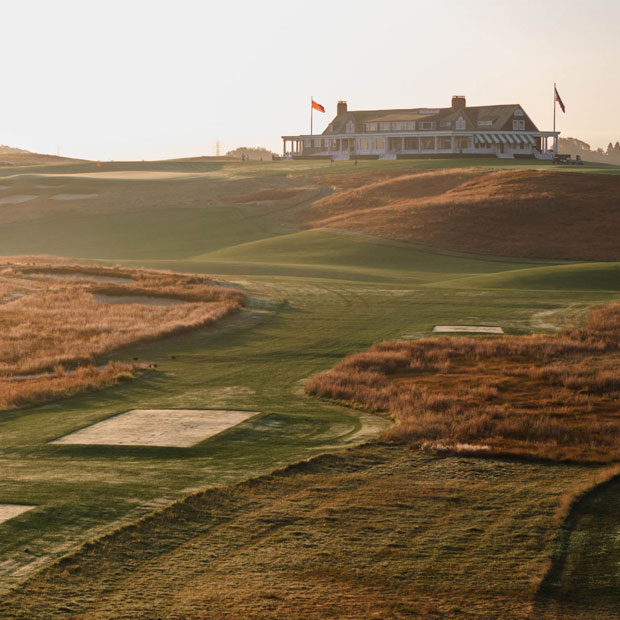


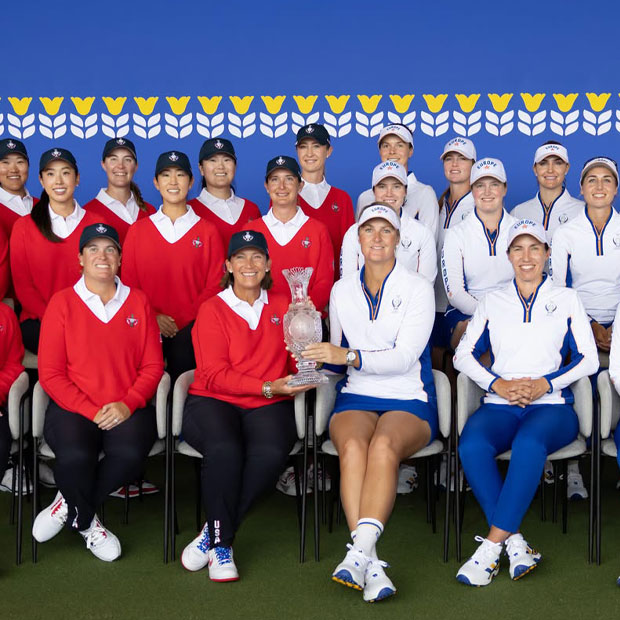
2026 Solheim Cup Preview
2026 Solheim Cup Player Profiles: Team Europe
2026 Solheim Cup Player Profiles: Team USA
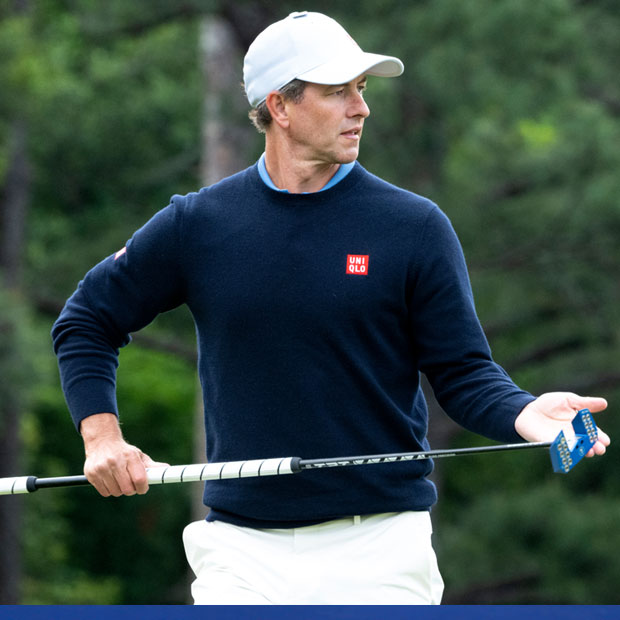
International Star Power In Decline at 2026 Presidents Cup
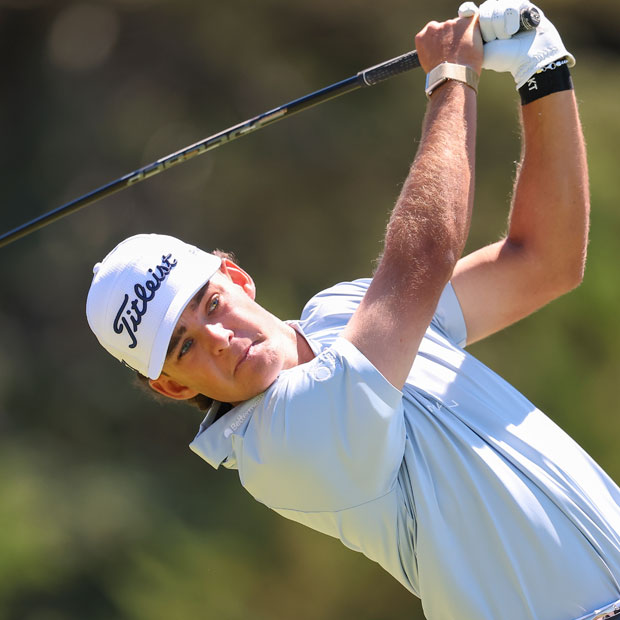
Jackson Koivun and a Presidents Cup Gamble Worth the Risk
Appreciating the Work: Scottie Scheffler Wins 2026 Tour Championship
Get full access to exclusive benefits from Fried Egg Golf
- Member-only content
- Community discussions forums
- Member-only experiences and early access to events