
Q&A: Jeff Hicks, Superintendent at Rustic Canyon Golf Course
On maintaining a firm and fast, model public course
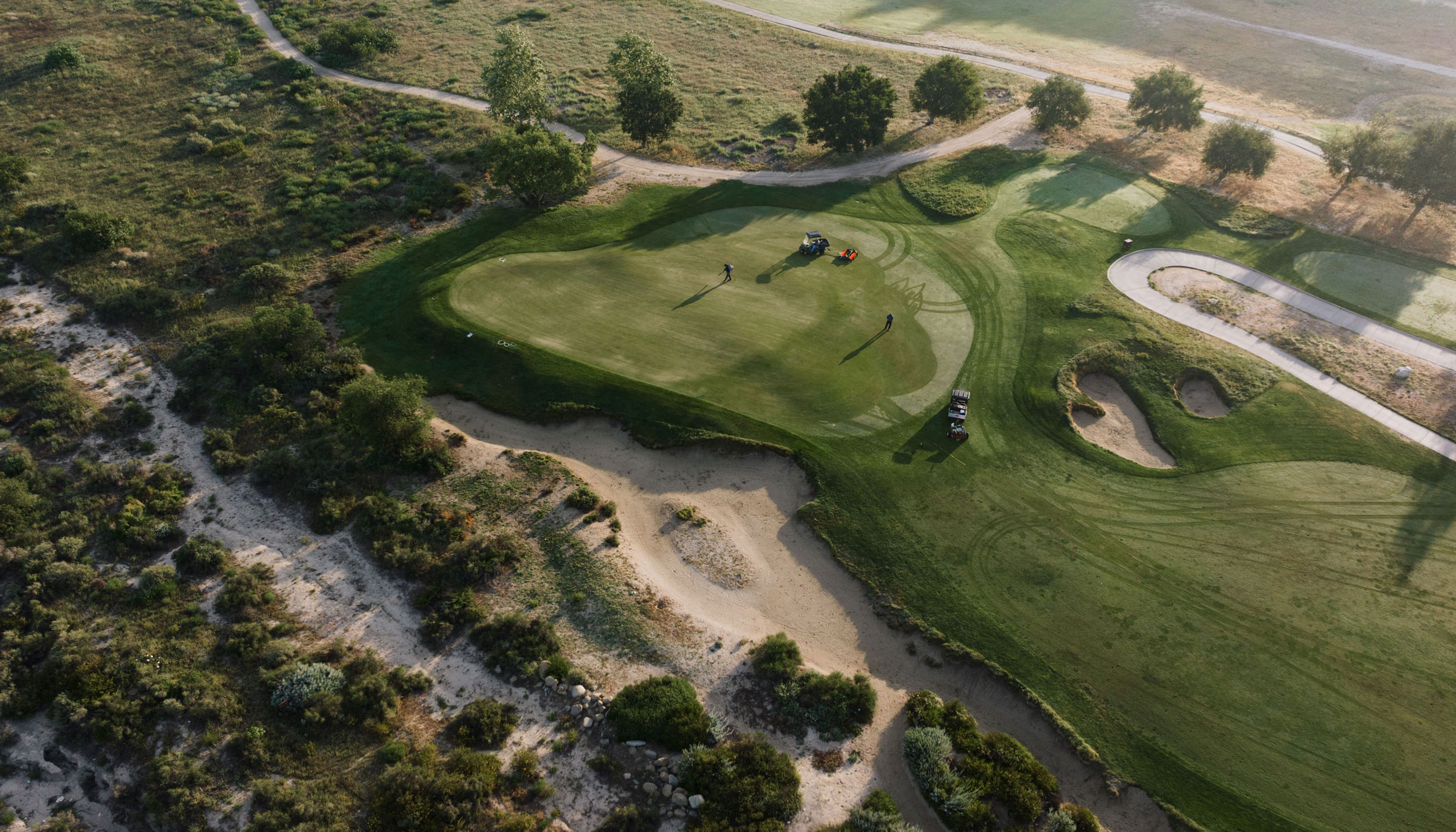

Jeff Hicks
Superintendent - Rustic Canyon Golf Course
Location: Moorpark, California
Years Spent as Superintendent: 24
Greens and Approaches: Bentgrass (with some Poa Annua in the winter months)
Fairways and Adjacent Rough: Originally Ryegrass, switched to Bermudagrass after 2009 drought
Soil Profile: Sandy but gravelly
Acreage: 350 acres
Crew Size: 9 full-time staff
Rustic Canyon — which has slowly become a model of public golf not just in California, but across the country — has only ever had one superintendent. Jeff Hicks got the job of grow-in superintendent, working with the construction team as Gil Hanse, Jim Wagner, and Geoff Shackelford shaped the golf course through a swath of sandy, gravely barrancas situated in a valley just northwest of Los Angeles.
He’s never really had an “assistant,” instead relying on an experienced crew to help keep the course playing as close to the firm-and-fast idea the architects envisioned almost 25 years ago. It’s a tough job, too, with often extreme winds, dramatic daytime temperature fluctuations, and a 1.5-mile-long property that rises over 300 feet end to end. With rabid local golfers teeing off in the dark every morning, efficiency from Jeff’s crew helps to keep them ahead of play (mostly) while maintaining one of the best golf experiences in the country.
Here’s an interview with Jeff, which was lightly edited for clarity.
Describe to me in fairly simple terms the geographic and climate profile of Rustic Canyon?
Rustic Canyon is located in Ventura County in the hills approximately 50 miles northwest of Los Angeles. It's in a Barranco dry wash area. It's a temperate climate, but the front nine and back nine can be completely different. The front nine can be a very coastal influence, while the same day, the back nine is a very dry, hot climate.
Talk to me about the natural landscape, the plant life, the flora fauna, that sort of aspect of this site?
The landscape, the native plants that surround Rustic Canyon, are very important to the golf course. The natural landscape was incorporated into the design and sustaining it and taking care of it is extremely important for us to do. It's full of white sage, purple sage, deer weed, bladderpods, oaks, sycamores, and all of those plants are extremely important to the design characteristics of the golf course.
What kind of animals do you guys get?
We’ve got road runners everywhere. Ground squirrels, rabbits, coyotes, mountain lions, occasionally bears will come down and get in the avocado orchards. Deer. We do have a lot of deer out here.
So you said it's peaceful out here. Is there a particular time of year that you love the most or time of the morning that's your favorite?
My favorite time of year out here is springtime right now, especially after having a lot of winter rains, natives have all come in, wildflowers are blooming everywhere. It's just gorgeous in the springtime.
Describe to me your soil profile and sort of what it means, how it impacts your turf and your irrigation here?
The soil profile at Rustic Canyon is very sandy, but also gravelly at the same time. There's a lot of fine gravel material. It is great for growing grass. In some ways it drains really well. It almost all drains too well.
After having five, six inches of rain, two days later, the carts can be off the path and everything is dry. But the other problem with that is we'll be having to irrigate a few days after because everything is drained through so quickly. So its ability to retain moisture is not good at all. And with water bills and what water costs in California, that does have a big impact on us.
Let's talk about the turf specifically. You were on the construction team — What did you guys seed the golf course with and how has that evolved over the last 25 years?
Originally the greens and approaches at Rustic Canyon were seeded with Bentgrass. They still are predominantly Bentgrass, especially the green surrounds. There is Poa in there and we'll have more Poa in the wintertime. But by the end of summer time, most of it's burned out and we're back to all Bentgrass. So it goes back and forth.
The fairways were originally seeded with Ryegrass. And then in approximately 2009 during the drought, we realized we're not going to be able to grow Ryegrass on the sandy soil that we had. We were using way too much water. So we interseeded Bermudagrass into it. It took a few years for it to establish. But now, primarily the fairways and rough along the fairways is Bermudagrass.
Do you have any issues with Kikuyu grass?
We do have Kikuyu issues. We do continue to spray for it. But it will always be an ongoing battle in Southern California.
How is the grass type and the surfaces affected, maybe for the better, the quality of the golf that you play out here?
I think the Bermudagrass is a much better grass for creating a firmer, faster surface than the Ryegrass. The Ryegrass in the warm climates takes a lot of water. And trying to get those conditions firm and fast and doing 300 rounds of golf a day, those two do not go together very well.
From that perspective, what kind of surface are you guys trying to present every day out here?
We're trying to create a surface every day, whether it's fairways, approaches, greens, tees, that the ball is bouncy, rolling, playing. Where a player can hit a shot, bounces, rolls, goes into an area that they wanted or they didn't want. Just that bouncy, fast, firm feeling of a link-style course.
Describe some of the challenges that your team faces day to day and seasonally. And this could be an operational challenge or maybe an environmental challenge as well, or both.
The challenge that we face daily is the amount of play. They tee off, almost in the dark, so trying to stay ahead of play with a small crew and do the job that we want to do to present the golf course daily to people in a way that it was designed to be played and what our expectations are – that's extremely difficult.
Seasonally, I would say our most difficult time is the fall when the Santa Ana winds kick in. It's probably our most difficult growing time and work time is being in that environment every day. We may have some (stretches) where we go 7-10 days of 40-50 mph winds. You have to go out and work, you have to be in it, but it is very draining on everybody.
I'm sure crew experience is important out here, especially with water and understanding trouble spots. How does experience impact the conditions of the golf course for you guys?
Having an experienced crew to maintain the course is very important. We are very fortunate to have crew members that have been here for 20 plus years. I have two crew members that (were) with me during construction and grow-in. So having people to understand the property and be on board with what our maintenance practices are, having the maintenance crew be on board with what our goals are for the golf course and understanding that dry spots and brown spots are ‘okay, we don't need to over water those areas’ and it's okay if grass dies sometimes or it's not cut and maintained perfectly. Having them understand that and the look that we are trying to do is extremely important.
What's one thing about this golf course that you think is unique that maybe most people don't know about it or understand?
I think the one unique thing at Rustic Canyon is the amount of slope in this property (over 300 feet end-to-end). People do not understand how much slope there is because it's over such a long period. I've told people many times who are putting on greens and they don't understand why that ball is so fast. They (should) put a level in their golf bag and take the level out some day and stick it on a green and it will tell you how much slope there truly is because they don't see it.
{{inline-course}}
On the topic of weather, too, how extreme can the temperature fluctuations be?
The temperatures can fluctuate a lot at Rustic Canyon. The front nine in the morning may be 40 degrees and the back nine may be 60 degrees. During the day, having a 30-degree fluctuation in temperature from morning to afternoon is very common.
There's a lot of microclimates. You might drive through an area where, especially in the winter, you might have frost and another area may be close to 50 degrees. It's like that all throughout the property.
What have you learned in your 25 years out here?
That's a lot (laughs). I would say one of the biggest things that I've learned at being on one property for 20 plus years is don't be afraid to make mistakes and don't be afraid to not do what nobody else is doing. Understand every property is different and treat every property this golf course as it needs to be.
What are you most proud of?
I would say the thing I'm most proud of is retaining the integrity of the golf course design. We have original maps. We did a flyover with an airplane. We took pictures. Every area is marked. Every time we were able to bunker, we take it back to the original edge. Green's edges, surrounds, fairways, every edge is within inches of where it was originally. And our job, I think, as a superintendent is to maintain the integrity of the architect’s design. It's never our job to play architect.
And I feel very proud that if Gil and Jim were to walk the property, it is as close to the original playing corridors as it was when they first grew it in.
During construction, did you guys talk about your goals from a presentation perspective?
Gil and Jim and I would go to lunch many times and they were great because they had pictures torn out from magazines or pictures that they had of other golf courses of what the goal was and what the golf course was supposed to look like, which is completely different than anything that was out here anywhere.
Having the colors, the textures, the variety on the golf course and understanding that yellows and browns in roughs and fairways and on greens was okay. So they did a very good job of teaching me at a young age what our goal was.
How does the golf course continue to evolve and what are your goals long-term for the golf course?
I think the golf course is evolving really every day. Every day, it's changing with weather, with mowing, grass is growing, plants are dying, plants are growing into areas … So it's constantly evolving. Maintaining the native corridors and letting plants grow in where you want them to grow in, but also letting them come in where maybe it's a visual impact on the golf hole. That's an ongoing daily, weekly, monthly, yearly process.
I would say our goal for every year is to keep rebuilding it. It's like an old house. It's like bunkers need to be rebuilt, tee boxes need to be re-leveled. It's just a continuous effort to keep the golf course as playable and as aesthetically pleasing as we can.
You've been here for a long time. What are the emotions you feel when you're out here day to day?
Every morning, I would say the biggest thing for us that we feel out here is peacefulness. It's so peaceful. It's so quiet. It's amazing. We're not surrounded by houses. There's no freeway noise. It's hard to find that.
Thank you to our friends at the Golf Course Superintendents Association of America for their support of this series.
More From Our Superintendents Series
Cory Griess: Prairie Dunes Country Club
Neil Hutchinson: The Evans at Canal Shores


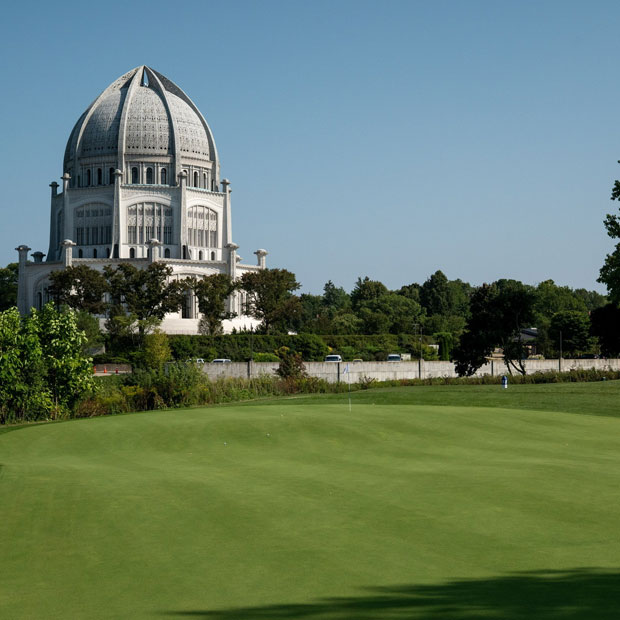
Q&A: Neil Hutchinson, Superintendent at the Evans at Canal Shores
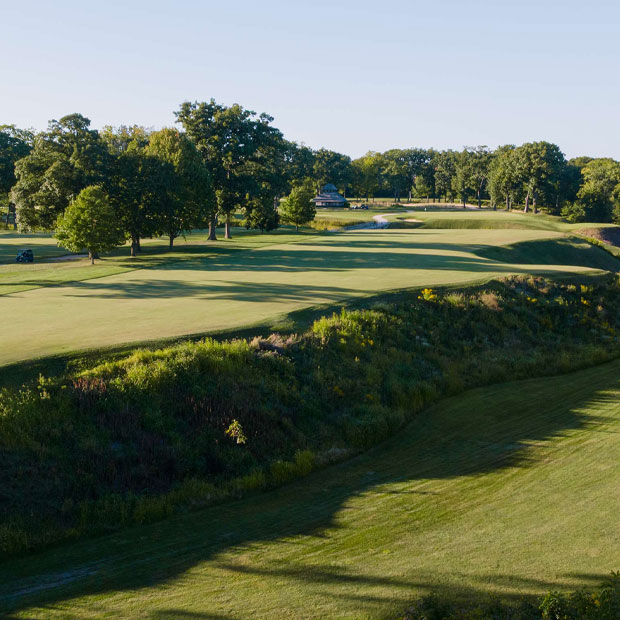
Chicago Golf Eclectic 18
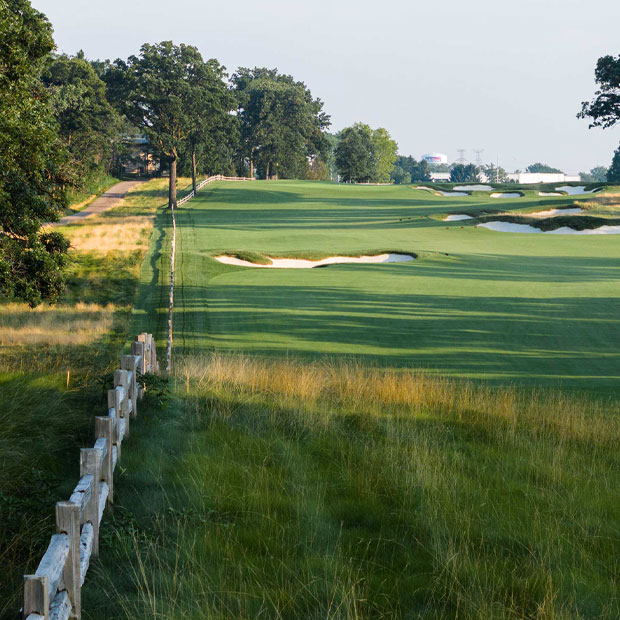
New-Look Medinah in the Spotlight at 2026 Presidents Cup
A Q&A with Ashley Mead
Cabot Announces New Resort in Nova Scotia
A Special Round With an Old Friend
Get full access to exclusive benefits from Fried Egg Golf
- Member-only content
- Community discussions forums
- Member-only experiences and early access to events