
Alternate Shot: Early Scapegoat Emerges at 2026 PGA Championship
The discourse on tree removal has been misguided
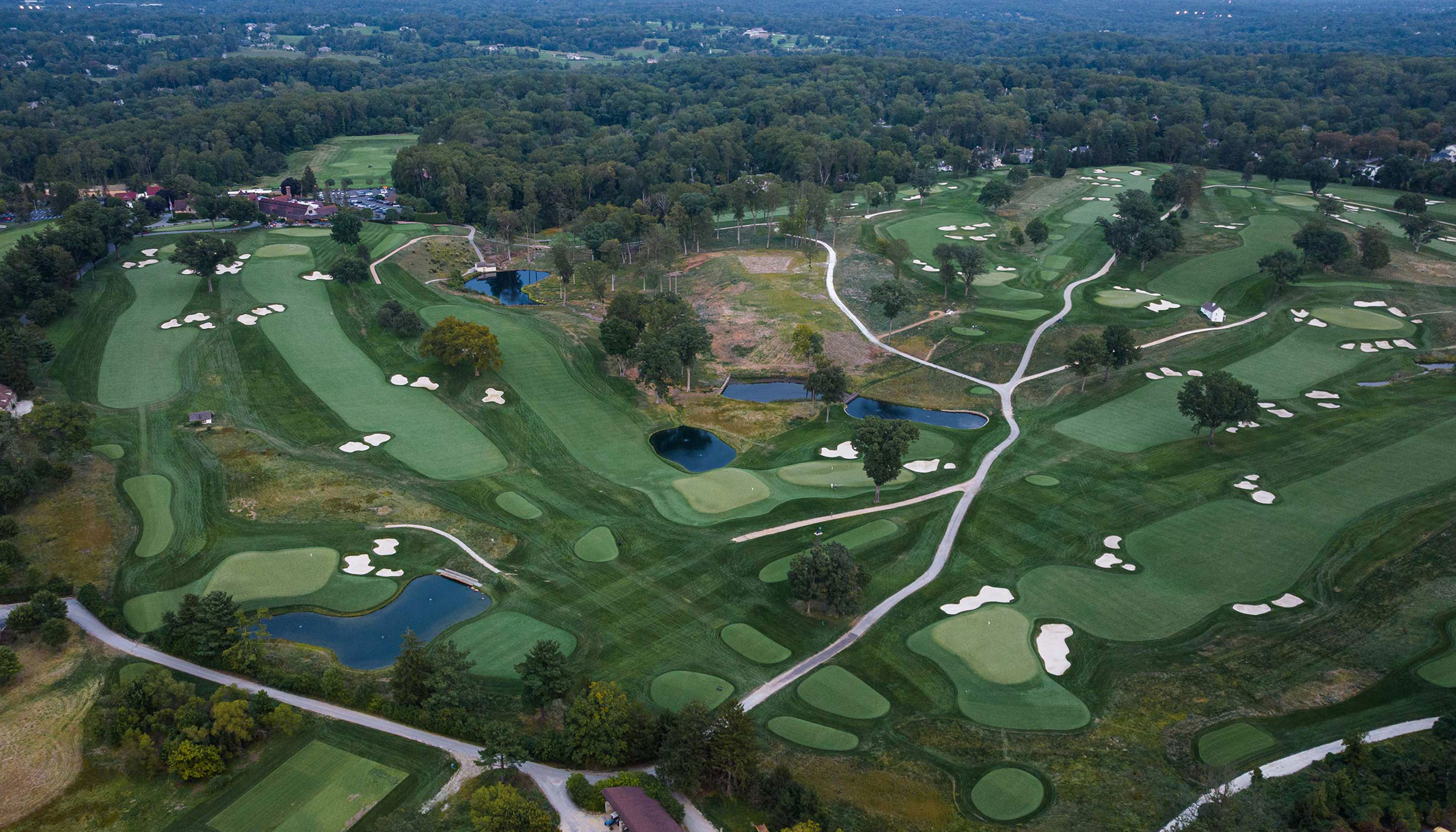

Joseph LaMagna: Before a single shot has been hit at the 2026 PGA Championship, an early scapegoat is already emerging: the lack of trees. As players traverse the property at Aronimink Golf Club — some for the first time — many are tiptoeing around their expectations for low scores and how the golf course will, or will not, test the best players in the world.
Except Rory McIlroy.
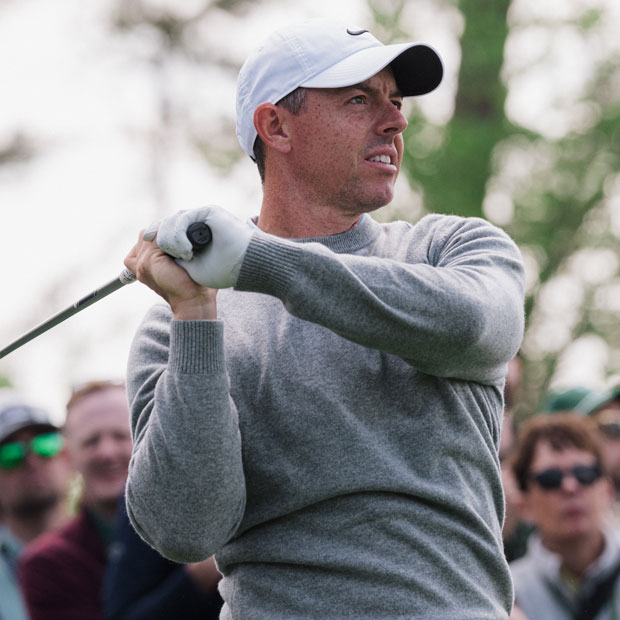
“Strategy off the tee is pretty nonexistent,” McIlroy said on Tuesday morning. “It's, basically, bash driver down there and then figure it out from there, which I think is a lot of these newer — newly renovated — I think about Oak Hill in 2023, here. When these traditional golf courses take a lot of trees out, it makes strategy not as much of a concern off the tee.”
He went on to say that the green complexes are the primary defense of the golf course, a defense that will only bare teeth if the weather cooperates.
PGA CHAMPIONSHIP HUB: Course insights, tournament coverage, and more from Aronimink
Jon Rahm offered a more fleshed-out perspective on tree removal, essentially stating that he sees both sides: that it can assist with air flow and course conditioning, but that it does reduce strategic complexity from tee to green. He also mentioned the role that driver technology has played and that laying back off the tee is not a viable option in the modern game.
Then there is this whopper of a quote from Xander Schauffele, who was, uh, considerably less articulate than Rahm.
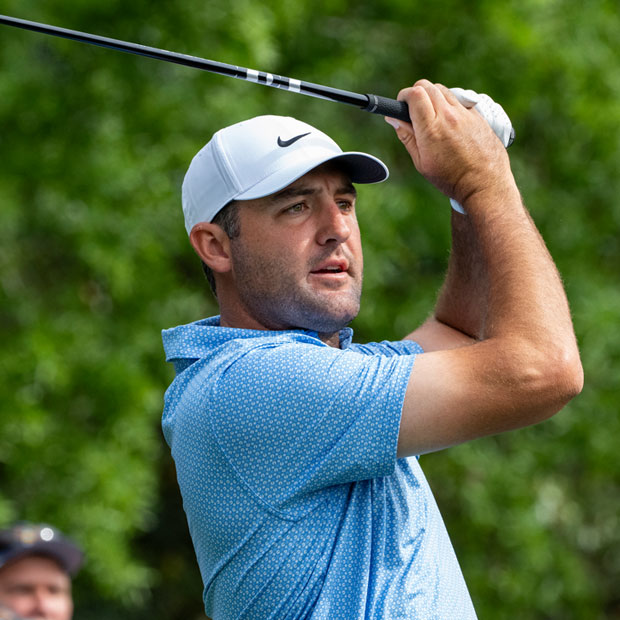
“When I hear certain designers saying, I'm going to restore this course to 1915, I'm like, ‘Well, it probably takes a good hundred years for a nice tree to grow, just to take it out, just to say it was where it was before,’” Schauffele argued. “I think people keep talking about distance and how the game is played, but just put a bunch of trees on a course – I think Hilton Head is a good example. Do I like Hilton Head? Not really. But it's hard. It's kind of crazy, if you look at the winning score at Hilton Head and the winning score at Doral, one's called Hilton Head, and one's called the Blue Monster. You're like, ‘I think the winning score at Miami is lower.’ It's just funny when you kind of look at it in that sense.”
Editor’s Note: The golf course where the RBC Heritage is staged each year is called Harbour Town Golf Links, not Hilton Head. But semantics!
Garrett, I don’t want to put the cart before the horse and preempt a conversation based on expected scores, but assuming we do see some low scoring this week, is tree removal an appropriate bogeyman?
Garrett Morrison: First of all, didn't we just do this at Oakmont? (Of course, that week everyone forgot about the tree issue as soon as play started because they were too busy complaining about the rough.)
Second, I’m not sure how anyone with two brain cells to rub together could deem a tree-removal program — and not, say, the massive, ineffectively regulated leaps in equipment and training technology over the past quarter century — primarily responsible for low scoring at a pro tournament. I mean, please.
Now, obviously Aronimink would produce higher scores if the club lined every hole with dense stands of trees. But would that make the course more interesting to play, or to watch being played? In what sense would it reintroduce strategic complexity to the tee shots? (Taking aim at a narrow fairway bordered by trees doesn’t strike me as awfully thought-provoking.) Does the integrity and historical significance of Donald Ross’ design matter at all here? Are people actually bigger fans of sideways punch-outs than I think?
Instead of repeating the familiar arguments for tree removal on golf courses, I’ll refer you to this primer on the subject from our website and this episode of the Designing Golf podcast.
But here’s the key point: how to manage trees is a course-by-course question. Before critiquing a particular course’s approach to tree planting or removal, you should familiarize yourself with that course’s design, history, and agronomic needs. I don’t get the impression that either McIlroy or Schauffele went to that trouble in Aronimink’s case. Rahm, to his credit, at least seems aware that such considerations exist.
So let’s run through a brief history of trees at Aronimink:
- Like most Ross courses, Aronimink featured relatively few trees near hole corridors in the beginning. This wasn’t an accident. For Ross, trees were fine as part of the scenery, but they should rarely appear on stage. “As beautiful as trees are,” he once wrote, “we must not lose sight of the fact that there is a limited place for them in golf.”
- By the end of the 20th century, Aronimink had become clogged with trees. The club’s consulting architect, Ron Prichard, removed many during his 2002 restoration, but he left a number of mature red oak trees.
- In the early 2010s, a blight hit these oaks, resulting in another round of removal. By the time Gil Hanse arrived to carry out a historically inspired project in the late 10s, Aronimink’s landscape was largely open. The club continued with selective tree removal, but most of the deforestation happened earlier.
- Today, Aronimink's tree inventory strongly resembles what can be seen in aerial photographs of the club from the 1920s and 30s.
That said, I wouldn't mind seeing Aronimink add back a few red oaks. These plantings wouldn’t necessarily alter the strategic identity of the course, but they might enhance the beauty of the property.
Anyway, Joseph, this is the kind of nuance that I think the tree issue deserves. So it bums me out when influential players and media figures bring the same tired talking points about distance, “strategy,” trees, and the wonders of Harbour Town Golf Links to every Golden Age club that dares to open its doors for a high-profile championship. Every course is different, and every tree-management program is driven by multiple motives, most of which have nothing to do with flattering the sensibilities of pros who show up for one week every 10 years.
{{inline-article}}
Joseph: Let’s just call it what it is: an opportunity to take a swipe at Golden Age architecture. Plenty of people out there believe Golden Age concepts are misguided — at least within the context of testing professional golfers — and they associate tree removal with that philosophy.
Anything involving angles or openness, they will argue, is an ineffective test. So if Aronimink yields low scores this week, the conclusion will be that it failed to test the best players in the world and, thus, reinforce that Golden Age principles are flawed, or, at a minimum, produce easy golf courses.
Do I agree with the professional golfers, to an extent, that tree removal can dull strategy and that Aronimink is largely thoughtless off the tee? I do. But turning that into a sweeping indictment of all tree removal just doesn’t make any sense. If we randomly planted a 50-foot tree directly in front of a green at Aronimink, it wouldn’t make the hole any better; it would just raise the scoring average. The question isn’t whether tree removal is inherently good or bad, but where trees should be and why. Those are questions that deserve to be answered with nuance.
Garrett, I can’t help but wonder if the same critiques will surface at Shinnecock Hills in June. Is Shinnecock thoughtless, bomb-and-gouge golf? Where should the trees be planted?
Garrett: A real pushover, Shinnecock. Famously. The question is not where to plant the trees, but where not to plant them. Same goes for every Open venue!
{{inline-course}}




Chicago Golf Eclectic 18
New-Look Medinah in the Spotlight at 2026 Presidents Cup
A Q&A with Ashley Mead
Cabot Announces New Resort in Nova Scotia
A Special Round With an Old Friend

Q&A: Cory Griess, Superintendent at Prairie Dunes Country Club
Get full access to exclusive benefits from Fried Egg Golf
- Member-only content
- Community discussions forums
- Member-only experiences and early access to events