
Every Hole at Augusta National - No. 16 Redbud
History, Masters strategy, and expert commentary on the par-3 16th

The Basics
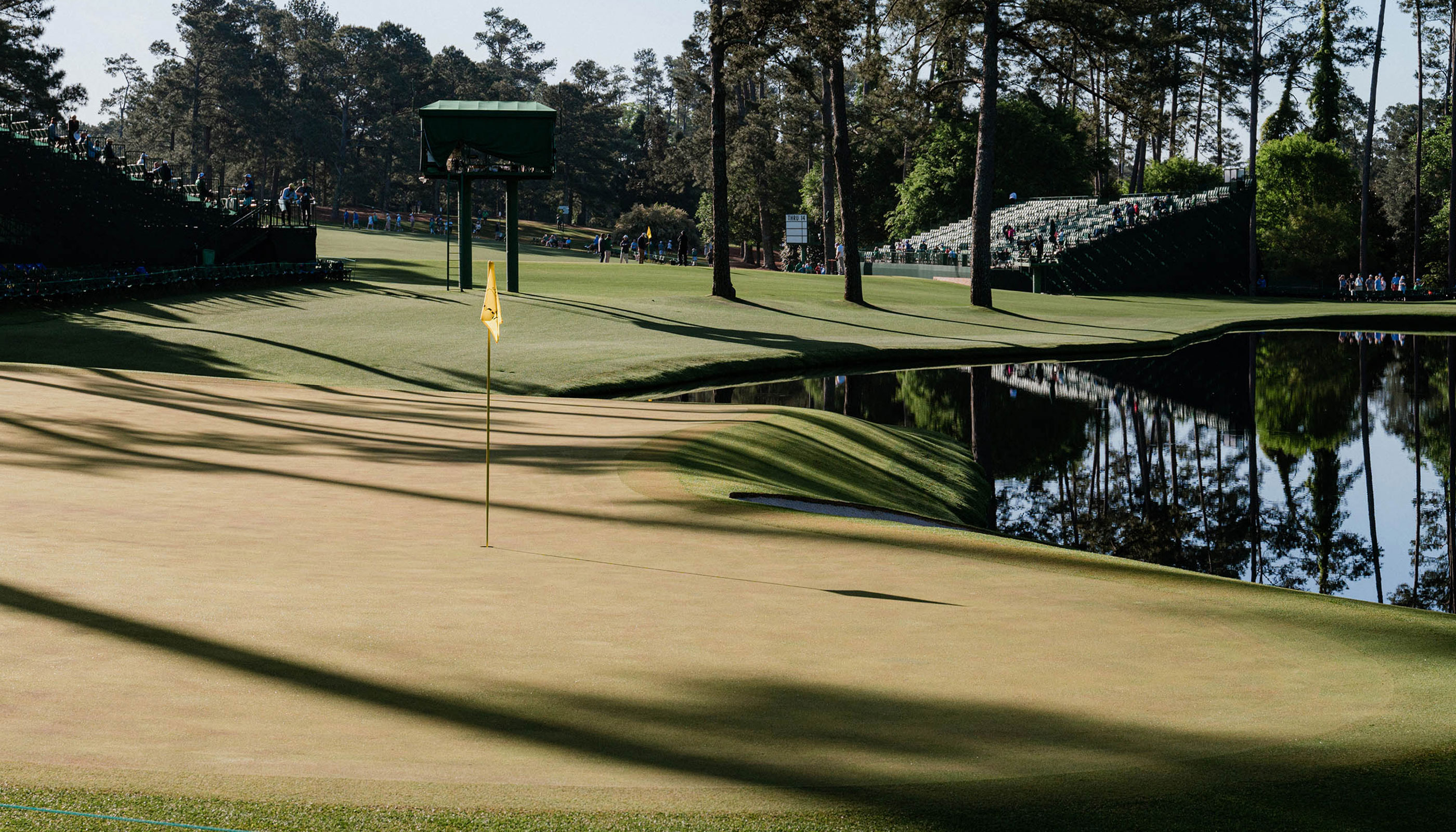
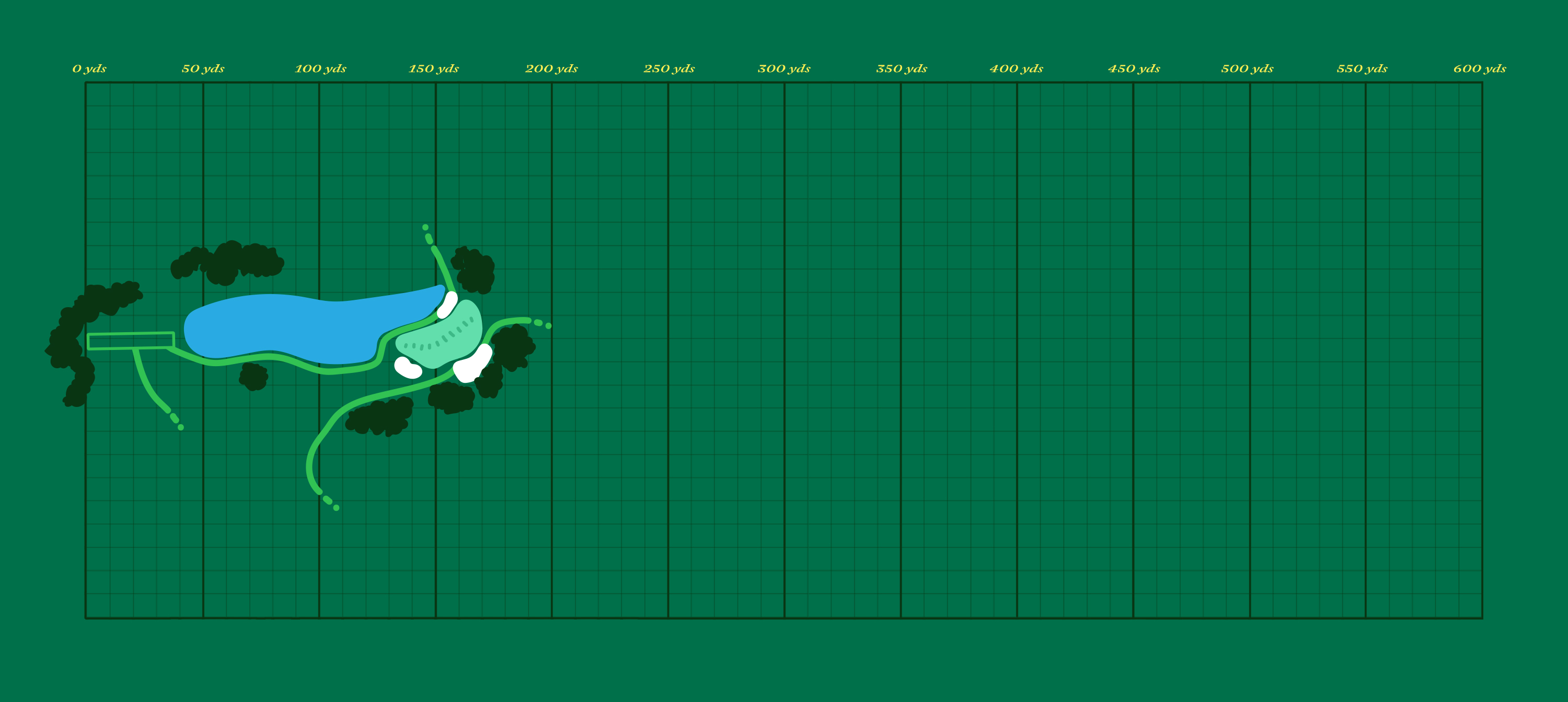
Par 3 | 170 yards
Set at the base of the ridge that the fifth green and sixth tee occupy, the par-3 16th hole provides a ready stage for exhilarating moments. The Robert Trent Jones-designed green is split by a broad sideways ramp. The terraces on the right are among the hardest sections on any putting surface at Augusta National to hit and hold, forcing players to knock spin off their tee shots. The channel on the left, however, is a magnet. The famous middle-left Sunday pin produces a consistent supply of spine-tingling aces and near aces, with balls catching the slope and taking long, arcing paths toward the hole. The pond and bunker on the left provide a modicum of defense for right-edge pins, but they don’t trouble the dreams of modern professional golfers, most of whom are reaching for a 7-, 8-, or even 9-iron on the 16th tee.
{{every-hole-augusta-national-16-redbud}}
History
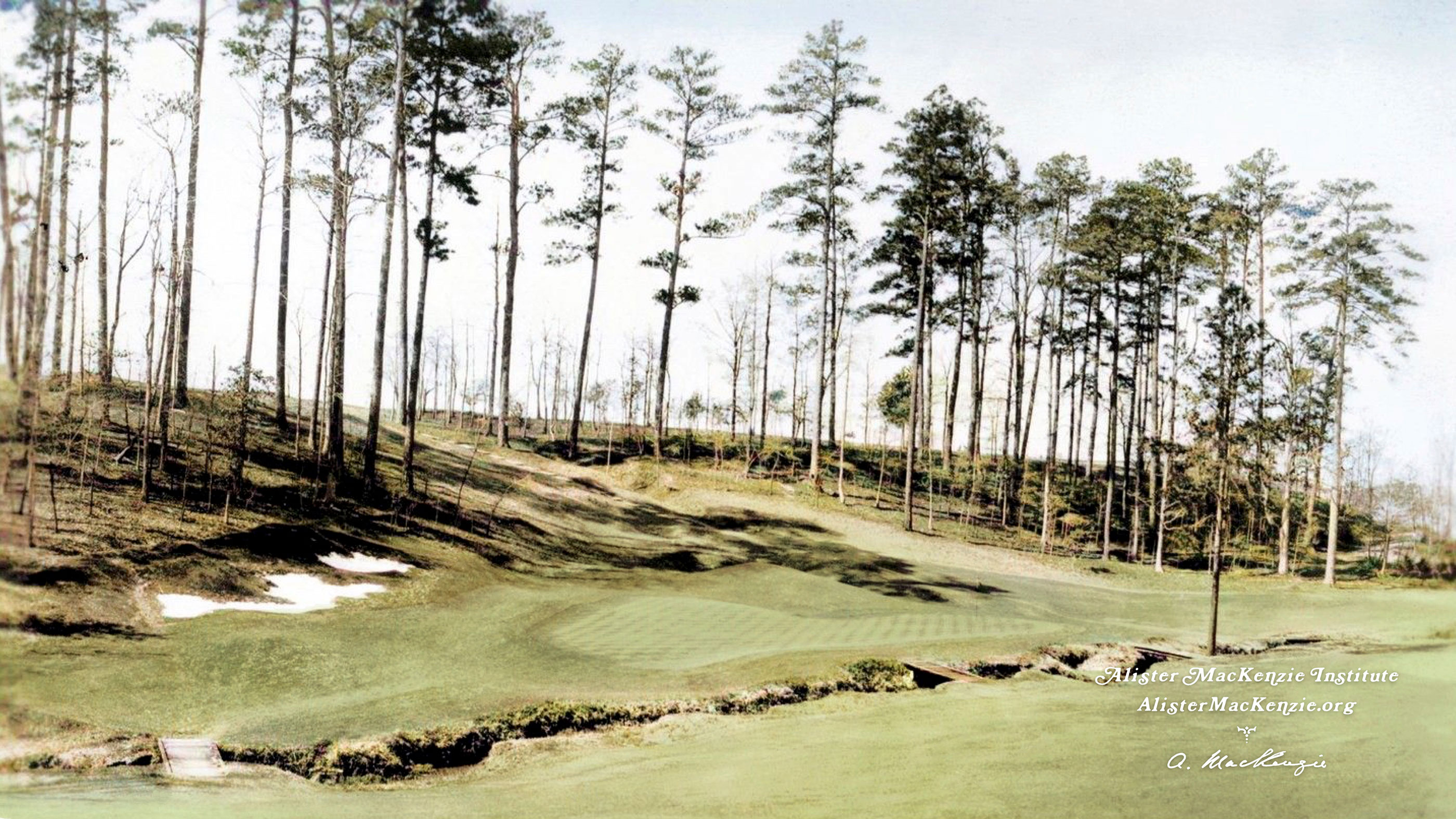
"Redbud" started life as a completely different hole. Alister MacKenzie and Bobby Jones's 145-yard version played toward the ridge instead of alongside it, with the tributary of Rae's Creek crossing diagonally in front of the green. Perhaps because it was short and easy, the original 16th never endeared itself to Bobby Jones. In 1948, Jones commissioned his co-designer at Peachtree Golf Club in Atlanta, Robert Trent Jones, to build a longer, more testing par 3. RTJ rotated the hole to play almost north rather than east, and he dammed up the tributary to create a pond. The new green featured the distinctive sideways-tiered structure that remains today. Since the late 1940s, only subtle changes have been made to this design.
Strategy Notes for the Masters
The slope cutting through the middle of the green defines strategy on the par-3 16th. To a back-right hole location, players must avoid going over the back of the green, or they will be met with a near-impossible par save. Accordingly, many players err short of that hole location, leaving a long, slow putt up and over the slope. To the traditional middle-left Sunday pin, approach shots that carry the ridge result in a putt that’s difficult to stop on the way back down, generally trickling several feet past the hole and leaving an uphill par save.
Easier said than done, of course, but: stay below the hole on 16. –Joseph LaMagna
Our Take
Over the past several decades, the 16th has shown an undeniable knack for spectacle. This par 3 knows its role in Augusta National’s closing stretch and plays it well. But in a couple of respects, the hole does not match the course's general design language: 1) the water hazard is not nearly as threatening as the ones on Nos. 11, 12, 13, and 15; and 2) the exterior contouring of the green is bland, lacking the intricacy and severity of MacKenzie and Jones’s founding style.
Expert Commentary
Alister MacKenzie (1932): “This hole, over a stream, is somewhat similar to the best hole (seventh) at Stoke Poges, England. It will probably be a better hole than the one at Stoke Poges as the green will be more visible and the background more attractive.”
Bobby Jones (1959): “The tee shot to this hole will be played by the tournament players with a number two-, three-, or four-iron, depending on the wind. The pond extends from the front of the tee very nearly to the edge of the green. The contours of the green are such that several pin locations can be found along the left side close to the bunkers and the pond. This is also the low side, so that a tee shot played for the middle of the putting surface, but with a slight draw, can be made to curl down toward the hole. This, of course, involves a risk that the draw may be overdone, landing its perpetrator in the sand or water. Pin locations on the right side may vary from an acceptable one in the V-shaped front of the green through a crown about halfway back, from which the ball may be expected to fall off to the left, back to a gently gathering area at the rear. With the pin on this side, the threats come from the bunkers on the right and the runoff of the green toward the left. Apart from the visible hazards on this hole, the player who leaves his ball on the forward area of the green with the pin near the back can have quite a problem getting down in the two regulation putts. Three putts on this green sealed Hogan’s defeat by Snead in their 1954 playoff.”
Geoff Ogilvy (2019): “The two easiest pins and the two hardest pins on the course might all be on No. 16…. The two low pins, generally Thursday and Sunday, are really fun. Anywhere 30 or 40 feet right of the hole goes towards the pin. That front-right pin on Friday and the back-right pin on Saturday are excruciatingly difficult…. You really just have to try to hit the great shot [to the front-right pin], and always with the thought in your mind that you don’t want to be 25 feet past the hole in the bottom bowl. From Sunday’s pin (middle left) to Friday’s pin (front right) would be a one-in-10 two-putt…. The Saturday pin, the Nicklaus in ’75 pin, is an incredibly small area. Anything left of the hole is going left towards Sunday’s pin. I don’t know how many balls could land left of the hole and stay [on the top shelf].”
Memorable Shots
Jack Nicklaus’ birdie in 1986: Nicklaus’ shot is memorable for a lot of reasons, one of them being that his son, Jack Nicklaus Jr., supposedly said, “Be right!” when the ball was in the air, and Nicklaus replied to his son, “It is,” as he leaned down to scoop up his tee. If you want to understand how much the game has changed in 40 years, just look at the fact that Nicklaus hit 5-iron into this green. The shot also benefited from the setup by Jim Nantz and Tom Weiskopf, one of the great moments in broadcast history. “He is gonna fire this right at the pin,” Weiskopf says, when Nantz asks what Nicklaus might be thinking. “He’s gonna think Jack, ‘This is time right now, make the swing you are capable of making. Stay down, accelerate through the golf ball. Your destiny is right here.’”
Tiger Woods nearly makes an ace in 2019: Why do people love the funnel pin on 16? Well, for starters, it contributed to two of the most famous shots in Woods’ career — the 2005 chip-in; then this shot in 2019. It did feel like destiny when Woods’ ball found the perfect spot on the slope to feed toward the pin. The birdie gave him the cushion he needed to bogey 18 and claim his fifth green jacket.
Course Routing
Click on a pin below to preview the hole or go to the full profile of the hole.
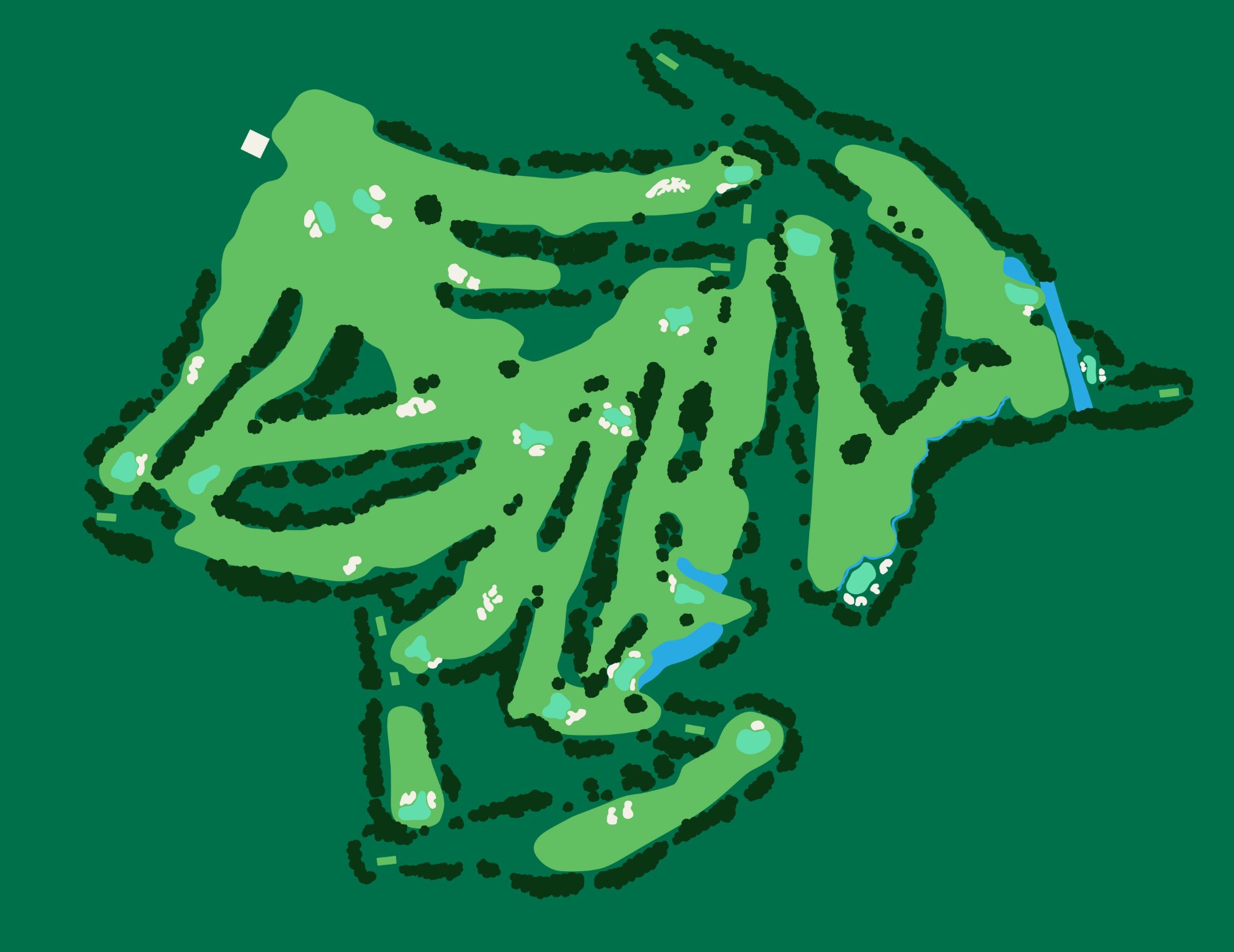
Augusta National
Ever since it opened, Augusta National has been in a constant state of evolution (for better or for worse), but it remains one of the greatest championship venues in the world
Hole 1 - Tea Olive
Augusta National's property is defined by a single broad downslope that ends at Rae’s Creek, and this par-4 opener is the only hole on the course that sits completely on top of it. Strategically, No. 1 at Augusta National is one of the most compelling opening holes in professional golf.
Hole 2 - Pink Dogwood
The second hole at Augusta National produces more off-the-tee variety than most par 5s in professional golf.
Hole 3 - Flowering Peach
Players face three basic options off the tee: hit a long iron or hybrid near the bunkers at the top of the first ridge, leaving a full wedge in; bash it left, past the bunkers and into the valley short left of the green; or go straight for the green in hopes of at least holding the narrow shelf short right. The most strategically complex hole on the golf course, “Flowering Peach” has stood the test of time, less affected by distance gains than most holes at Augusta National.
Hole 4 - Flowering Crab Apple
The first — and longest — par 3 at Augusta National has historically required a strong strike with at least a long iron, though club selections in the Masters have shifted as distance gains have spiraled out of control. Can you execute a towering shot with a long iron, hybrid, or fairway wood?
Hole 5 - Magnolia
“Magnolia” is like Paul Thomas Anderson’s film of the same name: brilliant, probably underrated, but a tad bloated. Nonetheless, the hole presents an honest challenge, and the green is one of the most artfully shaped at Augusta National (or anywhere else).
Hole 6 - Juniper
“Juniper” is, in our opinion, Augusta National’s second-best par 3. Each pin position presents a different range of challenges and exciting possible outcomes.
Hole 7 - Pampas
Yes, the green contours are fun, but “Pampas” has morphed into something that Alister MacKenzie likely would not endorse: a hole that merely defends itself through length and narrowness rather than asking complex strategic questions.
Hole 8 - Yellow Jasmine
This uphill three-shotter consistently produces the highest scoring average of Augusta National’s four par 5s, but it still presents a welcome birdie opportunity after the tough stretch of Nos. 4-7. “Yellow Jasmine” is the most underrated hole at Augusta National.
Hole 9 - Carolina Cherry
The ninth hole plays from a high point near the first and eighth greens, down through a valley frequently used by galleries, and up the hill where the clubhouse sits. From a risk-reward perspective, “Carolina Cherry” is a bit of a muddle.
Hole 10 - Camellia
The 10th hole kicks off the back half of the round in hair-raising fashion, plunging 100 feet into a valley shrouded by tall pines. Perry Maxwell’s 1938 transformation of “Camellia” is one of the rare cases in which a change to MacKenzie and Jones’s design represented a substantial improvement.
Hole 11 - White Dogwood
No. 11 is simply a brute, often playing as the most difficult hole to par at Augusta National. It’s also been one of the most frequently tinkered-with holes at Augusta National.
Hole 12 - Golden Bell
The focal point of Amen Corner and the center of gravity in any final round of the Masters, the 12th hole at Augusta National is as terrifying as it is beautiful.
Hole 13 - Azalea
This iconic risk-reward par 5 offers the first of a series of birdie opportunities on Augusta National’s home stretch.
Hole 14 - Chinese Fir
Although some nuances of MacKenzie and Jones’s original strategic concept for the hole have been lost, “Chinese Fir” is still a compelling par 4, rewarding precise and well-shaped shots both off the tee and into the green.
Hole 15 - Firethorn
No. 15 consistently presents one of the toughest decisions players have to make during their rounds: go for the green in two or lay up to one of the most demanding wedge shots in golf.
Hole 16 - Redbud
Set at the base of the ridge that the fifth green and sixth tee occupy, the par-3 16th hole provides a ready stage for championship-defining shots. Over the past several decades, the 16th has shown an undeniable knack for spectacle.
Hole 17 - Nandina
From tee to green, No. 17 is one of the simplest holes at Augusta National and is likely the least-loved hole on the second nine.
Hole 18 - Holly
“Holly” is a little funky, but its design is smart and elegant: bend it around the trees on the right and bypass some of the natural difficulty of the next shot.






New Cabot Wilds Resort Bolsters Canada's Destination Golf Reputation
A Special Round With an Old Friend

Q&A: Cory Griess, Superintendent at Prairie Dunes Country Club
Q&A with Golf Course Architect Sam Cooper
Merion East's Clever Inland Design on Display at 2026 U.S. Amateur
Is Royal Birkdale’s ‘Easiest’ Hole One of Its Best?
Get full access to exclusive benefits from Fried Egg Golf
- Member-only content
- Community discussions forums
- Member-only experiences and early access to events