
Every Hole at Augusta National - No. 13, Azalea
History, Masters strategy, and expert commentary on the par-5 13th

The Basics
Par 5 | 545 yards
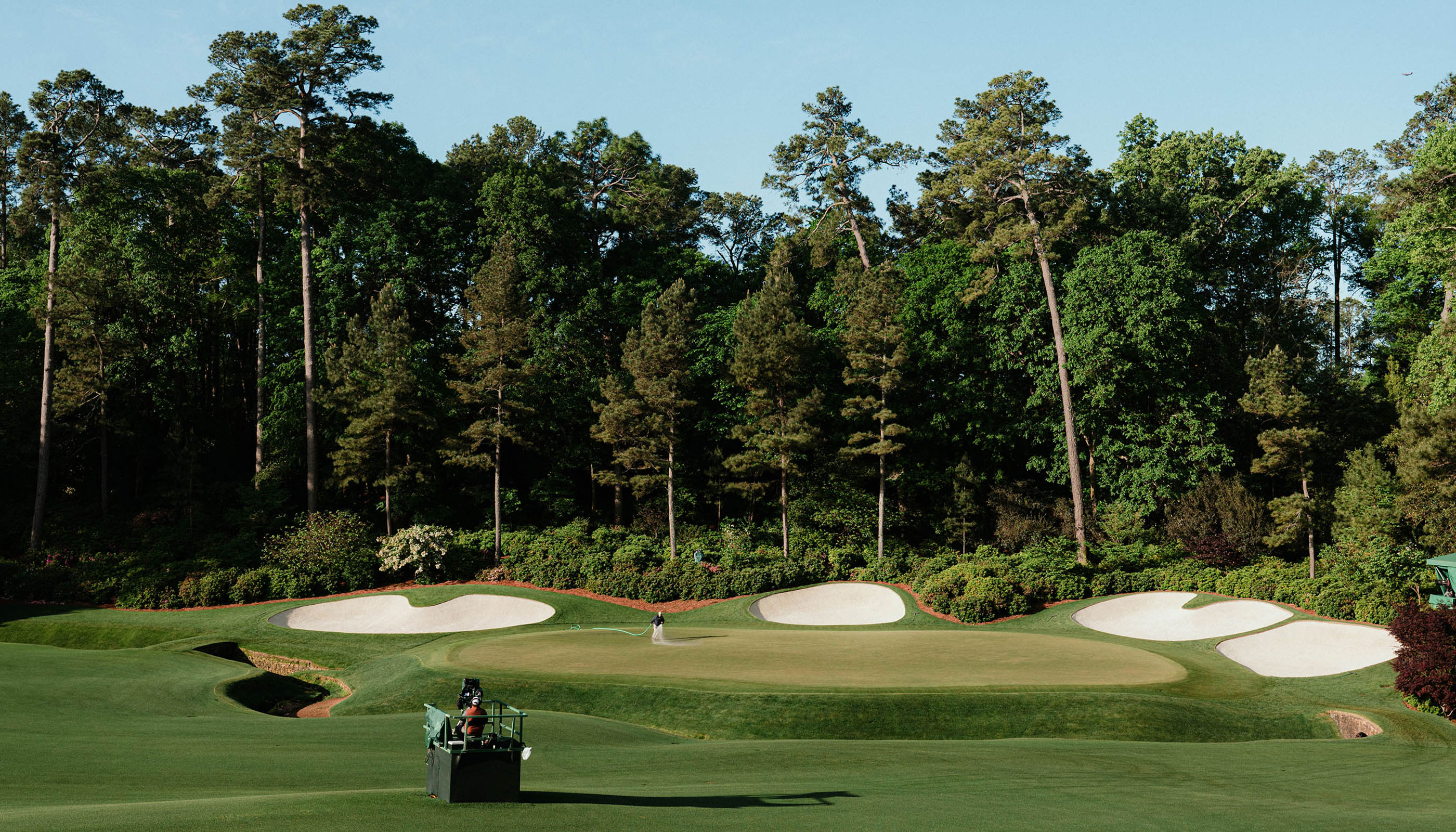
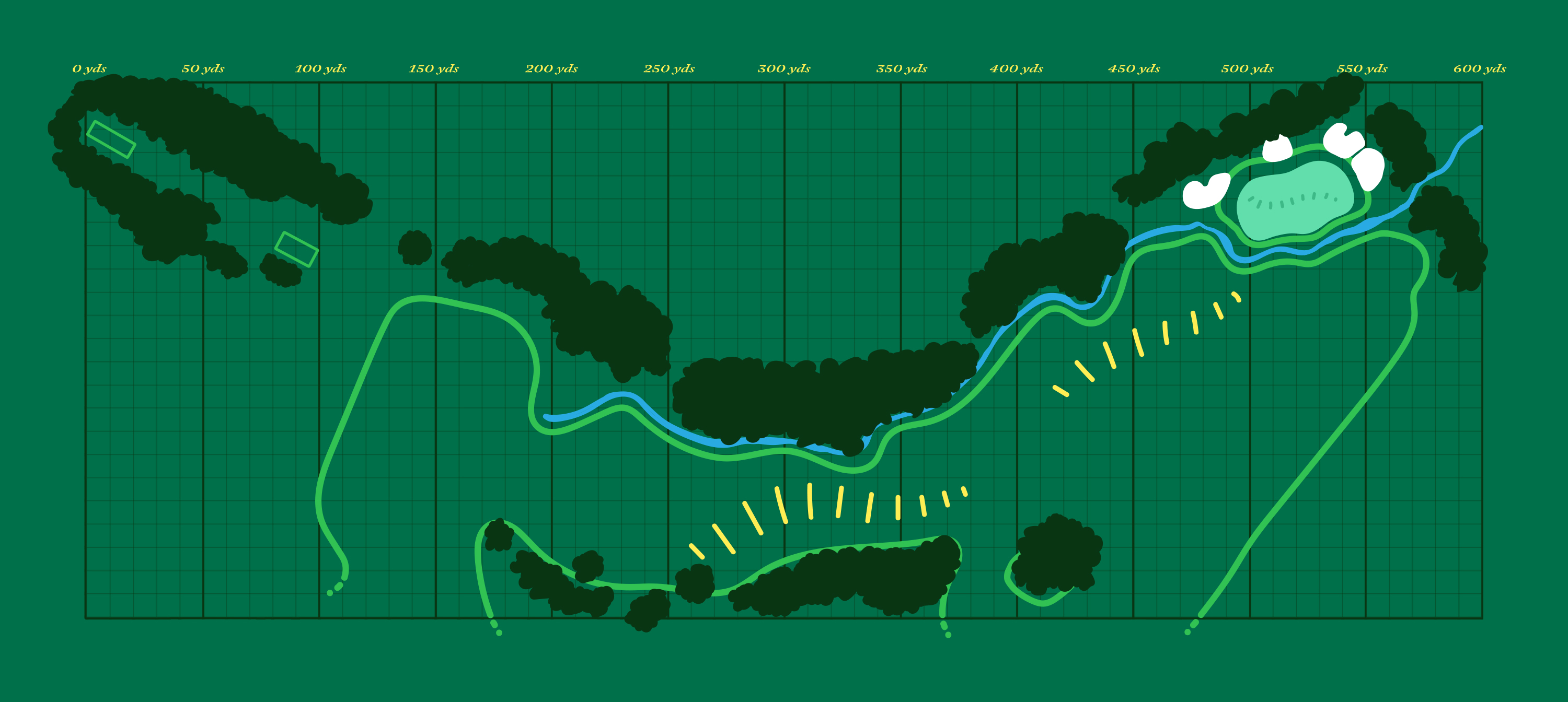
This deservedly celebrated par 5 offers the first of a series of birdie opportunities on Augusta National’s home stretch. The hole starts from the most isolated spot on the course — an elevated tee deep in the woods behind the 12th green — and bends left, following the natural curve of the tributary of Rae's Creek. The green sits on the other side of the stream, tucked under a bank accented by bunkers and azaleas. What gives the strategic design of No. 13 particular heft is the tilt of the fairway. The landing area slopes toward the tributary, but the severity of the slope lessens near the water's edge. Those who play close to the hazard earn not only a shorter second shot and a better angle down the length of the green but also a flatter lie. Players who stay right face a more difficult proposition: a slope that promotes a right-to-left ball flight and a green that best accepts a left-to-right shot. The angle is poor, the distance is longer, and the lie works against the preferred shot shape.
The 13th is one of the most gettable holes at Augusta National, routinely yielding eagles and birdies at the Masters. But in order to reach the green in two, players must accept an uncomfortable amount of risk on either the drive or the approach.
{{every-hole-augusta-national-13-azalea}}
History
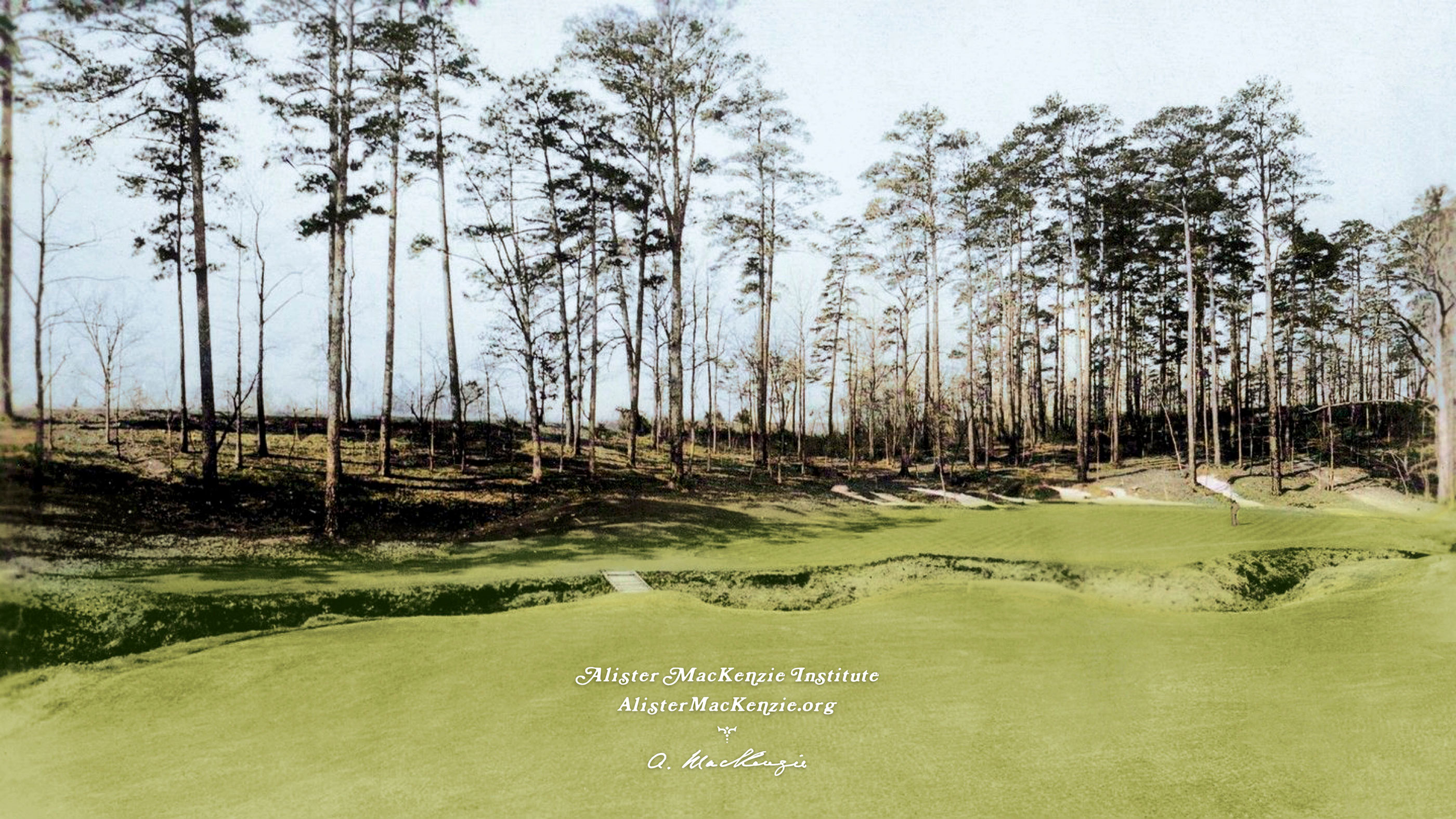
In 1934, the 13th fairway sat in an open field. As long as you avoided a lone pair of trees, you could play as far out to the right as you wanted with no punishment except for a reduced chance of reaching the green in two. During the second half of the 20th century, the club began adding pines on the right, choking the landing zone for drives. The plantings accelerated in the late 1990s and early 2000s, as ball and club technology turned the short par 5 into a mid-length par 4. Today, the tee shot is one of the tightest and most specific on the course.
In the late 2010s, Augusta National purchased a portion of neighboring Augusta Country Club's property in order to lengthen No. 13. The new back tee debuted in 2023, stretching the hole from 510 to 545 yards.
Strategy Notes for the Masters
When the club lengthened No. 13 ahead of the 2023 Masters, it put more drivers back in players’ hands and reduced the amount of right-to-left curvature required to find the fairway. A well-executed, gentle right-to-left drive sets up a green light go-for-the-green attempt. Going for the green in two demands a healthy serving of both commitment and skill. Players often describe how nervy it is to aim out right toward Rae’s Creek and trust the slope in the fairway — with the ball above a right-hander’s feet — to bring the ball back toward the green.
Layups short of the creek are not a mindless endeavor, either. The farther left a player lays up, the more he'll be hitting his short third shot up the green. Layups out to the right, however, result in a third shot across the green, which is typically more difficult, depending on the hole location. –Joseph LaMagna
Our Take
“Azalea” is one of the greatest natural holes ever created. It’s almost hard to believe that Alister MacKenzie and Bobby Jones made no alterations to the Rae’s Creek tributary, given how perfectly suited its curves are to the shape of a reachable, risk-reward par 5. Sadly, though, the 13th was simply too short to remain in its original form and still challenge the best golfers in the world. Today’s vertically stretched, horizontally constricted iteration of the hole is still wonderful but lacks the naturalness and elegance of MacKenzie and Jones’s original creation.
Expert Commentary
Alister MacKenzie (1932): “This is played along the course of a brook with the final shot finishing to a green over the stream with a background of a hill slope covered with magnificent pine trees. The hole has some of the best golfing features of the 17th hole at Cypress Point, California, and the ideal hole depicted in C. B. Macdonald’s book.”
Bobby Jones (1959): “We call 13 a par 5 because under certain conditions of wind and ground few players will risk trying for the green with a second shot. In my opinion the 13th hole is one of the finest holes for competitive play I have ever seen. The player is first tempted to dare the creek on his tee shot by playing close to the corner, because if he attains this position he has not only shortened the hole but obtained a more level lie for his second shot. Driving out to the right not only increases the length of the second but encounters an annoying sidehill lie. Whatever position may be reached with the tee shot, the second shot as well entails a momentous decision whether or not to try for the green. With the pin far back on the right, under normal weather conditions this is a very good eagle hole, because the contours of the green tend to run the second shot close. The danger is that the ball will follow the creek, and the most difficult pin locations are along this creek in the forward part of the green. Several tournaments have been won or lost here, even though the decision may not have been obvious at the time.”
Geoff Ogilvy (2019): “It’s probably the perfect golf hole, and if it isn’t the perfect golf hole, it’s as close as you can get to a perfect golf hole. Strategically, the closer to the water you get, you get a three-fold advantage. You get a flatter lie, you’re closer to the green, and you have a better angle. The further away from the creek you are, the further away from the hole you are, the further the ball is above your feet, the worse your angle into the green…. It’s incredible how much the ball is above your feet on that second shot. It’s hard to hit it high, and because the trouble is short left and [the creek] goes long right. If it was a flat lie, you’d want to hit a fade into that green, because you could hit a shot that was basically never [at risk] of going in the water. You could start it left of the green, the shortest carry. You could hit a safe one and say, ‘Well, if I hit it straight, I’ll just miss the green left and I can kind of birdie from over there.’ But you have to, with the ball above your feet, kind of hit a draw. So you’re hanging it over the long carry and you’re hanging it over the water. You’ve got this shot where all you want to do is hit a high fade and all the stance wants to give you is a low draw.”
Memorable Shots
Phil Mickelson through the trees in 2010: Mickelson didn’t have to risk it all going for the green off the pine straw between two trees, he could have laid up and still made birdie, but he wouldn’t be Phil Mickelson if he didn’t lean into the thrill of the moment. No matter what you think of Phil, it’s one of the most dramatic visuals in Masters history.
Zach Johnson’s practice swing in 2013: This list would not be complete without a little levity. Johnson accidentally hitting the ball with his practice swing does not officially count as a shot in the books — a player does not have to count a shot if they were not intending to make contact — but a decade later it’s still more memorable than any shot Johnson hit in his 2007 win.
Course Routing
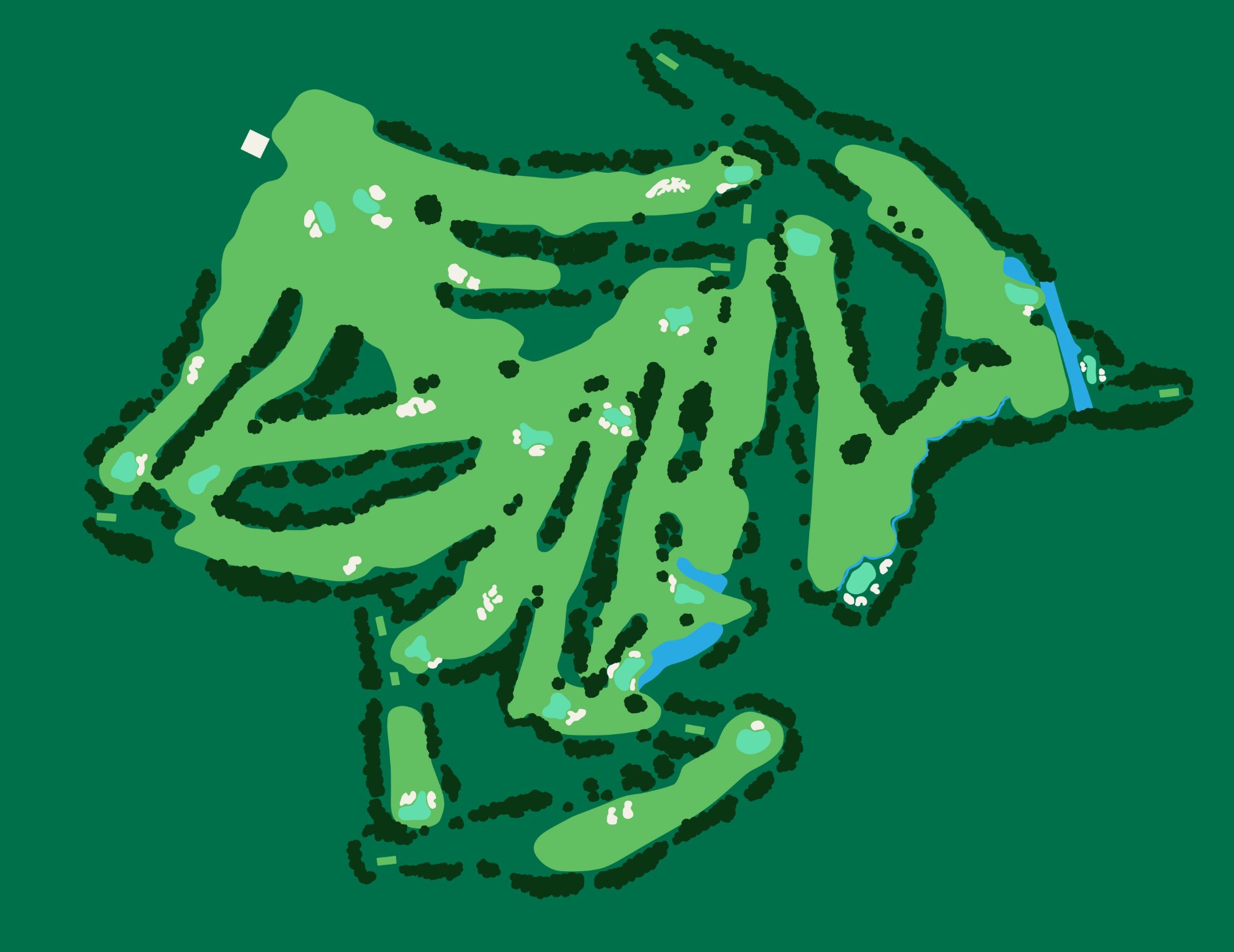
Click on a pin below to preview the hole or go to the full profile of the hole.
Augusta National
Ever since it opened, Augusta National has been in a constant state of evolution (for better or for worse), but it remains one of the greatest championship venues in the world
Hole 1 - Tea Olive
Augusta National's property is defined by a single broad downslope that ends at Rae’s Creek, and this par-4 opener is the only hole on the course that sits completely on top of it. Strategically, No. 1 at Augusta National is one of the most compelling opening holes in professional golf.
Hole 2 - Pink Dogwood
The second hole at Augusta National produces more off-the-tee variety than most par 5s in professional golf.
Hole 3 - Flowering Peach
Players face three basic options off the tee: hit a long iron or hybrid near the bunkers at the top of the first ridge, leaving a full wedge in; bash it left, past the bunkers and into the valley short left of the green; or go straight for the green in hopes of at least holding the narrow shelf short right. The most strategically complex hole on the golf course, “Flowering Peach” has stood the test of time, less affected by distance gains than most holes at Augusta National.
Hole 4 - Flowering Crab Apple
The first — and longest — par 3 at Augusta National has historically required a strong strike with at least a long iron, though club selections in the Masters have shifted as distance gains have spiraled out of control. Can you execute a towering shot with a long iron, hybrid, or fairway wood?
Hole 5 - Magnolia
“Magnolia” is like Paul Thomas Anderson’s film of the same name: brilliant, probably underrated, but a tad bloated. Nonetheless, the hole presents an honest challenge, and the green is one of the most artfully shaped at Augusta National (or anywhere else).
Hole 6 - Juniper
“Juniper” is, in our opinion, Augusta National’s second-best par 3. Each pin position presents a different range of challenges and exciting possible outcomes.
Hole 7 - Pampas
Yes, the green contours are fun, but “Pampas” has morphed into something that Alister MacKenzie likely would not endorse: a hole that merely defends itself through length and narrowness rather than asking complex strategic questions.
Hole 8 - Yellow Jasmine
This uphill three-shotter consistently produces the highest scoring average of Augusta National’s four par 5s, but it still presents a welcome birdie opportunity after the tough stretch of Nos. 4-7. “Yellow Jasmine” is the most underrated hole at Augusta National.
Hole 9 - Carolina Cherry
The ninth hole plays from a high point near the first and eighth greens, down through a valley frequently used by galleries, and up the hill where the clubhouse sits. From a risk-reward perspective, “Carolina Cherry” is a bit of a muddle.
Hole 10 - Camellia
The 10th hole kicks off the back half of the round in hair-raising fashion, plunging 100 feet into a valley shrouded by tall pines. Perry Maxwell’s 1938 transformation of “Camellia” is one of the rare cases in which a change to MacKenzie and Jones’s design represented a substantial improvement.
Hole 11 - White Dogwood
No. 11 is simply a brute, often playing as the most difficult hole to par at Augusta National. It’s also been one of the most frequently tinkered-with holes at Augusta National.
Hole 12 - Golden Bell
The focal point of Amen Corner and the center of gravity in any final round of the Masters, the 12th hole at Augusta National is as terrifying as it is beautiful.
Hole 13 - Azalea
This iconic risk-reward par 5 offers the first of a series of birdie opportunities on Augusta National’s home stretch.
Hole 14 - Chinese Fir
Although some nuances of MacKenzie and Jones’s original strategic concept for the hole have been lost, “Chinese Fir” is still a compelling par 4, rewarding precise and well-shaped shots both off the tee and into the green.
Hole 15 - Firethorn
No. 15 consistently presents one of the toughest decisions players have to make during their rounds: go for the green in two or lay up to one of the most demanding wedge shots in golf.
Hole 16 - Redbud
Set at the base of the ridge that the fifth green and sixth tee occupy, the par-3 16th hole provides a ready stage for championship-defining shots. Over the past several decades, the 16th has shown an undeniable knack for spectacle.
Hole 17 - Nandina
From tee to green, No. 17 is one of the simplest holes at Augusta National and is likely the least-loved hole on the second nine.
Hole 18 - Holly
“Holly” is a little funky, but its design is smart and elegant: bend it around the trees on the right and bypass some of the natural difficulty of the next shot.







New Cabot Wilds Resort Bolsters Canada's Destination Golf Reputation
A Special Round With an Old Friend

Q&A: Cory Griess, Superintendent at Prairie Dunes Country Club
Q&A with Golf Course Architect Sam Cooper
Merion East's Clever Inland Design on Display at 2026 U.S. Amateur
Is Royal Birkdale’s ‘Easiest’ Hole One of Its Best?
Get full access to exclusive benefits from Fried Egg Golf
- Member-only content
- Community discussions forums
- Member-only experiences and early access to events