
Ricky Robinson Q&A: Te Arai Links Through a Photographer’s Eyes
What to watch at the Asia-Pacific Amateur from the man who has one of the world’s coolest jobs
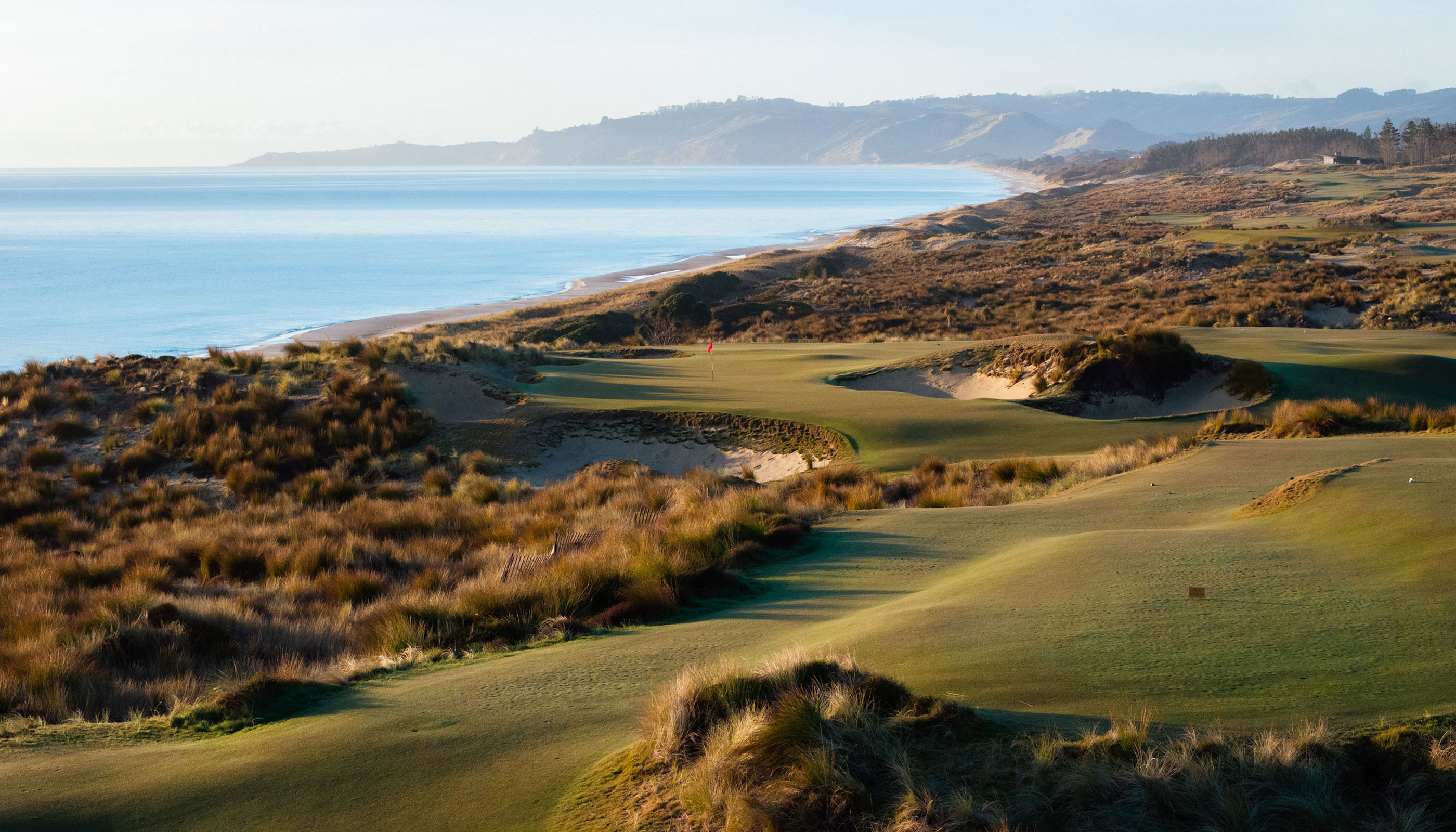

With the Te Arai resort on full display for the world to see this week at the Asia-Pacific Amateur Championship, we wanted to get some local perspective on New Zealand, its golf scene, and this emerging, world-class resort. For that, we turned to Australian photographer Ricky Robinson, who now lives in Mangawhai, New Zealand, and works as the resident photographer for both the Te Arai and Tara Iti next door.
What’s been your relationship with golf? How did your career in golf begin and how did it evolve to where you are today with photography?
I actually started out in golf as a greenkeeper, working on courses in Australia and Canada before eventually getting into photography.
I think having that background has definitely helped with how I photograph golf courses. You get a pretty good understanding of what goes into building and maintaining them, and I probably notice little things that I wouldn't otherwise.
Photography started out as more of a hobby, and over time the two things just came together. Now I get to travel the world photographing some pretty incredible courses which is a dream job for me.
What brought you to New Zealand and how did you become the local photographer for Tara Iti and Te Arai Links?
I kept hearing about a new course in the works called Tara Iti and so I applied for a greenkeeping role and that’s what originally brought me to New Zealand. From there I transitioned into a media and photography role.
I think a lot of it came down to being in the right place at the right time and getting to know the people involved.
I've been lucky enough to work with both properties for a number of years now, and it's grown into something much bigger than just photographing the golf courses. These days I'm photographing everything from the golf and surrounding landscapes to the architecture and lifestyle.
It's pretty cool having two places like Tara Iti and Te Arai Links right on my doorstep.
{{inline-course}}
Tell me about what it was like watching the Te Arai resort come to life. Any fun stories from the construction or interactions with the courses architects and shapers?
It's been pretty amazing watching the whole place come together over the years. When you look at it now, it's hard to imagine what it looked like during construction.
One of the coolest things has been watching the courses slowly settle into the landscape. During construction there's obviously a lot of exposed sand, machinery, and unfinished areas, but as the grass and native vegetation establish, everything starts to look like it's always been there.
It's also given me a real appreciation for the work that goes into building these courses. There are so many little details that most people probably wouldn't notice, but they're often the things that make the biggest difference.
I was lucky to capture some images of Tom Doak out here when there was nothing but sand, which will be quite a cool photo to look back on in the future.
You’ve spent tons of time at Te Arai Links, what are some of your favorite spots on property to visit and photograph and maybe some holes or areas for people to watch during the Asia-Pacific Amateur broadcast?
I always enjoy the holes along the coastline, especially first thing in the morning. It's pretty hard to beat those views when the light is good.
There are so many great spots around the South Course. I’m really excited to see how the par 3 holes look on the broadcast, especially Nos. 8 and 17.
Having grown intimate with the South Course, what are you most looking forward to with the Asia-Pacific Am and some of the best amateurs in the world playing this new links course?
I think it'll be pretty cool seeing some of the best amateur golfers in the world playing a course I've spent so much time photographing.
I'm usually out there when it's pretty quiet, so seeing the place come alive with a big tournament will be something different.
I'm also looking forward to seeing how the players handle the course, especially if the wind gets up. Maybe we will see some putting from further out than we see at most tournaments.
Which holes do you expect to see the best players struggle with the most?
I reckon holes 13 and 14 could be pretty challenging, but a lot will depend on the wind.
Being right on the coast, the conditions can change pretty quickly, and the course plays completely differently when it's blowing.
It'll be interesting to see how the players handle it, especially if we get a few windy days.
As you’ve continued to shoot the golf courses, how has your perception of them changed or how have they continued to reveal themselves to you? Are there features or holes that you’ve grown to appreciate that you may have missed early on?
I think that's one of the things I enjoy most about photographing golf courses. You can visit the same hole hundreds of times and still find something new.
When you first start photographing a course, you're naturally drawn to the big views, the ocean, the bunkering, and all the obvious stuff. But the more time you spend there, the more you start noticing the smaller details.
Sometimes it's a little contour in a fairway that only really stands out when the sun is low, or a completely different angle of a hole that you've walked past a hundred times.
Both courses have changed quite a bit as they've matured too, so there's always something new to photograph.
What makes Te Arai so unique in your eyes? Are there any other golf courses in the world that you can compare them to?
I think it's the whole setting really. You've got these huge sand dunes, beautiful beaches, the Pacific Ocean, and some pretty incredible golf all in one place.
I've been lucky enough to photograph some amazing courses around the world, and there are definitely places that have similarities, but I don't think anywhere feels quite like Te Arai.
It's also pretty special having two completely different courses sitting alongside each other, both with their own character.
And I think the fact that it's still a relatively quiet part of New Zealand makes it even better.
When is your favorite time to shoot (morning vs. evening as well as time of year)?
Definitely mornings. I love getting out there early when it's nice and quiet and there's hardly anyone around.
The morning light has this really nice golden look to it, whereas in the evenings the greens and blues tend to be a lot more vibrant, especially along the coast.
Both are great to photograph, but I think I prefer the peace and quiet of the mornings.
As for the time of year, I don't really have a favourite. The courses look different throughout the seasons, which is nice because there's always something new to photograph.
Could you share one of your favorite images that you’ve taken at the Te Arai Resort and describe how the image came to be?
One of my favourites is actually a photo looking across a green with a surfer catching a wave behind it and the Hen and Chicken Islands in the distance.
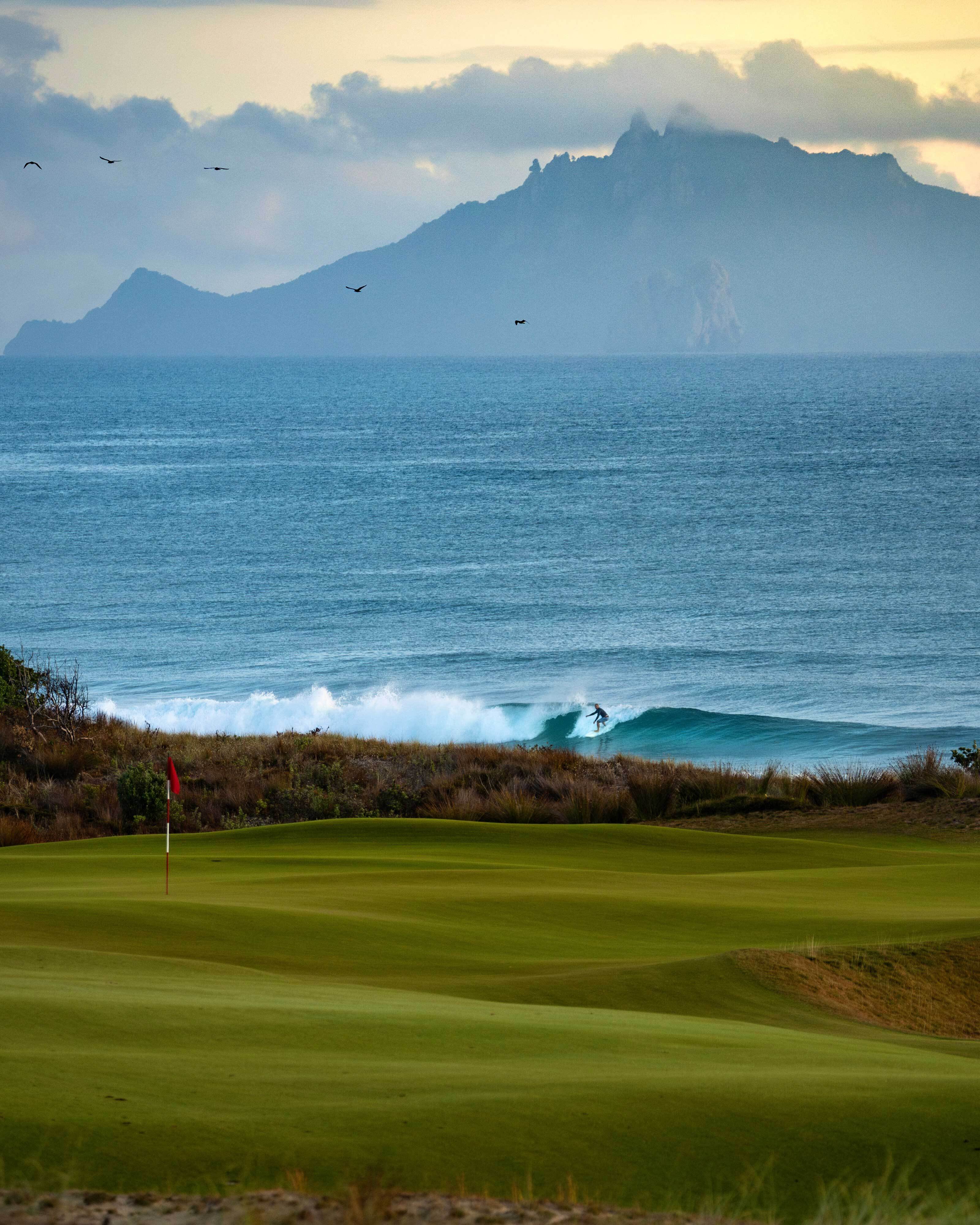
I just love how much is going on in the one photo. You've got the golf course, the surf, the islands, and even a few birds flying through.
It pretty much sums up this part of the world for me. It's not your typical golf course photo, which is probably why I like it so much.
What are some non-golf things people should do when they come to Te Arai?
Definitely get out and explore the coastline. There are some incredible beaches around Te Arai and Mangawhai, and it's a pretty amazing part of New Zealand.
Mangawhai is a great little town with some really good cafés and places to eat. There's plenty of surfing, swimming, and walking to do as well.
I'd definitely recommend making time to explore a bit beyond the golf courses. There's a lot more to the area than just golf, and I think that's part of what makes it such a great place to visit.



Most Impactful Golf Courses We Saw In 2026

East Potomac FAQs: What's Happening, What's Next, and Who Will Pay?
President Trump Announces New Plan for East Potomac Golf Links
Redefining Modern Amateurism in Golf's Reinstated Amateur Era
Q&A: Neil Hutchinson, Superintendent at the Evans at Canal Shores
Chicago Golf Eclectic 18
Get full access to exclusive benefits from Fried Egg Golf
- Member-only content
- Community discussions forums
- Member-only experiences and early access to events