
Most Impactful Golf Courses We Saw In 2026
From Kansas to a rare experience at the Home of Golf
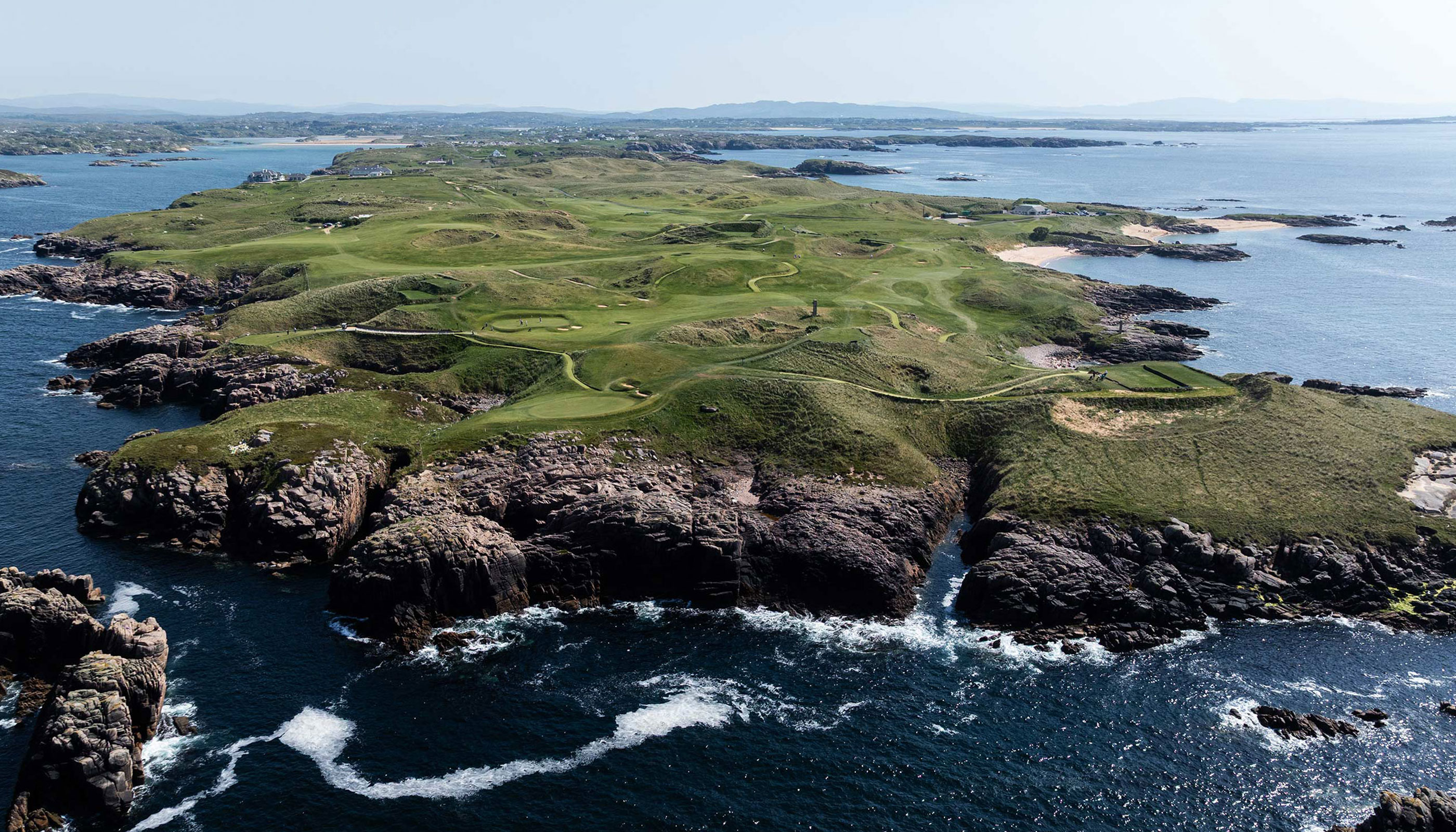

The Old Course at St. Andrews (Reversed)
Andy Johnson
The most impactful golf course I played this year is about 600 years old, and I played it backwards.
Right after the Masters, I flew from Augusta, Georgia, to Edinburgh, Scotland. The trip was a hot topic on the home front as my family was in the middle of planning a move, and I'd be gone for 17 days, but it’s hard to say no to playing the Old Course in reverse.

I had been to St. Andrews twice before, once for the Open Championship and once for our inaugural Fried Egg trip to the Home of Golf. It might be my favorite place in the world: the town, the history, the golf. This time I played the reversed routing with a set of hickories and Scott Macpherson, who has done more than anyone to document how the Old Course came to be. Over two days, Scott gave us a masterclass in the evolution of the Old Course and the history of all its features.
What stuck with me most was how well nearly every hole works in both directions. A few are clearly better one way. In the reversed routing, those come early in the round, where I found the stretch of Nos. 3-7 to be spectacular (these are the holes that play in the reverse direction of No. 16 back to the 12th.
Think about this: the Old Course was effectively one of the first golf courses in the world, and its reversible nature made it more functionally sophisticated than 99 percent of all courses that have been built since. How did they nail it so well the first time out of the gates, despite it being somewhat of a happy accident? (We have a video coming out in the next few weeks about the whole experience, so more to come on that front).
Like any routing decision any architect has ever made, the natural progression of the Old Course from a reversible course to its current version had trade-offs. By eliminating the reverse routing, golf lost a handful of the coolest holes I have ever played. I left wanting to replay a few of the holes, but the likelihood of me playing the Old Course in reverse again is very low. It continues to occupy so much space in my head partly because it’s a fairly unavailable experience. It’s why I urge anyone who asks to sign up for the Old Course Reversed lottery every year.
Cruit Island Golf Club
Garrett Morrison
I say this less as a brag than as an expression of gratitude: I had a banner year of golf travel. I saw Shinnecock Hills and Merion East for the first time. I checked Brora and Royal Dornoch off my bucket list on back-to-back days. And I played St. Patrick's Links, which I predict will go down as one of the two or three best courses of the 2020s.
Yet the round I think about most came at a relatively obscure nine-holer off the coast of Ireland.
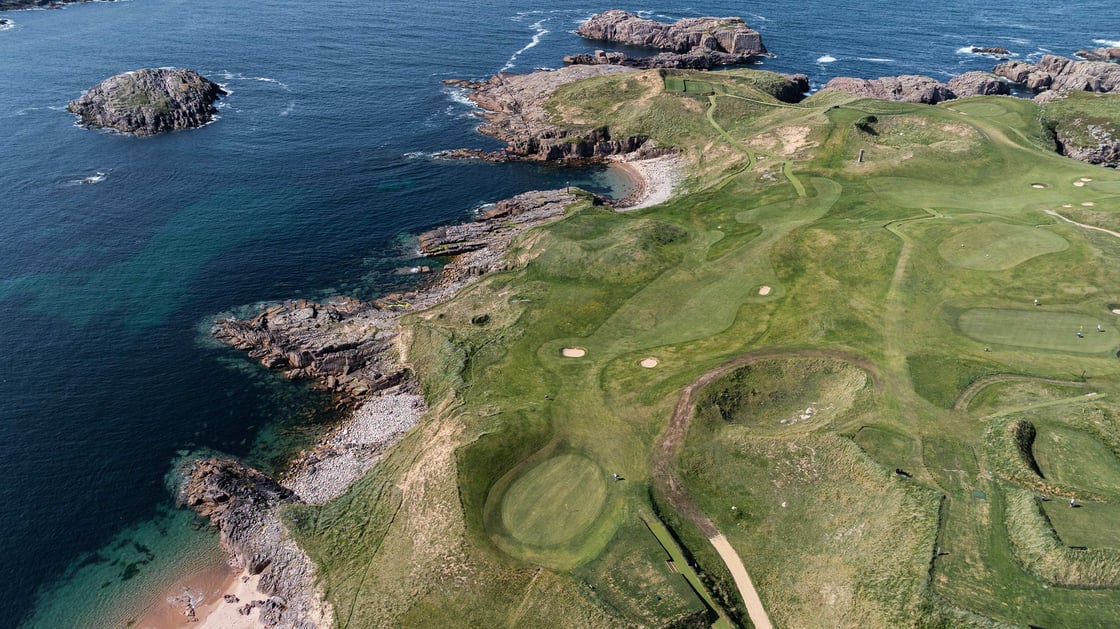
Cruit Island Golf Club occupies the northern tip of its titular island. To reach the clubhouse, you must navigate a narrow, serpentine road that frightens off most tour buses (and American drivers). But the difficulty of getting there adds to the pleasure of being there.
The course was designed by Michael Doherty, a golf professional at City of Derry Golf Club, and built by a local team of amateurs and high schoolers. They couldn’t bring heavy equipment to the site, so they constructed the holes as Harry Colt’s or Herbert Fowler’s companies would have in the early 20th century: with spades, shovels, and aerobic enthusiasm.
It’s no surprise that Cruit Island lacks architectural polish. Just one of its seven par 4s offers a clear view of the landing zone from the tee. The greens are crudely shaped, with little apparent attempt at tie-in work. The bunkers are placed more to capture poor shots than to force interesting strategic decisions.
{{inline-course}}
But these bits of earthmoving are so minimal that they hardly matter. To play Cruit Island is not to grapple with a design; it is to explore a fascinating piece of land in nearly its wild state. Photographers will focus on the cliffside second, sixth, and seventh holes, but I was more taken with the oddness and unpredictability of the duneland stretches.
If Cruit Island had been designed by a name-brand architect and constructed by a professional crew with proper machinery, I’m sure it would have been just as spectacular. But I doubt I’d be writing about it now. What does that say about modern golf architecture?
Brora Golf Club
Cameron Hurdus
A couple years ago, on one of the very rare occasions I took part in a Fried Egg Golf podcast, Andy Johnson posed the question: What course do you think about the most that you haven’t played? Normally, in situations like this, I completely freeze up but, shockingly, I blurted out something that maybe made some sense: “Brora.”
This was a pie-in-the-sky answer at the time — I’d been to Scotland before, but not quite far enough north — and I had no plans on making the trip when it popped into my head. I didn’t even know that much about the course itself; it felt like a mystical place to me, like something out of Golf in the Kingdom.
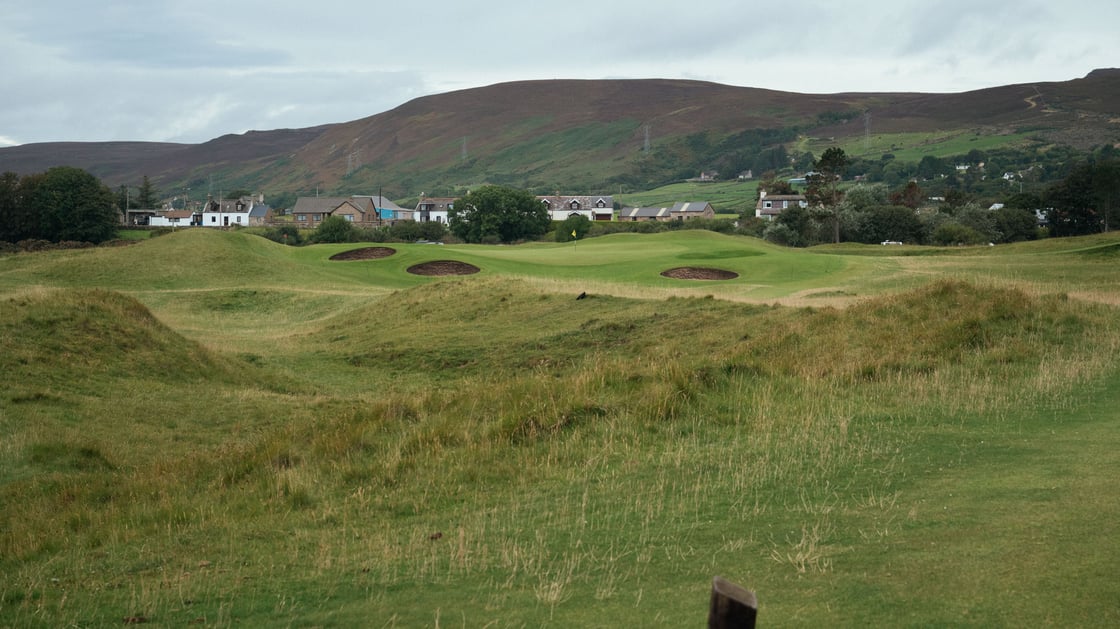
It turns out it was a good choice, because in September, as part of our Fried Egg Golf Club trip to Scotland’s Highlands region, I got to play Brora Golf Club for the first time and it captured my heart. Whether it was the early morning drive up the coast from Dornoch, the incredible opening hole, or the succession of confounding yet exciting blind shots struck over valleys and ditches and electric fences, Brora to me hits the core of all that is pure about golf. Brora is unadulterated golf played across an ideal landscape, where experience breeds knowledge, but not enough that the joy of the place would ever flicker. There’s enough humor in the shots (and the dodging of shit) that I can’t believe the fun would ever fade. And the fact that something so old (or old-school) can still feel so fresh was edifying.
To me there’s nothing worse than building up something in your mind only to have it flop once experienced. On the flip side, there’s nothing better than an experience rocketing past those expectations, especially when they were higher than most.
And P.S. I hope they keep the fences.
Buffalo Dunes Golf Course
Matt Rouches
Ever since I listened to Garrett Morrison’s podcast with Clay Payne in 2024, Buffalo Dunes had piqued my interest as a place I needed to visit. The only issue? Garden City, Kansas, where the municipal course is located, isn’t very close to, well, anything. At all. It felt like a place I would go years and years without seeing, but that all changed with our visit earlier this year to shoot a new episode of our All Grass is Local series (coming to the Fried Egg Golf YouTube channel next month!).
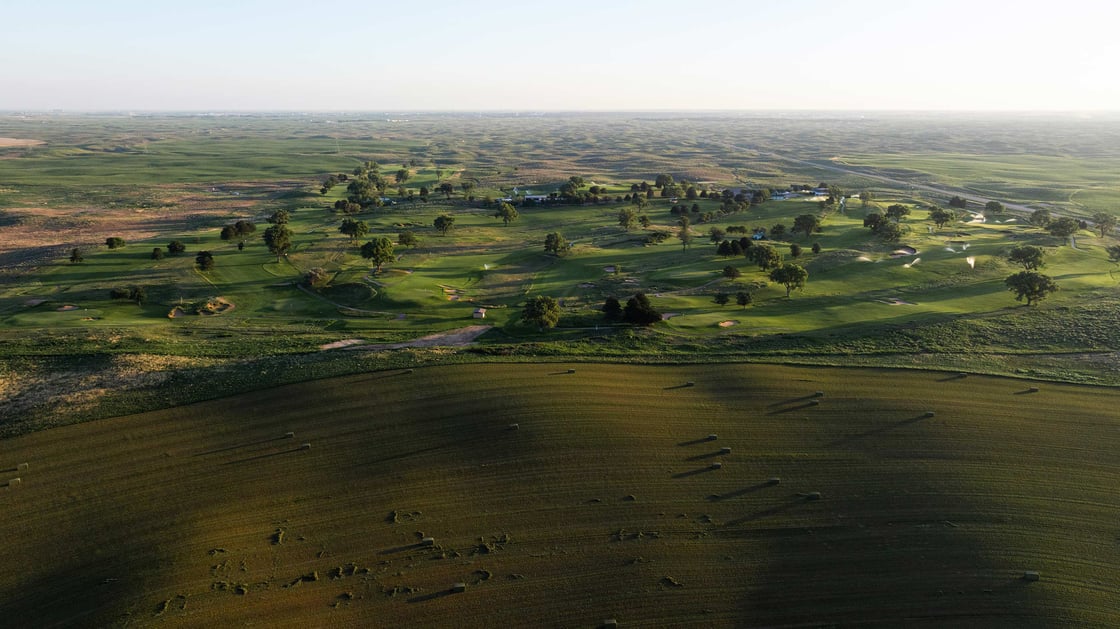
Having worked in the Nebraska Sandhills and visited almost every course in this central plains sandbelt, I knew what kind of potential Buffalo Dunes had. My anticipation ahead of our trip was very high, and I expected a lot from this modest, small-town muni. After spending a few days in Garden City with some of the key contributors to its six-year renovation, I can confidently say that Buffalo Dunes knocked my socks off, and I guarantee it will for you, too. The course is everything you could ask for and more. Exceptional turf presentation, ideal topography and soil quality, well-executed design, and it achieves all of this while being extremely affordable and accessible to all. The peak green is just $42. That’s not a typo. It's $42! I don’t think there’s any other golf course in America that even comes close to this level of value. (Wild Horse Golf Club might be the next best at $74).
While Garden City may feel like a forgotten land in America that’s impossible to get to, I've got good news for you. There are direct flights from Dallas to Garden City and Denver to Dodge City just 50 miles down the road. So next time you’re planning a weekend golf trip, consider playing what I believe to be one of the best public golf courses in America. You won’t regret it.


East Potomac FAQs: What's Happening, What's Next, and Who Will Pay?
President Trump Announces New Plan for East Potomac Golf Links
Redefining Modern Amateurism in Golf's Reinstated Amateur Era
Q&A: Neil Hutchinson, Superintendent at the Evans at Canal Shores
Chicago Golf Eclectic 18
New-Look Medinah in the Spotlight at 2026 Presidents Cup
Get full access to exclusive benefits from Fried Egg Golf
- Member-only content
- Community discussions forums
- Member-only experiences and early access to events