
Redefining Modern Amateurism in Golf's Reinstated Amateur Era
What even is an amateur golfer anymore?
I have been a professional writer for 25 years, and while some readers (and maybe a few editors) might quibble with how professional I’ve been at times, in the very literal sense, it has been my profession for my adult life. I have made enough money doing it to put food on the table, to buy a house, to save for retirement. There are times when I’ve felt like I didn’t live up to my potential, when I fell well short of my dreams, but if I’m being honest with myself, I’ve experienced plenty of success. I’ve written cover stories for a national magazine, I’ve been in a couple anthologies, and I’ve made writing for a living a big part of my identity.
Now imagine if I decided, at age 48, that I wanted to enter a prestigious writing contest where I competed against a group of writers who had never been paid for their published work, who had spent their lives as lawyers, plumbers, real estate brokers, and accountants, writing in their spare time for the love of the craft as they juggled their families and their actual profession. We’re both vying for a spot in an esteemed literary magazine, but I have the advantage of having already written 10 million words that someone paid me to write. I’ve just decided, at this point in my life, that I’m no longer calling myself “a professional writer.” I’m back to writing just for the love of the game.
That would seem ridiculous, maybe even a little shameless of me. How would it be fair to those aspiring authors who loved writing, but ultimately dedicated their lives to other pursuits?
That is, in essence, what it felt like to follow the U.S. Mid-Amateur this week.
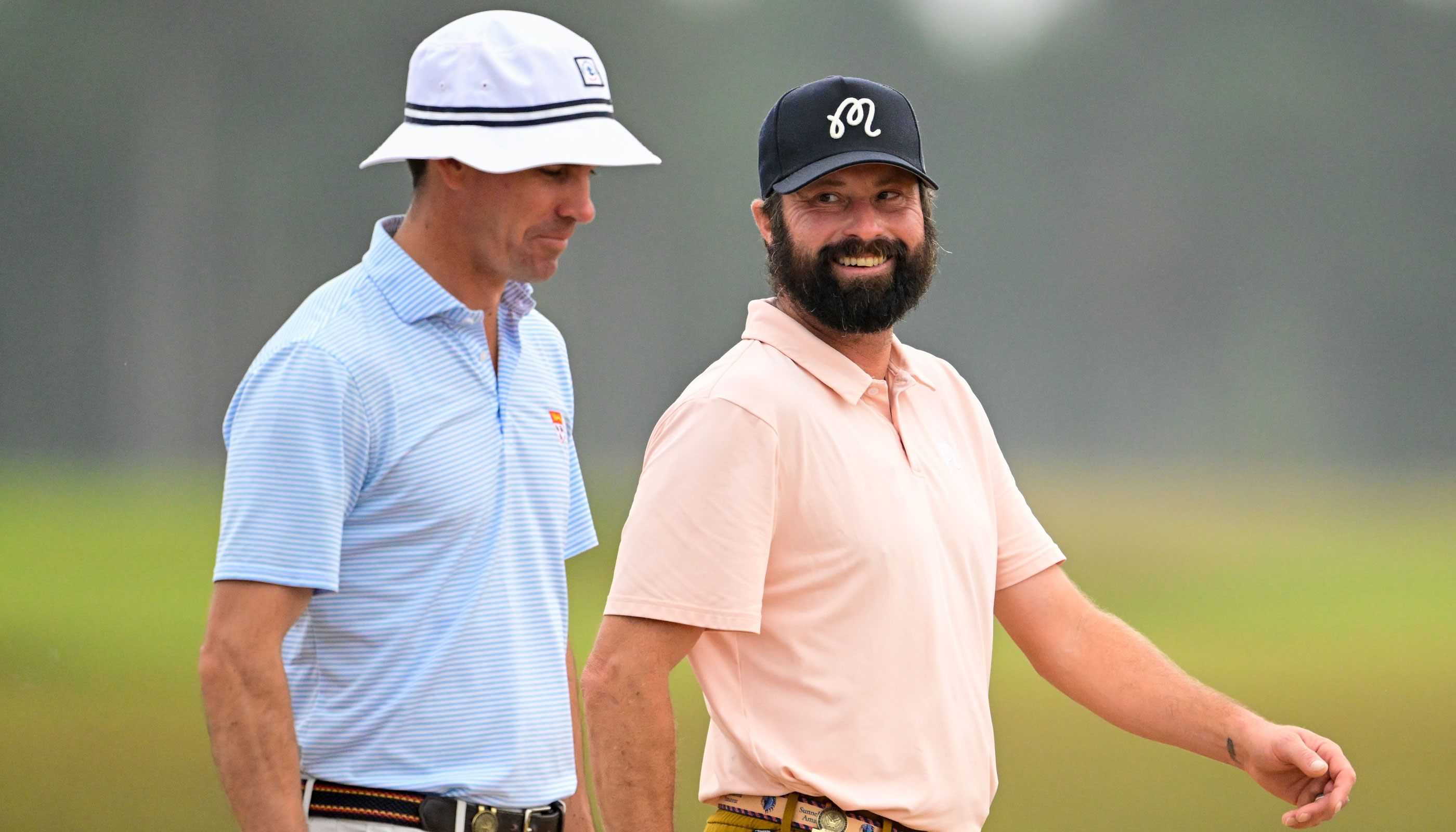
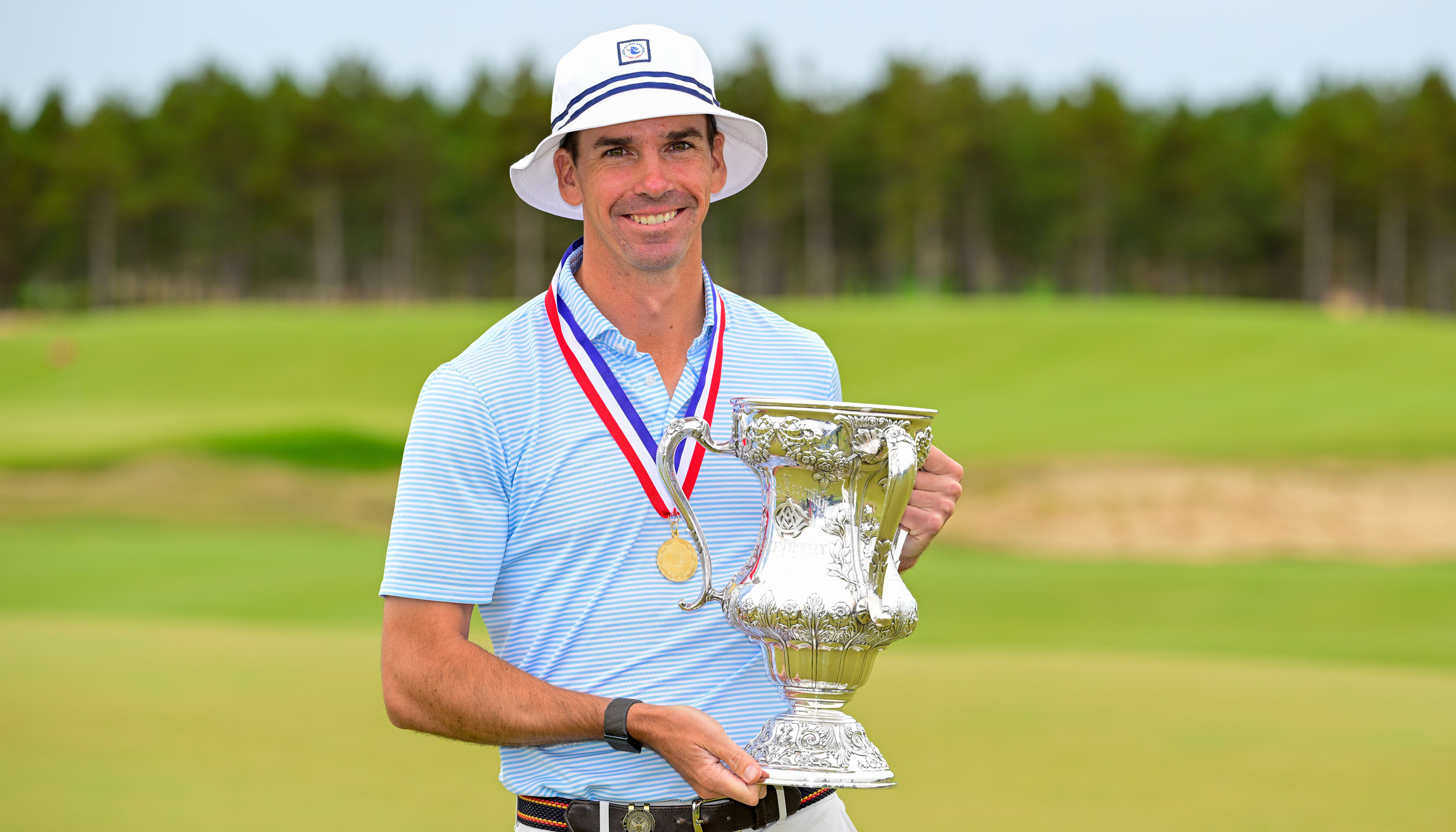
Nate Smith of Idaho and Ohio’s Andrew Bailey met in the 36-hole final at the Lido at Sand Valley on Thursday, where Bailey prevailed, 5 and 4. The win will likely get him an invitation to the Masters, as long as he keeps his amateur status. The Masters has a long tradition of awarding one spot in their field to the current Mid-Am champion, and Bailey is a worthy representative.
In some ways, it feels like an outcome that was much needed for sanity. Smith was very much a professional golfer at one point. He won a Korn Ferry Tour event in 2010, and earned $267,000 in his career. He also made 25 starts on the PGA Tour, made nine cuts, and banked $170,643. Bailey’s story is different. He was technically a pro at one point, but nothing like Smith.
"I'm a reinstated amateur who made like $8,000," said Bailey.
He’s been a reinstated amateur for nearly a decade now after a brief stint of professional golf with minimal success. They each applied to the USGA to have their amateur status reinstated after they gave up the dream of professional golf, and now they’re among the two best players in the United States who still have to hold down a day job. Smith is a homebuilder; Bailey is a national sales manager for the apparel company Holderness and Bourne.
Neither of them is guilty of anything, I should point out. They are working within a set of rules established by the USGA. In fact, six of the final eight golfers in this year’s Mid-Am played professionally at one point. And if anything, their presence felt less contentious than Mike Sposa’s victory in the U.S. Senior Amateur. Sposa never won on the PGA Tour, but he made 174 starts over 11 years as a professional, and earned nearly $2 million along the way.
A lot of mid-ams who never tried to play professional golf are reluctant to voice their frustrations with what the USGA has decided to allow, in part because they don’t want to come across like they’re making excuses. But the suggestion that these former pros don’t possess certain advantages in these “amateur” competitions has become borderline laughable.
What even is an amateur golfer anymore?
“I think amateurism is a bastardized term now,” says Will Davenport, who reached the quarterfinals of the U.S. Mid-Am in 2024. “I would say a handful of years ago, this problem really accelerated when we decided that foot traffic was the measurement, the yardstick on which we would measure success in golf. The Grow The Game initiative really became grow the game at all costs really. The issue of reinstatement is part of that movement. I think there was an explicit choice to relax the rules around reinstatement five years ago and it's very hard to put the cat back in the bag once you've done that. I think more people are coming. We're still in the early years of the reinstatement wave.”
Davenport wanted to make it clear when I reached out to him that he doesn’t feel any resentment toward reinstated amateurs. “It’s a classic ‘Don’t hate the player, hate the game’ situation,” he said. He’s grown friendly with a number of reinstated ams who have made the effort to integrate themselves into the mid-am circuit. They seem like great people who love golf the same way he does. But it’s important to be honest and acknowledge they’ve lived a very different life.
“I can't say I would do something different if I was in their shoes,” said Davenport, who played golf at Yale and is now a partner at Boston Consulting Group. “I think there's a compounding two-part advantage to being a reinstated am. One is that you've spent way more hours over way more years playing full-time golf and building skills that career amateurs don't build. And then you've played for stakes and in events that are much bigger than career amateurs have built. And so under pressure, you have a better skill set, a much calmer ability to handle the moment. That compounding effect means that it's a huge advantage. That's why we see reinstated ams starting to really dominate the landscape. I also think we are very afraid to talk about it. It seems like it's a taboo topic in some ways.”
Why are we afraid to talk about it? Because a lot of the motivation for reinstatement feels driven by money. If you reinstate good players, they’ll happily sign up for your championships. Foot traffic is contributing to some of these decisions. You might have to wait a bit — John Peterson waited five years for the USGA to restore his status — but eventually you can find your way back. Peterson won the prestigious Jones Cup in 2011, beating Jordan Spieth in a playoff. He was back in the Jones Cup this year, competing against the likes of 17-year-old Miles Russell. He started his own garage door company.
In between, he won $2.2 million and made 93 starts on the PGA Tour.
At what point do we admit the term amateur has lost all meaning? You can make a good case we’re already there, and reinstatement is just part of it.
Russell — who is committed to play at Florida State — has a handful of Name, Image, and Likeness deals worth (by most estimates) $1 million. The idea that he’s already a millionaire because of golf, but he remains an amateur because he hasn’t accepted prize money, is starting to feel like semantics. NIL has become an effective way to get money in golfers’ pockets while letting them maintain their amateur status, and that’s true of both the young and the old. Smith has participated in two tournaments put on by Grass League, the professional par 3 league where teams compete under the lights for purses typically exceeding $100,000. Players aren’t paid directly. The purses are awarded to franchise owners, who are welcome to sign players to NIL deals. It’s an interesting loophole.
It’s also not the only one.
Sposa contributed to the PGA Tour’s pension plan for many years while playing on Tour. He likely would have amassed around $1.2 million before he was required to start taking minimum withdrawals, according to someone familiar with the pension’s payout structure. So when he raised the U.S. Senior Amateur trophy at Baltimore Country Club this September, he almost certainly was doing it while cashing pension checks he earned from his time as a professional golfer.
At what point does the USGA start to be honest about what a farce this is?
“[Sposa] is an extreme example,” Davenport said. “I do worry the USGA’s response is going to be ‘Okay, no more Mike Sposas. And Colt Knost has to wait two more years and we’ve solved the problem.’ Well, we’ve got so many more guys who were Korn Ferry Tour winners and they fly under the radar because they’re not recognizable names. They haven’t won the mid-am yet, but five years from now it’s going to be too late.”
Davenport knows that these kinds of debates are often intertwined with conversations about classism. But it’s important to remember that golf’s origins are rooted in the amateur game. Professional golf was originally just a sideshow. If we want to honor that, it’s important to fight for it.
“There is a storied history behind amateur golf and the preservation of amateur golf,” he says. “It’s the golf most people grow up playing. And it’s played on the best venues in the world. Amateur golf is one of the purest pursuits and one of the oldest, and it’s probably one we need to protect the most.”


Q&A: Neil Hutchinson, Superintendent at the Evans at Canal Shores
Chicago Golf Eclectic 18
New-Look Medinah in the Spotlight at 2026 Presidents Cup
A Q&A with Ashley Mead
Cabot Announces New Resort in Nova Scotia
A Special Round With an Old Friend
Get full access to exclusive benefits from Fried Egg Golf
- Member-only content
- Community discussions forums
- Member-only experiences and early access to events