
A Q&A with Blake Conant
On his recent and ongoing projects, including the Gilroy at Old Barnwell
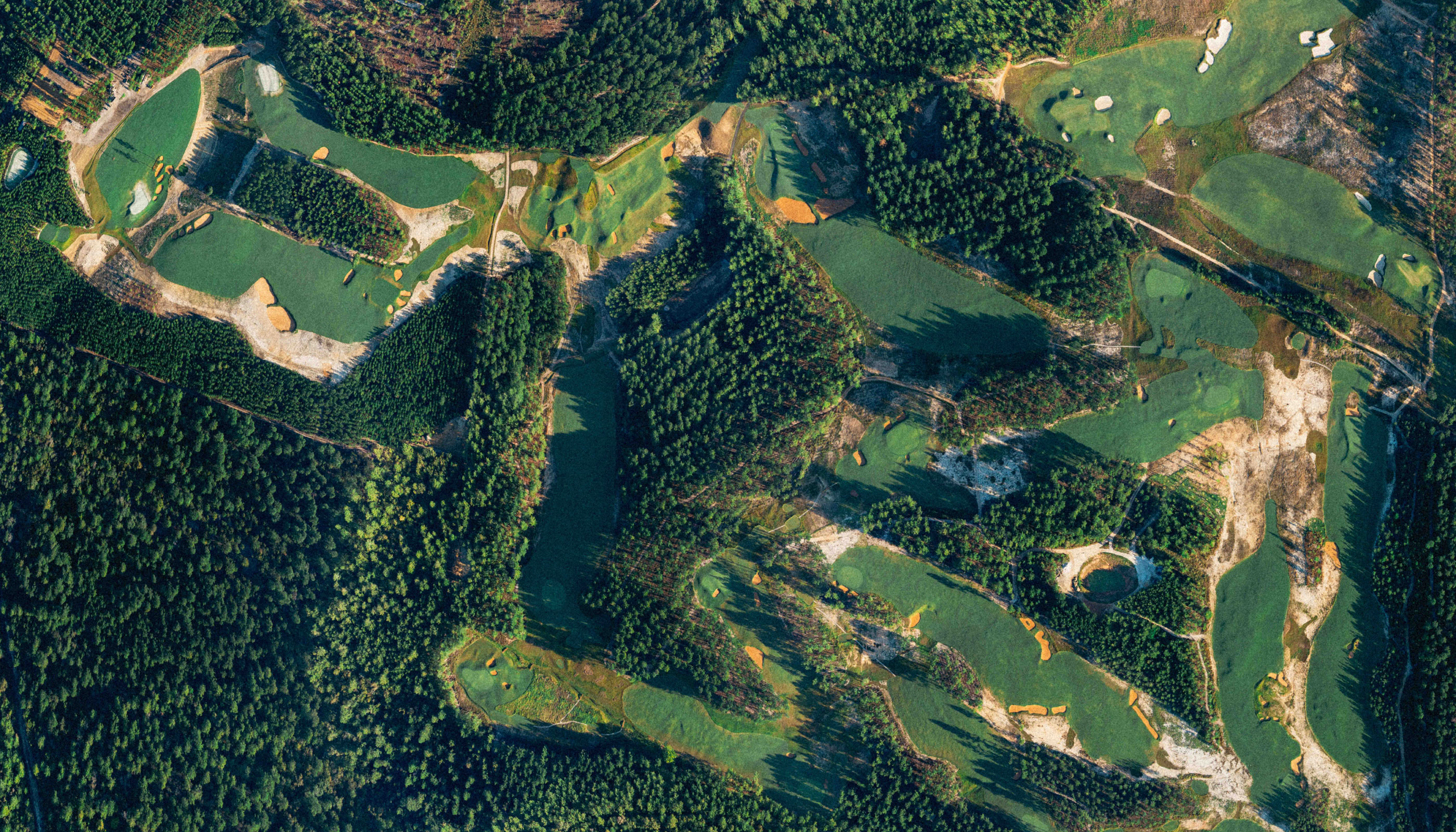

For about a decade, Blake Conant’s name has come up whenever people talk about who’s next in golf architecture. As a shaper and associate for Tom Doak’s Renaissance Golf Design, he worked at Stoatin Brae, Bel-Air, and Memorial Park. Along the way, he became known among nerds like me as one of the industry’s most creative thinkers and engaging conversationalists on the topic of design.
On several recent projects, Blake has appeared at the top of the masthead. He renovated Shorehaven Golf Club in Connecticut and teamed with Renaissance colleague Brian Schneider on Old Barnwell, an acclaimed new build in South Carolina. Two weeks ago, the pair’s second 18 there, the Gilroy, opened for preview play. Meanwhile, Blake is working on a co-design with Tom Doak at the Hill Club in Florida and a low-cost renovation of Williston Country Club, an affordable nine-holer down the road from Old Barnwell.
In short, Blake has a lot going on. I called him up last week to talk about all of it.
Garrett: Let’s start with your latest co-design with Brian Schneider, the Gilroy at Old Barnwell. This is the third course you and Brian have done at Old Barnwell, after the original 18-hole course and the Kids’ Course. How is the Gilroy's property different from the others?
Blake: It sits west of the original course. There’s the valley that runs through Old Barnwell on 16, 6, and 7 — the Gilroy is basically past 7 green and a little bit above the eighth hole. So the valley opens up a little more down there. There's a bit more up and down to the hills, but also the sideslopes are just soft enough to be able to play on and up and over, whereas on the original course, they were just a little too steep to tackle.
On the first course, we had to do a ton of work to bench in 16 green and build 17 tee. It'd be hard to have a whole fairway on slopes that steep. But because they soften out just enough at the Gilroy, we were able to have stuff playing off the sideslopes. On our fifth, 15th, and third holes, we're using some of these sideslopes in the valley to play off of, which I think gives the course a fresh take on the same piece of land.
Also, there are five par 3s at the Gilroy; there are only three at Old Barnwell. At the Gilroy, since the land is a little more up and down, it's not just like, “Okay, we're up on this plateau, then we're going down to a valley, and then getting back up to a plateau.” There are more spots to have par 3s to bridge different sections of the property.
The scorecard is also awkwardly balanced. It just sort of ended up that way. The front nine is a par 34, the back nine is a par 36, and the yardage is probably 4- to 500 yards different between front and back.
Garrett: Like Sand Hills.
Blake: Pac Dunes is the same way. But we were trying not to think about that. It was just like, “How do you route the best holes?” And then, once they come together, it’s like, “Oh shit, these are pretty different. Is that okay?” And we immediately went through the same exercise you just did [i.e., thinking of other courses with unbalanced nines].
Garrett: Were there specific courses you and Brian discussed as inspiration for the Gilroy?
Blake: Not really. The way we work is always like, “This thing I'm working on reminds me of this place over here.” So it's not usually, “Hey, I want the 15th hole to look like this.” It’s more, “The way the water's moving and the way this approach is set into the land, that feels a lot like this.”
But Brian did have a great old photo of the lost sixth hole at Sunningdale [New], which we used as inspiration for our 15th hole. Our fairway is doing something completely opposite. The lost sixth hole at Sunningdale was a reverse camber: it doglegged right but the fairway fell right to left, so your ball would roll to where you had more yardage in but more of an ideal angle to the green. Our 15th hole is the opposite: it swings around, high left to low right. So our land naturally takes your ball on the shortcut, but to the worse angle into the green, where you've got to carry some really strong right greenside bunkers. I like the way our land works a little bit better for that approach shot, but the green site is inspired by the lost one at Sunningdale.
{{design-notebook-sunningdale-old-gilroy}}
Garrett: Were there any big construction challenges that you had to solve?
Blake: There were some earthmoving exercises that we needed to do for 8 green, 9 fairway, 13 fairway. That's the area that sits above the first course’s eighth fairway and ninth tee. And it's really great sand — beautiful, well-draining sand — but it was all very flat, like 1%. So we just did some earthwork to create relief, create a little movement to get water off the golf holes.
Overall, I'd say it was a pretty smooth build. Not too many hiccups.
Garrett: People have started to play the course in the past couple of weeks. Have you gotten any feedback so far?
Blake: A little bit, just through texts with [owner] Nick [Schreiber] and our superintendent. Brian and I are actually going to play it the first week of November.
Seventeen is, like, a 500-yard par 4, and we're hearing some light chatter that maybe it wants to be a par 5. But it's like, “Okay, well, are people enjoying playing the golf hole?” That's the most important thing.
Everything else is typical preview play. There's a ton of excitement about it, and I think it's resonating with folks that it's not an afterthought. It's not different for the sake of being different. It's a place that people are going to want to play. And for us and Nick, that's really important — to have this asset that's not only going to serve the mission of the Old Barnwell Foundation, but also be a place where members want to go play. It's not like you’re going to have 80% of your play at the first course. So far so good.
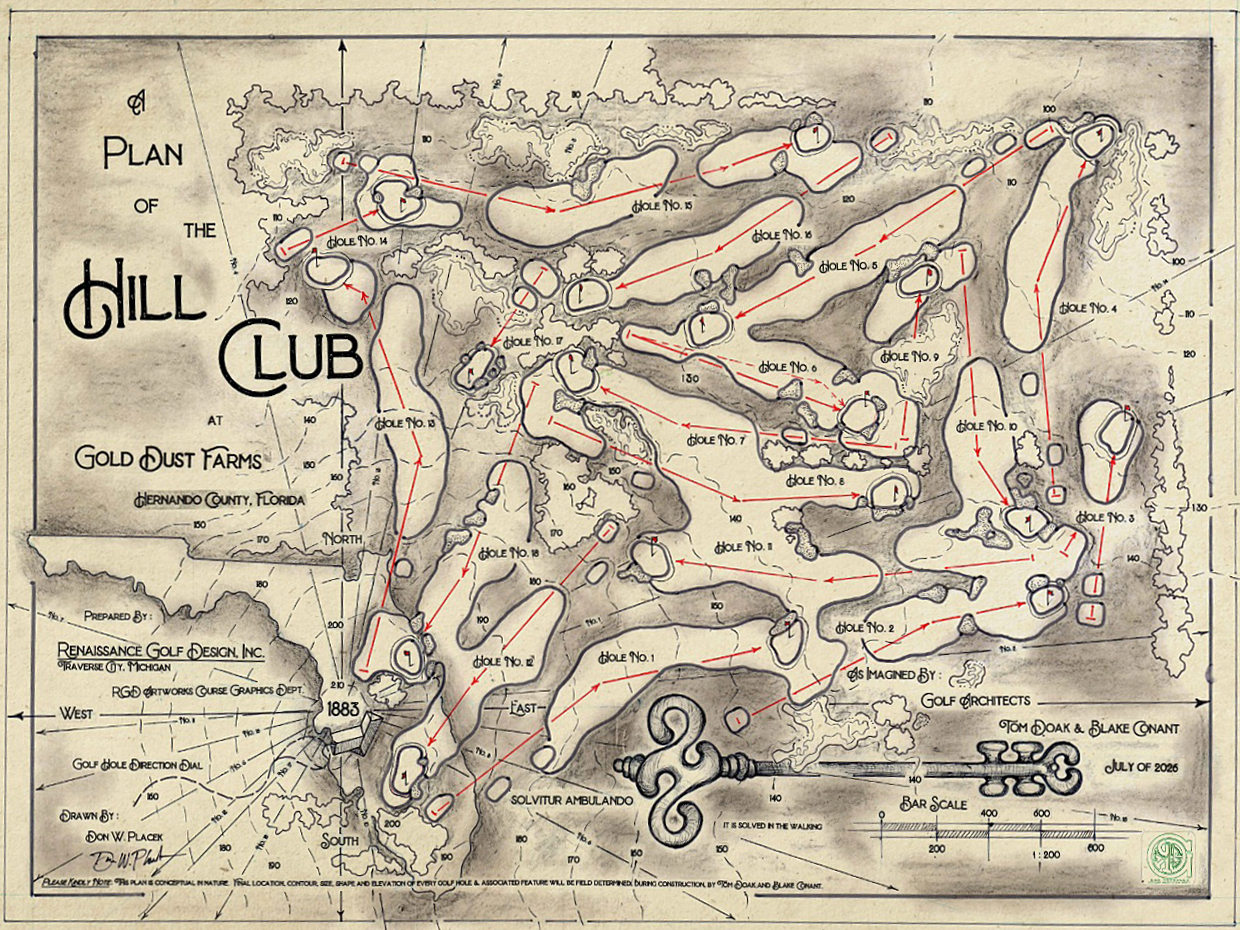
Garrett: Let's get into some other stuff you're working on. Last week, Golf Course Architecture magazine reported on a new design you’re doing with Tom Doak at the Hill Club in Florida. What are the basics of this project?
Blake: It’s about an hour north of Tampa, on some really interesting ground for Florida. Its high point is 210 feet and its low point is less than 100 feet, so there's about 115 feet of relief on the site. And it's all very sandy — not quite good enough sand to build greens out of, but really good sand to have firm and fast fairways and good ground for golf.
The co-design came about because that's largely how Tom is working these days. I think he just wants a little more control over his time and to give recognition to what he used to call the “lead associate.” So bringing that person in as the co-designer is a way to give us a little more responsibility on the front end and then a little more credit on the back end.
But it's really cool. We were walking around in the spring, and I was like, “Tom, you know, the site's strange.” There's a lot of great oak trees. It used to be an orange grove years ago. I was like, “This reminds me of golf in the Northeast. It feels like an old site already.” Tom mentioned that it reminded him of some places in the UK. Then, talking with our client a little more, what they seemed to be talking about was the culture of a UK club.
So we did a research trip a few weeks ago to England. Tom and I put together a list of courses we wanted our client to see. The GM and another founding member came on the trip with us, and I think it was really eye-opening for them.
We played a lot of old foursomes clubs — Woking, Rye, Royal Ashdown Forest, Brancaster, Royal Worlington [and Newmarket]. We took a walk around West Sussex. Those guys had never played foursomes before. And I don't think the Hill Club is going to be a foursomes club, but they were saying, “Hey, 10% of our rounds could be two-balls.” That part was really cool.
Now, there's still a large contingent of golfers that are pencil-and-paper guys, but there are also people who don't take themselves too seriously and will see how much fun it is to play foursomes. It's a three-hour round and then you can go back to the clubhouse and hang out.
Those clubs in the UK — they do the lunches, and the camaraderie around the clubhouse is so vibrant, and the proximity of most of those clubhouses to golf is so close. The impulse for modern golf architecture is that everything needs its own space. But just because we have the space, should we? Or can it be like the back porch at Woking, where the 14th green is three steps off where everybody's eating lunch and having a beer?

So hopefully we do some different things at the Hill Club that won't feel like traditional Florida golf.
Garrett: You have a routing at this point. Is there anything in particular that excites you about the design?
Blake: Well, it's appropriately named the Hill Club, because basically there's a big hill in the southwest corner. That's where the high point is. And then everything just slopes down the eastern side of the property. The northern side has a little bit of roll once you get down off the hill.
But I think that's one of the things that drew Tom to the project — the challenge of using a hill, and how many different ways can you use it. “How many great holes can we think of that are great because they're on a hill?” The one that comes to everybody's mind is the tee shot on 10 at Augusta, and our 13th hole will have something similarly dramatic. It's got about 30 less feet of fall, but a similar feel.
The clubhouse is sited up at the top, and there's a 12-hole loop and a six-hole loop. So our 12th hole kind of comes back up the hill, and then our 18th hole comes back up. So that’s another challenge — just getting up the hill twice.
Garrett: The last project I want to pick your brain about is a renovation of a local nine-hole public course in Aiken County, South Carolina, not far from Old Barnwell — Williston Country Club. How did this job come about?
Blake: So the Old Barnwell Foundation — which is a formal extension of the Old Barnwell club and serves all of its mission purposes — found out about these two brothers in Williston who had saved this local nine-hole course. They owned some of the adjacent farmlands that butt up against what were the first and second holes of the golf course. They found out that the course may close or just go fallow, so they bought it. They operated it for a few years.
It really resonated with Ed [Brockner], our mission director, who came from the Evans Scholars and the Western Golf Association — and he's like, “Man, this would be perfect. We should get involved with this and help them out somehow.”
So the Old Barnwell Foundation bought it this summer. We've got plans to put in new irrigation, renovate all the greens, fix the tee boxes.
We’ll keep it so it's 25 bucks a round and it's recognizable as a rural nine-holer, a community asset. That doesn't mean the golf architecture needs to be bad, but we're not going to try to make it look like a circus, either. Something that's approachable for the people who have been playing it and the people who will continue to play it and support it, but also make it good enough that it's something for folks to see when they're around for Masters Week. Or it's a dot on the map for golf architecture aficionados and people who are willing to drive to see cool places.
So we’re trying to do some cool things with the greens, but just have it be simple, good golf.
Garrett: These projects are so interesting to me, where the budget is modest and you have to figure out what exactly the proper scope of the work is. It sounds like you're doing greens and tees. Are you doing bunkers as well?
Blake: There's a few bunkers on site. If we built [another] five, that may be a lot. They have a superintendent and probably a couple guys to help with labor. So yeah, you could do something like Old Barnwell there, but then you’d need a maintenance crew of eight. To keep the green fees at 25 bucks, you can't think that way.
The land is really good, so you don’t need to do much to encourage strategy besides building cool greens. And then there are lots of ways to challenge a player without bunkers. So we'll lean into some of those ideas, maybe, as well.
Garrett: What would those ideas be, primarily? Are you talking about contour?
Blake: Yeah, and simple rough.
We're going to have just a single-row irrigation system — a main line at the center line of the fairway, and then however far out those heads throw is where the grass is going to be. So we’re letting the irrigation kind of dictate where the corridors are, and maybe that's where you can fudge. Maybe the main line shifts a little bit because you want to bring in more of whatever our native texture ends up being. In some areas it might be sand, or it might be scrubby rough, but bringing that into the golf to let a player decide: do I carry this little sandy, scratchy area, or do I lay short of it or play around it? I think we can do more of that stuff.
At Memorial Park, when Tom was consulting with Brooks Koepka, [Koepka said] the thing that's most challenging is just awkward stances in the rough. I think you're seeing more and more people do that — just rough as a hazard, on a little sideslope or something. That's usually all the hazard you ever need. So we’ll be playing around with some of those concepts at Williston.
Garrett: Rough making a comeback. Never thought I'd hear that.
Blake: I know, right?
Garrett: But, like, well-placed, irregular areas of it, as opposed to straight lines of it.
Blake: Yeah. Ultimately the irrigation is going to dictate where the grass grows. You're not going to define that with two different heights of cut. But if we do want an intentional cluster of mounds here and there, and we make those rough, I think we can pull that off.
Garrett: I know you like to go around and catalog the courses that you see. I use your Google Map a lot.
Blake: Nice. You're the one.
Garrett: Oh, my colleagues use it, too. I know Matt Rouches does. It’s a great resource, and pretty extensive at this point. Obviously you went to England recently. What’s a place that stood out to you?
Blake: I mean, this England trip — all the places we saw, for different reasons, stood out. I had been to Rye before, and I love Rye. I haven't seen all the courses in England, but it's probably among the best there.
Seeing Royal Worlington for the first time was pretty eye-opening, because that's one of those places where, if you look at it with a critical eye and think about what could be different, or what could be better, there's just nothing. There's no “Oh, you could have put this tee over here and made this,” or “This green could have been here.” Everything is just maximized and perfectly placed out there. I don't know if it could be improved upon. The more golf courses you see, the more you realize that's pretty rare.




Design Notebook: A Royal County Down Proposal and a Coul Links Denial
Design Notebook: The Athletic Lights Up Yale, LinksDAO Sells Spey Bay
A Q&A with David Normoyle about Cypress Point
Design Notebook: Pebble Beach Changes and Medinah No. 3 Insights
A Q&A with Ashley Mead
Design Notebook: Lahinch Debrief and Saudi Arabia's Golf Struggles
Get full access to exclusive benefits from Fried Egg Golf
- Member-only content
- Community discussions forums
- Member-only experiences and early access to events