

Design Notebook: The Athletic Lights Up Yale, LinksDAO Sells Spey Bay
Plus, a Q&A with David Normoyle on his Cypress Point book

Greetings, Fried Egg Golf Club members, and welcome back to Design Notebook, your regular rundown of what’s going on in golf architecture.
Today, I have a big, beautiful Q&A with David Normoyle about his recently published centennial history of Cypress Point Club. We get into a lot of fun topics: Marion Hollins’s role, Seth Raynor’s routing, the notion of “protection vs. exposure,” and much more.
First, though, let’s talk about Yale’s PR fiasco, LinksDAO’s exit from Spey Bay, a fiery East Potomac hearing, and other news from around the industry…
Chocolate Drops
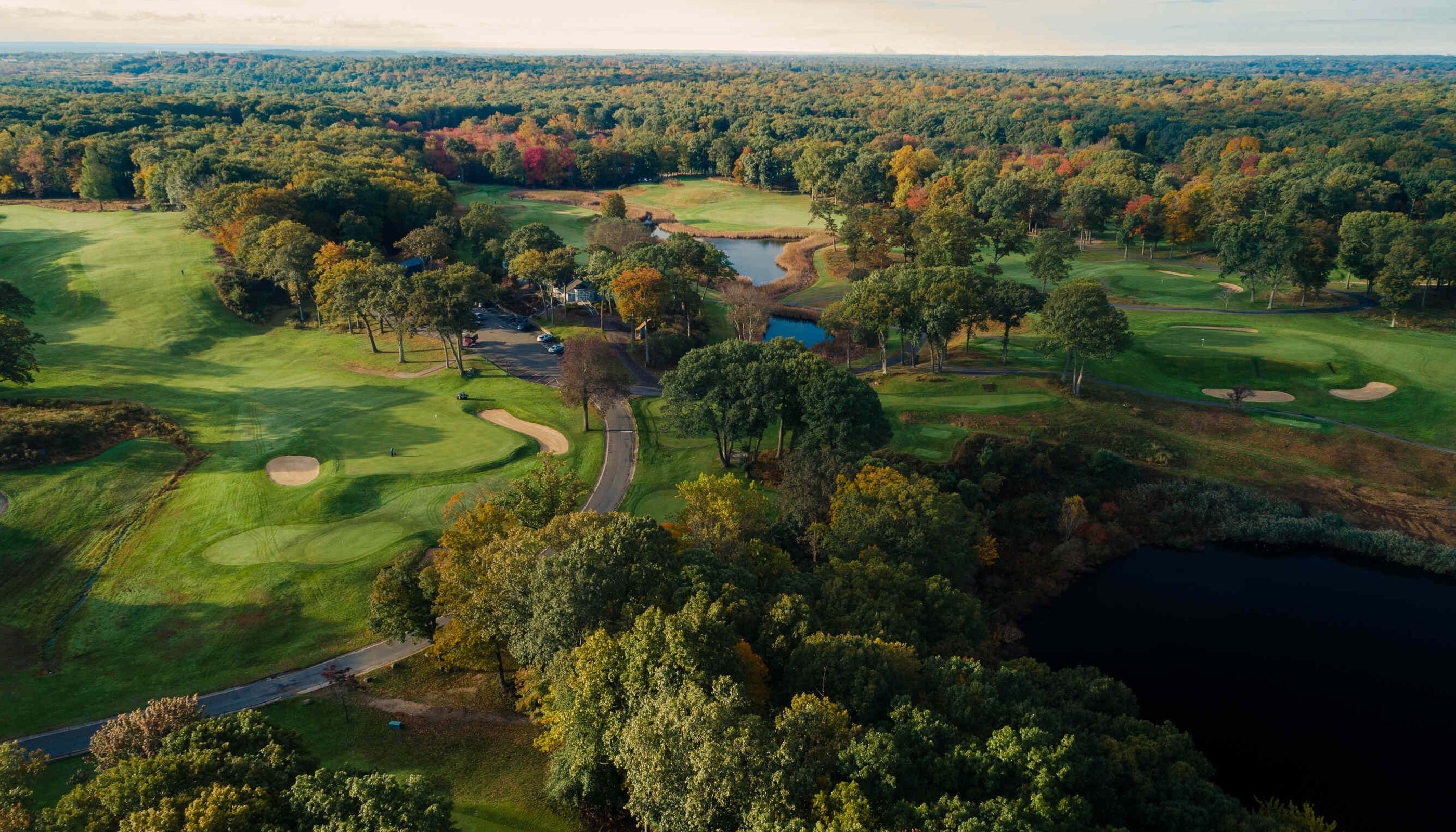
Gabby Herzig of The Athletic wrote an exposé on maintenance problems at Yale Golf Course, which reopened earlier this year after a $30-million renovation by Gil Hanse, and it’s a doozy. Back in August, I did a little digging on this topic myself, and at the time the recent visitors I spoke with felt the place wasn't in terrible shape. It had, however, taken a hit from a heat wave and a few summer storms, and many were worried about the course’s future.
Well, the future is here. Turf conditions have deteriorated, and Gabby’s piece is getting a lot of run. As always, read the article yourself, but here are the bits that struck me:
1. Gil Hanse went on the record with his frustrations: "I do not believe that there is anyone who has been involved in this project who could be happy with how the course is currently being maintained and presented." It's rare to hear a golf architect speak this way publicly about a project he just finished. More than any photo of dead grass, Hanse’s quote is an indication of a serious problem at Yale.
2. In mid-September, the university transferred management of the course from the athletic department to university operations, which oversees the campus's other facilities. This is a major rebuke of athletic director Vicky Chun, who somehow earned reappointment in July after taking fire from dozens of former staffers, coaches, and athletes for creating a toxic work environment.
3. According to Herzig's reporting, Yale has asked Hanse to help get the course back on track, and Hanse himself has enlisted the advice of superintendent Pat Sisk. This — and not just a passing of the buck from one department to another — is what Yale actually needs to do: bring in experienced golf people. The next step will be figuring out how to fund maintenance operations sufficiently and on an ongoing basis. That won't be easy, given the size and severity of the property and the restrictions around the course’s unionized labor force. But if other universities can figure it out, Yale and its $44-billion endowment should be able to as well.
Look, it’s not uncommon for freshly renovated golf courses to experience turf loss. The maintenance staff deserves time to figure things out, and golfers need to be patient. But since the Yale administration has a decades-long track record of under-resourcing this facility, many are understandably ready to pounce at the first sign of struggle.
Besides, the only reason this became a big story is that Yale decided to chase public green fees — $350 green fees at that. If the course primarily served students, faculty, and a small membership, as it did before COVID, post-grow-in issues wouldn't have been newsworthy. In fact, those issues might not even have occurred, since the course would have gotten far less cart traffic this past summer.
I'm glad Yale has opened its doors to golfers outside of the university community. But now it must confront the reality of running a high-end daily-fee golf facility. And that reality is: It's incredibly hard!
The good news is that Yale can fix this. Bringing Gil back in was the right call, and if the offseason interventions go well, the course could be looking great when it opens next spring. Even better, the university now knows that its negligence is a matter of public scrutiny. Sunlight, disinfectant, etc.
LinksDAO announced on October 5 that it is selling Spey Bay Golf Club, a links course in Northern Scotland. The cryptocurrency-backed virtual golf club purchased Spey Bay in March 2023 after raising $10.4 million from an NFT launch. Soon, the architecture firm Clayton, DeVries & Pont jumped on board to transform the course into a reversible layout.
While LinksDAO carried out significant upgrades to the facility — including widening fairways, removing gorse, building nine new tees, reconfiguring two holes, installing on-site pods for lodging, refurbishing the bar and restaurant, and adding a Himalayas-style putting green — the reversible design was never fully implemented.
CDP last visited the site in June 2025. A spokesperson for the firm told me on October 6 that CDP has not received any communication from LinksDAO since my Fried Egg Golf colleague Meg Adkins and I wrote an article about the situation in February.
“We’re honored to have been the steward of such an incredible golf course with such rich history,” said LinksDAO in a statement. “We’re proud of the improvements we’ve made to both the course and the club during our ownership, even bringing it into Scotland’s top 100 [on Top100GolfCourses.com]. But with most of our members in the U.S. we need to focus closer to home, and it’s time for Spey Bay’s next chapter.”
In 2023, LinksDAO reportedly paid well over the course’s asking price of $905,000. A public listing now invites offers “in excess of £1,500,000,” or just below $2 million.
LinksDAO’s other major project, a renovation of Kansas City’s Hillcrest Country Club, remains in limbo. In February 2025, LinksDAO announced that it had acquired a portion of Hillcrest, a 1916 Donald Ross design that had operated as an affordable daily-fee course since the early 2010s. Along with majority owner Robb Heineman, LinksDAO planned to take the club private again and overhaul the course with architect Tripp Davis.
As Meg and I reported earlier this year, however, LinksDAO and Heineman didn’t appear to agree on what LinksDAO actually owned. “They don’t have any ownership,” Heineman told us. “They’ve got some profits interests that they can gain through membership sales.” LinksDAO disputed this characterization but provided no documentation to the contrary.
Meanwhile, construction at Hillcrest has been stop-and-go. In the summer and fall of 2025, the Kansas City government and at least two contractors on the project filed liens against 635 Holdings, Heineman’s investment company, alleging unpaid debts. A little over a month ago, two more contractors told Fox 4 Kansas City that they had not been paid for work performed at Hillcrest this spring. (They received payment after the station’s “Problem Solvers” team contacted club ownership.)
For now, the property is quiet. Davis told me he visited the site twice in the early summer, but then construction halted again.
Those are the facts I’ve been able to confirm. Here’s my opinion on what the future might hold:
Spey Bay still has some runway. It’s in a great location on the Moray coast, about an hour from both Cabot Highlands and Fraserburgh. If it sells to the right owner, I’d expect the course to keep getting better.
I’m more worried about Hillcrest. The original Donald Ross design has already been dug up, the Tripp Davis redesign is nowhere near complete, and the legal documents are piling up. It would be sad to see this property sold to a non-golf developer, but that strikes me as a possibility at this point.
Golf course ownership in 2026 is hard and expensive. Clearly, crypto is not the magic bullet some thought it was five years ago.
The fight over East Potomac Golf Links erupted in federal court on Monday. Over the weekend, dozens of government workers descended on the Washington, D.C., municipal golf facility and removed 430 trees, leaving locals and golf course employees stunned. District Judge Ana Reyes, who is handling a lawsuit related to the Trump administration’s plan to transform East Potomac into a high-end championship venue, scheduled a hearing for 10 a.m. on Monday.
Judge Reyes tore into the government’s lawyers, openly furious that she and the plaintiff had not been notified of the tree-removal plan until 4:55 p.m. on Friday evening. During the four-hour hearing, she called in multiple administration officials for sworn testimony, grilling National Mall superintendent Kevin Griess and Deputy Director of the National Park Service Frank Lands about who knew what and when. Reyes ordered a temporary halt to further work at East Potomac, told the NPS to preserve records, demanded testimony from Interior Department Deputy Chief of Staff Gregory Wischer, and said she would continue to investigate whether the government had lied to the court.
MediasTouch’s Scott McFarlane has an exhaustive (though, I should note, tonally partisan) X thread on the hearing here.
Design Notebook is Presented By
This edition of Design Notebook is presented by the Golf Course Superintendents Association of America.
GCSAA supports more than 21 thousand members worldwide – from superintendents and equipment managers to students and educators. Celebrating its 100th anniversary this year, GCSAA continues to ensure that its members are at the forefront of research, education, innovation, and advocacy through a range of programs and services.
Let’s finish with some quick hits:
→ More news at the intersection of law and golf: a Scottish Land Court hearing over the dispute between Brora Golf Club and local crofters is scheduled for tomorrow.
→ Gil Hanse is working on The Trail, a small, private, invitation-only golf club outside of Charlotte, North Carolina.
→ Andrew Green has been hired to renovate the Cardinal Course at the Country Club of North Carolina. Work is set to begin in fall 2028.
→ Adam Schupak of Golfweek reports that Black Desert Resort in Utah, owned by Reef Capital Partners, intends to add three more golf courses in the near future.
→ Photographer Ricky Robinson posted some tantalizing photos of No Name Ranch, a recently completed Kye Goalby design in Montana.

→ Gil Hanse is working on The Trail, a small, private, invitation-only golf club outside of Charlotte, North Carolina.
→ Andrew Green has been hired to renovate the Cardinal Course at the Country Club of North Carolina. Work is set to begin in fall 2028.
→ Adam Schupak of Golfweek reports that Black Desert Resort in Utah, owned by Reef Capital Partners, intends to add three more golf courses in the near future.
→ Photographer Ricky Robinson posted some tantalizing photos of No Name Ranch, a recently completed Kye Goalby design in Montana.
Underlined and Starred
“Beginning the course with the elements of sea and sand, the senses are invigorated. Venturing deep into a forest, you encounter some of the most beautiful bunkering and green contours one could ever see, even if there’s no ocean. Then you are thrust into a lunar dunescape that makes you wonder how someone could ever fashion a golf course upon it. A final taste of the forest, a final taste of the dunes, a final encounter with the sheltered cove, and then exposure to the point. At first, an intimate experience, followed by an expression of grandeur you’ve long anticipated, and then the sheer spectacle of playing the 17th hole. Even the poets cannot explain scenes such as this.” -David Normoyle
Have a topic or question you'd like discussed in Design Notebook? Contact Garrett at garrett@thefriedegg.com.








Design Notebook: Pebble Beach Changes and Medinah No. 3 Insights

Design Notebook: Lahinch Debrief and Saudi Arabia's Golf Struggles

A Q&A with Keith Cutten

A Q&A with Geoff Shackelford

Design Notebook: Merion Reflections, Yale Conditions, and Muirfield Tensions
Design Notebook: An Open-Rota Renovation Vibe Shift
Get full access to exclusive benefits from Fried Egg Golf
- Member-only content
- Community discussions forums
- Member-only experiences and early access to events