
A Q&A with Geoff Shackelford
On Grounds for Golf, comic relief, how golf architecture has changed in the past two decades, and more

Whenever I’m asked to recommend a few introductory books about golf architecture, I mention Geoff Shackelford’s Grounds for Golf, published in 2003. It’s a lively overview of the concepts, attitudes, historical figures, and courses that any golf architecture geek should know. It also features some cool illustrations by a then-up-and-coming architect named Gil Hanse.
Two months ago, Tatra Press brought out a second edition of Grounds for Golf, complete with two new chapters and an updated set of lists in the index. I sat down with Geoff last week to talk about the refreshed book and reflect on how golf architecture appreciation has changed in the past two decades.
Garrett: What was the impetus for bringing out this second edition of Grounds for Golf?
Geoff: Actually it was the publisher who did my previous book Golf Architecture for Normal People, Chris Sulavik at Tatra Press, who brought it up. He had liked the book when it came out. In fact, I think he loaned it to somebody and never saw it again.
The book didn't do particularly well when it first came out. That’s nothing against St. Martin's Press, who did the first one. It’s just — a lot has changed, and a lot more people are interested in the elements of golf course design. The audience has grown. Part of that is thanks to you guys.
Garrett: Well, that's flattering. Of course, a lot of progress had already happened before we came on the scene.
Geoff: I mean, there's no question that the driving force — and I guess I lump you into this — is just the change in visual storytelling possibilities for golf architecture, whether it's Instagram, drone photography, everybody having a really good camera on their phone now. You are able to visualize a lot of things more easily, or see places that you didn't get to see before.
{{inline-article}}
Garrett: Going back to when the book was first published, back in 2003 — even then, there were a number of introductory golf architecture texts available. Some have become more available since then, particularly the older ones. But at that time, you could have gotten The Anatomy of a Golf Course by Tom Doak or The Spirit of St. Andrews by Alister MacKenzie. You could get an edition of The World Atlas of Golf. So I'm curious, when you initially wrote Grounds for Golf, what gap in that introductory literature of golf architecture were you trying to fill?
Geoff: I was trying to find a spot in between all those books you mentioned, but mainly I wanted to offer a primer on design that hopefully was a little more accessible while not totally glossing over the history and fundamentals that drive the best holes and drove certain eras. I think it's hugely vital to understand the various schools and eras of design, and as we get farther away from them, I think it's clear which ones were more productive or left behind better golf courses.
Garrett: One chapter of Grounds for Golf that has always stuck with me is “Comic Relief,” which highlights the importance of humor in golf course design. Why do you feel that the presence of absurdity or incongruity or surprise or anything else that might provoke laughter is important in a golf course?
Geoff: Well, when I did the book, you have to remember we were in the throes of Tiger Woods dismantling several golf courses. I was very motivated to highlight the fact that the reaction to that, “Tiger-proofing,” was taking the fun out of golf for everyone, even though it was really to combat one player. And then as the technology started to escalate, that again had side effects for the average golfers. The number one thing you would see in this — you know, harvesting rough and narrowing fairways and tucking pins and all this stuff to protect par — was that the fun, do-or-die hole, the quirk, the funky stuff was in danger. It has always been a battle to protect the holes that provide comic relief. But they're vital, just like comedy in a serious film. The narrative can't just be relentless throughout, or else you don't want to come back to it. And those kinds of holes are the ones that keep you coming back to a golf course.
Garrett: What you call charming absurdity, others might call a contrived gimmick. What is the difference between those two for you?
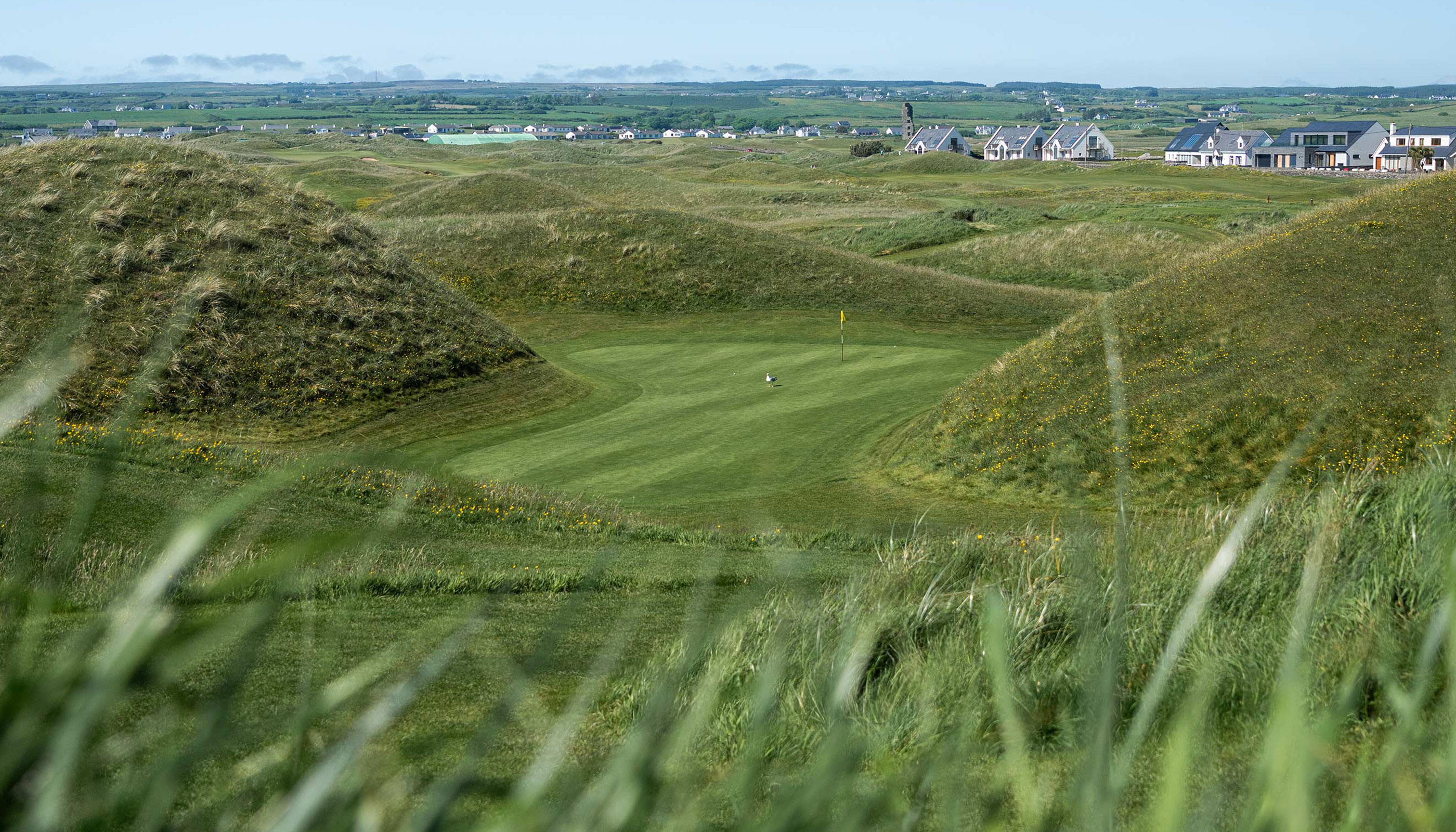
Geoff: The difference is really quite simple. And we're going to see it at Lahinch with the Walker Cup [in September] — the Dell hole. Essentially the architect is using natural features. If you rely on something that is there and natural or preexisting, the golfer accepts it. But if you construct something, it's kind of got a Disneyland effect to it. And people know it. They reject it. Look at North Berwick, how much people love the 13th hole and the wall. But it was there and they just put the green on the other side. Now, there have been architects who have tried to do faux walls and faux ruins and things, and it just doesn't pass a smell test for the golfer because they know there's a person behind this.
{{design-notebook-lahinch-5-north-berwick-13}}
Garrett: You've added two new chapters to this edition of Grounds for Golf. One about the increase in golf architecture appreciation over the past 20 years, and the other about the challenges and opportunities facing golf architecture in the future. You do seem generally happy with the way golf course appreciation has developed since 2003. What are the biggest changes that you've seen in that time?
Geoff: Fun. That’s the biggest change, and I try to highlight that in the book: the appreciation, the demand for fun.
When Rustic Canyon opened, which was around the same time as the book, I would get these sort of mildly condescending reactions to the course: “It's fun.” Like, isn’t that the point? And that's the time we were in. We were in full Tiger-proofing mode, and protecting par was such a thing, and the USGA was really into that.
So that was what we were dealing with. And to see how that's changed — and, you know, there's still progress to be made. There's still way too much concern about a certain number par and yardage and things that don't have much impact on your ultimate enjoyment of a course. But I think we've managed to at least get the focus off of that, mercifully, for the good of the game.
Garrett: What do you think are the main underlying factors that have made “fun” more fashionable, or more of a compliment when applied to a golf course?
Geoff: The sport has sort of bifurcated, so we have more people who are building places not with a tournament in mind. It's just incredible how much that once drove new construction. And it wasn't even always the case that the developer really wanted to have a tournament. They just felt that you had to hit certain numbers to have a certain legitimacy, whether it was to sell homes or memberships, or to charge a certain green fee. A lot of that also was driven by the Golf Digest resistance-to-scoring metric, which they finally have dropped. It took a long time. But it's incredible the damage that did to the mindset of both developers and architects.
Garrett: I want to pick up on this notion of the bifurcation of the sport. It seems to me that what we've seen over the past 20 years is a huge bifurcation between courses built for the general public and courses built for — or intended to be used for — championships. These have become two distinct camps. It seems to me that people really want fun out of the courses they play, but when they're watching championships, they really want those courses to resist scoring, and they're very unforgiving toward courses where 20 under is the number at the end of the week. Doesn’t it worry you that every U.S. Open that comes around, people are so on edge about scoring? I think that creates some bad incentives for the courses that have chosen to host those championships.
Geoff: I would counter that — and I guess this is the benefit of age — I got to see the time when what you've just described was way worse. Those of us who lived through the tournaments where the setup essentially muted the interest of the architecture — muted the comic relief holes or the temptation, the the elements I get into in the book — how dreary that was and how awful that was to watch. We've made great progress on that front.
But, to your point, I think the people who host these tournaments still get easily annoyed by low scoring, and that's disappointing.
Garrett: Speaking of which, we have the U.S. Amateur this week at Merion. What have you made of the course so far, and the way it's being played?
Geoff: Well, it's just brilliant as always to watch. It’s such a good match-play golf course.
There’s way too much rough. If you look at the old aerials — I get it. I mean, I know what they're doing. It’s a very short course now, and it'll be even shorter in 2030, when they host the U.S. Open in the first year of whatever rollback we get. But it just doesn't look right to me, the amount of rough.
It’s shocking how short it plays. On 16, they're hitting wedges and 9-irons in after a 3-wood off the tee, and there's no roll. I mean, give me a break. It's sad. That hole is a beast. In fact, somebody in my newsletter comments highlighted [golf writer] Charles Price mentioning it was generally a 4-iron to a 4-wood into the green [in the 1970s].
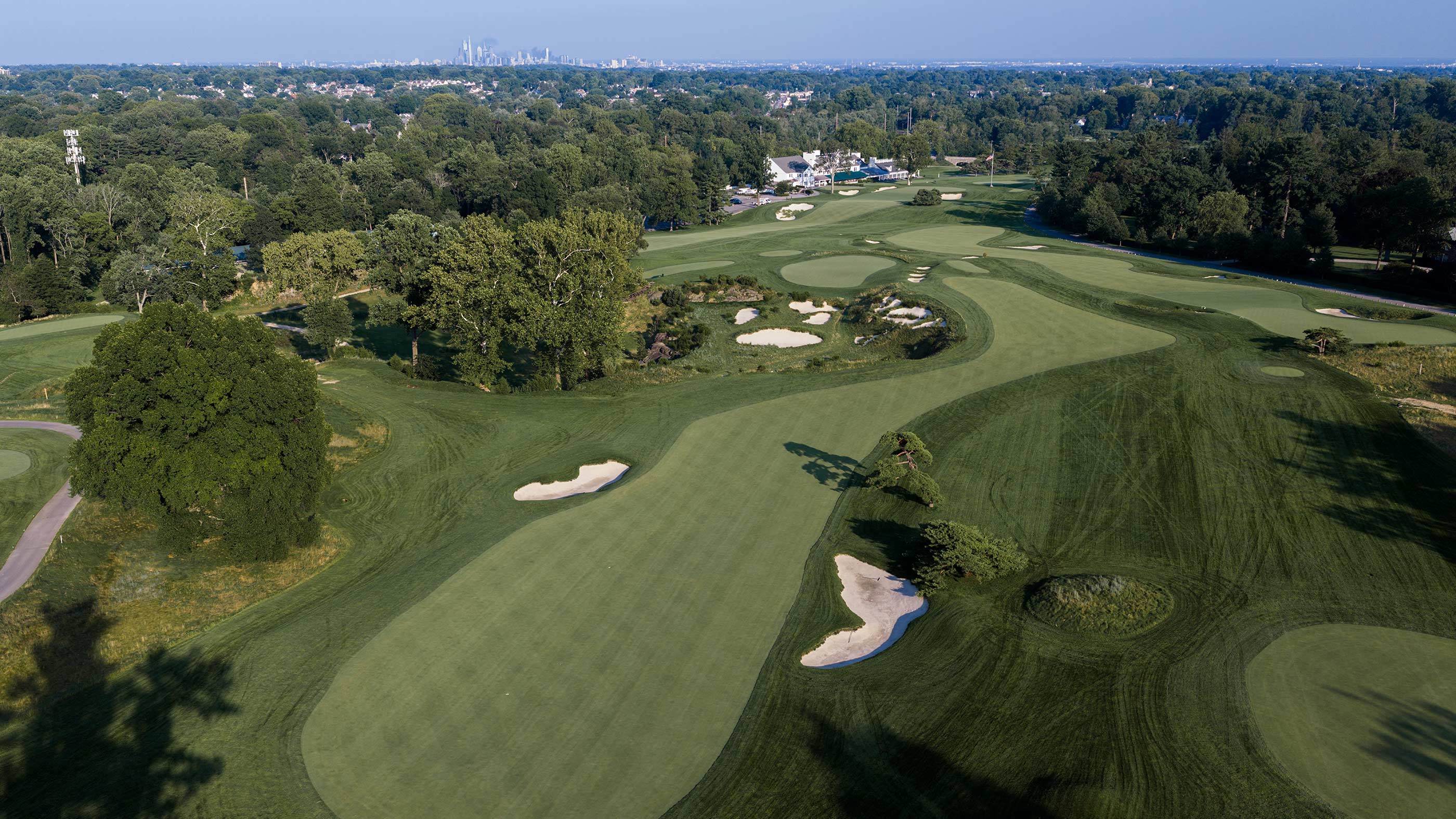
But all in all, the holes are still fascinating, and interesting decisions are going on.
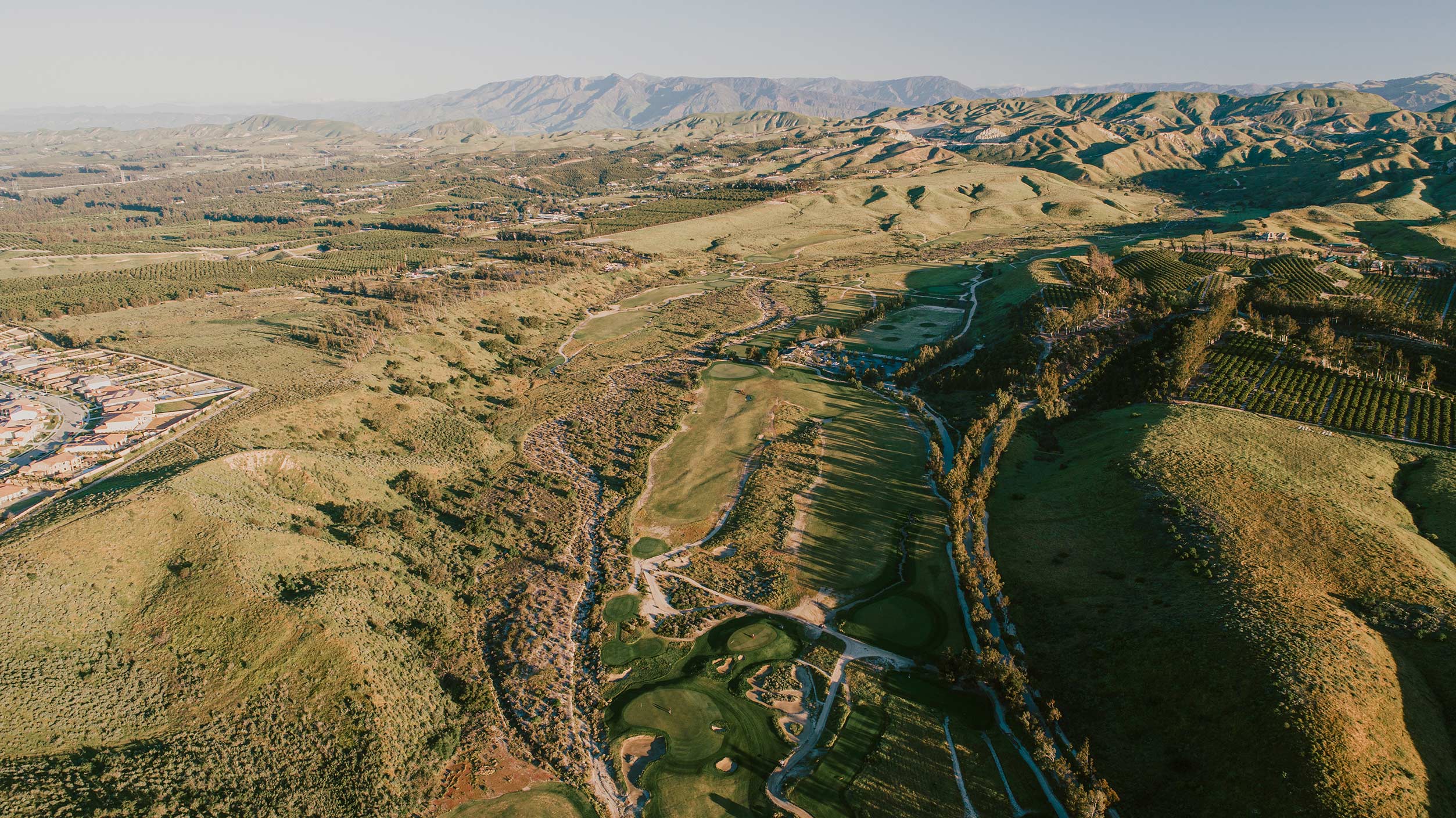
Garrett: There's one chapter of Grounds for Golf, from the first edition and retained in the second edition, that details the construction of Rustic Canyon Golf Course, in which you played a key role. Rustic Canyon is one of my favorite public courses. I still consider it one of the standard bearers of affordable golf in the U.S. I reread that chapter just yesterday, and I thought to myself, would this golf course get built today?
Geoff: I don't see any reason why it wouldn't. Is there any specific way you mean?
Garrett: I guess I'm thinking in terms of cost. The cost of construction was so low for you, partly because of the approach that you and Gil Hanse and Jim Wagner took. So a lot of credit is due to the cost savings of the architectural approach. But also some of that is due to things just being less expensive back then. You don't see many of those projects happening now.
After Wild Horse was built in Nebraska in the late 90s, and Bayside right on the heels of that, and Rustic Canyon a couple of years later, and then Diamond Springs in Michigan a couple of years after that, there was this hope that a lot of these kinds of golf courses would show up. That the minimalist movement in golf architecture would produce these great, affordable places to play. And somehow or another, that hasn't panned out.
Geoff: No, you're absolutely right. There's definitely been a focus on the “retail golfer” and that kind of [resort] experience. A lot of the land that would yield a Wild Horse or a Rustic is probably not close to a lot of people, or it's in a place that's considered environmentally questionable.
So what the National Links Trust is trying to do is probably the better focus. We do have so many places with such great bones from the [Works Progress Administration] era. I think that's your better chance of getting some refined and interesting architecture close to lots of people, and hopefully managed in a way that allows a lot of different people to play those places.
Garrett: What are a couple of older public courses where you would want to see a restoration or a cool renovation?
Geoff: It's such a long list. Just here in L.A. alone, Griffith Park and Rancho Park are both tired and run down and have such great potential. And East Potomac is just so cool. It's probably one of the most fascinating of all the designs from that era. [Editor’s Note: Let’s hope the plan to replace it with a cookie-cutter Fazio design falters on the starting line.] You could go to Long Island and start talking about Timber Point. There are so many courses in the New York area. I mean, you could go into any market.
The problem is, most of the time the discussion [of golf course renovation] revolves around the need for a new irrigation system. And the cost of that is so absurd. So what you get then is, “Well, if we're gonna spend that, then we should fully rebuild the greens and do this and that,” instead of saying, “What if we just enlarge the greens to what they were, rebuild the bunkers, freshen them up?” And unfortunately there aren't a lot of people that want to have that conversation and approach to a course. That's probably the thing I'm most concerned about.
Garrett: It's an interesting dynamic. There is this unmistakable rise in appreciation for golf architecture, an unmistakable increase in the number of people who want to learn about golf course design, coupled with these headwinds created by out-of-control equipment technology and, most significantly, the cost of construction. So we're in a situation where a lot of people want to discuss golf architecture and get nerdy about it, but our ability to do anything at the courses we play every day has been stymied. And that creates a little bit of frustration.
Geoff: Then you add in the obsession with 18 holes. Why does 18 holes have to be the thing? What about 12? I've made pitches before about 12 holes to people and you can just see that number 18 is just stuck in their heads. It just comes down to financing, I think, and that's a risky number to them.
Garrett: Right, we need to prove that courses with non-standard numbers of holes can make it, and there are a lot of people who don't believe that's possible.
Geoff: And I get it, but you can make it work if it's somewhat well maintained and shows some form of life architecturally. People will support a place like that.






Design Notebook: Pebble Beach Changes and Medinah No. 3 Insights

Design Notebook: Lahinch Debrief and Saudi Arabia's Golf Struggles
A Q&A with Keith Cutten
Design Notebook: Merion Reflections, Yale Conditions, and Muirfield Tensions
Design Notebook: An Open-Rota Renovation Vibe Shift

Design Notebook: Ron Prichard Discusses an Imperiled Muni and the State of the Restoration Game
Get full access to exclusive benefits from Fried Egg Golf
- Member-only content
- Community discussions forums
- Member-only experiences and early access to events