TPC Toronto North - One Thing To Watch On Each Hole


Golf on TV
This Tour is in my neck of the woods this week for the RBC Canadian Open, and as I’ve written about on here before I think TPC Toronto’s North house was a little poorly understood during its first time hosting last year. With that in mind, I wanted to highlight one interesting thing to watch for on each hole this week. In my (obviously biased) opinion, there’s a lot more to the North course than can be appreciated from TV Tower camera angles, so hopefully by sharing some on-the-ground observations I can help add some value to anyone watching the broadcast or following on ShotLink this week.
Before going hole-by-hole, I’ll re-state what I think is the course’s general premise: We know modern, technologically-optimized players are going to score well no matter what we do. Instead of trying to arbitrarily manipulate scoring with narrow targets, thick rough and more hazards, let’s create opportunities for the best players to earn their scoring opportunities with great long game play. If players continually decline risk off the tee and into the greens, their ability to keep pace with whoever is playing best that week will be compromised.
The other thing I’ll say is, last year’s event saw very soft conditions during the tournament due to a late/bad spring, and very humid/windless conditions, so some of the ShotLink plots may not illustrate these points as well as I think they can play. We’ve had a better spring this year, and the event is a week later in the calendar - hopefully that helps create a much more compelling test of pro golf!
1st Hole | Par 5 | 542 Yards | Tee Shot
This was one of the 30 easiest holes on the PGA Tour in relation to par (4.394) last year, so I don’t find it helpful to think of this as a par-5. It’s definitely a half-par hole, and I think it’s well set up to test a player’s mindset right out of the gate - are you willing to take on an aggressive line? If so, it’s a 4-or-3 hole. If not, it’s likely a 4-or-5.
There is a large fairway bunker on the outside corner (the horror!, but that’s not the trouble the hole is based on. Left of the fairway is a steep drop-off into a wooded area. The fairway cants hard right and turns slightly left, so hitting driver requires taking on the trouble in some way. More timid bail-outs to the right find the fairway bunker or rough and face a much worse angle to the green, which is protected on the right by a deep bunker and tilts right-to-left. A 4 is still in play, but it’s much tougher sledding than if you bite the bullet and rip one along the tree line down the left.
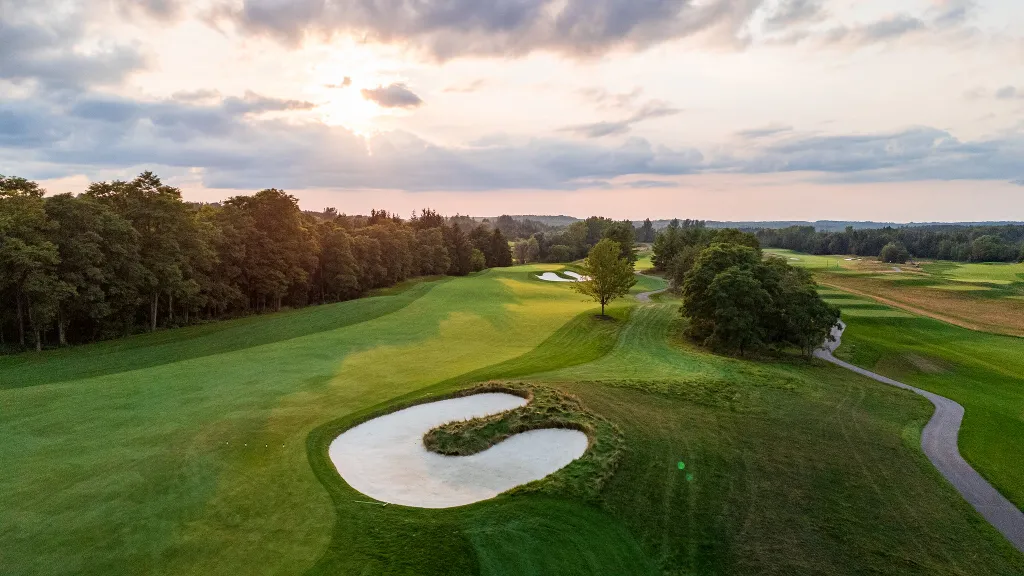
2nd Hole | Par 4 | 481 Yards | Approach Shot
A steep false front/runoff replaced a bunker short right of the green in our 2023 renovation, both to help distinguish the hole from 1 and 3 and to carry short right misses away and below the green. I think this pairs well with the pretty severe left-to-right and back-to-front tilt of the entire hole - approach shots are accentuated in that direction, and approaches long/left make for a difficult two-putt.. Again, safe play leads to a defensive next shot.
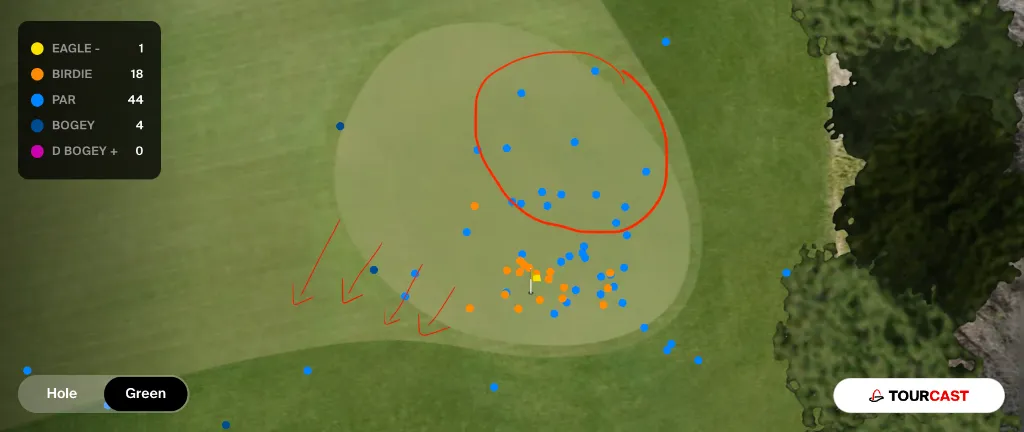
One thing I’ll add: Those shots that ended up stopping on the green short right there shouldn’t happen, but evidently the humidity of that week held a few balls up. Will be interested to see if the same happens this year with the firmer conditions this spring.
3rd Hole | Par 4 | 440 yards | Tee shot
Ian Andrew described this tee shot as a Cape-style tee shot, with a slight dogleg left going against the left-to-right camber of the fairway. The left side isn’t guarded by a hazard, but there is some tremendously thick rough and fescue there, while running through the right side brings a naturalized area into play. There’s also a small maple tree on the corner at 330 just to add a bit of complication to longer guys who don’t bite off enough the angle. There’s an opportunity cost to playing right and away from the aggressive line, though, as shots from the right side have to cover a very deep greenside bunker.
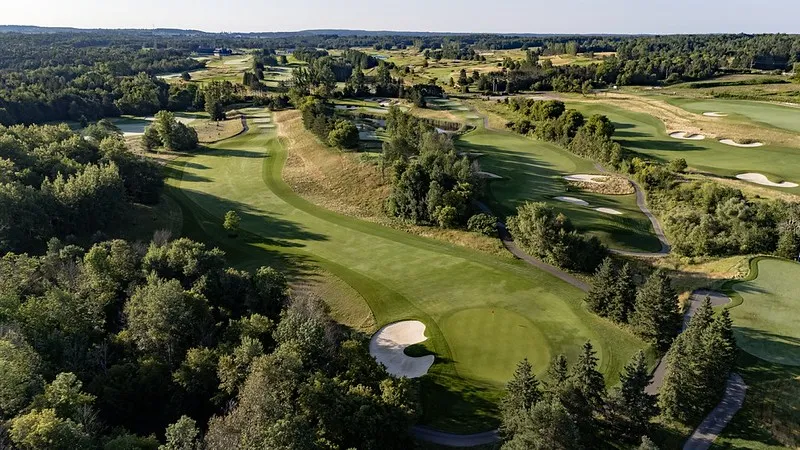
4th Hole | Par 3 | 158 yards | Tee shot
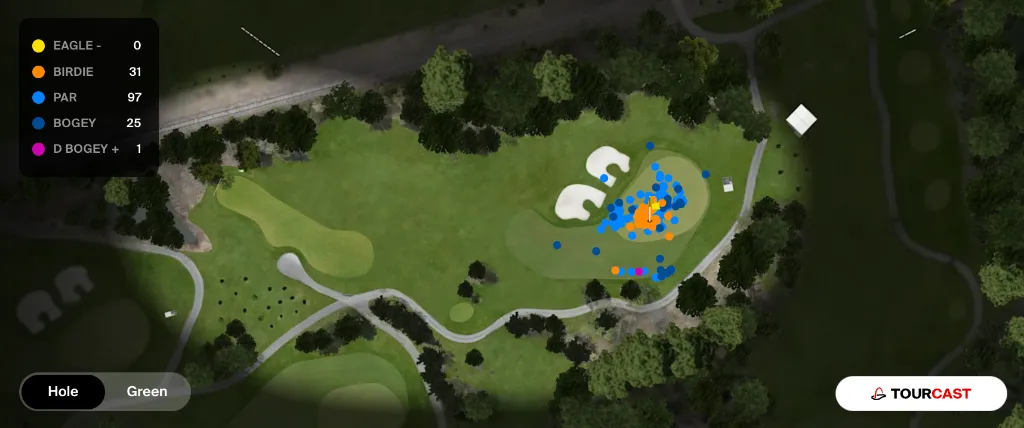
We recently posted an explainer video with Ian Andrew about this shot. I love the right pins on this green, which are one of the best examples of real ‘play boldly or lose pace’ shots on the course. The long and left misses lead to a really difficult two-putt (look at all the three putts!!), but right misses run down a huge runoff slope. Check out Max Homa’s tee shot from round two - missed just a little too far right and went all the way down the hill, leading to a bogey.
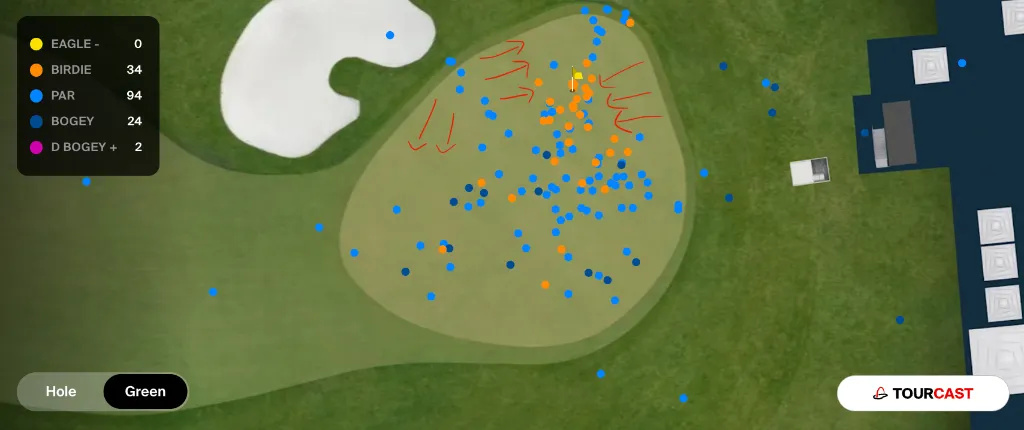
5th Hole | Par 4 | 497 yards | Green Contours
Whoever said the greens are flat on the North hasn’t seen this one. The left side in particular is fun, protected by a central spine over the greenside bunker. Approach shots are fun here because what happens when the ball gets on the ground matters more than usual here. Shots can be funnelled in from the back of the green, while bail outs to the right lead to some really difficult two-putts.
6th Hole | Par 4 | 350 yards | Tee shot
One of three two-shotters on the North I’d argue should be considered 3.5s. The go-for-it ratio was about 4:1 in the first round, and by the end of the tournament (with a slight tailwind) most of the field was going for it, which is when I’d argue it’s at its most interesting. Only a wide right miss really brings 5 into play, but shading safely left makes the next shots harder - the greenside bunkers are way below the level of the green. There’s a kicker slope over the last bunker on the right, so taking on the risk of finding it yields a nice reward for those who pull it off.
This is a bit of a deeper dive into the 3.5 dynamic and how the bunkering goads players into going for it, even when it goes against their instincts.

Fourth round (downwind) tee shot locations
7th Hole | Par 3 | 237 yards | Tee Shot
In my opinion, one of the strengths of the North course is putting different clubs in players’ hands, especially on the par-3s. The two long par-3s (7 and 11) play in opposite directions and the other two (4 and 14) are set up very short, so you can have some very different looks on the one-shotters. 7 is (obviously) not a Redan, but it has some Redan-like qualities in that a long shot can be funnelled in from the high right side to navigate the bunkering, which is especially relevant when played from the full back tee. On days with a south wind, you can look at both 6 and 7 as Par-3.5s.
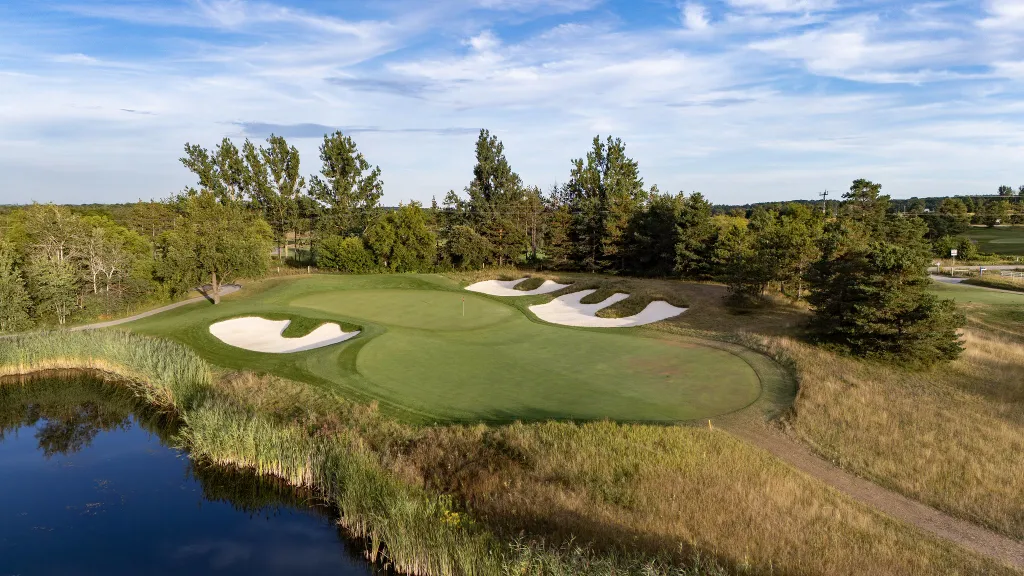
8th hole (tournament routing) | Par 4 | 440 yards
Honestly, I don’t have much here. It’s a nicely framed hole that looks good in photos. Hopefully my honesty earns some points here. I’d have a lot more to say if this wasn’t a driver-wedge hole, but that’s what 440 yards is on the modern PGA Tour.
If you are on site for the tournament, this is a great place to watch golf, with easy access to 2, 18 and 9 tees, and far enough from both entrances to the course that the crowds are a bit more sparse.
9th hole | Par 4 | 500 yards | Green contours
One of the best green sites on the course, perched a solid 40+ feet above the level of the fairway and guarded by an extremely deep bunker short left, with a staircase upper tier and very steep back-to-front tilt on the lower tier. The number of three-putts from guys who missed short to the back pins or long to the short pins last year was really striking to me.
There’s a fairway bunker on the inside corner of the slight dogleg that guards the best line into this green, with lots of room to bail left that leads to a really difficult shot over the greenside bunker. I can’t say much more, but based on some logistical changes and use of a different tee box, I expect this hole will be even better by next year’s tournament.

10th hole | Par 4 | 416 yards | Tee shot & false front
Easily the biggest surprise of last year’s tournament (and the Americas Tour Championship the year before) was how difficult this hole played. It’s kind of crazy that a ~400 yard par 4 with no bunkers could play over par for a week with soft conditions and very little wind, although Mathieu Pavon’s 12 in round two probably single-handedly made that happen.
The key here is the water hazard by the green, which will collect any approach shots that come up short right (even ones that are briefly on the green if conditions are firm). This matters more than it might because of the S-shaped fairway, which is very difficult to hit and hold because the tee is elevated, the wind is usually off the left, and the ground cambers to the right, which means players have to either shape one left-to-right or lay pretty far back to hold the fairway. If they don’t and the ball runs through into the right rough, they’ve got to take the water out of play and miss long, which brings a compound error into play - it’s super easy to run that next shot into the water. Here’s a little explainer video we did with Ian last Fall. With firmer conditions this year, this one could be very spicy.
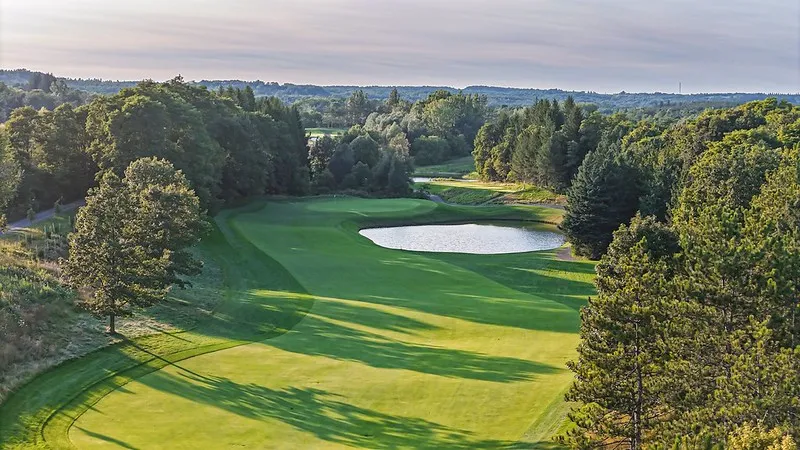
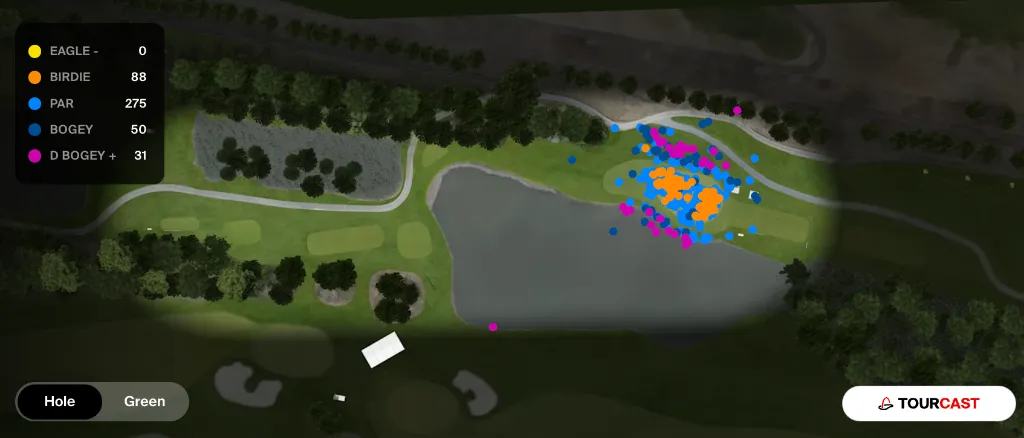
1th hole | Par 3 | 225 yards | Carnage
11 is just an ass kicker, especially if the back tee is used more than once like last year. The Ludvig quad from last year is a perfect example - play away from the water short right, and a left miss means you’re up on the fescue wall, and it might take a few swings to get out.
For the most part, the North course is pretty forgiving if you want to play safe, but I love how 10 and 11 are a real change of pace. On most holes, conservative play off the tee might cost you the chance to chase a birdie, but you don’t have to be a tactician to figure out where the bail-out spots are. On 11, there isn’t one. You just have to hit a great shot.
2th hole | Par 4 | 375 yards | Green contours
A drive-and-pitch par 4 with one of the most severe greens on the course. The greenside bunkering is more severe than any other green on the course, and that’s to make each of the three main tiers on the green a more precise target.
Because 12 is a drive-and-pitch hole situated between two hard holes - the back nine is generally bifurcated into ‘easy’ holes and ‘hard holes’ - I think guys face some extra pressure to try and convert a birdie chance here, and imprecise approaches (especially long to the back-left pin) are well-punished.
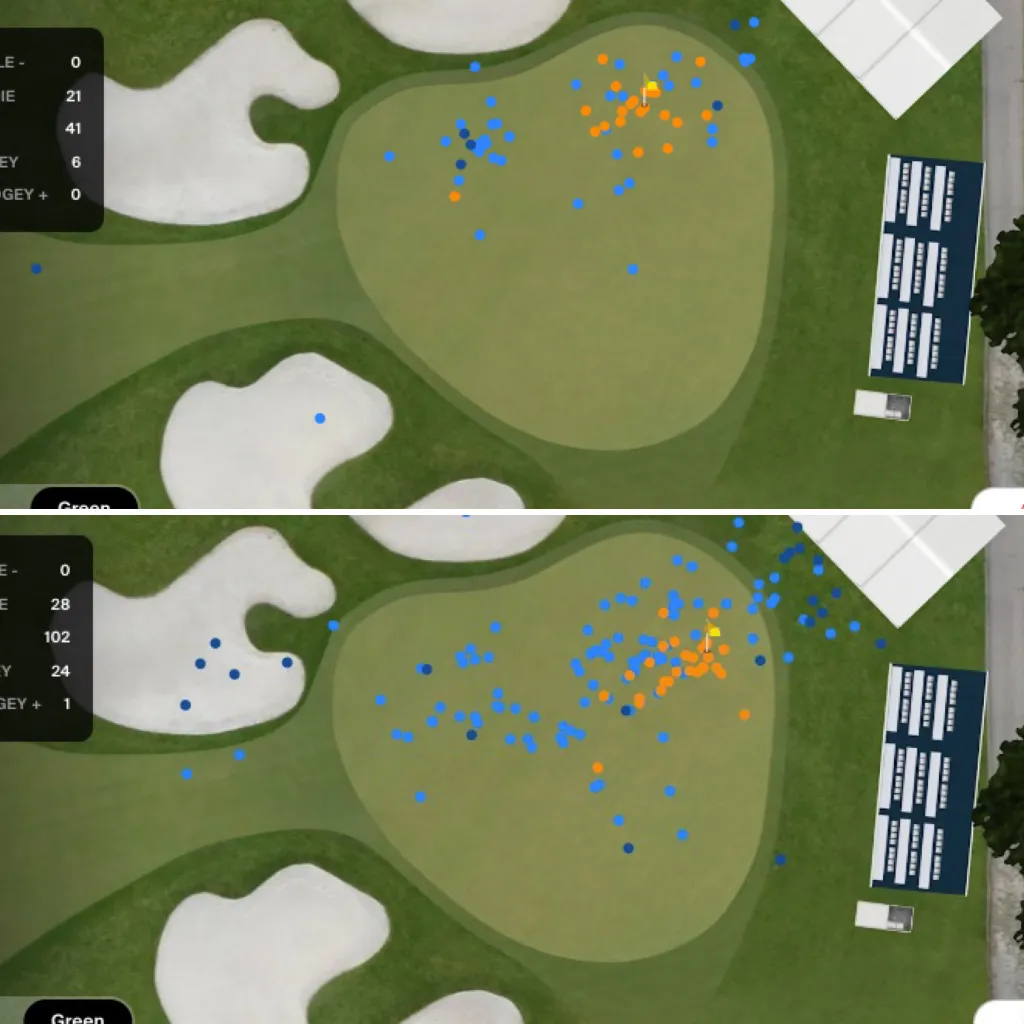
13th hole | Par 4 | 526 yards | Tee shot & greenside knoll
A half-par hole on the high side of par (and a converted par-5, shoutout to the TPC Summerlin model) the 13th is maybe the strongest example of the North’s ‘play boldly with the long game to unlock scoring chances’ premise. Yes, it’s a converted Par-5. Who cares? The players who chase an angle down the right - which can be done either in the air or by using the hole’s natural left-to-right camber - set up a chance to make a 3, but doing so brings in the risk of a 5 or 6.
That angle is all set up by the large knoll left of the green. I’d argue this is a fun, memorable feature that helps distinguish the hole on the back nine, and being a stout par-4 fits the back-and-forth cadence of the course since it’s preceded and followed by scoring holes at 12 and 14.
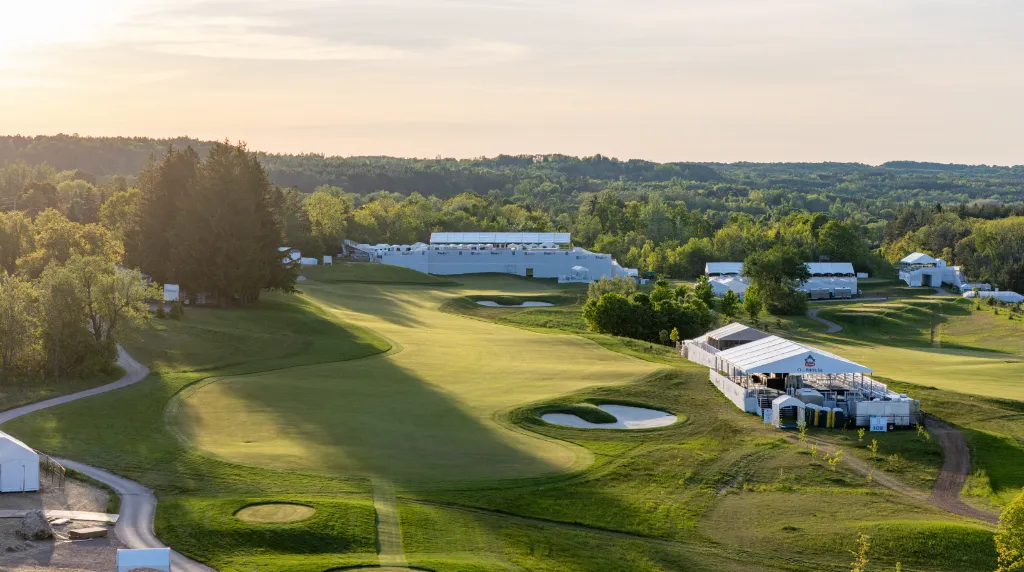
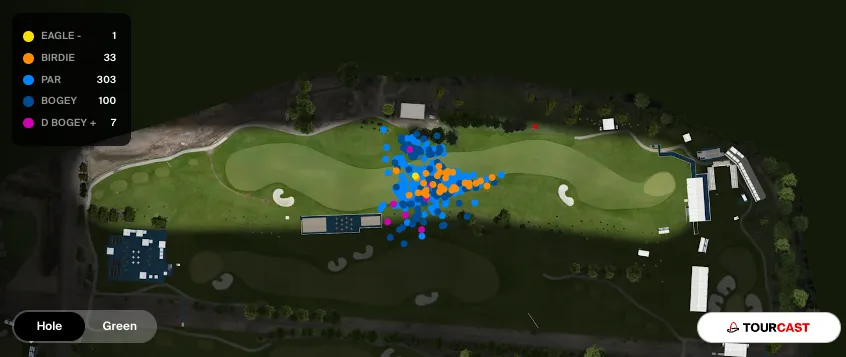
For those asking about TIO relief down the right side, I’m told it’s being marked as Internal OB this year
14th hole | Par 3 | 130 yards | Green contours
There’s a back tee at 190 yards, but the hole is played from about 130 for the RBC Canadian Open. Why? Building the stadium hole infrastructure that’s part of The Rink is obviously a part of it, but I think making this hole play short works for the back-and-forth of the back nine.
The green is tilted steeply back-to-front, with an internal punchbowl shape that can allows pins to be set (if desired) to funnel balls towards the hole. On a hole that’s meant for casual golf fans to hang out, enjoy the atmosphere and see some exciting shots, I think it works.
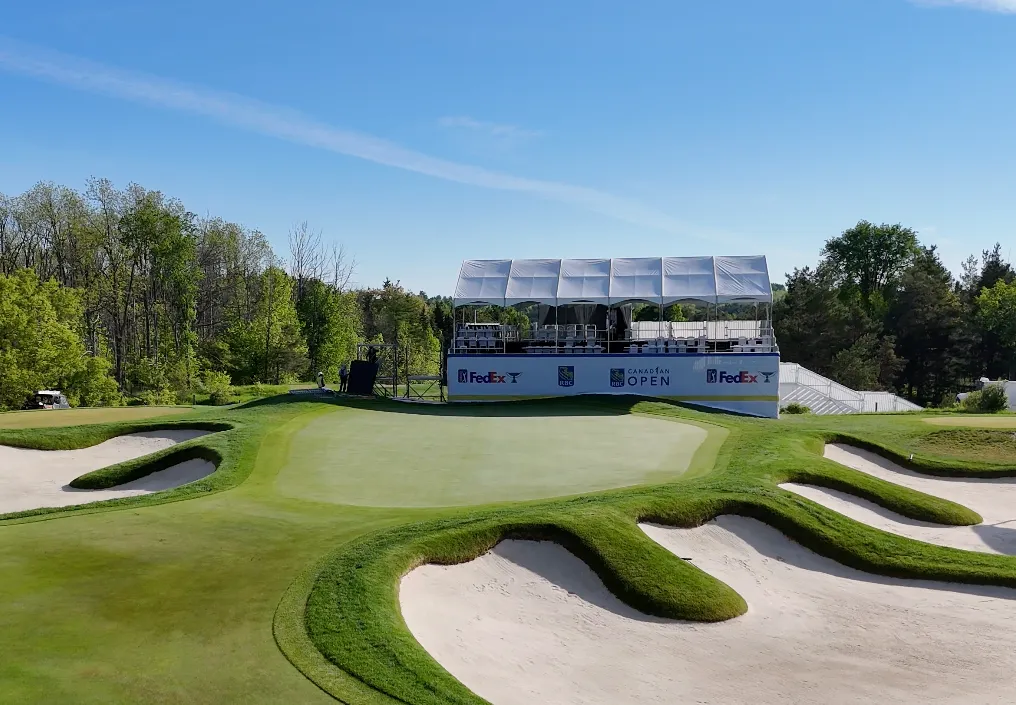
15th hole | Par 4 | 430 yards | Tee shot
Trees don’t play too much of a role on the North, but proponents of the ‘just put in more trees!’ school of thought will like this one. A very sharp dogleg right with a huge maple tree at the inside corner that requires players to pick a line: boldly take the inside corner and bring a lost ball into play, or play safely left (and not too far left, as the fairway cambers hard left and will take wild misses away into a thickly forested area).
There is also an option to use a tee across the railway tracks to set up a 315-yard direct line to the green, with the thick trees right and the fescue-faced bunkers and low collection area left to swallow up bail outs. It wasn’t used last year, but I wouldn’t rule it out this year, and I think it makes the hole more interesting and volatile.
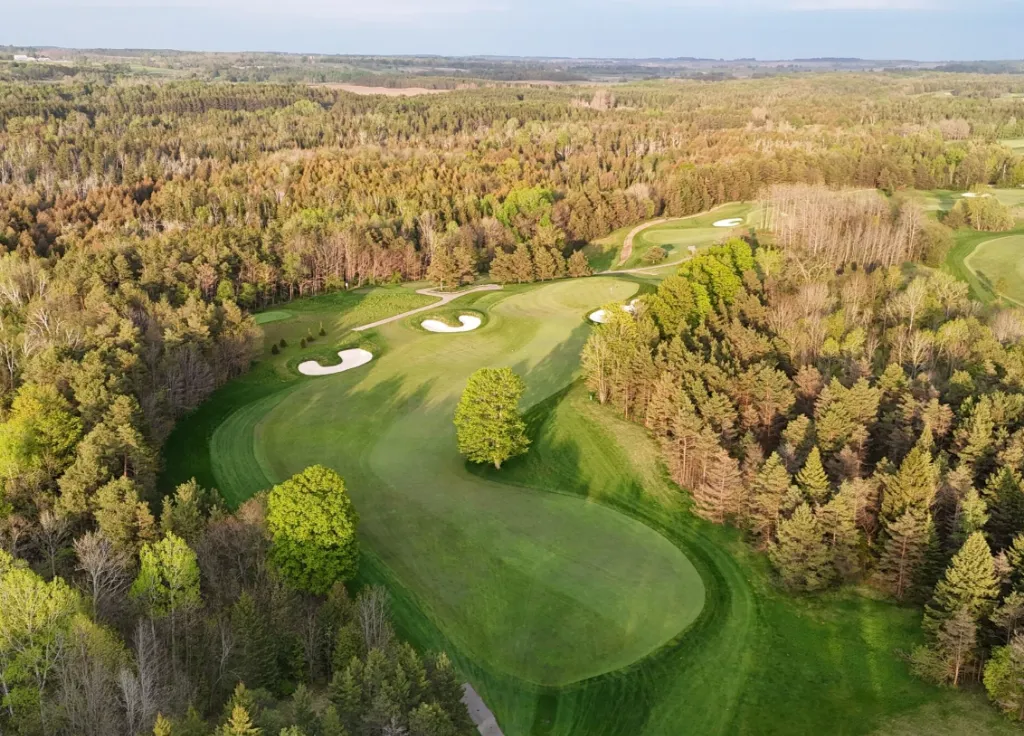
16th hole | Par 4 | 516 yards | Approach angle
My favourite of the six par-4s that can be set up at 500-yards plus, the 16th has a topsy-turvy green that tilts back-to-front on the right side and front-to-back on the left, which is protected by a deep greenside bunker. That means that tee shots (which are played blind over a ridge) down the right usually set up a good angle, especially to the left side pins. A good example was clear in round two, where ShotLink data shows that right was a much more penal miss, but playing down that side was required to set up a birdie opportunity.
I’m not under the illusion that chasing angles is a relevant consideration for modern pro golf, but in some situations it still matters and I think this one of them.
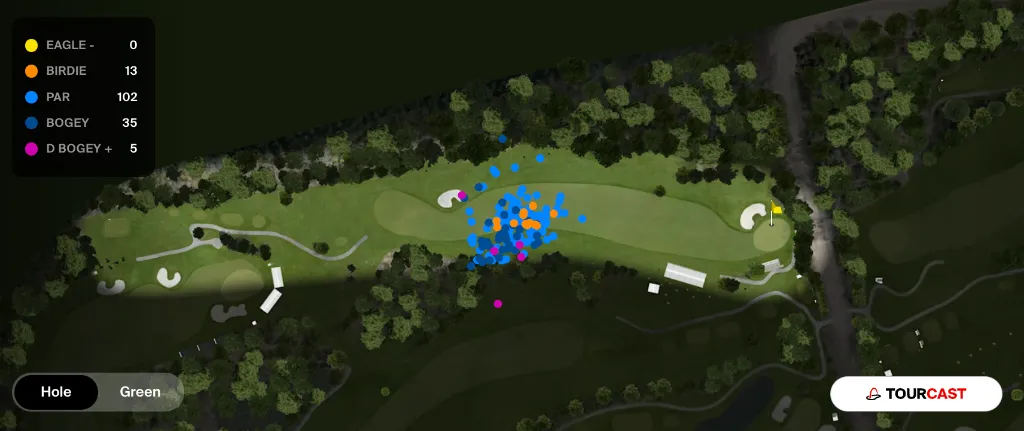
17th hole | Par 4 | 530 yards | Tee shot target selection
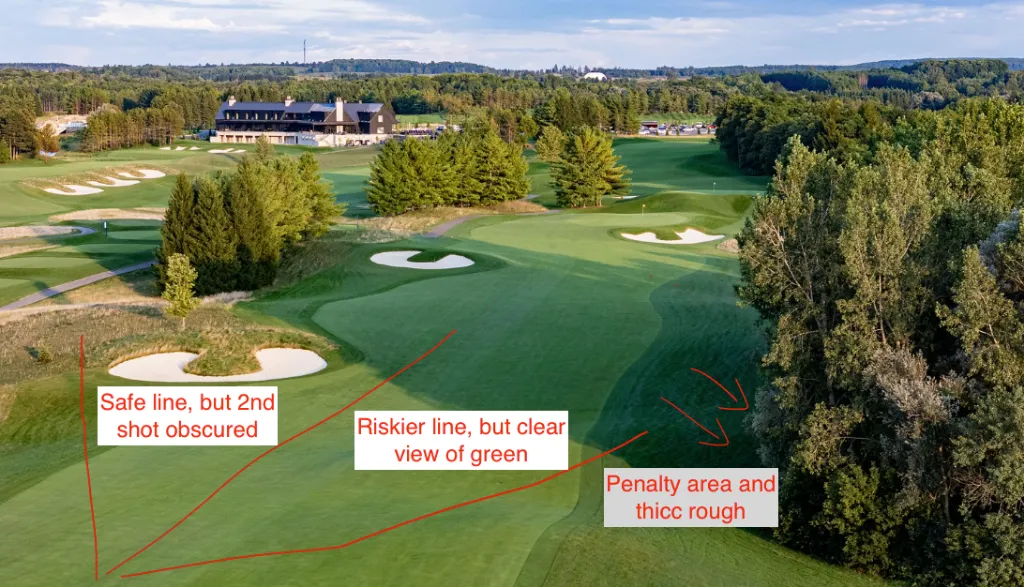
I particularly like this hole as a test of modern Tour players’ prevailing anti-risk course management strategy. The fairway is about 40 yards wide at max, and pinches to 28 yards at the bunker. However, there’s a penalty area and steep fall off down the right, so if players aim their ‘dispersion cone’ away from that big miss, they complicate things a bit.
The fairway bunker is set into a hill, so tee shots that stop short of it are totally blind, and actually finding the bunker or the thick fescue around it likely means a lay up. If they’re willing to aim down the middle and accept a right miss, it’s probably not that hard of a tee shot, but taking that on likely requires them to deviate from conventional strategy a bit.
Would this dynamic be better if the right side fell off as fairway into the hazard? Yes. Would it probably also be better if the left side of the green was protected by the bunker instead of the right, and the 2nd fairway bunker was on the right side instead of the left? Also yes. Maybe one day…
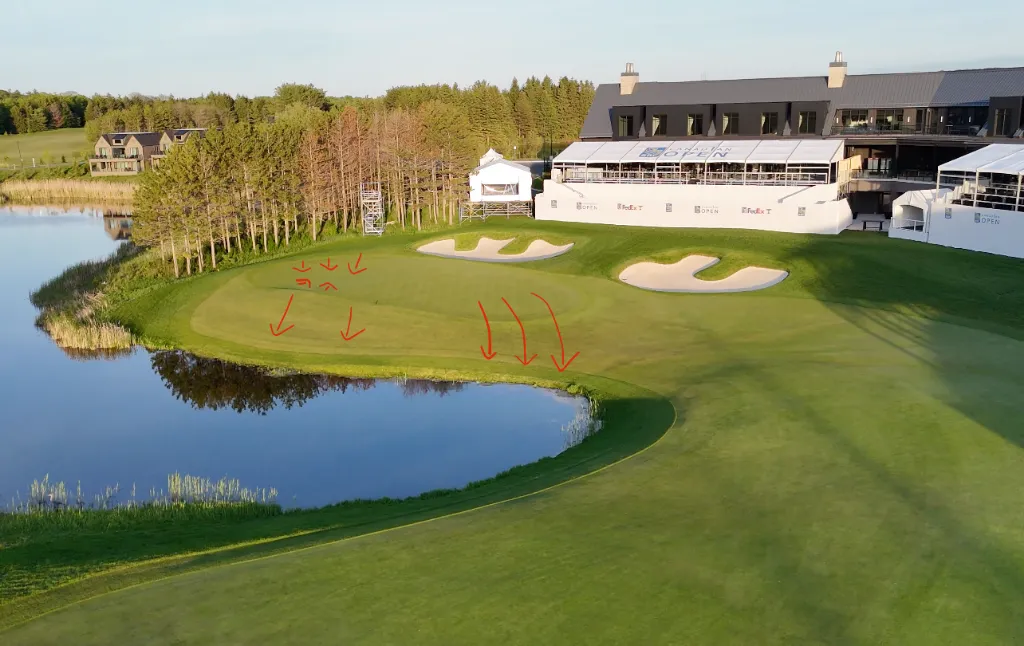
18th hole | Par 5 | 580 yards | Tee shot line and false front
If you’ve read to this point, hopefully you’ll see that I’m accepting - if not outright in agreement - with some of the criticism of the course. However, I will die on the hill that this is a great finishing hole. Come at me!
There are two risk-reward considerations here. On the tee shot, a carry of 310 safely covers the last fairway bunker on the right, which sets up a shorter second shot not only because of the angle, but a speed slot that will kick balls forward upwards of 15 yards. Taking that line is quite risky, because the fescue-faced bunkers are set into a massive ridge, so a right miss means not only a missed chance to go for the green in two, but possibly a very long third shot.
This is where the angle of the fairway matters; playing left means not only a very long second shot into the green, but the longer hitters will run through on that line. There are two small trees on the corner of the fairway, which don’t necessarily block them out but do require some creative shotmaking to go for it.

If you’re reading this, you’ve made it to the end and you’re a true sicko, so just know that I appreciate you very much! I’ll leave any interesting observations from the week here in the comments. If you have any questions, I’d love to hear from FEGC members so contact me here or in the app.
Engage in our content with thousands of other Fried Egg Golf Club Members
Engage in our content with thousands of other Fried Egg Golf Club Members

Yolk with Doak 47: New Projects & Listener Q&A




Leave a comment or start a discussion
Lorem ipsum dolor sit amet, consectetur adipiscing elit. Suspendisse varius enim in eros elementum tristique. Duis cursus, mi quis viverra ornare, eros dolor interdum nulla, ut commodo diam libero vitae erat. Aenean faucibus nibh et justo cursus id rutrum lorem imperdiet. Nunc ut sem vitae risus tristique posuere. uis cursus, mi quis viverra ornare, eros dolor interdum nulla, ut commodo diam libero vitae erat. Aenean faucibus nibh et justo cursus id rutrum lorem imperdiet. Nunc ut sem vitae risus tristique posuere.