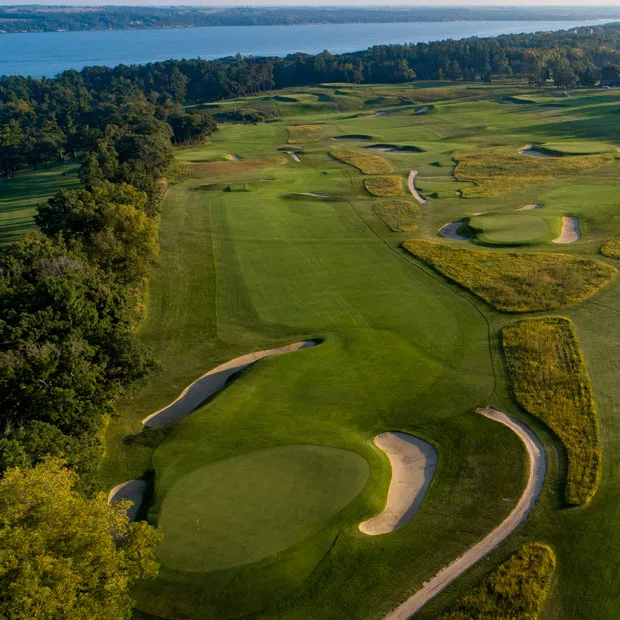
Coming to our event at Moraine CC on June 8? Jump in here and show yourself! Feel free to hit the "+ Follow" button at the top right of this post to get email updates when someone else posts in here.
You can also join the group WhatsApp Chat
Coming to our event at Moraine CC on June 8? Jump in here and show yourself! Feel free to hit the "+ Follow" button at the top right of this post to get email updates when someone else posts in here.
You can also join the group WhatsApp Chat
Coming to our event at Moraine CC on June 8? Jump in here and show yourself! Feel free to hit the "+ Follow" button at the top right of this post to get email updates when someone else posts in here.
You can also join the group WhatsApp Chat
I listened to Dr. Sasho Mackenzie's latest appearance on the No Laying Up podcast and came away flabbergasted at some of his positions on equipment rollback, driving distance and course setup. Copying some direct quites below here, and I'll make an earnest effort to try and understand them. Am I just too dumb to understand these positions, or is guy the Tiger Woods of making logical fallacies?
--
On the effect slowing down the ball would have on shot shaping: "I want to get back to shot shaping. You know, 'I like watching that player hit the one iron into the wind and, you know, curve it around the corner.' And so do I. I think that's really important. Slowing down the ball will actually, I believe, remove that, unfortunately."
If I understand it correctly, his belief seems to stem from the claim that players do not currently optimize their swing speeds to hit it as far as possible, but to optimize Strokes Gained at specific course setups. He uses the example of the 18th at TPC Sawgrass and claims there's apparently a certain, optimal place in the fairway to hit it based on weighing expected Strokes Gained and expected tee shot dispersion. For a longer player like Xander Schauffele that means hitting a hybrid to that spot, while for a shorter player like Brian Harman that means hitting a driver. Therefore, if the ball was slowed down, Xander would be hitting a driver to that spot and Brian Harman wouldn't even be able to reach it (and players of his type/skillset would become obsolete).
Isn't this exactly the point? By slowing down the ball you reduce the scale of the dispersion pattern, thus placing the specific challenges presented by the course, such as bunkers or hazards, in context of how far players can hit it.
On what the players' response to a slowed down ball would be: "So I think you will see if you slow the ball down, that little bit they're slowing it down, you will see a lot of players overnight instantly jack up their clubhead speed to start getting the ball to go back to that distance."
Again, the claim is that players aren't currently speed training/optimizing to hit it as far as possible, but to be optimized for the ways courses are set up on Tour. As a very obviously smart guy who works closely with Tour players, I have to think he's got good reason to believe this, but I find that very hard to believe. Is he saying that, if he wanted to, Matt Fitzpatrick could overnight possess a 200 mph ball speed, and that the reason he doesn't is because that wouldn't fit Tour courses? Isn't the reason that 200 mph ball speed wouldn't fit these courses precisely because with increasing speed comes increasing variance in dispersion? And isn't that tradeoff between maximizing distance and accuracy inherent to golf course strategy?
On slowing the effect of slowing the ball down would have on player types in elite competition: "And what we don't want to do is slow the ball down to a point where now we're just self-selecting for guys who can absolutely rip the cover off it."
Agreed! His position seems to be that if the ball was slowed down and courses played like the TPC Sawgrass example above, players who can then drive it into the area that optimizes for Strokes Gained would have a significant advantage, which, I also agree with.
But again, that position seems to be supported by a belief that there would be no loss in accuracy for players who optimize their swing speed hit it there. In other words, with a slowed down ball Xander Schauffele could simply hit his driver not only the same distance he currently hits his hybrid, but with the same level of dispersion. If this is true and players can simply add more speed without a loss in accuracy, why wouldn't more players just do that now? And if the argument for that is because current PGA Tour courses are set up to defend against that strategy... I find that hard to believe.
He cites "dozens of Michael Brennans" being out there who could take advantage of such a change, which, having watched Michael compete alongside other elite players at the course where I work each of the last two years, is very funny to me. That guy is a rare breed.
One of his supporting pieces of evidence seems to be well-known idea that Tony Finau can swing the driver at 135 mph when he really wants to, but instead chooses to swing at 120 mph while playing on Tour. Are we supposed to believe that the reason he does that is because if he swung at 135 mph, he'd simply be hitting it in places that aren't optimal on Tour courses? Isn't the actual reason he doesn't swing at 135 mph on Tour because doing so would make it incredibly difficult to keep the ball on the planet, not to mention that it would come at a steep cost to his physical health and longevity?
Again, this position seems to be anchored by the belief that players gaining speed is not the product of hard-earned training and skill development, but simply adjustments in optimization targets. I find the idea that players simply could learn to swing it faster without any adverse impacts on their ability to hit it straight, not to mention their skills and health, really tough to believe.
On course setup: "I would like more exploration into course setups in ways that don't impact the way the hole is supposed to be played."
He seems to be in favour of carefully selected trees or other obstacles that don't affect the 'normal' way a hole is played, but protect them from being played in unconventional ways. He cites Bryson's famous drive over the lake on No. 6 at Bay Hill, suggesting that perhaps it would be better if there were a tree that prevented him from being able to hit it on that line, but did not affect the player hitting their drive on a more conventional line.
Agronomic and aesthetic concerns aside, dictating that a hole must be played a certain way using arbitrary obstacles and hazards? Yuck! He also cites vague examples of Open Championship courses, which present increasingly dangerous rough, bunkers or other hazards the further up the hole you hit it. It's at this point of the interview I think it is clear that Dr. Mackenzie (and others like him) views the sport as a technical challenge, where the question posed to players is about how well they get reliably get from A to B, and not at all about the route they choose to get there. Strategy is a linear, 'how far can I attempt to hit it until the returns begin to diminish' question, not one of position and tact and ingenuity.
I would argue that the reason we want to see more emphasis placed on shotmaking and strategy, such as the 'one iron into the wind' example he mentions above, is NOT because we want to see players who hit that shot because it's the optimal one to gain strokes versus their competitors, but because being able to hit that shot allows a player to access targets that otherwise can't be reached. And, that the farther players hit the ball and the shorter their approaches are into the green, the more those skills are diminished. I am obviously not alone in this belief, and it's quite easy to find this position among the USGA's Distance Insights report. Which brings me to...
On the role of the USGA and R&A in implementing an equipment rollback: "My biggest problem with the USGA and R&A is that they don't really have any skin in the game, but they impose these rules."
I had to take out my earbuds and put away my phone upon hearing this and don't think I can bear to write a response.
--
Am I willfully misunderstanding Dr. Mackenzie because he's going against the grain of my pro-rollback priors? Is there something I'm really just not getting here? Or is this just the position of someone who's a master of one aspect of the game and is blind to the others?
I listened to Dr. Sasho Mackenzie's latest appearance on the No Laying Up podcast and came away flabbergasted at some of his positions on equipment rollback, driving distance and course setup. Copying some direct quites below here, and I'll make an earnest effort to try and understand them. Am I just too dumb to understand these positions, or is guy the Tiger Woods of making logical fallacies?
--
On the effect slowing down the ball would have on shot shaping: "I want to get back to shot shaping. You know, 'I like watching that player hit the one iron into the wind and, you know, curve it around the corner.' And so do I. I think that's really important. Slowing down the ball will actually, I believe, remove that, unfortunately."
If I understand it correctly, his belief seems to stem from the claim that players do not currently optimize their swing speeds to hit it as far as possible, but to optimize Strokes Gained at specific course setups. He uses the example of the 18th at TPC Sawgrass and claims there's apparently a certain, optimal place in the fairway to hit it based on weighing expected Strokes Gained and expected tee shot dispersion. For a longer player like Xander Schauffele that means hitting a hybrid to that spot, while for a shorter player like Brian Harman that means hitting a driver. Therefore, if the ball was slowed down, Xander would be hitting a driver to that spot and Brian Harman wouldn't even be able to reach it (and players of his type/skillset would become obsolete).
Isn't this exactly the point? By slowing down the ball you reduce the scale of the dispersion pattern, thus placing the specific challenges presented by the course, such as bunkers or hazards, in context of how far players can hit it.
On what the players' response to a slowed down ball would be: "So I think you will see if you slow the ball down, that little bit they're slowing it down, you will see a lot of players overnight instantly jack up their clubhead speed to start getting the ball to go back to that distance."
Again, the claim is that players aren't currently speed training/optimizing to hit it as far as possible, but to be optimized for the ways courses are set up on Tour. As a very obviously smart guy who works closely with Tour players, I have to think he's got good reason to believe this, but I find that very hard to believe. Is he saying that, if he wanted to, Matt Fitzpatrick could overnight possess a 200 mph ball speed, and that the reason he doesn't is because that wouldn't fit Tour courses? Isn't the reason that 200 mph ball speed wouldn't fit these courses precisely because with increasing speed comes increasing variance in dispersion? And isn't that tradeoff between maximizing distance and accuracy inherent to golf course strategy?
On slowing the effect of slowing the ball down would have on player types in elite competition: "And what we don't want to do is slow the ball down to a point where now we're just self-selecting for guys who can absolutely rip the cover off it."
Agreed! His position seems to be that if the ball was slowed down and courses played like the TPC Sawgrass example above, players who can then drive it into the area that optimizes for Strokes Gained would have a significant advantage, which, I also agree with.
But again, that position seems to be supported by a belief that there would be no loss in accuracy for players who optimize their swing speed hit it there. In other words, with a slowed down ball Xander Schauffele could simply hit his driver not only the same distance he currently hits his hybrid, but with the same level of dispersion. If this is true and players can simply add more speed without a loss in accuracy, why wouldn't more players just do that now? And if the argument for that is because current PGA Tour courses are set up to defend against that strategy... I find that hard to believe.
He cites "dozens of Michael Brennans" being out there who could take advantage of such a change, which, having watched Michael compete alongside other elite players at the course where I work each of the last two years, is very funny to me. That guy is a rare breed.
One of his supporting pieces of evidence seems to be well-known idea that Tony Finau can swing the driver at 135 mph when he really wants to, but instead chooses to swing at 120 mph while playing on Tour. Are we supposed to believe that the reason he does that is because if he swung at 135 mph, he'd simply be hitting it in places that aren't optimal on Tour courses? Isn't the actual reason he doesn't swing at 135 mph on Tour because doing so would make it incredibly difficult to keep the ball on the planet, not to mention that it would come at a steep cost to his physical health and longevity?
Again, this position seems to be anchored by the belief that players gaining speed is not the product of hard-earned training and skill development, but simply adjustments in optimization targets. I find the idea that players simply could learn to swing it faster without any adverse impacts on their ability to hit it straight, not to mention their skills and health, really tough to believe.
On course setup: "I would like more exploration into course setups in ways that don't impact the way the hole is supposed to be played."
He seems to be in favour of carefully selected trees or other obstacles that don't affect the 'normal' way a hole is played, but protect them from being played in unconventional ways. He cites Bryson's famous drive over the lake on No. 6 at Bay Hill, suggesting that perhaps it would be better if there were a tree that prevented him from being able to hit it on that line, but did not affect the player hitting their drive on a more conventional line.
Agronomic and aesthetic concerns aside, dictating that a hole must be played a certain way using arbitrary obstacles and hazards? Yuck! He also cites vague examples of Open Championship courses, which present increasingly dangerous rough, bunkers or other hazards the further up the hole you hit it. It's at this point of the interview I think it is clear that Dr. Mackenzie (and others like him) views the sport as a technical challenge, where the question posed to players is about how well they get reliably get from A to B, and not at all about the route they choose to get there. Strategy is a linear, 'how far can I attempt to hit it until the returns begin to diminish' question, not one of position and tact and ingenuity.
I would argue that the reason we want to see more emphasis placed on shotmaking and strategy, such as the 'one iron into the wind' example he mentions above, is NOT because we want to see players who hit that shot because it's the optimal one to gain strokes versus their competitors, but because being able to hit that shot allows a player to access targets that otherwise can't be reached. And, that the farther players hit the ball and the shorter their approaches are into the green, the more those skills are diminished. I am obviously not alone in this belief, and it's quite easy to find this position among the USGA's Distance Insights report. Which brings me to...
On the role of the USGA and R&A in implementing an equipment rollback: "My biggest problem with the USGA and R&A is that they don't really have any skin in the game, but they impose these rules."
I had to take out my earbuds and put away my phone upon hearing this and don't think I can bear to write a response.
--
Am I willfully misunderstanding Dr. Mackenzie because he's going against the grain of my pro-rollback priors? Is there something I'm really just not getting here? Or is this just the position of someone who's a master of one aspect of the game and is blind to the others?
This is a neat little story about Keweenaw Mountain Lodge taking its golf course to walking and hickory clubs only!
https://keweenawmountainlodge.com/2025/10/21/a-hickory-only-and-walking-only-golf-course/
I have looked at this course a ton on google maps through the years because of its locale way up in the UP of Michigan, one of my favorite escapes in the country.
It makes me wonder what other courses I would love to see adopt this. One that jumps out is Northwood GC in California.
What are some others?
This is a neat little story about Keweenaw Mountain Lodge taking its golf course to walking and hickory clubs only!
https://keweenawmountainlodge.com/2025/10/21/a-hickory-only-and-walking-only-golf-course/
I have looked at this course a ton on google maps through the years because of its locale way up in the UP of Michigan, one of my favorite escapes in the country.
It makes me wonder what other courses I would love to see adopt this. One that jumps out is Northwood GC in California.
What are some others?
Hello FEGC! I'm curious is if any FEGC members are course raters through their local golf association. For example, I volunteered to be a GAM Course Rater through the golf association of Michigan. I'm wondering if anyone is currently doing it or has done it in the past and would be able to provide some insight into the training and what a day looks like when rating a course. I'm eager to hear what the experience was like for others, especially in states out side of Michigan.
I have seen some banter online about this. Anyone know what is going on?
Can Blake become a semi-regular pod guest? That was a refreshing amount of honest opinions!
Pending confirmation from everyone's favorite Twitter account, we are back! Is this a shot across the bow to announce the day before Brooksie's return? I miss villains with excellent short games, and I, for one, welcome them all back with open arms.
https://www.nytimes.com/athletic/7004122/2026/01/28/golf-liv-pga-patrick-reed-contract-suspension/
Pending confirmation from everyone's favorite Twitter account, we are back! Is this a shot across the bow to announce the day before Brooksie's return? I miss villains with excellent short games, and I, for one, welcome them all back with open arms.
https://www.nytimes.com/athletic/7004122/2026/01/28/golf-liv-pga-patrick-reed-contract-suspension/
A FEGC Member Shop refresh just landed! Our friends at Handcrafted have upped their game with new sherpa covers, plus we now have American Needle hats with our FEGC logos. Lastly, a few of our bestsellers from Tasc for performance, lightweight layers.
https://proshop.thefriedegg.com/pages/fried-egg-golf-club-pro-shop

Don't forget to log into your account in the Pro Shop to access FEGC items. As always, code FEGCMEMBER at checkout will get you 10% off their purchase.
Questions, comments, suggestions? Reply away!
A FEGC Member Shop refresh just landed! Our friends at Handcrafted have upped their game with new sherpa covers, plus we now have American Needle hats with our FEGC logos. Lastly, a few of our bestsellers from Tasc for performance, lightweight layers.
https://proshop.thefriedegg.com/pages/fried-egg-golf-club-pro-shop

Don't forget to log into your account in the Pro Shop to access FEGC items. As always, code FEGCMEMBER at checkout will get you 10% off their purchase.
Questions, comments, suggestions? Reply away!
I've never been to a PGA tournament. Luckily, my sons (both DIII college golfers) were able to attend the Amex on Saturday. Like me, they had never been to a PGA tournament and I was eager to get their perspective.
Here are 5 of their biggest takeaways:
The AmEx does not get a lot of praise. “Dome Golf” “Fraudelent Field” “Birdie Fest” but for two boys from Alaska, it was an experience they will cherish for the rest of their lives

I've never been to a PGA tournament. Luckily, my sons (both DIII college golfers) were able to attend the Amex on Saturday. Like me, they had never been to a PGA tournament and I was eager to get their perspective.
Here are 5 of their biggest takeaways:
The AmEx does not get a lot of praise. “Dome Golf” “Fraudelent Field” “Birdie Fest” but for two boys from Alaska, it was an experience they will cherish for the rest of their lives

I’m going on a trip to Panama City Beach with my wife’s family this fall. I’ve never been to a Florida city not named Orlando and would like to tee it up in PCB, Destin or Pensacola while we’re there.
Any recommendations for courses of moderate architectural interest? Doesn’t need to be anything earth-shattering, but I’d love to go somewhere that isn’t in the middle of a real estate development with holes built mindlessly around lakes.
I’m going on a trip to Panama City Beach with my wife’s family this fall. I’ve never been to a Florida city not named Orlando and would like to tee it up in PCB, Destin or Pensacola while we’re there.
Any recommendations for courses of moderate architectural interest? Doesn’t need to be anything earth-shattering, but I’d love to go somewhere that isn’t in the middle of a real estate development with holes built mindlessly around lakes.
Hi all -
As part of our next Fried Egg pod, we're planning to do a mailbag segment similar to what we did a few times at the end of 2025. We'll keep this as a running thread for questions for the year, with the first installment coming on Wednesday, January 28th.
Have a question for Andy? Ask away!
Thanks, as always, for your participation.
Hi all -
As part of our next Fried Egg pod, we're planning to do a mailbag segment similar to what we did a few times at the end of 2025. We'll keep this as a running thread for questions for the year, with the first installment coming on Wednesday, January 28th.
Have a question for Andy? Ask away!
Thanks, as always, for your participation.
This looks interesting from an architect that's been on the pod with Andy way back in 2017
I guess they did Winter Park in Florida that everyone raves about...and worked with C&C and Doak
https://www.oldcharliegolfclub.com/
Good way to get in at a course near 30A that doesn't cost 6 figures?
What are people hearing?
This looks interesting from an architect that's been on the pod with Andy way back in 2017
I guess they did Winter Park in Florida that everyone raves about...and worked with C&C and Doak
https://www.oldcharliegolfclub.com/
Good way to get in at a course near 30A that doesn't cost 6 figures?
What are people hearing?
In his 2025 "Year-and-Review" communique, Jay Blasi revealed that he will be designing a new course called The Sand Mine in Whitehall, Wisconsin.
"This has been a dream project of mine since 2020, when I first visited the site," Blasi wrote. "In 2020, the previous property owner, a mining company, sold the land to my friend Derrick Bushman and his brother Mitch. Together, we will work to transform this abandoned frack sand mine into one of the top golf courses in Wisconsin and beyond. We have a great team ready to go. Stay tuned!"
Whitehall is just under two hours west of Sand Valley Golf Resort and actually closer to Minneapolis than it is to any major city in Wisconsin. So: pretty far out in the boonies. But that's the custom these days.
Given the existence of Pinehurst Sandmines, I might suggest a name change, but I'm excited to see The Sand Mine (working title) come together. Blasi has been on a roll lately, with terrific public-course renos at Poppy Ridge and Golden Gate Park in California coming online in the past couple of years.
In his 2025 "Year-and-Review" communique, Jay Blasi revealed that he will be designing a new course called The Sand Mine in Whitehall, Wisconsin.
"This has been a dream project of mine since 2020, when I first visited the site," Blasi wrote. "In 2020, the previous property owner, a mining company, sold the land to my friend Derrick Bushman and his brother Mitch. Together, we will work to transform this abandoned frack sand mine into one of the top golf courses in Wisconsin and beyond. We have a great team ready to go. Stay tuned!"
Whitehall is just under two hours west of Sand Valley Golf Resort and actually closer to Minneapolis than it is to any major city in Wisconsin. So: pretty far out in the boonies. But that's the custom these days.
Given the existence of Pinehurst Sandmines, I might suggest a name change, but I'm excited to see The Sand Mine (working title) come together. Blasi has been on a roll lately, with terrific public-course renos at Poppy Ridge and Golden Gate Park in California coming online in the past couple of years.
Harris Kalinka, a company specializing in realistic renderings of yet-to-be-built golf courses, posted a heck of a tease today. "We can't reveal too many details yet, as this project remains confidential," Harris Kalinka said, "but we can share that it's set on a small island, is among the most picturesque sites we've worked on, and will feature a golf course designed by Clyde Johnson of @CunninGolf."
Clyde Johnson is a St. Andrews local, a Tom Doak associate, a frequent podcast guest in the Fried Egg Golf universe, and a great up-and-coming talent in golf architecture. This projects appears to be one of the most striking solo-design debuts in recent memory.
Any geography geniuses out there have an idea of where it might be?
Harris Kalinka, a company specializing in realistic renderings of yet-to-be-built golf courses, posted a heck of a tease today. "We can't reveal too many details yet, as this project remains confidential," Harris Kalinka said, "but we can share that it's set on a small island, is among the most picturesque sites we've worked on, and will feature a golf course designed by Clyde Johnson of @CunninGolf."
Clyde Johnson is a St. Andrews local, a Tom Doak associate, a frequent podcast guest in the Fried Egg Golf universe, and a great up-and-coming talent in golf architecture. This projects appears to be one of the most striking solo-design debuts in recent memory.
Any geography geniuses out there have an idea of where it might be?
The National Links Trust, currently in a struggle with the Trump administration to maintain control of three municipal golf courses in Washington, D.C., announced earlier this week that it will partner with the Friends of the Port Townsend Golf Park in Port Townsend, Washington. NLT co-founder Mike McCartin will develop a master plan for improvements to the 122-year-old course as well as design a new community putting course inspired by the Himalayas at St. Andrews.
"This partnership is an exciting step in expanding our work nationally and advancing our mission to protect and promote community-focused municipal golf across the country," the NLT said in a statement. Consider that a hint about what the NLT might do next if the Trump administration manages to chase the group out of D.C.
In any case, this is great news for Port Townsend, a beautiful and historic little town at the mouth of Puget Sound.
Elsewhere in the FEGC community forum, member Wesley Domeck asks which other municipalities would make good partners for the NLT. May I suggest Portland, Oregon?
The National Links Trust, currently in a struggle with the Trump administration to maintain control of three municipal golf courses in Washington, D.C., announced earlier this week that it will partner with the Friends of the Port Townsend Golf Park in Port Townsend, Washington. NLT co-founder Mike McCartin will develop a master plan for improvements to the 122-year-old course as well as design a new community putting course inspired by the Himalayas at St. Andrews.
"This partnership is an exciting step in expanding our work nationally and advancing our mission to protect and promote community-focused municipal golf across the country," the NLT said in a statement. Consider that a hint about what the NLT might do next if the Trump administration manages to chase the group out of D.C.
In any case, this is great news for Port Townsend, a beautiful and historic little town at the mouth of Puget Sound.
Elsewhere in the FEGC community forum, member Wesley Domeck asks which other municipalities would make good partners for the NLT. May I suggest Portland, Oregon?