

Design Notebook: Local Golfers Pick Up the Slack at East Potomac
The local community is keeping the course alive
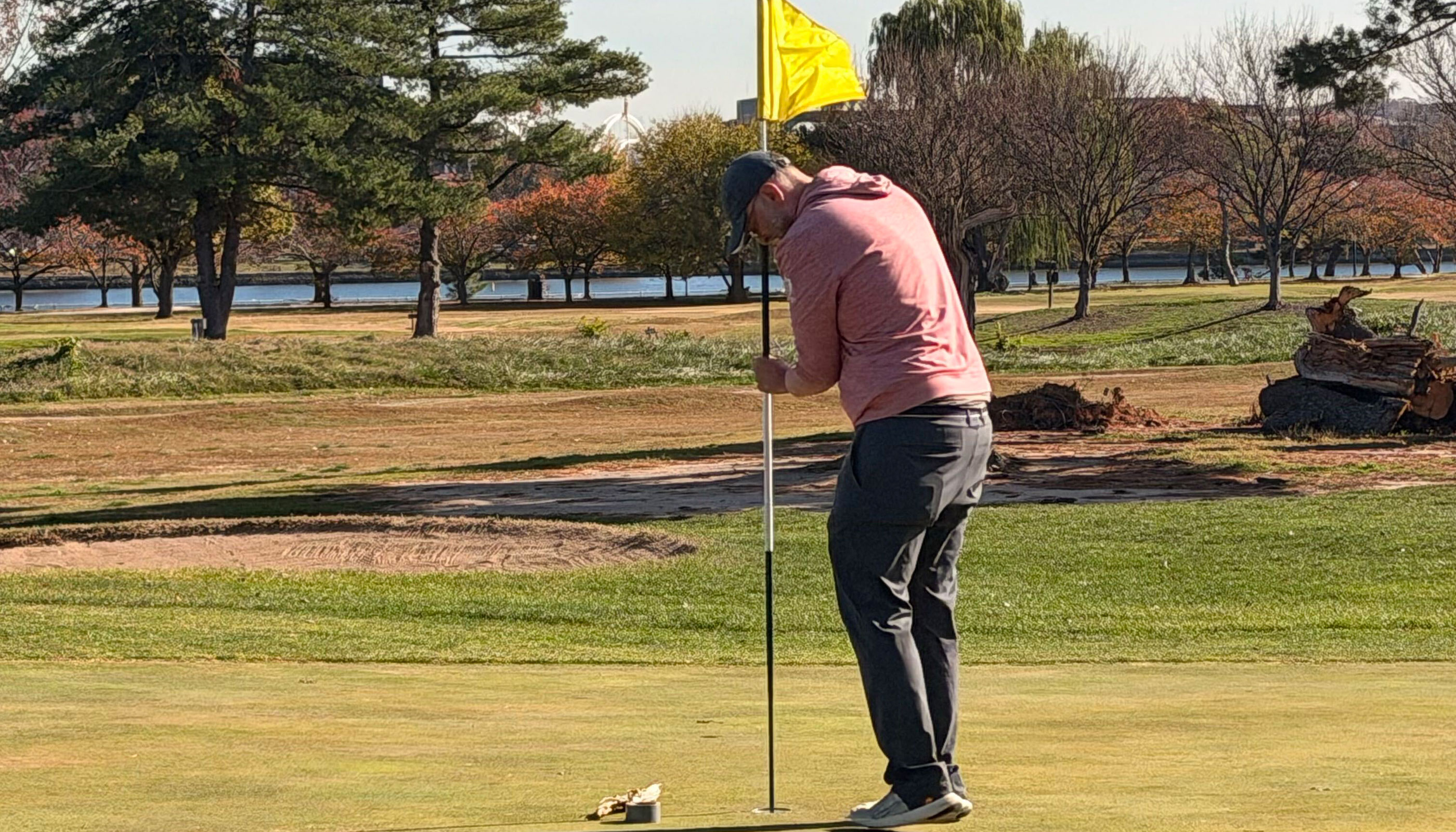

Hello, Fried Egg Golf members, and welcome back to Design Notebook, your regular update on what’s happening in the world of golf architecture. I’m Garrett Morrison.
In this Thanksgiving-week edition, our lead segment is a conversation with Alex Dickson, aka “Beltway Golfer,” about some remarkable recent developments at East Potomac Golf Links in Washington, D.C. Let’s get into it.
Long Live East Potomac
On November 15, 2026, the version of East Potomac Park that had existed for more than 100 years was supposed to die. Bulldozers were scheduled to arrive, intent on digging up not only East Potomac Golf Links, the blue-collar 36-hole municipal golf facility that takes up most of the park, but also the surrounding roads, trails, and public recreational areas. The Trump administration’s plan was — and still is — to transform the property into a championship golf venue with a single 18-hole course designed by Tom Fazio.
But then, on Sunday, November 14, District Judge Ana Reyes ruled that the park could not be closed, even if it lacked an operator. The next day, golfers started showing up.
For a first-person perspective on what happened next, I spoke with Alex Dickson, who operates a D.C.-focused golf media outfit called Beltway Golfer. Alex is also a party to the lawsuit that kept the park open.
Garrett: So what exactly was the ruling that led to the current situation at East Potomac Park?
Alex: I'll summarize it best I can, although some of the language in the ruling left a little bit of room for confusion, even amongst the people that are involved. But essentially it said that the East Potomac Park — both the golf course property as well as the perimeter road, Ohio Drive, and the parkland on the outer perimeter of the entire island — must remain open to the public. However, there was one line that said, effectively, the status quo must be maintained. But then there was another line that more clearly stated that the court wasn't going to tell the Department of the Interior or the National Park Service how to operate the course, just that it had to remain open to the public.
Garrett: If you define "open" as “being run as it normally had been run,” then East Potomac Park isn't open in that sense right now.
Alex: I mean, it's open in every sense except for the fact that there's no staff, there's no operator. But everything else is basically the same.
Garrett: You can go there as a member of the public, but it's not “status quo” by any definition of the term.
Alex: Correct.
Garrett: That's a unique situation.
In any case, could you tell me about the last day of East Potomac under NLT’s operation and then the first day of this new reality?
Alex: The administration stated that the golf course was going to close effective on November 15, which was a Sunday. Earlier that week, the court had ruled. So that weekend — Friday, Saturday, Sunday — everybody rushed out, thinking they were going to play their last rounds of golf at East Potomac, because you couldn't book a tee time after Sunday.
And then Sunday night, the interim operator, National Links Trust, brought in all of their equipment, because the administration had effectively ended their interim operation. Tee markers, flags, pins, literally the cups in the holes, picnic tables, range mats, chairs, you name it — they brought everything either into the buildings or to some other storage location.
So I was there, with many others, right up till sundown on Sunday, November 15.
Then on Monday, November 16, when East Potomac was officially closed, I dropped my kids off at school and headed down there. I got there about 9:30 a.m. It was kind of an eerie feeling. There were a couple of employees still milling about, cleaning up some things, and one of them told me they had a meeting on site with the National Park Service that they were waiting to do.
There may have been a couple of people before me, but I was one of the first people to stroll out onto the White Course, which is the intermediate nine that my buddies and I like to play a lot. I played the course by myself that morning. Again, there's no cups, there's no flags, there's no pins. A lot of people joked about this — it kind of helps your golf game, because you're not firing at a flag.
Garrett: “Hit to the middle of the green” is actually good advice for most golfers.
Alex: I felt like I was hitting more greens than normal.
Garrett: Tell me about the days after that. How did things develop?
Alex: By Monday afternoon, there were more golfers. By Tuesday, a little more. Word got out, there was some media. By Wednesday, the course was getting fuller and fuller. And you'd see some non-golfers, people just walking their dogs. You’d see people hopping around playing different holes. You’d see some bikers biking around the golf course. But for the most part, it was normal. People were starting on No. 1, waiting for the group in front of them, and playing normal golf.
I think I've been down there every day since the shutdown, and almost everyone I spoke to, especially those first three days, was just like, "This is wild. It's free golf, and the course is actually in great shape."
However, come Thursday, there were a few holes over on the White Course where someone had maybe used the green like it was a driving range and taken some big divots.
So that shifted the mindset to, "Okay, this is bizarre and it's free golf, but we’ve got to maintain it because there's zero oversight. What do we need to do to keep this course playable?”
I run a D.C.-area fledgling golf media company called Beltway Golfer, where I have a significant following of local golfers, especially on Instagram. So I started to use that platform on Thursday to convey that message of, "Hey, we’ve got to start taking care of this." Almost immediately I had superintendents from golf courses in Virginia and Maryland saying, "Hey, if you need cups, I got extras. Do you need flags? I got extras. Come get them. I got pins."
Friday morning, I went to one golf course. Saturday morning, I went to another, and we started installing everything.
The court issued this temporary restraining order that delays things until November 28, but the reality is we don't know how long this is going to last. This could last several more weeks, or it could end tomorrow. We have no idea.
[Editor’s Note: On Monday afternoon, after Alex and I talked, Judge Reyes extended the temporary restraining order, ordering the park to stay open until at least December 12. A hearing is scheduled for December 8.]
Garrett: How is this group of volunteers organizing itself right now?
Alex: It's a good question. There isn't much organization. My fellow plaintiff in the lawsuit, a gentleman named Dave Roberts, helped me start putting in new flags and pins and cups on Friday morning. So we had that conversation ourselves, because my inbox was blowing up with people saying, "How can we help?"
I even put out a little “Adopt a Hole” sign next to No. 9 on the White Course saying that Beltway Golfer was going to adopt No. 9 and take care of it. I wasn't being totally serious, but it was part of shifting people's mindsets.
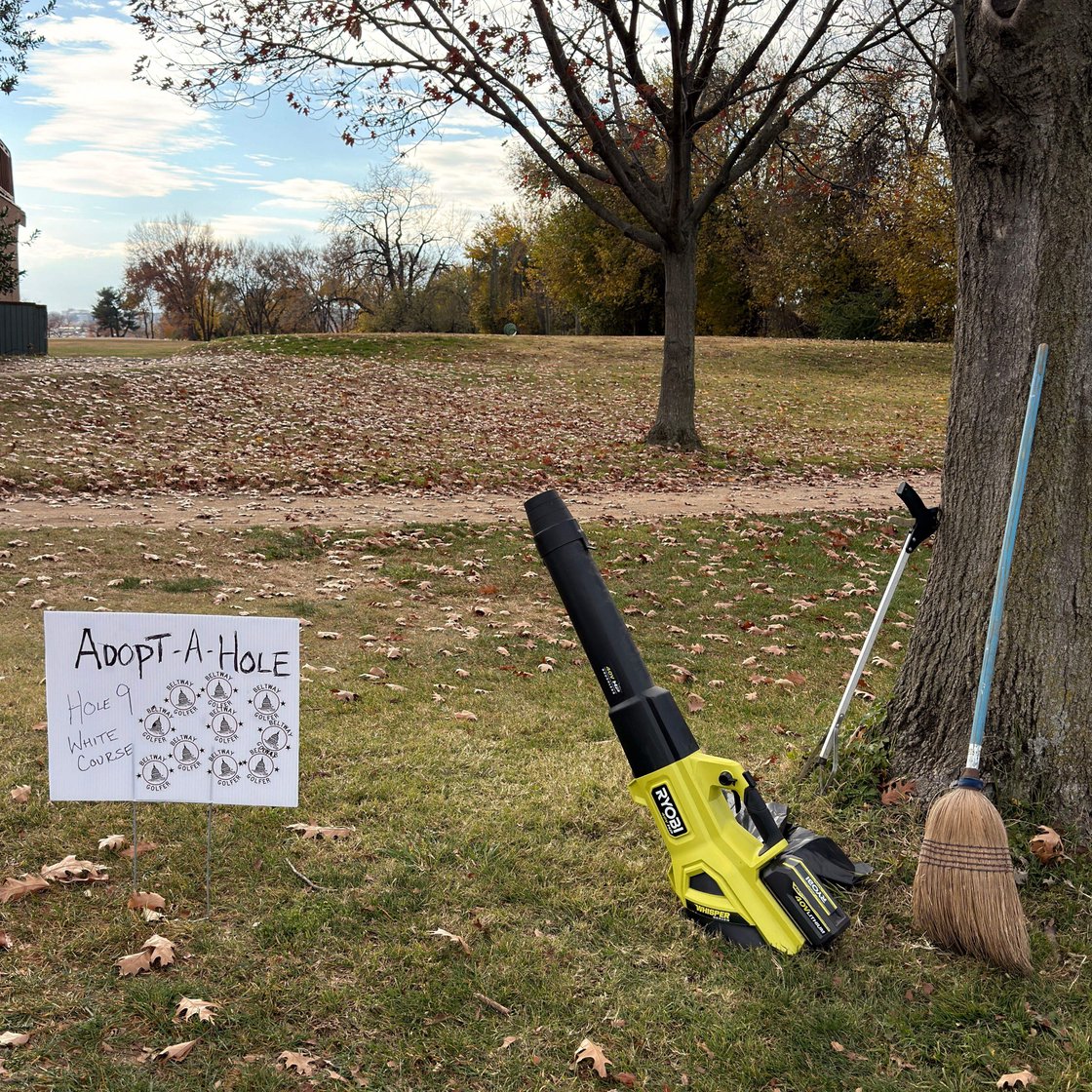
Anyway, Dave and I said, "Maybe we should start a listserv." Dave took on that mission, and he started a Google group, and I shared it on the Beltway Golfer social media account. Within the first evening, we got 40 to 50 people signed up for things like “Adopt a Hole”; or shifts, morning or afternoon, to pick up trash; or to donate tools.
I've also had a lot of messages from people who don't even live in D.C. saying, "I don't live there, but can we donate money?" At first I was like, "Ah, we don't really need money," but then I started thinking about it and was like, "Well, could we get superintendents from other courses coming on their off days, and could we pay them a little bit of money?"
It’s supposed to get really cold in the D.C. area this week, and I've had superintendents texting me about frost delays. If there's no oversight and people are out there at seven in the morning when it's 30 degrees, that's not good. So I want to print up some signs that just say, "Hey, reminder, if it's this temperature, you probably shouldn't be out there."
Those things cost a couple of bucks, so we might start a GoFundMe or something.
Garrett: You're almost creating a golf club from first principles. You’d imagine this was how golf societies started in Scotland way back in the day. Somebody was like, "Oh, hey, someone needs to maintain this course, and maybe we need a little bit of money to do that."
Alex: I hadn’t thought about it in those terms, but you're not wrong. The phrase I keep using is "mass civility with no oversight." Everyone is so civil out there.
I've had a couple of notes from different people. One guy, for instance, wanted to create a little tee time engine for East Potomac on his website. I messaged him and said, "You know what? I wouldn't do that. There's something happening out here that's kind of wild, and trying to manage tee times, I don't think that's the right answer."
Then another group reached out to me and said, "Hey, do you want to do a group scramble?" Eric Anders Lang made these popular, and I did one myself at East Potomac, where you just get a large group of people together and play a massive scramble as a communal thing, playing one hole at a time. I was like, "Sure. That'd be fun." But then they started to set up registration, and it gave me pause, because I was like, "Wait a second, this is almost feeling too official for the vibe that's happening out there." So we decided not to do it.
There is something very… I don't know. It's hard to describe.
Garrett: If you get organized, maybe you start to reconstitute a regular golf course or golf club too quickly. It sounds like you want to keep it in that zone where it feels spontaneous. That's a tricky balance.
Alex: This whole week there’s been no oversight. I mean, they turned over the trash cans, almost discouraging people from using them. We were out there this weekend flipping them back over, putting trash bags in, putting all the trash in the dumpster. There's been no real Park Police activity whatsoever.
On Saturday night, some teenagers pried open the door to the basement of the clubhouse and backed up their car to the clubhouse, and were pilfering the walk-in refrigerator from the basement. I was walking back to my car, and I got into it with a couple of the kids. They were trying to argue with me: "No, it's abandoned. We're not doing anything wrong." A woman ended up calling the police, and the police showed up.
As of this morning — I was just getting some messages an hour before hopping on here with you — there's police cameras. There's one up in the parking lot behind the clubhouse and another right by the starter shack.
Garrett: Well, that leads me to my next curiosity. It's so romantic, this idea of a truly public golf course, an absolutely open space that anybody can use. No green fees, no tee times. In general in these situations, I think people will behave well —
Alex: 99% of them, yes.
Garrett: — because they know the whole arrangement depends on them behaving well. But of course, there are people who won't make the right choice. And there are certain things that any golf course needs, like playable conditions and some amount of organization around when people go out on the course and how they conduct themselves.
A simple one to talk about would be conditions. East Potomac might be in a fortunate situation right now because it's November, and I would guess the grass isn't growing. So perhaps the courses don't need much mowing. But what kind of maintenance is necessary out there right now to keep the place playable?
Alex: This is something I'm learning on the fly. Again, not that I'm responsible for everything, but you're absolutely right. The grass isn't really growing.
So I've been messaging with a lot of local superintendents and asking: As novices out here, what can we do?
The basics are blow leaves off greens, fix repair marks, rake bunkers — and that's the bare minimum. But we also need to move hole locations, because if the hole locations aren't moved, the wear and tear will kill that grass. I had a couple of cup cutters donated to me, and my first attempt at it, I realized I didn't know what I was doing. It's not super complicated, but you have to have someone show you the first time.
We're going to try to get a super or two to come down on their off days, or at least give us some advice, and go from there.
Garrett: So far, have people been stepping up to maintain the course?
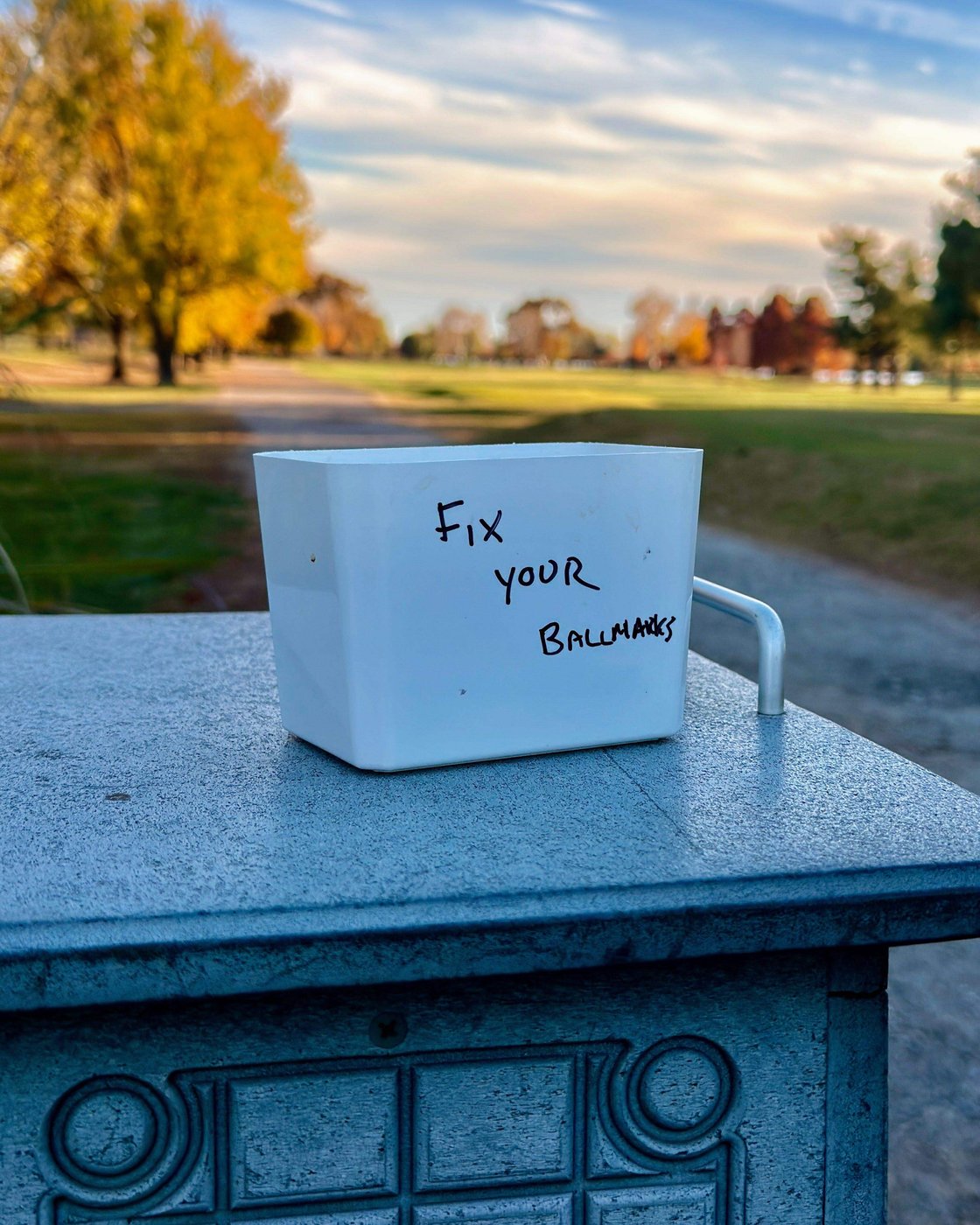
Alex: A lot of people are doing it as they play. I emptied my garage of all my different repair tools and put them out in a bin right next to the first tee saying, "Fix your ball marks.” So people are grabbing them.
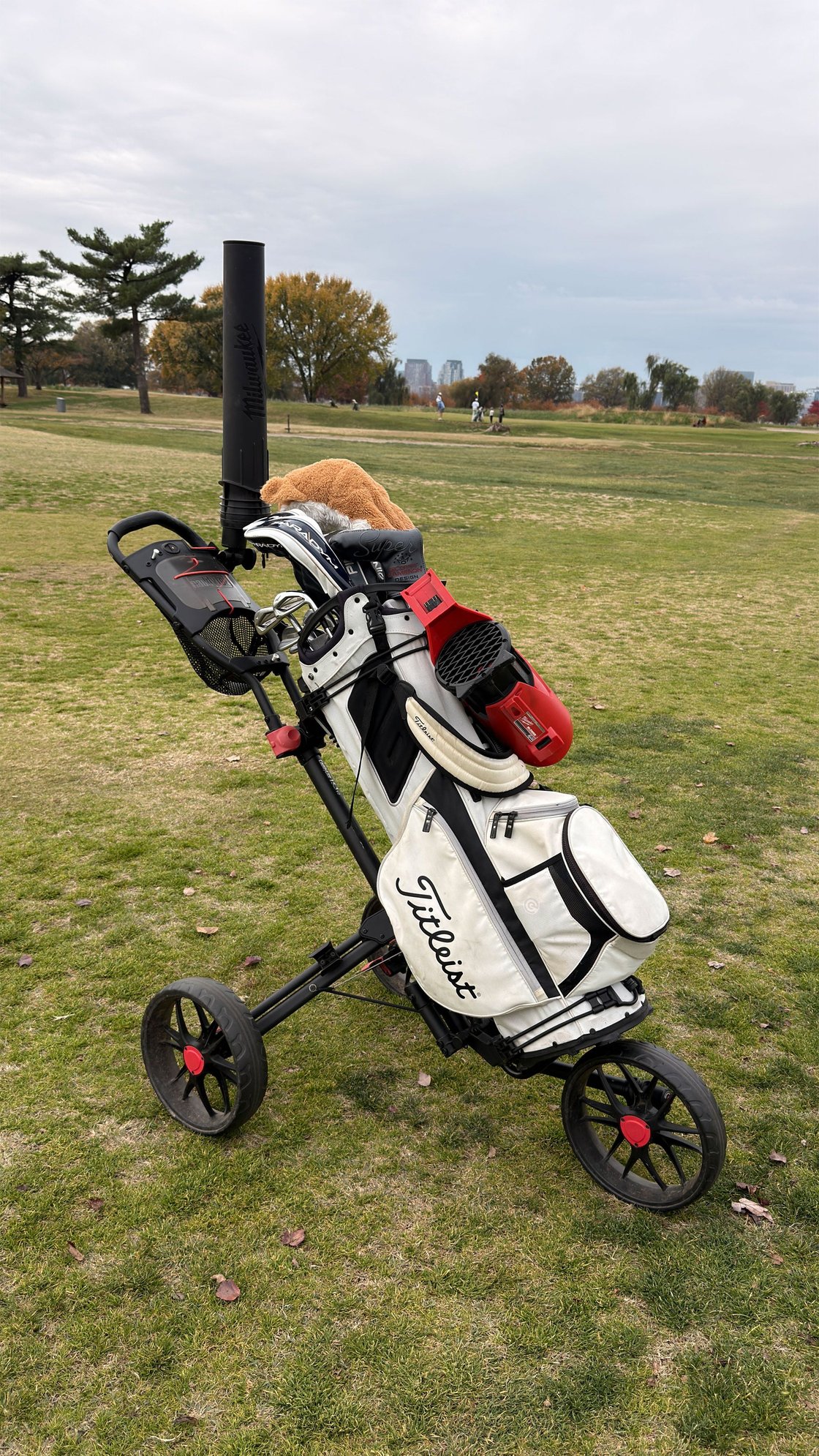
Also, some people are just bringing out their residential leaf blowers and attaching them with carabiners or their golf bags. They're playing golf with leaf blowers.
It's not super organized, but people are doing it.
Garrett: Has the reaction of the community surprised you?
Alex: No, it hasn't. If you go out to East Potomac any day over the last five years, this is what it looks like. People love the place.
But what’s been really awesome — I mean, this is a municipal golf course. It doesn't have the same community that a country club might have, because country clubs have organized events, member-guests, dinners —
Garrett: A specific list of members.
Alex: Exactly. Whereas East Potomac gets 124,000 rounds a year, and it's been my home course forever, but I didn’t know a ton of people down here, because people just go and love it and kind of mind their own business. That part has shifted this week. Everyone is talking to each other. I've learned the names of so many people — in the parking lot, in front of the clubhouse, on the golf course. This week has felt more like a community at East Potomac than it ever has.
Chocolate Drops
Let’s wrap up with a quick spin around the industry:
→ Rumors began circulating last Friday that Royal St. George’s has hired Gil Hanse as its new consulting architect. If true, this would be major news; Hanse would be replacing Martin Ebert, who advised the club on preparations for the 2011 and 2021 Open Championships. Ebert’s firm Mackenzie & Ebert currently works with every other rota venue, but this stranglehold appears to be loosening.
→ Now for news of the official variety: Woking Golf Club has appointed Clyde Johnson to lead a 10-year master plan. A great choice for a great course.
→ Tiger Woods’s firm will begin construction on Bellarena Golf Links, a seaside course in Northern Ireland, next year. Check out my colleague Brendan Porath’s write-up in the FEGC app.
→ Bryson DeChambeau is helping to develop and design a golf course called The Orchard Golf Club in his hometown of Clovis, California. More in the app.
→ Westport Golf Links appears to be dead. The proposed David McLay Kidd-designed public course on oceanfront parkland in Washington was voted down by the state’s parks and recreation commission last Wednesday.
→ I don’t have enough room in this newsletter to give my full thoughts on Golf Digest’s misbegotten ranking of today’s top renovation architects, but I’ll say this: I don’t think it should have been published. Happy to discuss further in the app.
Underlined and Starred
“Given a choice between (a) beautiful surroundings with emotional impact and (b) the principles of strategic golf, which one is the retail golfer going to choose?
“The correct answer is (a).” -Mike Keiser
Have a topic or question you'd like discussed in Design Notebook? Contact Garrett at garrett@thefriedegg.com.



Engage in our content with thousands of other Fried Egg Golf Members


Design Notebook: A Royal County Down Proposal and a Coul Links Denial
A Q&A with Blake Conant
Design Notebook: The Athletic Lights Up Yale, LinksDAO Sells Spey Bay
A Q&A with David Normoyle about Cypress Point
Design Notebook: Pebble Beach Changes and Medinah No. 3 Insights
A Q&A with Ashley Mead
Get full access to exclusive benefits from Fried Egg Golf
- Member-only content
- Community discussions forums
- Member-only experiences and early access to events