
Q&A with Golf Course Architect Sam Cooper
On his firm McDonnell & Cooper, why golf course restoration is so tricky in Great Britain and Ireland, and more
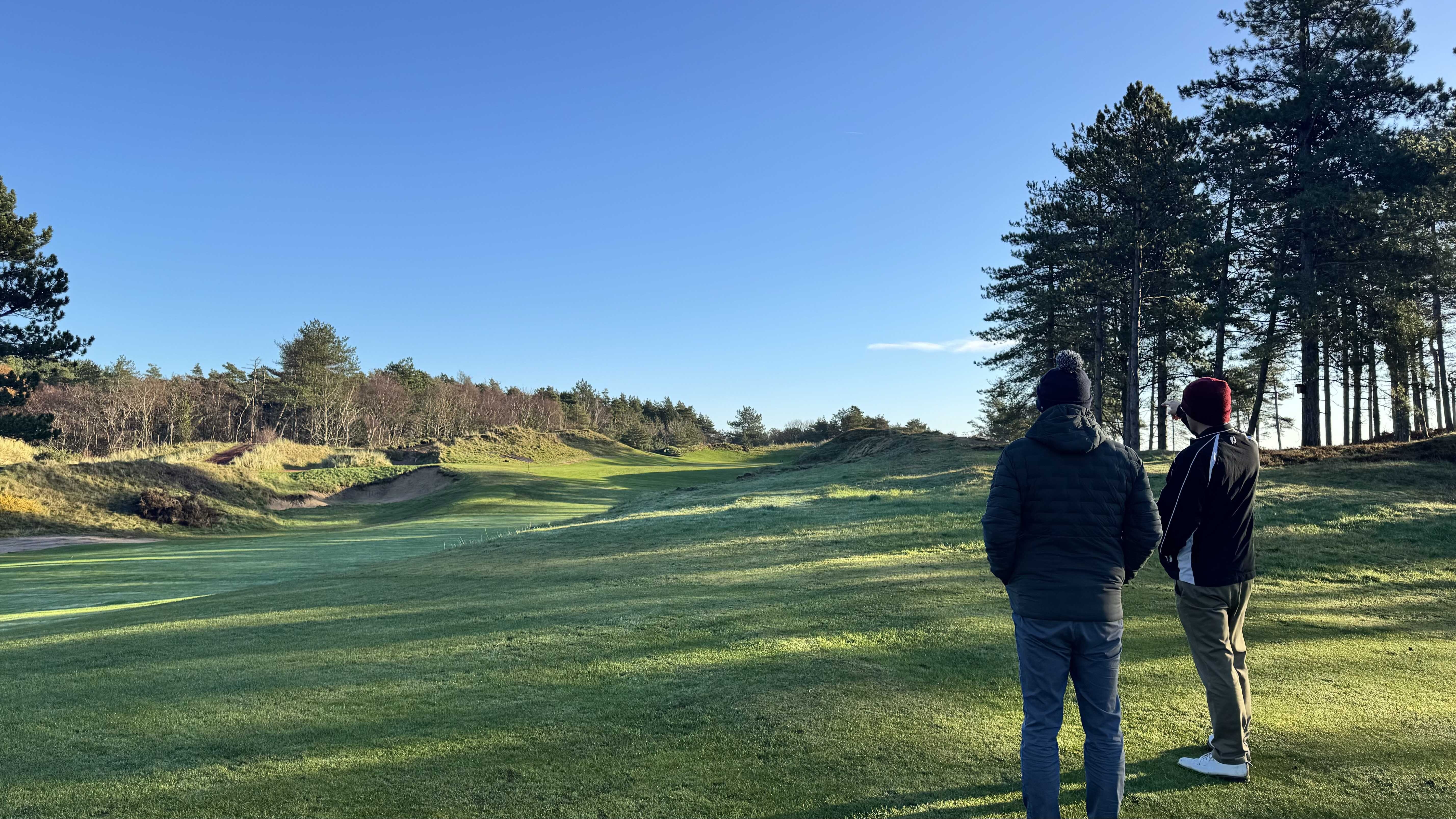

Who’s next in British golf architecture? One compelling candidate is the firm McDonnell & Cooper.
Joe McDonnell and Sam Cooper, both past guests on the Fried Egg Golf podcast, got their start in the industry working for the firm Clayton, DeVries & Pont. Last year, they hung out their own shingle, taking on renovation jobs at Southerness Golf Club and Formby Golf Club. Recently, they’ve earned commissions at Dunstable Downs in England’s Chiltern Hills and Gullane Golf Club, a famous three-course complex in East Lothian, Scotland.
Both Joe and Sam are young (by the standards of the profession), astute, and well spoken, and their visualizations are among the best in the industry. You’ll be hearing more from them in the coming years.
Earlier this week, I sat down with Sam to discuss the formation of McDonnell & Cooper, the firm’s work so far, and why the task of golf course restoration is so tricky in Great Britain and Ireland.
Garrett: I remember when I first became aware of you. It was Covid times and you were road-tripping around Great Britain with your wife —
Sam: And two dogs.
Garrett: And two dogs. You were visiting a bunch of obscure links courses. Is there a course from that trip that you still find yourself thinking about?
Sam: I would say landscapes rather than golf courses per se. For me that's one of the biggest differentiating factors between a great golf course and a good golf course — how effectively it uses all of the land and its attributes. The standout nature of links golf is the land, and trying to do as little as possible with the land so it shines through.
So rather than specific courses, I was taken by some of the extreme landscapes, and then the contrast to other places that had more muted, rolling topography. The variety that my tour encompassed, I think, was eye-opening.
Garrett: You weren’t working in the golf industry at the time. How did you decide to get into golf architecture?
Sam: I'd always had a longstanding passion for the subject. I think it's easy to look backwards and trace a route and say, yes, I did X and therefore that led to Y. But realistically, there are probably fewer people who will be climbing to the top of Everest than will be working on British golf course architecture this year. It's such a small group of people that to have the temerity to say “I'm going to be one of those people” in advance is almost impossible. I still think myself very lucky that I found myself in that position.
{{inline-article}}
Garrett: How did you meet your current partner, Joe McDonnell?
Sam: I've known Joe for a long time. Anyone looking at a photograph of the two of us wouldn’t believe that he's actually 10 years older than I am. People would think it's the reverse. But our dads used to play golf together, and we both grew up at [Royal Liverpool Golf Club]. Then Joe went off and had the most extraordinary life, which is worthy of an interview in itself. And I worked in property.
Joe moved back to Wirral from London — that was just before Covid. We started working together on a few nerdy golf projects, not least the creation of these sort of artistic maps of golf courses. If anyone's seen them, they'll know that they're quite beautiful. And that’s Joe's talent there shining through. But I would produce surveys of the golf courses, and that's what the maps were based off of.
It was working through that as a process and a hobby, really, that we developed a working relationship. From there, we started working together at Clayton, DeVries & Pont.
Garrett: What made you and Joe decide to form your own firm?
Sam: The brilliant nature of CDP is it's a global collection of very different partners, different skill sets, and different geographies. [Note: CDP’s principals are Mike Clayton, Mike DeVries, and Frank Pont — based in Australia, the U.S., and the Netherlands, respectively.] And Joe and I both benefited from spending time with them and seeing their strengths first-hand.
Because I had a number of transferable skills already and because I had a strong network and understanding of British golf, I wanted to be thrown in the deep end, and they allowed me to do that. Joe, who joined the firm a little later than I did, was doing all of the visualization and a lot of the technical stuff as well, which I think gets overlooked. Joe's an artist, but he’s an artist of the ground, not just how it looks on a screen.
He and I were working very closely together on a number of projects, and we would have very happily carried on with CDP for a long time. We remain on very good terms with them, but we just decided to try it on our own, and we're glad we did.
Garrett: Do you see yourself and Joe as having distinct roles?
Sam: Massively. It's one of the reasons we felt confident to go out on our own.
Generally the way we split the roles is I might do a little more, for want of a better term, “front-of-house” stuff. You know, speaking with the clubs in the first instance. And then Joe and I will both go out there and spend time on site to get to the crux of the problem.
The sort of initial puzzle-solving — say, if it’s a routing-related challenge — that's more something I will take the lead on. But when we get further down the process and we're developing detailed designs and grading plans and visual assets to take the members on a journey, that part of the process is where Joe particularly shines.
So we work hand-in-hand, but at different times one of us will take a step forward and the other will take a step back, and vice versa.
Garrett: What projects have you taken on so far?
Sam: I don't like announcing, yes, we've been appointed at such-and-such a place and we're going to do this and we're going to do that, because we know that even the best ideas might not come to fruition for a whole host of reasons outside of our control. We try to keep our heads down, see [each project] through, and then talk about the work we have done rather than the work we would like to do in the future.
So, early projects. Over last winter, we built a new hole at Formby Golf Club [in Merseyside, England], a course that Joe and I actually played 20 years ago when [Royal Liverpool] had courtesy [access] for the 2006 Open. It's quite nice 20 years later to be working on that golf course.
We rebuilt a hole that Formby had built in response to coastal erosion. The green was challenging — it wasn't very pinnable, and it was a bit low-lying. So we came in with a brief first and foremost to resolve the technical, structural challenges of the hole, create more pinnable area and raise some levels.
{{design-notebook-formby-7-gallery}}
But at the same time we were passionate about bringing in some thought-provoking strategic dilemmas into the hole, and that’s what we’ve done.
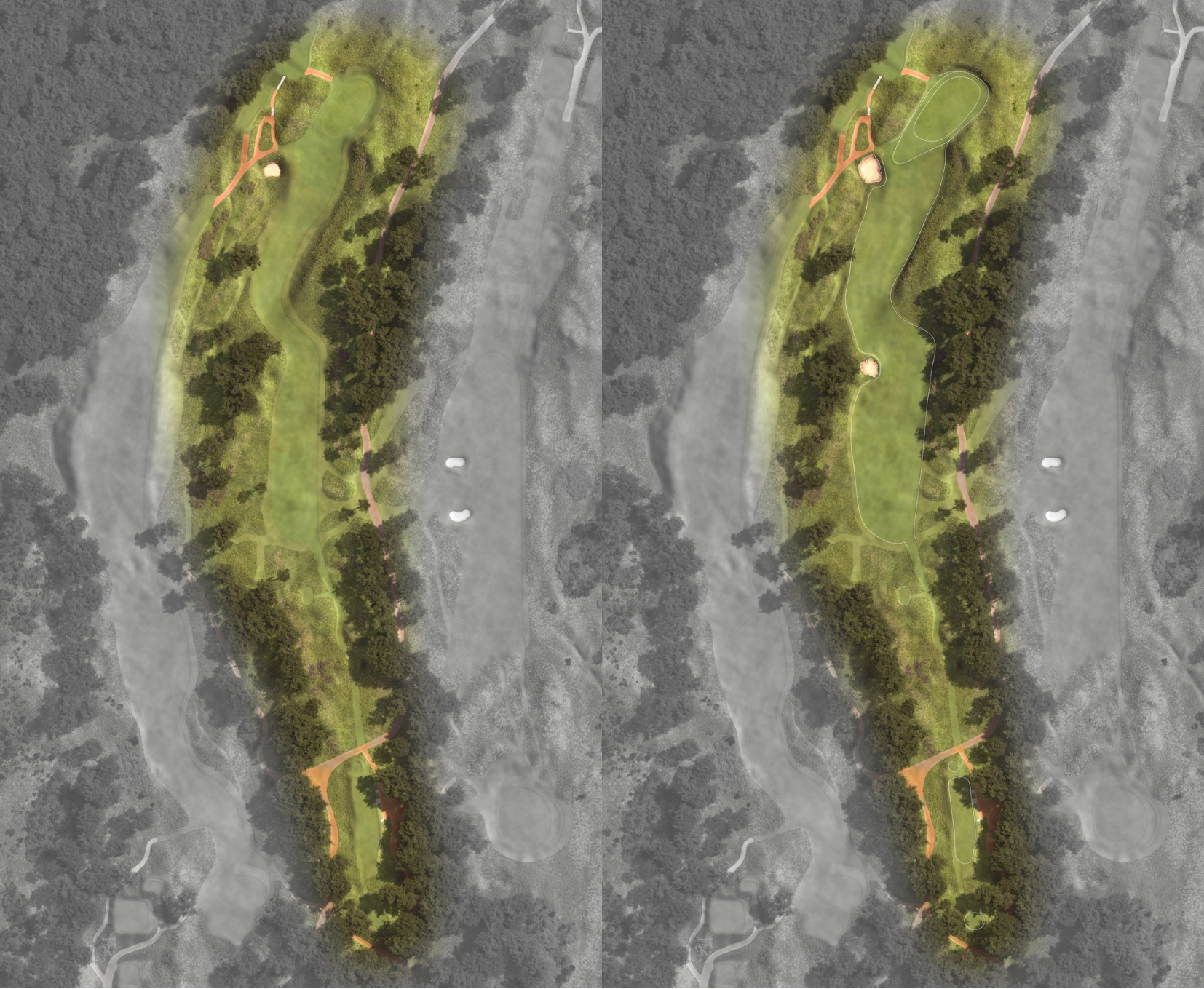
We’ve also built a couple of new holes at Southerness Golf Club [in Southwest Scotland] that aren't open yet. They will have taken a long time from when we started to completion, and there's an obvious reason for that, which is that we’re tailoring a workflow to the kind of golf club that a lot of the American audience probably wouldn't be able to compute — somewhere that has three or four green staff and a smaller budget. We used land that wasn't part of the existing routing, and therefore we could do a bit here, a bit there, start with the greens, get some irrigation down, and let them grow in. Hopefully they'll be open for play next year, but 2028 was the original objective.

Garrett: When you make changes to a historic place like Southerness, do you worry about altering the essence of the course?
Sam: I've had debates with architects whom I respect as much as anyone else in the industry, and the argument that has been made is that, if they're doing a mix of restoration work and new-build work, then the new-build work is where they can indulge their own creative juices. The restoration work should be more deferential. “Let's put it back to how it was. One of the greats of our industry designed something. They didn't design it without good reason.”
Now I slightly push back on that for a few reasons. First, I could list a whole host of places where it wouldn't be possible to put everything back as it was. You know, land boundaries have changed, erosion, properties have been built alongside a boundary that used to play as a boundary feature.
Second, the game is a different game. Not just because the ball flies a different distance, but also it's a year-round game now, which it wouldn't have been a hundred and something years ago. These golf courses might have 30-plus thousand rounds of golf on them over the course of a year, and people's expectations around presentation and the height of cut have changed.
So for those reasons, the restoring architect must apply a degree of subjectivity.
But then it's a question of, what is your objective? Are you trying to leave [the course] so that it looks as if it was always there, as if Tom Simpson just got in the back of his chauffeur-driven Rolls-Royce and disappeared up the up the driveway, and you come the next day and it's exactly how he might have left it? If that is our objective, we try our best to make it appear as if it was something that could authentically have been his work. But beware the people who suggest that you can codify everything and say, “Colt would always do this.”
The one thing I always come back to is, does the hole make you think? Does the hole give you a sense of unease? Is it trying to lure you into one way that might not be the right way? And does it get better when you play it the second time and the third time?
Garrett: There does seem to be a difference in the attitudes toward golf course restoration in Great Britain and Ireland on the one hand and in the U.S. or North America on the other hand. Where do you think that difference comes from?
Sam: I think money and the size of the economy have played a big role here. An often-read narrative in favour of British golf is how it is cheaper and more accessible and has fewer inputs in terms of maintenance, resource, and irrigation. I think that has been our strength and also maybe our undoing at times.
There’s a very good but very normal golf club that I won't name that we're working with — they have fairways that are cumulatively eight-and-a-half hectares. When the course was laid out, they were probably 20 hectares. Why has it gotten to that position over time? First and foremost, when irrigation came in, clubs couldn't necessarily afford to irrigate all of the fairways, and they lost their peripheral features. They ended up with an irrigated perfectly straight strip down the middle.
It was like a frog in hot water in Britain. Slowly, slowly the temperature rose. And a lot of the things we lost we didn't realize we were losing because it was so incremental.
In the States, a lot of your great courses were laid out not by a local pro who was also the clubmaker and also the greenkeeper; they were laid out by a Tillinghast or a MacKenzie or a George C. Thomas. And in the same way, they were changed in a conscious decision.
Garrett: You’ve put your finger on something important. Almost all of the great courses of Great Britain and Ireland evolved into the forms we now consider great, whereas many of the great courses of North America were built that way from the beginning. Now, not all of them. There are American courses that took time to evolve into what most people regard as their ideal forms, Pinehurst No. 2 being a great example. Nobody wants to restore the 1907 Pinehurst No. 2.
But the problem in Great Britain and Ireland, I guess, is that almost every course is that way. When you're dealing with old links courses, almost every project has to confront a robust history of early evolution. So where does that leave a restoration architect?
Sam: Colt and Simpson are my favorites. But why should you restore something? If the reason is, well, because it was designed by Harry Colt or Tom Simpson, even I would say that's not enough.
Not every Beatles song is a great song, but they wrote some absolute bangers. And if you played “Blackbird” or “Yesterday” to someone who has never heard of the Beatles, chances are they'll like the song. Not because it's by the Beatles, but because it's a tremendous song.
It’s the same with Simpson and MacKenzie and Colt. If you're going to change something, it should be on the merits of the golf course of today, not just in pure deference to what was done a hundred years ago.




A Special Round With an Old Friend

Q&A: Cory Griess, Superintendent at Prairie Dunes Country Club
Merion East's Clever Inland Design on Display at 2026 U.S. Amateur
Is Royal Birkdale’s ‘Easiest’ Hole One of Its Best?
Architect Tom Mackenzie on Royal Birkdale Changes for 2026 Open Championship
Comparing, Contrasting Upcoming Open Championship Venues
Get full access to exclusive benefits from Fried Egg Golf
- Member-only content
- Community discussions forums
- Member-only experiences and early access to events