
Every Hole at Shinnecock Hills - No. 9, Ben Nevis
U.S. Open strategy and expert commentary on the par-4 ninth
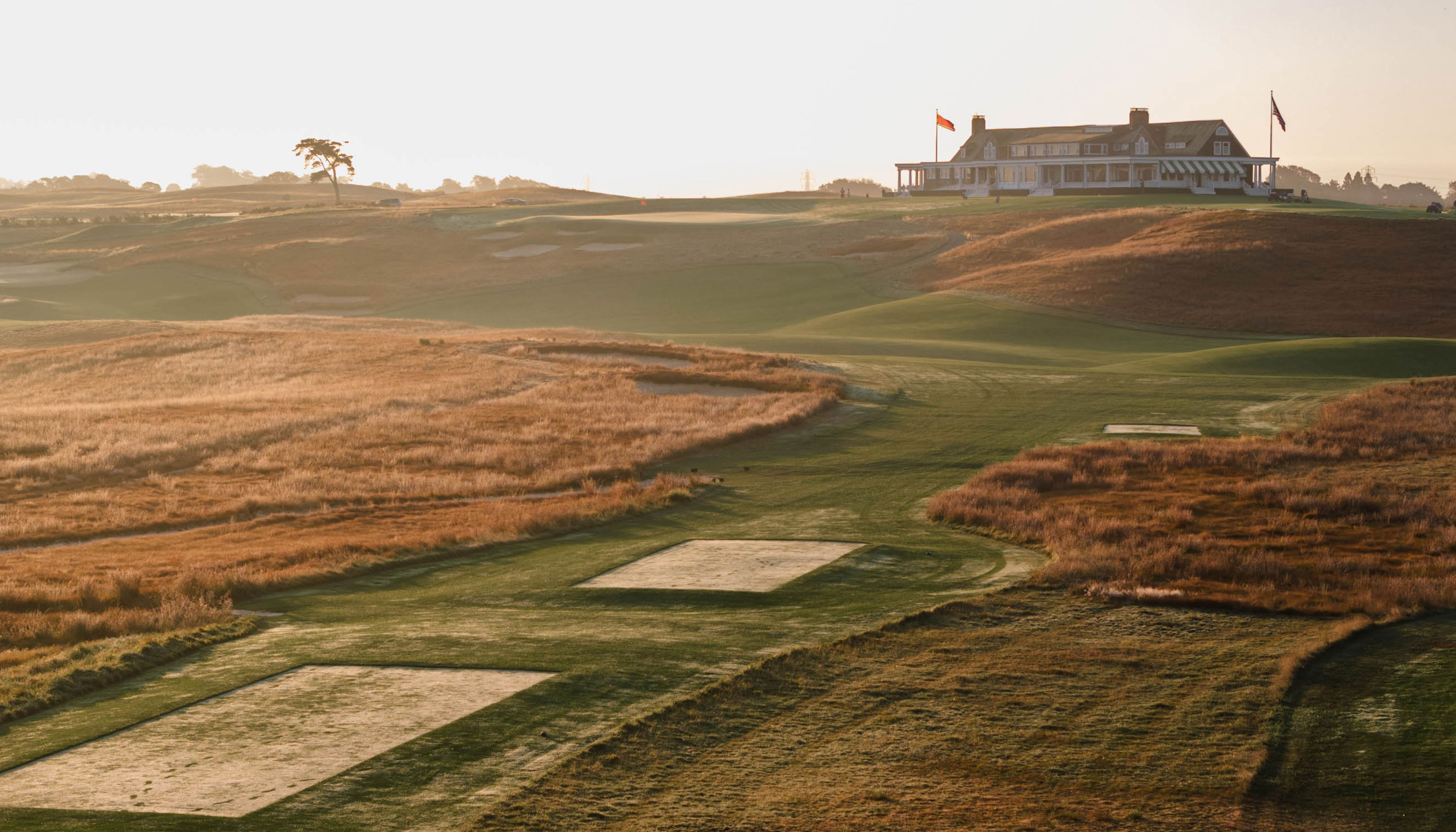

No. 9 - Ben Nevis
Par 4 | 482 yards
The ninth provides a brash introduction to Shinnecock's high duneland, tumbling over massive undulations before climbing to a green that hangs off the edge of the clubhouse ridge, some 50 feet above the tee. After eight holes on subtle ground, the scale of “Ben Nevis,” named after the tallest mountain in Scotland, comes as a shock.
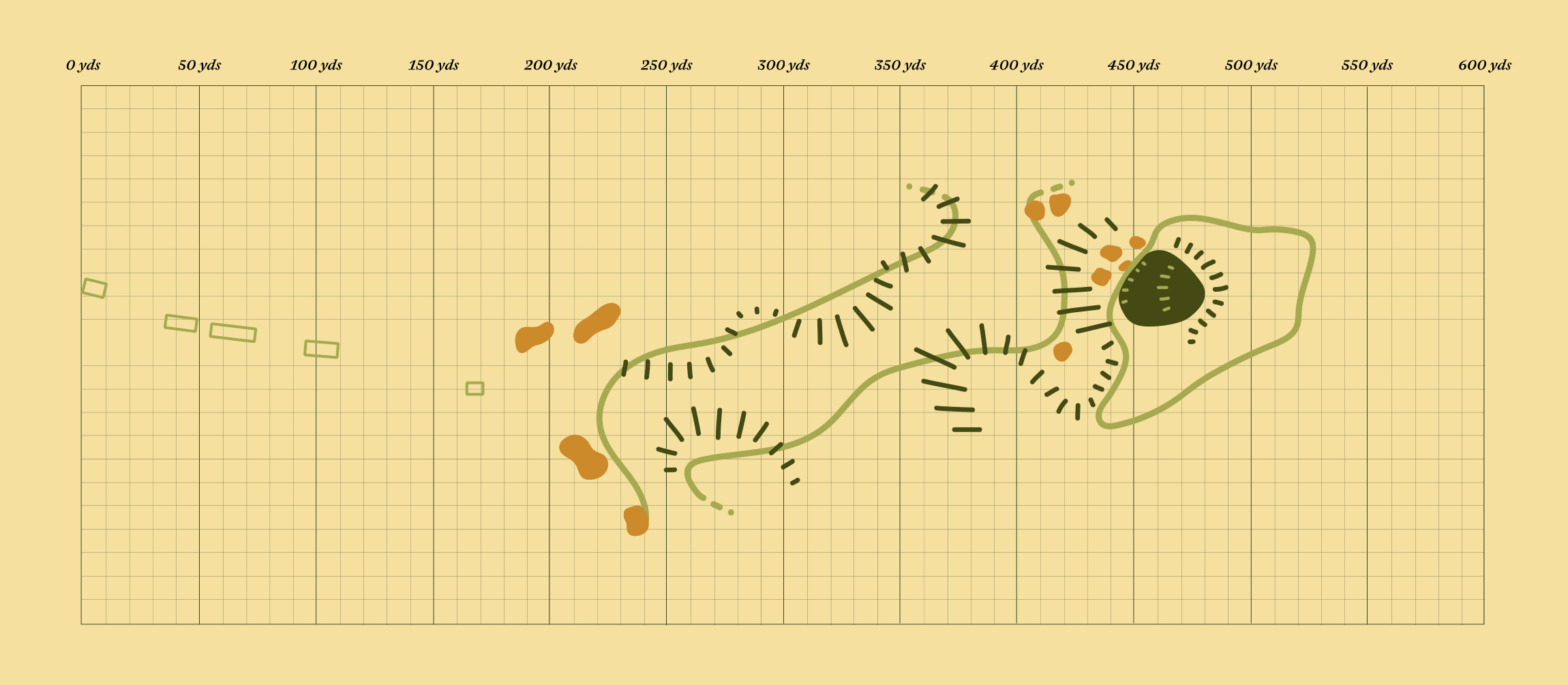
There is, however, a strategic pattern beneath the topographical chaos. The fairway slants from right to left, requiring players to make specific decisions on both line and distance. (Members and caddies often use the two clubhouse chimneys as aiming points.) Tee shots tend to settle into one of three bowls, none of them visible from the tee. The first sits on the inside-left portion of the fairway, roughly 180 yards from the green; the second on the outside-right, about 145 yards out; the third, again on the left, leaves around 105 yards in.
The third bowl is the most desirable. Not only does it offer the shortest approach, but it also allows players to use the right half of the green as a backboard. Reaching it, though, requires a long, blind carry over an expanse of native grasses.
{{every-hole-shinnecock-9-ben-nevis}}
Strategy Notes for the U.S. Open
- The fairway provides ample width — nearly 50 yards across — but missing this blind fairway comes at a high cost. Miss it, and you’ll need a special recovery shot or up and down to salvage par.
- Being above the hole is certainly no picnic on No. 9, but coming up short is jail. Players must be sure to take short out of play, even if it results in a glassy putt downhill toward the front of the green.
- This is a good green for players to spend extra time lag putting during their practice rounds, preparation that could pay off in tournament rounds. –Joseph LaMagna
Historical Tidbits
- The current ninth green occupies the same site as the 18th green on C.B. Macdonald’s 1916 version of Shinnecock Hills. Macdonald’s hole, however, played more or less straight. In his 1931 redesign of the course, William Flynn moved the tee back and to the right in order to create today’s oblique angle. (WM)
- Dustin Johnson’s approach to No. 9 at the 2018 U.S. Open shows the difficulty of hitting the green from the right side of the fairway. With the ball above his feet and a shoulder of the ridge blocking his view, he had to carve a draw into the right-to-left sloping green. And he hit a beauty.
Our Take
Some dislike the ninth hole, finding the hanging lies in the fairway and the sudden ascent to the green awkward. But the three-bowl structure of the fairway, paired with the feeding slope that takes up the right half of the green, makes No. 9 as interesting as it is impressive.
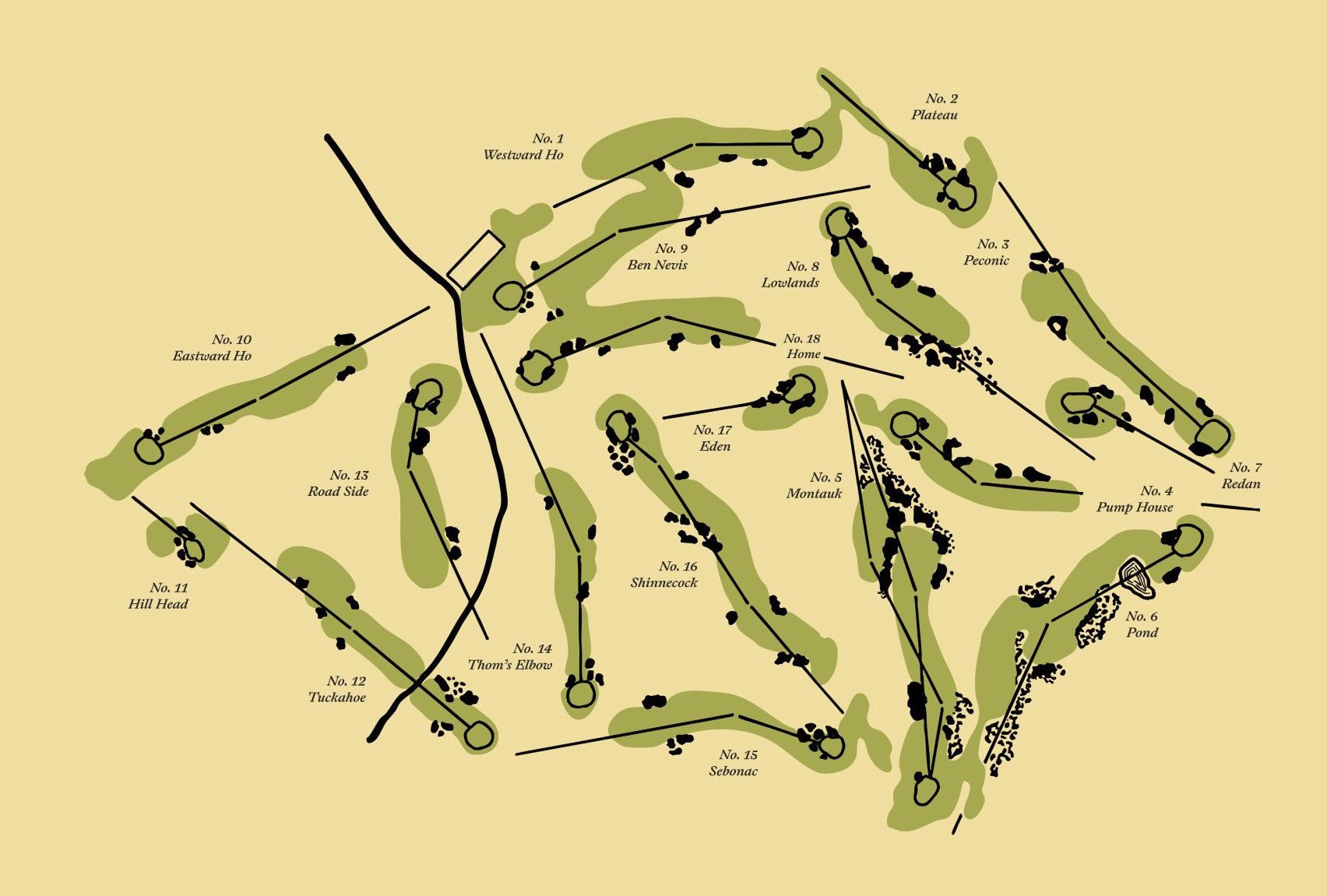
Course Routing
Click on a pin below to preview the hole or go to the full profile of the hole.
Shinnecock Hills Golf Club
A Golden Age architect’s magnum opus thanks to a sublime setting and stellar design, Shinnecock Hills is deep-rooted in American golf history.
Hole 1 - Westward Ho
Like most great opening holes, No. 1 at Shinnecock Hills establishes the primary themes of the course: the importance of the wind; the use of diagonals, offsets, and doglegs; the demand to match line with distance on every shot; and the critical strategic role of runoffs around the green. "Westward Ho" embodies much of what makes Shinnecock unique — just in a friendlier manner than most other holes on the course.
Hole 2 - Plateau
This handsome, challenging par 3 deserves more recognition in the international canon of long one-shotters. The "S"-shape formed by the fairway, green, and bunkers is a brilliant match for the prevailing wind.
Hole 3 - Peconic
"Peconic" is unlikely to make anyone's list of the most memorable holes at Shinnecock, but the sneaky complexity of the tee shot makes it a good par 4.
Hole 4 - Pump House
“Pump House” is the least distinguished leg of Shinnecock’s’ first triangle, but that’s just a testament to the strength of the fifth and sixth holes. No. 4 is a fine par 4, with a well-tuned strategic design and a striking green.
Hole 5 - Montauk
“Montauk” is at its best when the right fairway is a legitimate option. Unfortunately, in a summer wind, that’s rarely the case. Nonetheless, the slanting landing zones and sadistic exterior contours of the green make the hole exciting to play and watch year-round. While the U.S. Open telecast focuses on Nos. 10 and 11, the nerds will cluster around the fifth green.
Hole 6 - Pond
Whether inspired by the Channel hole or not, the sixth at Shinnecock Hills is a beautiful rendition of a double-fairway par 4. The green design is particularly clever, with its back-to-front slope and exterior swales influencing strategic choices all the way back to the tee.
Hole 7 - Redan
Shinnecock’s Redan certainly has a knack for creating drama, in both everyday rounds and U.S. Opens. Yet it is a peculiarly one-dimensional hole. Because of the height and severity of the front of the green, run-up shots — which the best Redans accommodate — are rarely successful. In addition, the green is barely functional at modern speeds; only a couple of pin positions in the middle-left portion of the putting surface remain viable.
Hole 8 - Lowlands
We wouldn’t be surprised to see “Lowlands” become the go-to hipster pick for favorite hole at the 2026 U.S. Open. This unassuming par 4 has an unusual strategic configuration and a cunningly designed green. And, when played into a lively summer wind, it becomes a stern test. One for the sickos.
Hole 9 - Ben Nevis
Some dislike the ninth hole, finding the hanging lies in the fairway and the sudden ascent to the green awkward. But the three-bowl structure of the fairway, paired with the feeding slope that takes up the right half of the green, makes No. 9 as interesting as it is impressive.
Hole 10 - Eastward Ho
The 10th at Shinnecock Hills represents Flynn at his best. It is challenging and strategically sophisticated, but not chiefly because of the architect’s interventions. The hole simply reacts to a unique, stunning piece of land.
Hole 11 - Hill Head
“Hill Head” deserves to be spoken of in the same breath as the 12th at Augusta National, the 17th at TPC Sawgrass, and the Postage Stamp at Royal Troon: a diminutive par 3 that looms large in the player’s consciousness from the beginning of the round.
Hole 12 - Tuckahoe
The 12th is one of the handsomest holes at Shinnecock, draped artfully over fine topography. It is strategically compelling, too, when players feel challenged to carry the fairway bunkers and must consider laying up. In high-level men’s competition, unfortunately, this would only be the case in a north/northeast wind — a rarity in the warm months.
Hole 13 - Road Side
On a calm day, the tee shot on the 13th can be a little dull, especially given that the preferred side of the fairway is undefended. But the treacherousness of the green — not to mention the beauty of its shaping — makes the hole memorable.
Hole 14 - Thom's Elbow
“Thom’s Elbow” is Shinnecock in a nutshell: ferociously challenging on every shot, but also intelligently designed to assess the player’s mastery of wind, terrain, and angles. Is it fun to play? Not really. But it’s an excellent test.
Hole 15 - Sebonac
On the one hand, No. 15 gets overshadowed — justifiably, perhaps — by the two world-class holes that it connects. On the other, with its cleverly oriented fairway and quietly challenging green, “Sebonac” is a strong hole in its own right.
Hole 16 - Shinnecock
With its nuanced design and unforgettable setting, the 16th hole at Shinnecock Hills marks the peak of one of the greatest back nines in golf.
Hole 17 - Eden
The 17th might not make an immediate impression, but after a few plays, its subtle challenges — the opposition of the wind and the green orientation, the up-and-over profile of the putting surface, the difficulty of the shots around the green — garner respect.
Hole 18 - Home
“Home” sums up the greatest strengths of Shinnecock Hills: its soul comes from its use of the land, but its teeth are found in the green.
<< Hole 8 Hole 9 Hole 10 >>







Most Impactful Golf Courses We Saw In 2026

East Potomac FAQs: What's Happening, What's Next, and Who Will Pay?
President Trump Announces New Plan for East Potomac Golf Links

Redefining Modern Amateurism in Golf's Reinstated Amateur Era
Q&A: Neil Hutchinson, Superintendent at the Evans at Canal Shores
Chicago Golf Eclectic 18
Get full access to exclusive benefits from Fried Egg Golf
- Member-only content
- Community discussions forums
- Member-only experiences and early access to events