

Phil Mickelson vs. Augusta National’s Par 5s
In defense of a par 5 being a par 5

Phil Mickelson skipped the 2026 Masters (to attend to a "personal health matter," he said), but on Friday afternoon, he found time for one of his favorite hobbies: chumming the water on X.
In a reply, he added, "Not a single eagle putt on 13. Crazy [facepalm emoji]."
When my Fried Egg Golf colleague Will Knights pointed out that, in fact, six players putted for eagle on No. 13 in round two, Mickelson replied, "6 of 90. Like I said 'so few.'"
Huh?
Anyway, Phil's complaint has been a common one among fans ever since Augusta National lengthened the 13th and 15th holes earlier this decade. Mickelson and many others believe these changes have rendered two of the most famous par 5s in golf dull to watch.
Of course, this is a matter of taste. But we might as well be accurate about what’s really happening on the holes.
{{augusta-national-holes-13-15-gallery}}
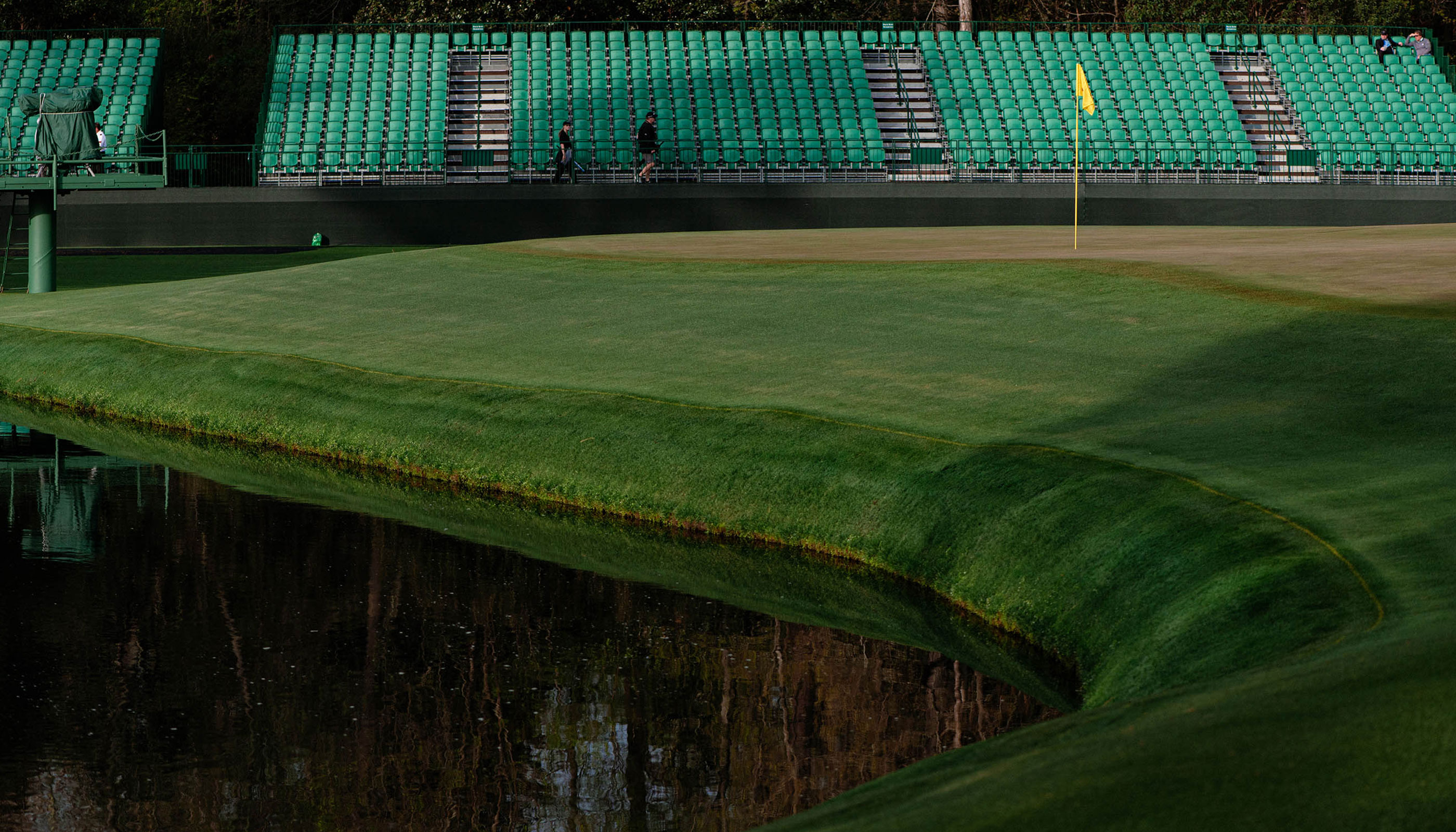
On No. 15, players have tried to reach the green on their second shots at a high rate. Sixty-three percent went for it on Thursday, 48% on Friday, and 72% on Saturday. Almost everyone in the field appeared willing to go for it after a good drive. Even Brian Harman — 151st on the PGA Tour in driving distance — gave it a go in rounds two and three.
So to say that few players are long enough to reach the 15th green in two, as Mickelson did, is flatly inaccurate.
When it comes to No. 13, he is slightly closer to being right. In the first round, 33% of the field went for the green; in the second round, 42%; in the third round, 43%. (I've included in these percentages a couple of instances where players hit their drive in water, took a drop, and tried to reach the green on their next shot.)
But numbers like these shouldn’t be shocking for a par 5. As Augusta National's co-designer Bobby Jones put it in 1959, "We call 13 a par 5 because under certain conditions of wind and ground few players will risk trying for the green with a second shot."
{{inline-article}}
Besides, I don't think the hole in its current form actually does discriminate against shorter hitters. With the exception of some aging past champions, every player in the Masters field can cover 545 yards in two shots. Just observe Mike Weir, five foot nine and 55 years old, launching a fairway wood at the green in the first round.
So why do players lay up on No. 13 more than half the time? Well, because the drive is exacting and the approach is treacherous. You need to hit great shots in order to earn a chance at eagle. The added length simply ensures that this remains the case as the world's best golfers continue to dial in their #distancemaxxing protocols.
Critics of the lengthened 13th and 15th holes will insist that layups are boring and more layups mean more boredom. I disagree with that, but I won’t say it’s wrong. Again, it's a matter of taste.
For my part, though, I enjoy Nos. 13 and 15 more than I did before they were lengthened. I like watching players hit long irons and hybrids into firm, fiercely protected greens. I like that mistakes are more likely to result in water balls. I like seeing contenders make hard decisions in the fairway on Sunday. I like that elite ball-strikers are getting their just deserts. And I even like the layups — or more specifically, the nuances of how players position their layups to certain pins.
Par 5s are fun. I wish more of them existed at the pro level.
.png)
Interactive Augusta National Map
Click on a pin below to preview the hole or visit the full profile.
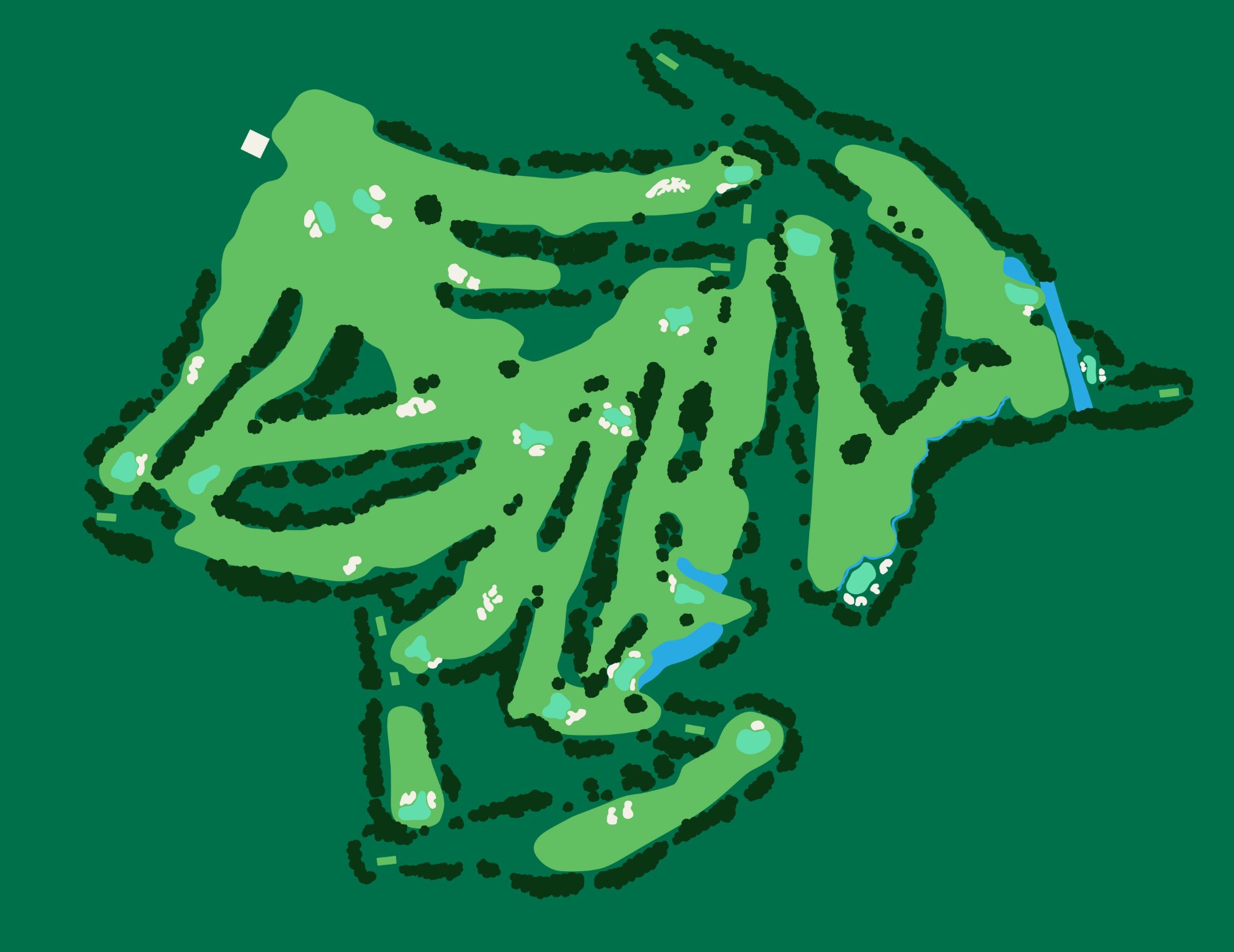
Augusta National
Ever since it opened, Augusta National has been in a constant state of evolution (for better or for worse), but it remains one of the greatest championship venues in the world
Hole 1 - Tea Olive
Augusta National's property is defined by a single broad downslope that ends at Rae’s Creek, and this par-4 opener is the only hole on the course that sits completely on top of it. Strategically, No. 1 at Augusta National is one of the most compelling opening holes in professional golf.
Hole 2 - Pink Dogwood
The second hole at Augusta National produces more off-the-tee variety than most par 5s in professional golf.
Hole 3 - Flowering Peach
Players face three basic options off the tee: hit a long iron or hybrid near the bunkers at the top of the first ridge, leaving a full wedge in; bash it left, past the bunkers and into the valley short left of the green; or go straight for the green in hopes of at least holding the narrow shelf short right. The most strategically complex hole on the golf course, “Flowering Peach” has stood the test of time, less affected by distance gains than most holes at Augusta National.
Hole 4 - Flowering Crab Apple
The first — and longest — par 3 at Augusta National has historically required a strong strike with at least a long iron, though club selections in the Masters have shifted as distance gains have spiraled out of control. Can you execute a towering shot with a long iron, hybrid, or fairway wood?
Hole 5 - Magnolia
“Magnolia” is like Paul Thomas Anderson’s film of the same name: brilliant, probably underrated, but a tad bloated. Nonetheless, the hole presents an honest challenge, and the green is one of the most artfully shaped at Augusta National (or anywhere else).
Hole 6 - Juniper
“Juniper” is, in our opinion, Augusta National’s second-best par 3. Each pin position presents a different range of challenges and exciting possible outcomes.
Hole 7 - Pampas
Yes, the green contours are fun, but “Pampas” has morphed into something that Alister MacKenzie likely would not endorse: a hole that merely defends itself through length and narrowness rather than asking complex strategic questions.
Hole 8 - Yellow Jasmine
This uphill three-shotter consistently produces the highest scoring average of Augusta National’s four par 5s, but it still presents a welcome birdie opportunity after the tough stretch of Nos. 4-7. “Yellow Jasmine” is the most underrated hole at Augusta National.
Hole 9 - Carolina Cherry
The ninth hole plays from a high point near the first and eighth greens, down through a valley frequently used by galleries, and up the hill where the clubhouse sits. From a risk-reward perspective, “Carolina Cherry” is a bit of a muddle.
Hole 10 - Camellia
The 10th hole kicks off the back half of the round in hair-raising fashion, plunging 100 feet into a valley shrouded by tall pines. Perry Maxwell’s 1938 transformation of “Camellia” is one of the rare cases in which a change to MacKenzie and Jones’s design represented a substantial improvement.
Hole 11 - White Dogwood
No. 11 is simply a brute, often playing as the most difficult hole to par at Augusta National. It’s also been one of the most frequently tinkered-with holes at Augusta National.
Hole 12 - Golden Bell
The focal point of Amen Corner and the center of gravity in any final round of the Masters, the 12th hole at Augusta National is as terrifying as it is beautiful.
Hole 13 - Azalea
This iconic risk-reward par 5 offers the first of a series of birdie opportunities on Augusta National’s home stretch.
Hole 14 - Chinese Fir
Although some nuances of MacKenzie and Jones’s original strategic concept for the hole have been lost, “Chinese Fir” is still a compelling par 4, rewarding precise and well-shaped shots both off the tee and into the green.
Hole 15 - Firethorn
No. 15 consistently presents one of the toughest decisions players have to make during their rounds: go for the green in two or lay up to one of the most demanding wedge shots in golf.
Hole 16 - Redbud
Set at the base of the ridge that the fifth green and sixth tee occupy, the par-3 16th hole provides a ready stage for championship-defining shots. Over the past several decades, the 16th has shown an undeniable knack for spectacle.
Hole 17 - Nandina
From tee to green, No. 17 is one of the simplest holes at Augusta National and is likely the least-loved hole on the second nine.
Hole 18 - Holly
“Holly” is a little funky, but its design is smart and elegant: bend it around the trees on the right and bypass some of the natural difficulty of the next shot.







Winners and Losers from LIV Golf 1.0

It's Too Soon for Jon Rahm's LIV Golf Retrospective

Lauren Coughlin's Brush With Perfection
Weekend Update: Tom Kim Earns Military Exemption, Michael Block Stumbles

How Can Team USA Solve a Problem Like Foursomes?

If Not Now, Then When for the Internationals?
Get full access to exclusive benefits from Fried Egg Golf
- Member-only content
- Community discussions forums
- Member-only experiences and early access to events